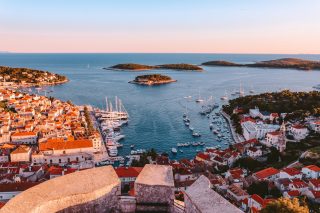
Hvar Arsenal
Historic Building, Shipyard and Theatre in Hvar
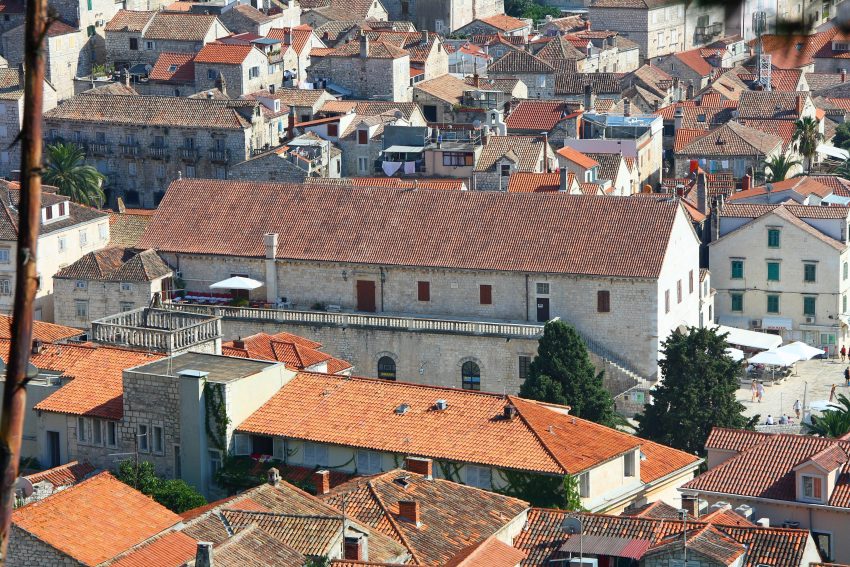
Hvar Arsenal sits right at the seaward edge of Hvar Town's main square, steps from the harbor promenade. From the outside it reads as a handsome stone civic building, but inside it tells a bigger story: Hvar's seafaring past, Venetian-era power, and the town's long tradition of public culture.
Because it's so central, the Arsenal is one of the easiest attractions to fold into a self-guided walking tour: start at Trg Svetog Stjepana (the main square), stroll the waterfront, then pop into the Arsenal when the sun is high or the weather turns. For the best overall views of the setting, stand near the harbor-facing side of the square and look back toward the building's long façade.
Table of Contents
- History and Significance of the Hvar Arsenal
- Things to See and Do in the Hvar Arsenal
- How to Get to the Hvar Arsenal
- Practical Tips on Visiting the Hvar Arsenal
- Where to Stay Close to the Hvar Arsenal
- Is the Hvar Arsenal Worth Visiting?
- For Different Travelers
- FAQs for Visiting Hvar Arsenal
- Nearby Attractions to the Hvar Arsenal
History and Significance of the Hvar Arsenal
The Arsenal began as a practical maritime building: a place tied to the defense and upkeep of galleys that protected local trade routes from threats on the Adriatic. Over time, it evolved beyond a purely military or industrial function, reflecting how Hvar grew into a prosperous port town with civic ambitions.
Much of what visitors recognize today comes from later rebuilding and reshaping, especially in the early modern period. That layered timeline is part of the appeal: you’re not looking at a single “frozen” moment, but a working structure that adapted as naval technology, politics, and local priorities changed.
One of the Arsenal’s most famous associations is with Hvar’s historic theatre tradition above the maritime space. The pairing is unusual and memorable: shipyard pragmatism below, public performance and civic life above, all in the same landmark.
Things to See and Do in the Hvar Arsenal
Inside, expect a low-key, interpretive visit rather than a large, object-heavy museum. The experience is often about understanding the building's purpose, its architecture, and the story of Hvar as a maritime community—ideal if you like context that makes the rest of the old town feel more meaningful.
Take time to notice the scale and proportions of the interior, which hint at its original working role. Even if the displays feel simple, the setting itself does a lot of the storytelling, especially when you imagine the space filled with ship equipment and repair activity.
If you’re visiting on a rainy day or want a break from the midday heat, the Arsenal can be a smart “culture stop” between the cathedral area, the waterfront cafés, and the climb up toward Fortica. It’s also conveniently close to other historic buildings around the square, so you can keep your itinerary compact.
How to Get to the Hvar Arsenal
The nearest major airports are Split Airport (SPU) and Dubrovnik Airport (DBV), with Split typically the most straightforward for reaching Hvar Town by sea connections. For the best deals and a seamless booking experience, check out these flights to Hvar on Booking.com.
There's no train service to Hvar Island; if you're arriving by rail, you'll take a train to Split and then continue to the port for a catamaran or ferry connection toward Hvar. Train schedules and bookings can be found on Omio.
If you're traveling by car, drive to Split (or Drvenik, depending on your route) and take a car ferry to the island, then continue by road to Hvar Town and park outside the tight old-town core.
Practical Tips on Visiting the Hvar Arsenal
- Official website: https://hvar1612.hr/za-posjetitelje/
- Entrance fee: Adults: €10.
- Opening hours: Daily: 10:00–21:00.
- Best time to visit: Go late morning or early evening to avoid the hottest part of the day and to pair it with a harbor stroll.
- How long to spend: Plan 30–60 minutes for a focused visit, longer if you like reading interpretive panels slowly.
- Accessibility: The old-town approach is mostly flat near the harbor, but expect stone surfaces and potential steps inside; confirm on-site if you need step-free access.
- Facilities: You’re surrounded by cafés, restrooms, and services around the main square; treat the Arsenal as a central stop rather than a standalone complex.
Where to Stay Close to the Hvar Arsenal
Base yourself in central Hvar Town near the main square and harbor if you want the easiest, walk-everywhere stay for sights, ferries, and evening dining.
Adriana Hvar Spa Hotel A polished waterfront option a short walk from the Arsenal, chosen for its harbor views and spa facilities—great when you want a “resort feel” without leaving the old town.
Amfora Hvar Grand Beach Resort Included for travelers who want pool time and a beach-resort setup while still being close enough to walk into the center for the Arsenal and dinner.
The Palace Hvar Hotel A classic, ultra-central pick right on the main square—hard to beat for location if your plan is to step out and start sightseeing immediately.
Pharos Hvar Bayhill Hotel Chosen for value and a lively atmosphere, with an easy walk down to the harbor and the Arsenal—handy if you want nightlife nearby.
Hotel Park Hvar A smaller, comfortable option close to the center, included for travelers who want a quieter base that’s still within a short stroll of the Arsenal.
Is the Hvar Arsenal Worth Visiting?
Yes—if you enjoy historic buildings and want a quick, weather-proof cultural stop right in the heart of Hvar Town, the Arsenal is worth it. Its biggest strength is location and context: it helps you understand why Hvar mattered as a maritime town, and it pairs naturally with a walking loop of the square, waterfront, and nearby landmarks.
Honest Pivot: if you’re expecting a large museum packed with artifacts or interactive exhibits, you may find it underwhelming for the price. In that case, consider admiring the exterior, spending more time on viewpoints like Fortica, or prioritizing beaches and boat trips.
What Other Travellers Say...

Reviews suggest the Hvar Arsenal is a worthwhile, centrally located stop with strong historical interest and attractive architecture, especially convenient near the harbor and on rainy days. Visitors commonly appreciate learning about its 14th-century maritime role and later evolution, plus the connection to the theatre. The main downsides mentioned are that the exhibits can feel simple or text-heavy and that the entry price may feel steep if you expect a larger, artifact-rich museum.


For Different Travelers
The Arsenal works best as a short, story-driven stop that complements everything else you're already doing in central Hvar. Think of it as a “connector” attraction: it adds meaning to the harbor and square rather than demanding half a day.
It’s also a practical choice when you want something cultural without complicated logistics. Because it’s so central, you can decide spontaneously based on weather, crowds, and your energy level.
Families with Kids
For families, the Arsenal can be a manageable indoor visit that doesn’t require a long attention span. Keep it light: focus on the idea of ships being repaired here and how the harbor outside connects to the story.
If your kids are more active than museum-inclined, pair the visit with a harbor walk and a treat stop nearby. Treat it as a short “reset” between outdoor activities.
Couples & Romantic Getaways
Couples will like how easy it is to weave the Arsenal into a slow day around the square—coffee, a cultural stop, then a sunset walk along the waterfront. It's a good rainy-day plan that still feels distinctly Hvar.
For a more romantic flow, combine it with a golden-hour stroll and a viewpoint later on. The Arsenal adds a sense of place that makes the old town feel deeper than just a pretty backdrop.
Budget Travelers
Budget travelers should weigh the ticket cost against how much they enjoy reading displays and learning context. If you’re doing a self-guided history walk of the old town, the Arsenal can be a worthwhile “paid anchor” in an otherwise free day.
If you’re watching spending closely, consider enjoying the exterior and focusing on free highlights: the square, harbor promenade, and scenic streets. Save paid entries for the one or two places you’re most excited about.
History Buffs
History buffs will appreciate the Arsenal’s layered timeline and its connection to Venetian-era maritime strategy and local civic life. It’s especially satisfying if you like buildings that show how a town functioned day-to-day.
To get the most from it, visit with a bit of background on Hvar’s role in Adriatic trade and defense. Even modest displays feel richer when you’re connecting them to what you’ve seen outside in the harbor.
FAQs for Visiting Hvar Arsenal
Getting There
Tickets & Entry
Visiting Experience
Tours, Context & Itineraries
Photography
Accessibility & Facilities
Food & Breaks Nearby
Safety & Timing
Nearby Attractions to the Hvar Arsenal
- St. Stephen's Square (Trg Svetog Stjepana): Hvar's grand main square, perfect for people-watching and admiring historic façades.
- St. Stephen's Cathedral: A central landmark with an atmospheric interior and a strong sense of Hvar's civic-religious history.
- Fortica (Španjola Fortress): The classic uphill viewpoint for sweeping harbor panoramas and sunset photos.
- Hvar Loggia: A historic civic structure near the square that adds context to the town's Venetian-era public life.
- Hvar Waterfront Promenade (Riva): A scenic stroll lined with boats, cafés, and easy access to tours and water taxis.
The Hvar Arsenal appears in our Complete Guide to Visiting Hvar!

Moira & Andy
Hey! We're Moira & Andy. From hiking the Camino to trips around Europe in Bert our campervan — we've been traveling together since retirement in 2020!
This website uses affiliate links which may earn a commission at no additional cost to you!
Planning Your Visit
Daily: 10:00-21:00.
Adults: €10.
Nearby Attractions
- Hvar Harbour (0) km
Harbour, Port and Promenade - Venetian Loggia and Clock Tower (0.1) km
Historic Building, Historic Site and Tower - Trg Sv Stjepana (0.1) km
Area, Attraction and Square - Hvar Cathedral (0.2) km
Attraction, Cathedral and Church - Fortress Fortica (0.3) km
Castle, Historic Site and Viewing Point - Franciscan Monastery (0.4) km
Church, Monastery and Museum - Museum of Croatian Archaeological Monuments (36.9) km
Attraction, Historic Site and Museum - Riva Harbor (37.3) km
Area, Harbour and Promenade - Bronze Gate (37.3) km
Attraction, City Gate and Historic Site - Ethnographic Museum (37.3) km
Attraction, Historic Building and Museum