Hofkirche St. Leodegar, Lucerne
Church in Lucerne
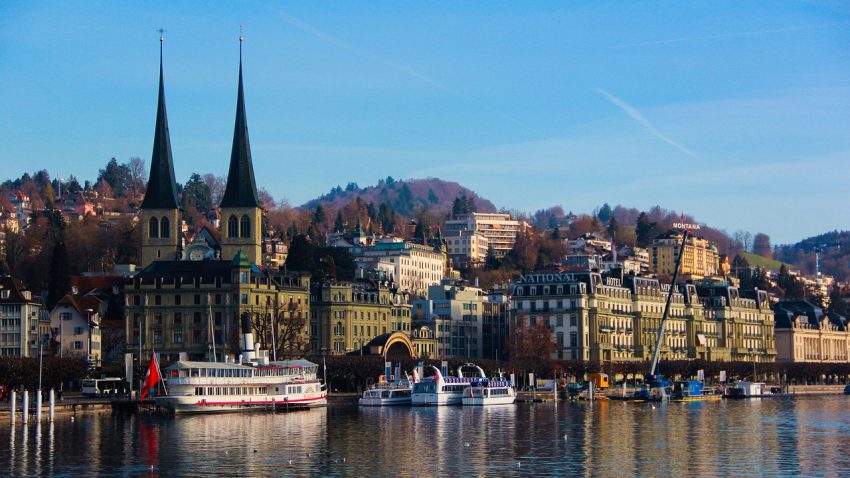
Perched just above the lakefront promenade, Hofkirche St. Leodegar rises with its striking twin towers and long staircase, instantly recognisable on Lucerne's skyline. The church's story stretches back to the mid-8th century, when it formed part of a monastery that helped give birth to the town itself. Fire destroyed much of the earlier Gothic building in 1633, but the towers, St. Mary's altar and a handful of sacred treasures survived and were carefully woven into the 17th-century German Renaissance church you see today. Step inside and the bustle of the lakeside suddenly drops away into cool white stone, gilded altars and the soft creak of old wooden pews.
The interior feels both grand and human-scale. Richly carved choir stalls and gilt statuary line the southern side, while simpler wooden benches on the northern half hint at a time when rich and poor worshipped in separate spaces but under the same roof. A discreet plaque honours Ludwig Pfyffer von Altishofen, the powerful 17th-century Swiss officer who helped bring the Jesuits to Lucerne and ushered in the city's Counter-Reformation era. Between the quiet side chapels, the play of light on gold and stone, and the layered history in its walls, Hofkirche St. Leodegar is a highlight of any walking tour of Lucerne and rewards both a quick look and a longer, contemplative visit.
Table of Contents
- History and Significance of Hofkirche St. Leodegar
- Things to See and Do in Hofkirche St. Leodegar
- How to Get to Hofkirche St. Leodegar
- Practical Tips on Visiting Hofkirche St. Leodegar
- Where to Stay close to Hofkirche St. Leodegar
- Is Hofkirche St. Leodegar Worth Visiting?
- FAQs for Visiting Hofkirche St. Leodegar
- Nearby Attractions to Hofkirche St. Leodegar
History and Significance of Hofkirche St. Leodegar
The roots of St. Leodegar reach back to around the mid-700s, when a monastic complex was founded on this hillside above the lake. Over time, the monastery became a focal point for settlement and trade, helping to shape the town that would become Lucerne. An earlier Gothic church once stood where the current nave rises, but a devastating fire in 1633 left most of it in ruins. Rather than abandon the site, the community chose to rebuild, creating one of the finest examples of German Renaissance church architecture in Switzerland.
The present Hofkirche incorporates what could be salvaged from the Gothic predecessor. The iconic twin towers, some of the older foundations and St. Mary’s altar all pre-date the fire, acting as anchors that tie the “new” 17th-century building to its medieval past. Inside, the rich programme of altars, side chapels and liturgical furnishings reflects the Catholic renewal of the period. This is where the arrival of the Jesuits-encouraged by Ludwig Pfyffer-left its mark, signalling Lucerne’s firm alignment with the Counter-Reformation at a time when religious divides were reshaping Europe.
Beyond its religious role, Hofkirche St. Leodegar has long been a civic symbol. Its silhouette features on countless images of Lucerne, and its bells mark the passing of time for locals and visitors alike. The churchyard and terraces outside offer glimpses over the lake and Old Town, reminding you how closely faith, daily life and the natural landscape have been intertwined here for more than a thousand years. In a compact space, the church manages to tell stories of monastic beginnings, fire and rebuilding, social hierarchy, baroque splendour and political power-all reasons it remains one of the must-see places in Lucerne.
Things to See and Do in Hofkirche St. Leodegar
Begin your visit by climbing the broad staircase from the lakeside road or nearby streets; the slow ascent gives you changing views of the towers and the city behind you. Pause at the top to take in the façade, then step into the cool, pale interior. Your eyes are drawn first to the high altar and the richly decorated chancel, where gilded figures, columns and carved wood stand out against the white stone. Take time to walk slowly up the central aisle, letting the details reveal themselves rather than rushing straight to the front.
As you explore, notice how the seating reflects historical social divisions: the ornate, high-backed, carved pews on the southern side would once have been used by Lucerne’s more affluent families, while more modest benches on the northern side were reserved for less wealthy parishioners. This layout tells its own story about how worship, status and everyday life were intertwined. Look for side chapels, devotional images and the surviving St. Mary’s altar from the earlier church, which adds a distinctly medieval note to the otherwise Renaissance ensemble.
Before you leave, seek out the plaque dedicated to Ludwig Pfyffer von Altishofen on one of the supporting pillars. Reflecting on his role in bringing the Jesuits to Lucerne adds depth to your understanding of the church as a political and cultural symbol, not just a beautiful building. Outside, stroll around the churchyard or along the terrace edges for views down to the lake and across to the Old Town and Musegg Wall. On a quiet morning or evening, this can feel like one of the top sights in Lucerne for anyone who enjoys combining architecture, history and a bit of reflective calm.
How to Get to Hofkirche St. Leodegar
From abroad, most travellers arrive via Zurich Airport, which offers frequent international connections and lies about an hour from Lucerne by direct train or motorway. For the best deals and a seamless booking experience, check out these flights to Lucerne on Booking.com. Basel and Bern also serve as useful gateways if you are visiting several Swiss cities and planning to include Lucerne's churches and lakeside in a wider itinerary. For the best deals and a seamless booking experience, check out these flights to Lucerne on Booking.com.
Once you reach Lucerne's main railway station, Hofkirche St. Leodegar is an easy walk away. Train schedules and bookings can be found on Omio. Simply follow the lakeside promenade or head through the Old Town towards the casino and lakefront hotels, then look up for the distinctive twin towers on the slope above; a short but slightly uphill walk and a flight of steps bring you to the church entrance. Local buses also run along the lakeside road if you prefer to minimise walking.
If you are travelling by car, use one of Lucerne’s central car parks or lakeside garages and continue on foot, as the immediate area around the church is best explored without worrying about traffic or tight parking spots. The approach involves some steps, so allowing a little extra time makes the climb more relaxed and gives you a chance to appreciate the changing views as you go.
Practical Tips on Visiting Hofkirche St. Leodegar
- Suggested tips: Visit outside of Mass times for the best chance to quietly explore the interior, and remember to speak softly and dress respectfully as it is an active place of worship.
- Best time to visit: Morning light streaming through the windows can be especially beautiful, while late afternoon often brings a calm atmosphere and fewer tour groups.
- Entrance fee: Free entry; donations towards the upkeep of the church and its music are appreciated.
- Opening hours: Mon - Fri 9am - 12pm & 2pm - 4.30pm
- Official website: http://www.hofkirche.ch/
- How long to spend: Around 30-45 minutes is usually enough to explore the interior, admire the details and enjoy the views outside, longer if you attend a service or organ concert.
- Accessibility: The church stands above a staircase from the lakeside, which can be challenging for those with reduced mobility; alternative, less steep approaches may be possible via nearby streets, but access still involves some inclines.
- Facilities: There are no major visitor facilities inside the church itself, but cafés, shops, public toilets and the lakeside promenade are just a short walk away.
- Photography tip: Discreet photography is usually fine outside service times-try framing the twin towers against the lake and mountain backdrop, and inside, use natural light rather than flash to respect the space.
- Guided tours: Consider joining a city or church-focused walking tour if you would like more context on the building's architecture, the Counter-Reformation history and the role of Ludwig Pfyffer.
- Nearby food options: After your visit, you’ll find plenty of cafés and restaurants along the lakeshore and in the nearby Old Town, ideal for sitting with a drink while you look back towards the church on the hill.
Where to Stay close to Hofkirche St. Leodegar
Staying near Hofkirche St. Leodegar lets you enjoy its bells and views at quieter times of day, when most day trippers have gone. Grand Hotel National Luzern sits just along the lakeside, offering classic grand-hotel style, easy access to the promenade and a short walk up to the church. For a boutique feel in a historic building, Hotel Hofgarten Luzern is tucked in a calmer corner close to both the lakeshore and the church steps. If you prefer a slightly elevated position with broad views over Lucerne and the lake, Art Deco Hotel Montana sits higher on the hillside, connected to the lakeside road by its own funicular and within comfortable walking distance of Hofkirche St. Leodegar.
Is Hofkirche St. Leodegar Worth Visiting?
Hofkirche St. Leodegar is very much worth visiting, especially if you enjoy places where architecture, history and lived faith come together in one setting. It offers a richer, more layered story than many churches twice its size, thanks to its monastic origins, the dramatic 1633 fire, the surviving Gothic elements and the Counter-Reformation imprint of the 17th century. Combined with its atmospheric interior and fine views from the churchyard, this spot is one of the best places to visit in Lucerne if you want to look beyond the lakeside postcard scenes and understand more of the city's soul.
What Other Travellers Say...

Hofkirche St. Leodegar on St. Leodegarstrasse in Luzern is a monumental church known for its vaulted white-stone interior and twin Gothic bell towers; visitors praise the dramatic nighttime illumination and large staircase that's a popular spot to sit and soak in a peaceful atmosphere, note the serene churchyard with tombstones along the perimeter wall, and recommend looking up above the altar when you enter for an intriguing detail—there's also nearby paid parking and an overall quiet, solemn feel even though it sits close to the water and the city.


FAQs for Visiting Hofkirche St. Leodegar
Nearby Attractions to Hofkirche St. Leodegar
- Lake Lucerne promenade - Scenic lakeside paths directly below the church, perfect for a relaxed stroll with views of mountains and paddle steamers.
- Chapel Bridge and Water Tower - Lucerne's famous covered bridge and medieval tower spanning the Reuss, a short walk away towards the Old Town.
- Lion Monument - The moving rock relief commemorating the Swiss Guards, set in a peaceful park a few minutes' walk inland.
- Old Town Lucerne - A compact district of frescoed façades, narrow lanes and historical squares lying just across the main road from the church.
- Swiss Museum of Transport - A large, family-friendly museum along the lakefront, easily reached by a longer walk, bus or boat from near the church.
The Hofkirche St. Leodegar appears in our Complete Guide to Visiting Lucerne!

Moira & Andy
Hey! We're Moira & Andy. From hiking the Camino to trips around Europe in Bert our campervan — we've been traveling together since retirement in 2020!
This website uses affiliate links which may earn a commission at no additional cost to you!
Planning Your Visit
Mon – Fri 9am – 12pm & 2pm – 4.30pm
Free entry; donations towards the upkeep of the church and its music are appreciated.
Nearby Attractions
- Bourbaki Panorama (0.2) km
Arts Venue and Museum - Lion Monument (0.4) km
Statue - Glacier Garden (0.5) km
Museum - Peter's Chapel (0.6) km
Church - Fritschi Fountain (0.6) km
Fountain - Kunstmuseum Luzern (0.6) km
Arts Venue - Torbogen Luzern (0.6) km
Railway - Museggmauer (Musegg Wall) (0.6) km
City Gate and City Walls - Chapel Bridge and Water Tower (0.6) km
Bridge - Lucerne Town Hall (0.7) km
Town Hall