Hoa Lu Ancient Capital, Ninh Binh (Tam Coc)
Historic Building in Ninh Binh (Tam Coc)
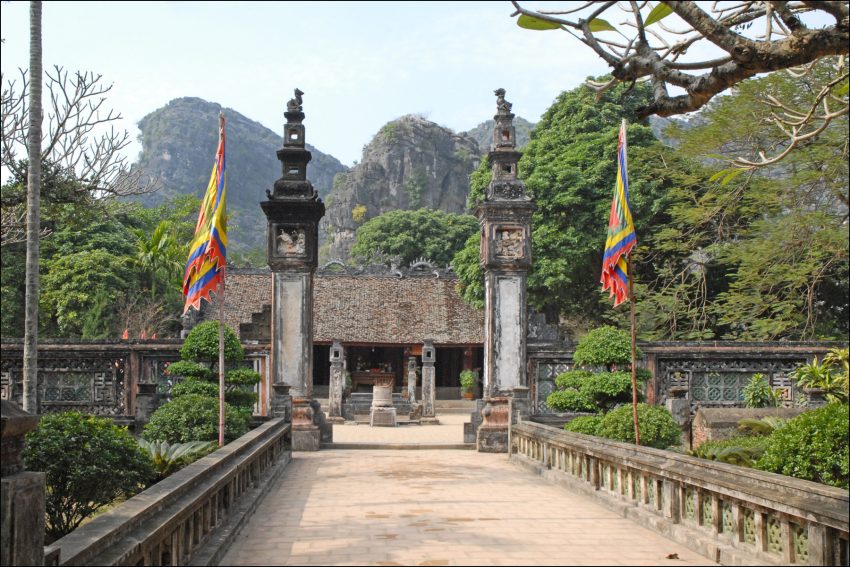
Surrounded by jagged limestone peaks and cooled by the waters of the Hoang Long River, Hoa Lu Ancient Capital was the heart of the Dai Co Viet kingdom in the 10th century. Located about 90 km south of Hanoi near modern Ninh Binh, this compact 300-hectare capital flourished under the Dinh and Early Le dynasties and continued into the early Ly era. The natural fortress of the Yen Ngua hills and the river system gave Hoa Lu a strong defensive position against northern invasions, while royal palaces, temples and pagodas anchored the political and spiritual life of the young Vietnamese state.
Today, little of the original citadel survives above ground, but Hoa Lu remains rich in temples, pagodas and relic sites that recall its royal past. The temples of Kings Dinh Tien Hoang and Le Dai Hanh, Nhat Tru Pagoda and the four sacred temples of Hoa Lu sit amid ponds, rice fields and dramatic karst formations, making the area feel both historic and deeply atmospheric. As one of the must-see places in Ninh Binh and one of the core zones of the UNESCO-listed Trang An Landscape Complex, Hoa Lu is ideal to combine with nearby river and cave landscapes in a single, rewarding day.
Table of Contents
- History and Significance of Hoa Lu Ancient Capital
- Things to See and Do in the Hoa Lu Ancient Capital
- How to Get to the Hoa Lu Ancient Capital
- Practical Tips on Visiting the Hoa Lu Ancient Capital
- Where to Stay close to the Hoa Lu Ancient Capital
- Is the Hoa Lu Ancient Capital Worth Visiting
- FAQs for Visiting Hoa Lu Ancient Capital
- Nearby Attractions to the Hoa Lu Ancient Capital
History and Significance of Hoa Lu Ancient Capital
Hoa Lu lies in a natural amphitheatre of Trang An limestone mountains, with the Hoang Long River forming its northwestern boundary and smaller waterways threading through the plain. This mix of water and sheer rock created an ideal defensive site in a period when the fledgling Vietnamese state faced repeated threats from the north. In 968, after unifying rival warlords, Dinh Bo Linh proclaimed himself King Dinh Tien Hoang and chose Hoa Lu as the capital of Dai Co Viet, laying the foundations for an independent Vietnamese kingdom.
Under the Dinh dynasty (968-980) and the Early Le dynasty (980-1009), Hoa Lu grew into a functioning royal city. The Royal Court occupied around 150 hectares in the east, housing palaces, administrative buildings and ritual spaces, while the western side was used for educational and protective purposes, including areas for royal children. Natural barriers formed by cliffs and rivers were supplemented by earthworks and walls, turning Hoa Lu into a secure base for consolidating power and shaping early state institutions.
In 1010, King Ly Thai To moved the capital to Thang Long (modern Hanoi), marking a new chapter in Vietnamese history and leaving Hoa Lu as an “ancient capital”. Over time, palaces faded, but the temples, pagodas and sacred sites remained, preserving the memory of the early kings and their achievements. Today, Hoa Lu is one of the four core areas of the Trang An World Heritage Site, valued for its blending of cultural heritage with karst landscapes. Visiting the temples and climbing Ma Yen Mountain offers a vivid sense of how the first Vietnamese capital was both protected by and integrated into its natural surroundings, making it a highlight of any walking tour of Ninh Binh.
Things to See and Do in the Hoa Lu Ancient Capital
A visit to Hoa Lu typically starts at the temple complex dedicated to the founding kings. The Temple of King Dinh Tien Hoang, set at the foot of Ma Yen Mountain, is the most prominent. Built in the 17th century by Vietnamese craftsmen, it features richly carved wooden beams, stonework and altars that evoke the grandeur of a millennium-old capital. As you pass through its courtyards and halls, you will see intricate dragons, phoenixes and floral motifs that blend royal symbolism with traditional Vietnamese aesthetics.
Nearby, the Temple of King Le Dai Hanh offers a slightly smaller but closely related architectural ensemble. Also dating from the 17th century, it is divided into three main parts: the front shrine, Thien Huong House and the Sanctum, where King Le is worshipped. In front of the main building, an altar and large drum set the ritual tone, while behind the temple you will find statues representing King Le Dai Hanh, his wife and his son, King Le Long Dinh. Together, the Dinh and Le temples honour the rulers who anchored Vietnam’s independence at Hoa Lu.
Nhat Tru Pagoda, sometimes called the One Pillar Pagoda of Hoa Lu, is another important stop. Founded in the 10th century, it preserves a wealth of antiquities and architectural details linked to the capital’s religious life. The complex, covering over 3,000 square metres, includes five front halls and three upper halls, with a south-facing tiled roof and wooden structures carved with lotus blossoms, foliage, dragons and swords in Le and Nguyen dynasty styles. It offers a quieter, more contemplative counterpoint to the royal temples.
If you have time, explore the four sacred temples of Hoa Lu (Hoa Lu Tu Tran), dedicated to protective gods of the four directions. Quy Minh Temple in the south, Nguyen Temple in the north, Thien Ton Temple in the east and Cao Son Temple in the west form a spiritual compass around the old capital, underlining its importance as a cultural as well as political centre. Each has its own legends and local stories, and visiting them adds another layer of understanding to the landscape.
For views and a bit of exercise, climb Ma Yen Mountain, which rises around 200 metres and is associated with King Dinh Bo Linh. Steps lead up the slope to viewpoints that look out over the ancient capital, rivers and karst formations. At the foot of the mountain sits the tomb of King Le Dai Hanh, giving the area both scenic and commemorative significance. From Hoa Lu, many visitors then continue on to Tam Coc - Bich Dong, with its boat rides, caves and rice fields, often called “Ha Long Bay on land” and especially beautiful when the rice turns golden in summer.
How to Get to the Hoa Lu Ancient Capital
Most visitors start their journey in Hanoi, around 110 km north of Hoa Lu. The nearest major airport is Noi Bai International Airport in Hanoi, which handles both international and domestic flights and connects easily to the city centre by bus or taxi. For the best deals and a seamless booking experience, check out these flights to Ninh Binh (Tam Coc) on Booking.com. From there, you can continue to Ninh Binh and Hoa Lu by bus, train, tour or private vehicle.
Buses to Ninh Binh or Tam Coc depart frequently from major Hanoi stations such as Giap Bat and My Dinh. Tickets generally range from about 100,000 to 150,000 VND per person, with departures every 30 minutes or so from early morning until late evening. Once in Ninh Binh, local buses, taxis or pre-arranged transfers can carry you the short distance to Hoa Lu.
By train, you can travel from Hanoi to Ninh Binh Railway Station on the north-south Reunification Line in around 2 to 2.5 hours, depending on the service.Train schedules and bookings can be found on Omio. From the station, taxis and car services can take you to Hoa Lu in about 15-20 minutes, or you can combine a visit with stops in Tam Coc and Trang An.
If you prefer to drive yourself or hire a car with a driver, the most common route from Hanoi is to head along Giai Phong Street, join the Phap Van - Cau Gie Expressway, then follow signposts to Ninh Binh and on to Hoa Lu. The roads are generally good, and having your own transport makes it easier to combine Hoa Lu with nearby attractions such as Tam Coc, Trang An and Bich Dong Pagoda in a single day.
Practical Tips on Visiting the Hoa Lu Ancient Capital
- Suggested tips: Bring water, sun protection and a small daypack; the complex is spread out and you will likely spend time walking between temples and up hillside paths.
- Best time to visit: The months from April to June and October to December offer comfortable temperatures and lush scenery; spring (January to March) is lively with festivals but can be busier.
- Entrance fee: 20,000 VND for each person
- Opening hours: Generally open daily from morning until late afternoon; exact hours can vary slightly, so check locally if you plan a very early or late visit.
- How long to spend: Allow 2-3 hours to see the main temples, Nhat Tru Pagoda and Ma Yen Mountain; a full day works well if you also visit Tam Coc - Bich Dong.
- Accessibility: Paths around the temples are mostly flat but stone-paved; climbs to Ma Yen Mountain and some shrines involve steep, uneven steps, so they may be challenging for visitors with reduced mobility.
- Facilities: Basic facilities such as toilets, small shops and food stalls are available near the main entrances and car parks, but less so near outlying temples and on the mountain.
- Photography tip: Early morning or late afternoon light makes the limestone peaks and temple roofs especially photogenic; look for reflections in ponds and framed views through gateways and carved doors.
- Guided tours: Consider hiring a local guide or joining a day tour from Hanoi that covers Hoa Lu and Tam Coc; guides can provide context on dynasties, legends and temple symbolism that you might otherwise miss.
- Nearby food options: Simple eateries and cafes near the site serve local dishes, while Ninh Binh and Tam Coc towns have a broader range of restaurants and homestays where you can sit down for a fuller meal.
Where to Stay close to the Hoa Lu Ancient Capital
Staying in or near Tam Coc or Ninh Binh makes it easy to visit Hoa Lu while also exploring the wider Trang An landscape. For a boutique retreat surrounded by rice fields and karst peaks, Tam Coc Garden Resort offers a peaceful base with lush gardens and a strong sense of place. Closer to major transport links, The Reed Hotel provides a modern citystay that works well if you are arriving by train or bus and planning multiple day trips. Another good option is Ninh Binh Hidden Charm Hotel & Resort, which places you near Tam Coc while still keeping Hoa Lu and Trang An within easy reach by bicycle, taxi or motorbike.
Is the Hoa Lu Ancient Capital Worth Visiting
If you are interested in Vietnam's early history and enjoy landscapes where mountains and temples blend together, Hoa Lu Ancient Capital is definitely worth including in your Ninh Binh itinerary. It may not have towering citadel walls like some later capitals, but the combination of royal temples, pagodas, sacred mountains and surrounding karst scenery gives it a quiet, dignified power. Walking through courtyards dedicated to the Dinh and Le kings, then climbing Ma Yen Mountain to look out over the former royal heartland, brings the story of Dai Co Viet into focus in a way that books alone cannot. For many travellers, Hoa Lu becomes a gentle but memorable counterpoint to the dramatic boat rides and viewpoints elsewhere in the province.
What Other Travellers Say...

Hoa Lu Ancient Capital sits amid dramatic limestone mountains and natural fortifications and offers a peaceful, spacious place to explore temple and fortress ruins that reflect traditional Vietnamese design; visitors describe walking through a monumental stone gate and wandering among ancient temples and relics that give a strong sense of the country's early imperial past, often experienced as part of a day tour with a guide who explains the history, while many people rent bicycles or motorbikes (drivers sometimes offer paid rides and may expect tips) and entrance is straightforward, typically managed by on-site staff or tour operators.


FAQs for Visiting Hoa Lu Ancient Capital
Nearby Attractions to the Hoa Lu Ancient Capital
- Tam Coc - Bich Dong: Take a boat through caves and rice fields and visit Bich Dong Pagoda, often called “Ha Long Bay on land.”
- Trang An Landscape Complex: Explore a network of grottoes, waterways and temples in this UNESCO-listed karst landscape by sampan boat.
- Mua Caves Viewpoint (Hang Mua): Climb about 500 steps to a dramatic ridge and pagoda viewpoint with some of the best panoramas in Ninh Binh.
- Thai Vi Temple: A tranquil temple associated with the Tran Dynasty, set amid rice paddies and limestone mountains near Tam Coc.
- Van Long Wetland Nature Reserve: A quieter wetland area north of Ninh Binh, ideal for peaceful boat trips and birdwatching away from the main tourist routes.
The Hoa Lu Ancient Capital appears in our Complete Guide to Visiting Ninh Binh (Tam Coc)!

Moira & Andy
Hey! We're Moira & Andy. From hiking the Camino to trips around Europe in Bert our campervan — we've been traveling together since retirement in 2020!
This website uses affiliate links which may earn a commission at no additional cost to you!
Planning Your Visit
Generally open daily from morning until late afternoon; exact hours can vary slightly, so check locally if you plan a very early or late visit.
20,000 VND for each person
Nearby Attractions
- Am Tien Pagoda Cave (0.9) km
Lake and Pagoda - Trang An Caves (3.6) km
River - Bai Dinh Pagoda (4.5) km
Buddhist Temple - Mua Caves Viewpoint (6.5) km
Cave and Viewing Point - Thai Vi Temple (7.1) km
Hindu Temple - Bich Dong Pagoda (7.5) km
Buddhist Temple - Tam Coc (8.1) km
Cave and River - Cuc Phuong National Park (31.5) km
National Park - Perfume Pagoda (40.8) km
Buddhist Temple - Museum of Vietnamese Women (82.4) km
Museum