Halls of the Mandarins, Hue
Historic Building in Hue
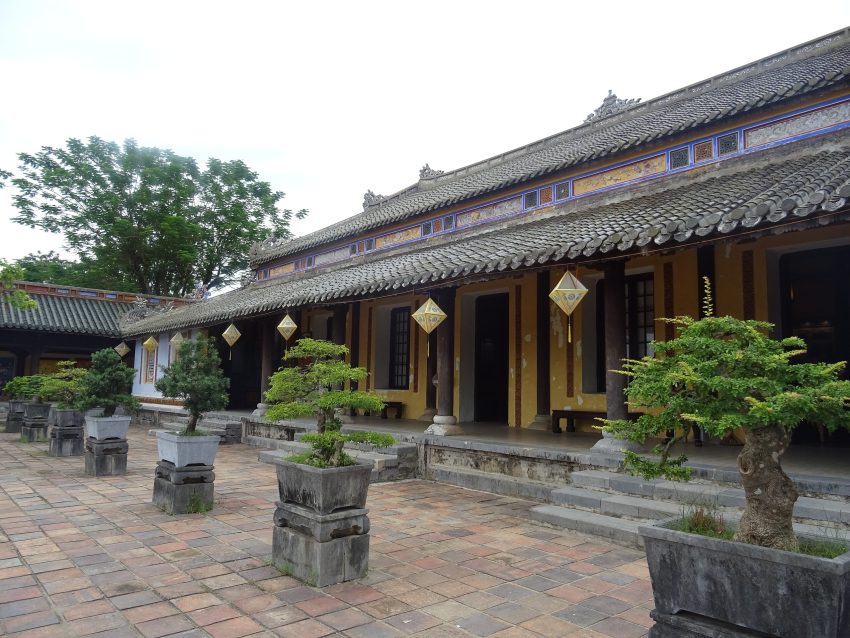
The Halls of the Mandarins sit just behind the grand Thai Hoa Palace, forming a pair of elegant pavilions that once served as working and ceremonial spaces for the emperor's mandarins. These atmospheric buildings, flanking a broad courtyard, feel like stepping into the quiet backstage of imperial life, where officials prepared their robes and gathered before entering the formal halls of power. Today, their exhibits and preserved architecture make them one of the top attractions in Hue for travellers curious about the structure and symbolism of the Nguyen Dynasty court and a great place to visit on a tour around the Imperial City.
Civil and military mandarins once used these halls as preparation chambers, dressing in richly embroidered robes before stepping into ceremonies at the heart of the Imperial City. The surviving garments, restored interiors, and archival photographs give the space a lived-in sense of authenticity. This spot is one of the best places to see in the Imperial City complex, especially for those who enjoy historic buildings where small details reveal deeper stories.
Table of Contents
- History and Significance of Halls of the Mandarins
- Things to See and Do in Halls of the Mandarins
- How to Get to Halls of the Mandarins
- Practical Tips on Visiting Halls of the Mandarins
- Where to Stay close to Halls of the Mandarins
- Is Halls of the Mandarins Worth Visiting?
- FAQs for Visiting Halls of the Mandarins
- Nearby Attractions to Halls of the Mandarins
History and Significance of Halls of the Mandarins
The Halls of the Mandarins were constructed in the early 19th century as an integral part of the ceremonial axis leading toward the Forbidden Purple City. They served as the working spaces for high-ranking civil and military officials, who played essential roles in administering the empire. The halls were strategically positioned behind Thai Hoa Palace so that mandarins could assemble and prepare immediately before imperial audiences.
The halls were divided into two distinct pavilions from the emperor’s viewpoint: Huu Vu (Right Pavilion) for military mandarins and Ta Vu (Left Pavilion) for civil mandarins. This layout symbolised the structured hierarchy of the court, where discipline, scholarship, and loyalty were balanced within the imperial system. Both buildings underwent major renovations in 1899, with Huu Vu restored again in 1977 and Ta Vu in 1988.
Their function was deeply tied to royal ceremony, from coronations to annual rituals. Displays within Huu Vu include gilded Buddha statues, coronation photographs of Vua Duy Tan, and imperial curios, while Ta Vu reflects the traditions and responsibilities of the civil mandarins. Their placement marks the transition zone into the Forbidden Purple City, making them an important threshold in the wider Imperial City layout.
Things to See and Do in Halls of the Mandarins
Visitors can explore the beautifully restored interiors of both pavilions, each offering a different glimpse into Vietnam’s imperial past. Huu Vu houses remarkable historic photographs that show rare moments from the Nguyen court, including the ceremony surrounding the young emperor Duy Tan. Intricate lacquerwork, artefacts tied to military administration, and Buddhist statuary give the hall a rich visual appeal.
Ta Vu, on the opposite side, mirrors the structure of Huu Vu but features displays linked to civil administration. Visitors will find quieter exhibits, unique decorative elements, and a more contemplative atmosphere reflecting the scholarly role of the civil mandarins. Together, the two halls help bring to life the rhythms of official life in the Imperial City.
Just beyond the halls lie the reconstructed long galleries leading toward the ruins of Can Chanh Palace. Painted in vivid scarlet lacquer, these galleries add a striking visual contrast and provide a sense of the grandeur that once defined the Forbidden Purple City. Standing here offers a deeper understanding of how these spaces connected processional routes and ceremonial roles within the imperial complex.
How to Get to Halls of the Mandarins
Hue is served by Phu Bai International Airport, located around 16 kilometres from the city centre. For the best deals and a seamless booking experience, check out these flights to Hue on Booking.com. Flights connect Hue with major Vietnamese cities, making it an easy stop on a wider itinerary.
Hue Railway Station offers regular services to Da Nang, Hanoi, Ho Chi Minh City, and several smaller destinations. Train schedules and bookings can be found on Omio. The station is only a short taxi ride from the Imperial City, making the journey convenient for travellers arriving by rail.
Travelling by car is also straightforward, whether you're driving yourself or hiring a driver. The Imperial City has designated parking areas nearby, and the Halls of the Mandarins are easily reached on foot once inside the complex.
Practical Tips on Visiting Halls of the Mandarins
- Suggested tips: Wear comfortable footwear as the Imperial City covers a large area and much of the ground is uneven.
- Best time to visit: Early morning or late afternoon for cooler temperatures and softer light.
- Entrance fee: Included within the Imperial City ticket.
- Opening hours: Generally 8:00-17:30, though hours may vary seasonally.
- How long to spend: Around 30-45 minutes for both halls.
- Accessibility: Mostly level paths but some uneven surfaces; wheelchair access varies by hall.
- Facilities: Restrooms and small refreshment stalls are available elsewhere inside the Imperial City.
- Photography tip: The scarlet galleries behind the halls make excellent backdrops for architectural photos.
- Guided tours: Numerous guides offer on-site tours exploring the symbolism and court traditions.
- Nearby food options: Cafés and restaurants can be found just outside the Imperial City walls, particularly around Dang Thai Than Street.
Where to Stay close to Halls of the Mandarins
Staying near the Imperial City offers a quieter atmosphere and quick access to Hue’s most historic sites. Boutique properties like Le Domaine de Cocodo offer spacious rooms and tranquil surroundings within easy reach of the citadel. Another good option is Azerai La Residence, a riverside heritage hotel with art-deco style and excellent facilities. Those seeking a more intimate stay might enjoy Villa Hue, known for its peaceful gardens and proximity to major attractions.
Is Halls of the Mandarins Worth Visiting?
The Halls of the Mandarins are absolutely worth visiting, especially for travellers interested in imperial history, architecture, and the behind-the-scenes workings of Nguyen Dynasty ceremonies. Their preserved interiors and thoughtful displays provide insights that enrich any visit to the wider Imperial City. The location, linking Thai Hoa Palace and the Forbidden Purple City, makes them a particularly atmospheric and meaningful stop.
What Other Travellers Say...

Hue Imperial City in Hue City is a vast 19th-century citadel surrounding the former imperial palace, with walls, a moat, temples and many intricately designed buildings to explore; visitors say you can easily spend half a day wandering its complexes and courtyards and viewing palace interiors, that its scale and architecture are impressive and atmospheric (even in rain), though some areas could use better maintenance, and note that the entrance fee can be paid by card at some windows but you may need to insist.


FAQs for Visiting Halls of the Mandarins
Nearby Attractions to Halls of the Mandarins
- Thai Hoa Palace: The grand throne hall of the Nguyen emperors.
- Forbidden Purple City: Former private quarters of the royal family.
- Can Chanh Palace ruins: Atmospheric remains behind the halls with reconstructed scarlet galleries.
- Noon Gate (Ngo Mon): The iconic main entrance to the Imperial City.
- Truong Sanh Residence: A graceful compound within the citadel complex.
The Halls of the Mandarins appears in our Complete Guide to Visiting Hue!

Moira & Andy
Hey! We're Moira & Andy. From hiking the Camino to trips around Europe in Bert our campervan — we've been traveling together since retirement in 2020!
This website uses affiliate links which may earn a commission at no additional cost to you!
Planning Your Visit
Nearby Attractions
- Forbidden Purple City (0.1) km
Historic Building - Thai Hoa Palace (0.1) km
Palace - Nhat Thanh Lau (0.1) km
Historic Building - The Royal Theatre (0.1) km
Historic Building - The Royal Library (0.2) km
Historic Building - Meridian Gate (0.2) km
City Gate - Hung Mieu Temple (0.3) km
Historic Building - Mieu Temple (0.3) km
Historic Building - Dien Tho Residence (0.3) km
Historic Building - Hien Lam Pavilion (0.3) km
Historic Building