Gjirokastër Cold War Tunnel Museum
Historic Building in Gjirokastër
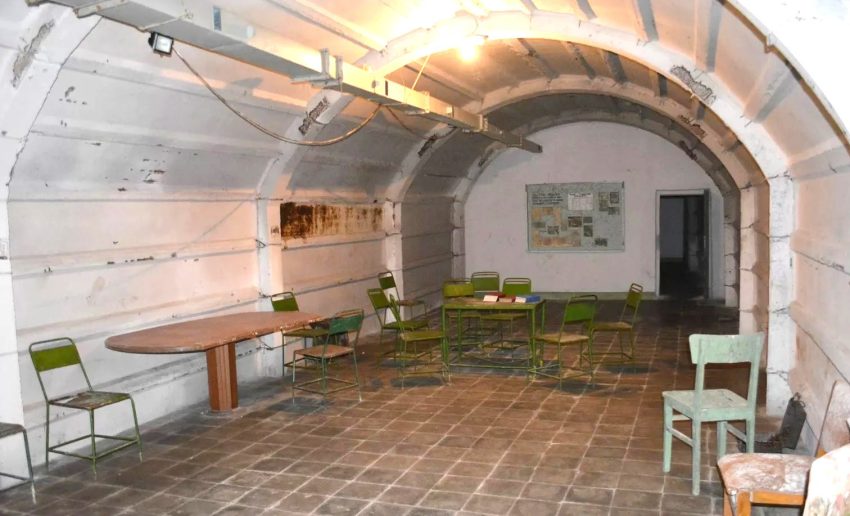
The Cold War Tunnel is an emergency underground bunker hidden beneath the heart of Gjirokastër, built in secret in the early 1970s when Albania's communist leadership was preparing for the unthinkable. From the outside, nothing about the square and surrounding streets suggests what lies below-until you step into a long, echoing labyrinth that feels frozen in time.
Unlike similar bunker museums in Tirana that have been heavily restored and curated, Gjirokastër's tunnel is closer to its original state. That makes it less explanatory but far more visceral: dim corridors, stark rooms, and a mood that can be genuinely creepy, in the best possible way for travellers who like their history immersive rather than polished.
Table of Contents
- History and Significance of the The Cold War Tunnel
- Things to See and Do in the The Cold War Tunnel
- How to Get to the The Cold War Tunnel
- Practical Tips on Visiting the The Cold War Tunnel
- Where to Stay Close to the The Cold War Tunnel
- Is the The Cold War Tunnel Worth Visiting?
- For Different Travelers
- FAQs for Visiting The Cold War Tunnel
- Nearby Attractions to the The Cold War Tunnel
History and Significance of the The Cold War Tunnel
The tunnel is a product of Enver Hoxha’s paranoia and Albania’s extreme isolation during the communist era. After breaking with the Soviet Union in the early 1960s-and later distancing itself from other allies-Albania’s leadership increasingly framed invasion as inevitable, shaping everything from military policy to the built environment.
This bunker was designed as a protected command-and-control shelter for local authorities in the event of attack, including scenarios involving chemical or nuclear threats. Stretching around 800 metres and divided into 59 rooms, it wasn’t built for comfort or public curiosity; it was built for continuity of power, secrecy, and survival. The fact that parts were looted during the unrest of the 1990s only adds to the sense of absence-rooms that hint at function even when the objects are gone.
Things to See and Do in the The Cold War Tunnel
The experience is essentially a guided walk through an underground complex where every space has a purpose. You’ll pass rooms intended for ministries and local administration, areas for party elites, sleeping quarters, and grim sections associated with interrogation-an unsettling reminder that “civil defence” and control often went hand in hand.
Several of the most memorable stops are the functional, almost industrial spaces: the decontamination area, the air filtration room, and the power-generation section with its rusting Czechoslovakia-made generator. Even when you’re not looking at exhibits, the tunnel itself is the exhibit-cold air, dripping corners, heavy doors, and the claustrophobic geometry of a state that planned for catastrophe.
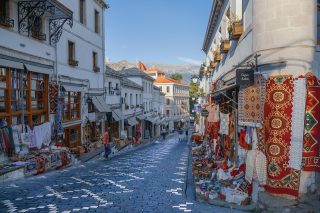
To round out the day, the tunnel pairs naturally with Gjirokastër's Old Bazaar and the castle above, giving you a strong contrast between the city's Ottoman-era beauty and its 20th-century anxieties. It's the kind of visit that stays with you precisely because it doesn't try to entertain.
How to Get to the The Cold War Tunnel
For most travellers, Tirana International Airport (Nënë Tereza, TIA) is the main gateway, while Corfu International Airport (CFU) in Greece can be a convenient alternative if you are already routing through the Ionian coast (typically via ferry to Sarandë and onward by road). For the best deals and a seamless booking experience, check out these flights to Gjirokastër on Booking.com.
From Tirana, the simplest route is by bus or private transfer to Gjirokastër, with services usually running via major southern corridors; if you're travelling in summer, transport options are generally more frequent and easier to line up. Once in Gjirokastër, the tunnel entrance is in the centre near Çerçiz Topulli Square, close to the municipality building, and it's walkable from most Old Bazaar accommodations.
There is no practical passenger train option to reach Gjirokastër, so road transport is the approach that actually works for most itineraries. If you're driving, the route from Tirana is straightforward in planning terms but can be slow in reality-allow extra time for traffic leaving the capital and for winding sections as you approach the city. If you are looking to rent a car in Albania I recommend having a look at Discover Cars, first, as they compare prices and review multiple car rental agencies for you.
Practical Tips on Visiting the The Cold War Tunnel
- Entrance fee: 200 lek
- Opening hours: (Summer) April – October: Daily: 09:00–18:00. (Winter) November – March: Daily: 08:00–14:00.
- Best time to visit: Go earlier in the day for a calmer, less rushed feel, then follow with the Old Bazaar and a long lunch to decompress from the bunker atmosphere.
- How long to spend: Budget around 30-45 minutes on-site for tickets, briefing, and the walk-through, then add extra time if you want to linger in the square and connect it with nearby sights.
- Accessibility: Expect stairs, narrow corridors, low lighting, and uneven surfaces in places, so it is not a comfortable visit for travellers with limited mobility or anyone sensitive to enclosed spaces.
- Facilities: Treat it as a “visit and move on” stop-bring water if it's hot outside, and plan your café break before or after in the Old Bazaar rather than expecting amenities on-site.
Where to Stay Close to the The Cold War Tunnel
For a culture-heavy itinerary, the best base is the Old Bazaar/castle hillside area so you can walk to the tunnel, the historic houses, and evening restaurants without relying on transport; if your focus is road-tripping the south, staying near the main road access can make arrivals and departures simpler.
A strong all-round choice in the historic core is Hotel Argjiro, which puts you close to the Old Bazaar and within easy walking distance of the central sights. For a traditional-feeling stay that still keeps you near the centre, Hotel Kalemi 2 is well placed for quick walks to the square and the castle area. If you want standout views and a more “retreat” atmosphere after long sightseeing days, Kërculla Resort is a good option, especially if you have a car or plan to use taxis.
Is the The Cold War Tunnel Worth Visiting?
Yes-if you want a sharp, memorable window into Albania’s communist era that feels immediate rather than museum-sanitised. The tunnel’s power is emotional as much as historical: it helps you understand the logic of fear that shaped daily life, architecture, and governance, and it does so in a way that books and plaques rarely match.
Honest pivot: if you dislike confined spaces, struggle with low light, or prefer attractions that are more interpretive and “explained,” this can feel stressful or frustrating. In that case, you may be better off focusing on Gjirokastër’s castle, Ottoman houses, and bazaar-sites that deliver depth without the bunker’s intensity.
What Other Travellers Say...

Tunel sits beneath Gjirokastër Castle and provides a short, lit pedestrian passage between the castle area (near the parking lot) and the town center; visitors describe it as a plain, roughly 100–150 m tunnel that's free to use, cool and shady even in summer, takes only a few minutes to cross and can save some walking compared with the paved route, though it's nothing ornate and may feel a bit claustrophobic to those who dislike confined spaces — note there's another nearby tunnel-like attraction a few dozen metres away with more signage and souvenir stalls that charges a small fee.


For Different Travelers
Families with Kids
For older kids and teens, the tunnel can be gripping in a “real-world history” way, especially if you frame it as a look at how governments planned for emergencies and controlled information. It works best when you set expectations: it’s dark, echoey, and not a playful museum, so it suits curious, resilient kids rather than very young children.
For families with little ones, the main challenge is mood and mobility-stairs, enclosed corridors, and a atmosphere that can spook even confident children. If you do go, keep it short, stay close together, and plan a bright, outdoorsy follow-up (castle ramparts or bazaar treats) to reset the tone.
Couples & Romantic Getaways
It's not “romantic” in the conventional sense, but it can be a surprisingly good shared experience because it sparks conversation-about history, fear, and how places carry memory. Couples who enjoy meaningful travel moments often find the tunnel gives the day a strong narrative arc before returning to the warmth of the Old Bazaar for dinner.
If one of you is uneasy with enclosed spaces, approach it as optional rather than a must, and agree on a quick exit plan so it doesn’t become a stressful “push through it” situation. The best pairing is bunker first, then an easy, slow afternoon wandering the stone streets with plenty of stops.
Budget Travelers
This is one of the best-value paid sights in Gjirokastër because it delivers a distinctive experience without requiring a tour package or long transport legs. You can keep the day low-cost by combining it with free wandering in the bazaar lanes, viewpoints, and exterior castle walks.
The only real budget risk is letting logistics get expensive-avoid last-minute private transfers if you can, and use buses/shared vans where practical. Treat the tunnel as a short, high-impact stop that anchors a wider DIY walking day.
History Buffs
If you’re interested in communist-era Albania, this is essential because it shows how ideology turned into infrastructure-literal underground architecture for continuity of rule. The room layout, the practical systems, and the starkness do a lot of “explaining” without needing many exhibits.
To get the most from it, read a little about Hoxha-era bunkerisation before you go, then use the tunnel to connect abstract history to physical reality. It also pairs well with Gjirokastër’s historic houses, which show the older layers of the city that the communist period tried to control.
FAQs for Visiting The Cold War Tunnel
Getting There
Tickets & Entry
Visiting Experience
Tours, Context & Itineraries
Photography
Accessibility & Facilities
Food & Breaks Nearby
Safety & Timing
Nearby Attractions to the The Cold War Tunnel
- Gjirokastër Castle: The city's dominating fortress with sweeping views and enough space to decompress after the tunnel's enclosed corridors.
- Gjirokastër Old Bazaar: A compact, characterful area of stone lanes and shops that's perfect for café breaks and slow wandering.
- Skenduli House: A beautifully preserved Ottoman-era tower house that shows how wealthy families once lived in the Stone City.
- Zekate House: Another standout historic house with grand rooms and viewpoints that make the city's architecture feel personal and lived-in.
- Ismail Kadare House: A meaningful stop for literature fans, linking the city’s atmosphere to Albania’s most famous writer.
The Gjirokastër Cold War Tunnel Museum appears in our Complete Guide to Visiting Gjirokastër!

Moira & Andy
Hey! We're Moira & Andy. From hiking the Camino to trips around Europe in Bert our campervan — we've been traveling together since retirement in 2020!
This website uses affiliate links which may earn a commission at no additional cost to you!
Planning Your Visit
(Summer) April - October: Daily: 09:00-18:00.
(Winter) November - March: Daily: 08:00-14:00.
200 lek
Nearby Attractions
- Cold War Tunnel (0.1) km
Museum - Gjirokastër Castle (0.1) km
Castle and Museum - Old Bazaar (0.2) km
Historic Site - Gjirokastër Obelisk (0.2) km
Monument - National Museum of Armaments (0.2) km
Museum - Bazaar Mosque (0.2) km
Mosque - Ismail Kadare’s House (0.4) km
Historic Building - Skenduli House (0.4) km
Historic Building - Ethnographic Museum (0.5) km
Historic Building and Museum - Zekate House (0.7) km
Historic Building