Gate of Hercules, Pula
City Gate, Historic Site and Monument in Pula
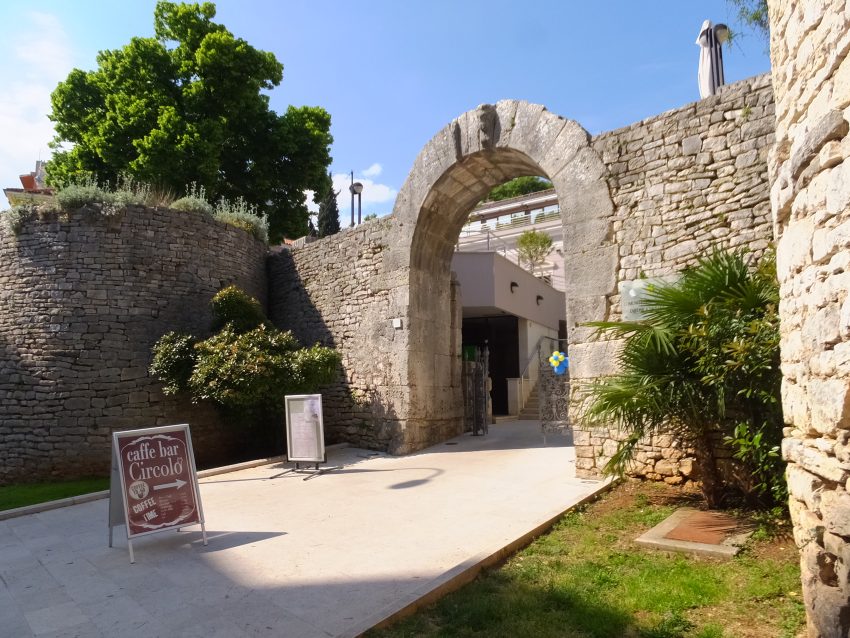
Tucked into Pula's Old Town, the Gate of Hercules is the city's oldest surviving entrance and one of those landmarks you can walk past without realizing you've just crossed a 2,000-year-old threshold. It's small, atmospheric, and best appreciated as part of a self-guided stroll between Pula's bigger Roman highlights.
You'll find it near the heart of town, close to other easy-to-link sights like the Twin Gate, Kaštel (the hilltop fortress), and the Archaeological Museum area. If you're doing a walking tour, it's a perfect “pause point” for a quick photo and a closer look at the ancient stonework before continuing deeper into the historic center.
Table of Contents
- History and Significance of the Gate of Hercules
- Things to See and Do in the Gate of Hercules
- How to Get to the Gate of Hercules
- Practical Tips on Visiting the Gate of Hercules
- Where to Stay Close to the Gate of Hercules
- Is the Gate of Hercules Worth Visiting?
- For Different Travelers
- FAQs for Visiting Gate of Hercules
- Nearby Attractions to the Gate of Hercules
History and Significance of the Gate of Hercules
The Gate of Hercules dates to the late Roman Republic era and is widely considered Pula's oldest city gate. It once formed part of the defensive walls that protected the early settlement, marking a controlled entry into the town and helping define the urban boundary.
What makes it memorable today is how understated it is: rather than a grand triumphal arch, it’s a practical gateway built for everyday movement, later framed by towers and fortifications as the city evolved. Look closely and you can still spot traces of the carved relief associated with Hercules, a small detail that connects the site’s name to the mythic hero.
Because it sits in the living fabric of the city, the gate is also a great reminder that Pula’s Roman heritage isn’t confined to ticketed monuments. Here, antiquity is embedded in the street plan itself, and the best way to understand it is simply to walk.
Things to See and Do in the Gate of Hercules
Start by slowing down and examining the stone blocks: the gate rewards close viewing more than it does distance. The carvings are subtle, but that’s part of the charm—this is a “spot the ancient detail” kind of stop, especially satisfying for history lovers.
Next, use the gate as a navigation anchor on a mini Roman-and-medieval loop. From here it’s easy to connect to nearby gates, fragments of old walls, and the climb toward Kaštel for broader context and city views.
If you’re around after dark, consider passing by again. The gate’s simple form can look especially striking with evening lighting, and the surrounding lanes feel quieter once day-trippers thin out.
How to Get to the Gate of Hercules
The nearest airports are Pula Airport (the closest), as well as Rijeka Airport and Trieste Airport (Italy) for additional flight options depending on season and prices. For the best deals and a seamless booking experience, check out these flights to Pula on Booking.com.
Pula is reachable by train, though services can be slower than buses; if you're coming from other Croatian cities, check connections in advance and consider combining train segments with a bus for the most practical route. Train schedules and bookings can be found on Omio..
If you're traveling by car, Pula is straightforward to reach via Istria's main roads, but parking is easier on the edge of the Old Town—then walk in to the gate.
Practical Tips on Visiting the Gate of Hercules
- Entrance fee: Free.
- Opening hours: 24 Hours.
- Best time to visit: Early morning for quiet streets and easy photos, or in the evening when the Old Town feels more atmospheric and the lighting can be beautiful.
- How long to spend: 5–15 minutes is plenty for a close look and a few photos, unless you’re using it as a waypoint on a longer Old Town history walk.
- Accessibility: It’s at street level, but the surrounding Old Town lanes can be uneven with stone paving; expect some bumps if using wheels.
- Facilities: No on-site facilities; you’ll find cafés, small shops, and public amenities within a short walk in the center.
Where to Stay Close to the Gate of Hercules
Base yourself in or just beside Pula's Old Town for the easiest walking access to the Gate of Hercules and the rest of the historic sights.
Hotel Amfiteatar A convenient, central pick that’s ideal if you want to walk everywhere and keep logistics simple between the Arena, Old Town lanes, and quick stops like the gate.
Park Plaza Histria Pula A strong choice for travelers who want resort-style comfort and sea views, while still being a manageable ride into town for sightseeing.
Boutique Hotel Oasi A quieter boutique option near the water that suits couples and anyone who wants a calmer base after busy Old Town afternoons.
Hotel Galija A practical, walkable stay close to the center—great if your priority is location and you plan to spend most of your time out exploring.
Ribarska Koliba Resort A scenic, slightly removed option with a relaxed feel, chosen for travelers who want a “holiday” atmosphere with easy access to city sights.
Is the Gate of Hercules Worth Visiting?
Yes—if you enjoy history, the Gate of Hercules is absolutely worth a quick stop, especially because it costs nothing, takes only minutes, and fits naturally into an Old Town walking route. It's not a headline attraction like the Arena, but it adds texture to your visit and makes Pula's Roman layers feel more real.
Honest Pivot: If you’re short on time and prefer big, dramatic landmarks, you can skip it without regret and focus on the Arena, Forum area, and Kaštel. The gate is subtle, and travelers expecting a large monument may find it underwhelming.
What Other Travellers Say...

Reviews suggest the Gate of Hercules is a small but meaningful stop that's best appreciated as part of a walking route through Pula's Old Town. Travelers praise its age and historical value, noting that ancient carvings and the surrounding stonework are still visible and that it can look especially nice when illuminated at night. The most common downside is that it's easy to miss and can feel underwhelming if you expect a major monument; a few visitors also mention nearby café seating can be uncomfortable in strong sun.


For Different Travelers
The Gate of Hercules is best treated as a small “connector sight” that enriches a broader day of exploring. Think of it as a quick, meaningful pause rather than a destination that needs its own itinerary.
Families with Kids
Kids who like “treasure hunt” moments may enjoy searching for the carved details and imagining the city walls that once stood here. It’s also a low-effort stop: no lines, no indoor rules, and you can move on quickly if attention spans fade.
Pair it with a nearby climb or viewpoint afterward so the outing has a clear payoff. A short loop that includes other gates or the fortress hill can turn a tiny sight into a fun mini-adventure.
Couples & Romantic Getaways
For couples, the appeal is in the atmosphere: narrow lanes, ancient stone, and the feeling of stumbling on something old and quietly significant. It’s a nice place for a quick photo together that feels more personal than the busiest hotspots.
Consider passing by in the evening as part of a relaxed wander to dinner. The Old Town’s lighting and slower pace can make even simple landmarks feel cinematic.
Budget Travelers
This is a perfect budget-friendly sight: it’s outdoors, quick, and free, yet still delivers a genuine Roman-era touchpoint. It also helps you build a full day of sightseeing by linking together multiple walkable stops without spending on tickets.
Use it as part of a DIY walking route: gate to gate, then up toward Kaštel, then down toward the Forum. You'll get plenty of “I was here” moments with minimal cost.
History Buffs
History lovers will appreciate that the gate isn’t a reconstructed showpiece—it’s a surviving fragment of the city’s defensive system. The small scale encourages careful looking, which is often where the best details hide.
To deepen the context, connect it to other Roman and early-medieval layers nearby. Seeing the gate alongside other walls, entrances, and the city’s later fortifications makes Pula’s timeline easier to visualize.
FAQs for Visiting Gate of Hercules
Getting There
Tickets & Entry
Visiting Experience
Tours, Context & Itineraries
Photography
Accessibility & Facilities
Food & Breaks Nearby
Safety & Timing
Nearby Attractions to the Gate of Hercules
- Pula Arena: The city's iconic Roman amphitheatre and the biggest must-see for first-time visitors.
- Arch of the Sergii: A prominent Roman arch that's easy to combine with an Old Town stroll.
- Forum and Temple of Augustus: Pula's historic main square area with classical architecture and a lively atmosphere.
- Kaštel (Pula Fortress): A hilltop fortress with sweeping views and excellent context for the city's layered history.
- Twin Gate (Porta Gemina): Another historic gate nearby that helps you visualize the old city entrances.
The Gate of Hercules appears in our Complete Guide to Visiting Pula!

Moira & Andy
Hey! We're Moira & Andy. From hiking the Camino to trips around Europe in Bert our campervan — we've been traveling together since retirement in 2020!
This website uses affiliate links which may earn a commission at no additional cost to you!
Planning Your Visit
24 Hours.
Free.
Nearby Attractions
- Archaeological Museum of Istria (0) km
Historic Site, Museum and Viewing Point - Small Roman Theatre (0.1) km
Arts Venue, Roman Site and Theatre - Twin Gates (0.1) km
Attraction, City Gate and Historic Site - Triumphal Arch of the Sergii (0.2) km
Attraction, Historic Site and Monument - Pula Castle (0.3) km
Castle, Museum and Viewing Point - Roman Amphitheater (0.3) km
Amphitheatre, Attraction and Roman Site - Pula Cathedral (0.3) km
Cathedral, Church and Historic Building - Floor Mosaic The Punishment of Dirce (0.4) km
Attraction, Historic Site and Roman Site - Franciscan Church and Monastery (0.4) km
Church, Monastery and Religious Building - City Farmers' Market (0.4) km
Market