Fort National, Saint-Malo
Castle in Saint-Malo
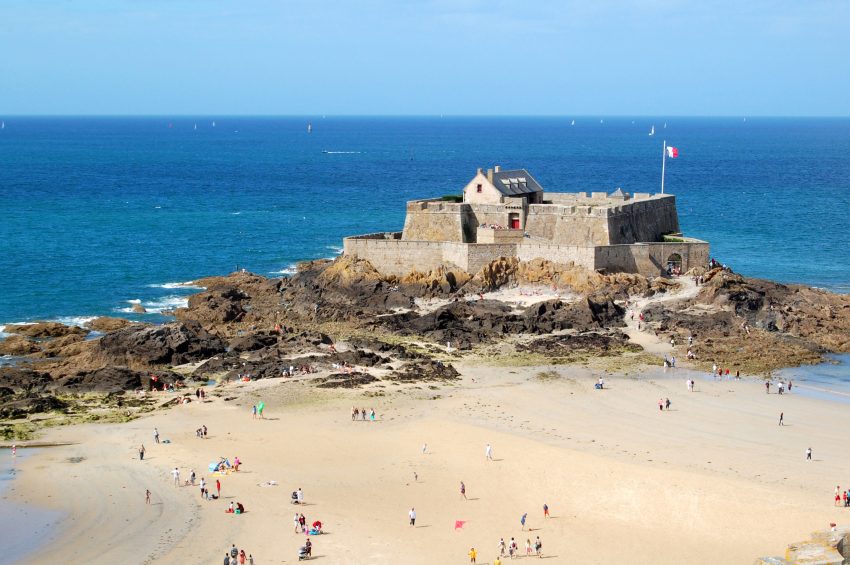
Fort National is the stone fortress you can see sitting on its own rocky islet just off Saint-Malo's seawall, close enough to feel like part of Intra-Muros yet separated by the tide like a final defensive “outpost.” Built by Vauban in 1689, it was designed to shield the port and strengthen the city's coastal firepower, and today it remains one of the must-see places in Saint-Malo simply because the setting is so cinematic: granite walls, open sea, and a causeway that appears and disappears with the water.
It's also a brilliant stop to fold into a walking tour of Saint-Malo, especially if you're already doing the ramparts and want to add something that feels like a small expedition. The key is timing: you don't just “walk over whenever,” you plan around the tides, and that little bit of logistics makes the visit feel more memorable than a typical historic monument.
Table of Contents
- History and Significance of the Fort National
- Things to See and Do in the Fort National
- How to Get to the Fort National
- Practical Tips on Visiting the Fort National
- Where to Stay Close to the Fort National
- Is the Fort National Worth Visiting?
- For Different Travelers
- FAQs for Visiting Fort National
- Nearby Attractions to Fort National
History and Significance of the Fort National
Fort National began life in 1689 as Fort Royal, a Vauban-built response to Saint-Malo's strategic importance and its exposure to naval attack. Its position is pure military logic: close enough to protect the harbor approaches and support the ramparts with crossfire, but separated from the city itself so an enemy couldn't easily seize it and turn it against Saint-Malo.
The fort quickly proved its value as part of a wider defensive network along the bay, and its story is closely tied to late-17th-century maritime conflict. The dramatic attempted attacks on Saint-Malo in this era helped cement the city's reputation for resilience, and Fort National's survival has made it a lasting symbol of that hard-edged coastal identity.
In the 20th century, the fort gained a darker chapter when it was used during World War II as a prison by occupying forces, holding hundreds of local residents. That history changes the emotional tone of the visit: beyond cannons and walls, it’s a place that witnessed fear and endurance, which is part of why guided interpretation matters here.
Things to See and Do in the Fort National
The first “wow” moment is simply getting there. Walking across the sand at low tide, with Saint-Malo’s ramparts behind you and the fort looming ahead, feels like stepping into a historic scene set between land and sea. As you approach, the defensive details become clearer: thick stonework, angular lines designed to resist bombardment, and the kind of purposeful architecture that doesn’t waste anything on decoration.
Inside on a guided visit, you’ll typically explore key defensive spaces and get a sense of how the fort was supplied, guarded, and prepared for attack. Look out for the dry moat, the drawbridge approach, and the barracks-style layouts that underline how functional the place was meant to be, with life organized around readiness rather than comfort.
Even if you treat it primarily as a viewpoint stop, the fort rewards lingering. From the walls you get wide bay panoramas back toward Intra-Muros, the tidal islets, and the shifting waterlines that make Saint-Malo feel perpetually in motion.
How to Get to the Fort National
Fort National sits just offshore from the walled city and is only reachable on foot at low tide, usually by crossing the sand from Plage de l'Éventail. The nearest airports for reaching Saint-Malo are Dinard-Pleurtuit-Saint-Malo (DNR) for the shortest transfer and Rennes-Saint-Jacques (RNS) for a wider spread of routes. For the best deals and a seamless booking experience, check out these flights to Saint-Malo on Booking.com.
Saint-Malo has a train station with frequent connections via Rennes, and from the station you can reach Intra-Muros by local bus, taxi, or a straightforward walk if you are travelling light. You can use SNCF Connect to check schedules, compare routes, and purchase tickets for National (SNCF ) and regional trains (TER). For a more streamlined experience, we recommend using Omio, which allows you to easily compare prices, schedules, and book tickets for both National and Regional travel across all of Europe, all in one place. From the walled city, head toward the seafront near Porte Saint-Thomas and Plage de l'Éventail, then time your crossing for a safe low-tide window.
If you’re driving, aim for parking near the seafront access points such as the La Galère area, then walk down to the beach and cross when conditions allow. If you are looking to rent a car in France I recommend having a look at Discover Cars, first, as they compare prices and review multiple car rental agencies for you.
Practical Tips on Visiting the Fort National
- Entrance fee: Adults: €5
- Opening hours: Seasonal and tide-dependent; open during Easter and All Saints school holidays, long weekends, and daily from 1 June to 30 September, with daily times varying by tides (the fort is generally open when the French flag is hoisted).
- Official website: https://www.fortnational.com/
- Best time to visit: Aim for a calm-weather, low-tide window, and try to time it so you can enjoy the views without rushing straight back across the sand.
- How long to spend: Allow enough time for the crossing and a slow circuit; a guided visit plus the walk can easily take a good chunk of your day.
- Accessibility: The approach involves walking on sand and uneven surfaces, which can be challenging for limited mobility and is not ideal for everyone.
- Facilities: Treat it as a self-contained outdoor outing and plan restrooms, water, and food before you leave Intra-Muros.
Where to Stay Close to the Fort National
For a culture-heavy itinerary, base yourself Intra-Muros so you can reach the ramparts and tide crossings early and easily; if your main focus is long beach walks and a calmer base with space, stay along Le Sillon and dip into the old town when you want history. If you want to be in the heart of the walled city for early tide planning and evening atmosphere, La Maison des Armateurs is a strong, central choice. For a classic, ultra-convenient location by the main square and gates, Hôtel France et Chateaubriand keeps you close to the seafront approaches. If you prefer beach access with an easy walk into Intra-Muros, Hôtel Le Nouveau Monde is a comfortable base for mixing fortifications with sea-air downtime.
Is the Fort National Worth Visiting?
Yes, if you like sights that feel earned rather than simply visited. The tide-dependent crossing adds a small sense of adventure, and the fort's position gives you a rare viewpoint back toward Saint-Malo that makes the city's defenses feel coherent and intentional.
It’s especially worthwhile if you combine it with the ramparts on the same day. You’ll understand the system from both sides: the city walls from above, and the offshore fort that helped protect the harbor from the seaward approach.
What Other Travellers Say...

Plage de l'Éventail at 4 Chaussée du Sillon in Saint-Malo is a coastal beach appreciated for its changing tides and striking blue waters; visitors note it's great for kids to play and for watching the rapid shift between low and high tide, with clear, cold water for paddling. Experiences vary by conditions: on sunny, high-tide days many praise the beauty and family-friendly atmosphere, while when the tide is far out some have found the exposed sand cluttered with algae and sea life and were disappointed.


For Different Travelers
Families with Kids
This can be a fantastic family outing if your group is comfortable with sand, wind, and a bit of planning. Kids tend to love the “walk to an island fort” idea, but it works best when you keep the pace relaxed and make the crossing part of the fun rather than a stressful dash.
The main consideration is safety around tides and footing. Treat the visit as a guided, adult-led mini expedition, and be ready to pivot if conditions are windy, wet, or simply not enjoyable for smaller children.
Couples & Romantic Getaways
Fort National is a strong couples stop because it feels dramatic and slightly removed from the crowds, especially in softer light. The walk across the sand, the sea views, and the sense of being “out there” together creates a mood that's very Saint-Malo: bracing, maritime, and quietly cinematic.
For the best experience, aim for a calm day and build it into a slow loop: fort first, then back into Intra-Muros for a warm café stop and a ramparts stroll. The contrast between exposed sea air and cosy old-town lanes makes the day feel textured and memorable.
Budget Travelers
This is a budget-friendly highlight if you plan it well, because the biggest value is the setting and the views rather than paid add-ons. If you do choose the guided visit, it can still feel like strong value because you’re getting a unique interior experience in a site you can’t casually enter every day.
To keep costs down, pair it with free ramparts time and a bakery picnic in the old town before you head out. The fort’s atmosphere is just as powerful when you take your time and let the landscape do the storytelling.
History Buffs
History lovers will appreciate how clearly this fort reads as Vauban-era strategic thinking: positioning, angles, and an almost ruthless practicality. It also adds depth to Saint-Malo’s story by showing how the city defended itself beyond the walls, not just at the gates.
The World War II chapter is also significant, and it shifts the visit from purely military architecture into lived history. If you like places where one site holds multiple eras of meaning, this is exactly that kind of stop.
FAQs for Visiting Fort National
Getting There
Tickets & Entry
Visiting Experience
Tours, Context & Itineraries
Photography
Accessibility & Facilities
Food & Breaks Nearby
Safety & Timing
Nearby Attractions to Fort National
- Saint-Malo Ramparts: The classic wall-top circuit with panoramic sea views and the best “map view” of Intra-Muros.
- Plage de l'Éventail: The beach crossing area and a great spot to watch tides and the fort from shore.
- Château de Saint-Malo: The ducal fortress by the walls that explains the city's power dynamics as well as its defenses.
- Bastion de la Hollande: A broad ramparts viewpoint and an ideal pause point for watching the bay and islets.
- Grand Bé: A tide-timed islet walk with sweeping views back toward Saint-Malo's fortified skyline.
The Fort National appears in our Complete Guide to Visiting Saint-Malo!

Moira & Andy
Hey! We're Moira & Andy. From hiking the Camino to trips around Europe in Bert our campervan — we've been traveling together since retirement in 2020!
This website uses affiliate links which may earn a commission at no additional cost to you!
Planning Your Visit
Seasonal and tide-dependent; open during Easter and All Saints school holidays, long weekends, and daily from 1 June to 30 September, with daily times varying by tides (the fort is generally open when the French flag is hoisted).
Adults: €5
Nearby Attractions
- Plage de l'Éventail (0.2) km
Beach - Château de Saint-Malo (0.4) km
Castle - Place Chateaubriand (0.4) km
Square - Étoile du Roy (0.5) km
Museum - Porte Saint-Vincent (0.5) km
City Gate - Saint-Malo Ramparts (0.5) km
City Walls - Maison du Québec (0.6) km
Arts Venue - Tour Bidouane (0.6) km
Tower - Saint-Vincent Cathedral (0.6) km
Cathedral - Plage de Bon-Secours (0.8) km
Beach