Fort du Grand Bé & Petit Bé, Saint-Malo
Castle near Saint-Malo
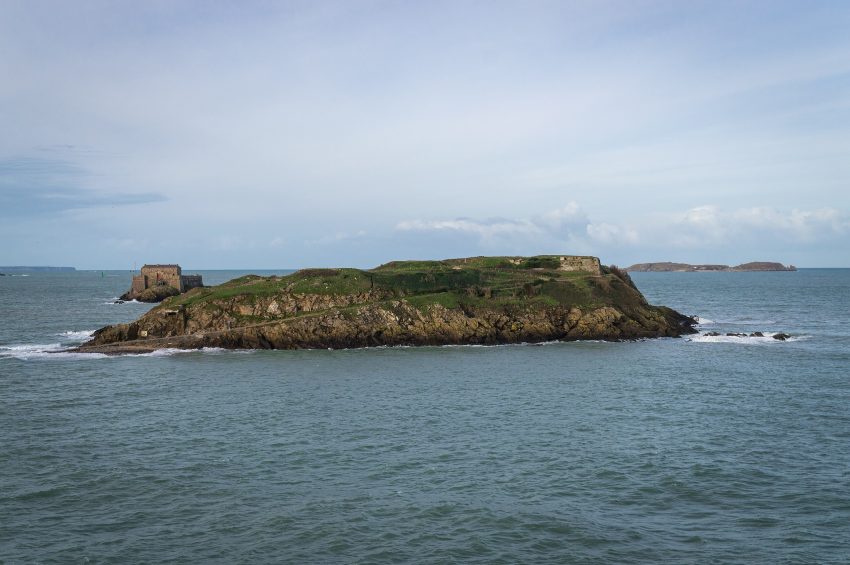
Grand Bé and Fort du Petit Bé are two of Saint-Malo's most memorable “only here” experiences, because the sea controls your schedule. From the beaches beneath the ramparts, you can walk across the sand at low tide to Grand Bé, a rocky tidal islet that feels instantly removed from the city even though it sits just offshore, and it rewards the effort with big, open views over the walls, the bay, and the changing waterline.
From there, Fort du Petit Bé takes the story further. This fully restored Vauban-era fort sits beyond Grand Bé and opens via guided visits when conditions allow, turning a simple tidal walk into one of the top sights in Saint-Malo and a standout addition to a walking tour of Saint-Malo when you want your history with sea air, horizons, and a little bit of real-world timing.
Table of Contents
- History and Significance of the Grand Bé and Fort du Petit Bé
- Things to See and Do in the Grand Bé and Fort du Petit Bé
- How to Get to the Grand Bé and Fort du Petit Bé
- Practical Tips on Visiting the Grand Bé and Fort du Petit Bé
- Where to Stay Close to the Grand Bé and Fort du Petit Bé
- Is the Grand Bé and Fort du Petit Bé Worth Visiting?
- For Different Travelers
- FAQs for Visiting the Grand Bé and Fort du Petit Bé
- Nearby Attractions to the Grand Bé and Fort du Petit Bé
History and Significance of the Grand Bé and Fort du Petit Bé
Grand Bé became part of Saint-Malo's coastal defense landscape in the 17th century, chosen for its natural advantage as a rocky platform just outside the walls. Its position helped extend the city's protective “ring” seaward, reinforcing the idea that Saint-Malo's security depended as much on controlling approaches by water as on fortifying gates and bastions.
Today, Grand Bé is widely associated with François-René de Chateaubriand, whose tomb sits on the island in a deliberately spare, windswept setting. It adds a reflective, almost literary counterpoint to the military purpose of the islet, and it changes the tone of the visit from “fortifications only” to something more personal and atmospheric.
Fort du Petit Bé, built as part of the same defensive logic, is the more complete military time capsule. Designed to strengthen the bay's layered artillery coverage, it reflects Vauban's emphasis on geometry, visibility, and overlapping fields of fire, and its restoration and guided interpretation make it one of the clearest places around Saint-Malo to understand how coastal defense actually functioned day to day.
Things to See and Do in the Grand Bé and Fort du Petit Bé
On Grand Bé, the main pleasure is the walk and the views. The island feels surprisingly wild and quiet for something so close to the ramparts, and it's at its best when you slow down, follow the footpaths, and let the landscape do the work: granite underfoot, seabirds overhead, and the walled city framed like a fortress postcard across the water.
Chateaubriand's tomb is the emotional anchor on Grand Bé. It's an intentionally simple memorial in an exposed setting, and even if you arrive knowing little about him, the location alone makes it memorable, especially when the tide is changing and the island feels temporarily cut off from the everyday city rhythm.
At Fort du Petit Bé, the guided visit shifts the focus to architecture and strategy. You'll see how the fort was laid out to house troops, store equipment, and command views of the bay, with interpretation that helps you read details you might otherwise walk past. The fort's position also delivers some of the most panoramic viewpoints in the area, with Saint-Malo, Dinard, and the wider coastline all visible on a clear day.
How to Get to the Grand Bé and Fort du Petit Bé
Both sites are reached from Saint-Malo's seafront by planning around low tide, typically starting from the beaches beneath the ramparts. The nearest airports are Dinard-Pleurtuit-Saint-Malo (DNR) and Rennes-Saint-Jacques (RNS). For the best deals and a seamless booking experience, check out these flights to Saint-Malo on Booking.com.
If you arrive by rail, Saint-Malo station connects well via Rennes, and from the station you can reach the Intra-Muros seafront by local bus, taxi, or an easy walk if you are travelling light. You can use SNCF Connect to check schedules, compare routes, and purchase tickets for National (SNCF ) and regional trains (TER). For a more streamlined experience, we recommend using Omio, which allows you to easily compare prices, schedules, and book tickets for both National and Regional travel across all of Europe, all in one place. From the walled city, head to the beach access points, then use the day’s tide timetable to choose a safe crossing window.
Local buses are useful if you want to reposition between the seafront and other parts of Saint-Malo without backtracking on foot, especially in peak season when the old town is busy.
If you are driving, park outside the tight Intra-Muros streets and approach on foot from the seafront, which keeps the tide-timed part of the visit simple and stress-free. If you are looking to rent a car in France I recommend having a look at Discover Cars, first, as they compare prices and review multiple car rental agencies for you.
Practical Tips on Visiting the Grand Bé and Fort du Petit Bé
- Entrance fee: Grand Bé: Free. Fort du Petit Bé: Guided tour €5; reduced €3; under 7 free.
- Opening hours: Grand Bé: Daily: Low-tide access only (use the 3-hour window: 1 hour 30 minutes before–1 hour 30 minutes after the day's low-tide time). Fort du Petit Bé: Daily: 11:00–18:00 (guided visits, weather & tide permitting).
- Official website: https://www.petit-be.com/
- Best time to visit: Plan for a calm-weather, low-tide window so you can walk out and back without rushing, and try to avoid the most crowded mid-afternoon tide slots in summer.
- How long to spend: Allow time for the crossing plus unhurried exploring; if you add the Petit Bé tour, it becomes a proper half-day outing rather than a quick stop.
- Accessibility: Expect sand, uneven rock, and steps in places, which can be challenging for limited mobility, strollers, and anyone uncomfortable with unstable surfaces.
- Facilities: Bring water and wear shoes that handle wet sand and rock, because facilities on the islets are limited compared with Intra-Muros.
Where to Stay Close to the Grand Bé and Fort du Petit Bé
For a culture-heavy itinerary, base yourself Intra-Muros so you can reach the ramparts and tide crossings early and return easily for evenings; if your trip is more about beach walks and sea views, staying along Le Sillon gives you a calmer rhythm while keeping the old town close by foot. For a well-located Intra-Muros base that makes early tide timing easy, consider Hôtel Cartier. If you want to sleep inside the walls with the seafront access points close, Hôtel des Marins is a convenient choice. For a seafront stay that suits beach-and-tide days, Hôtel & Spa Oceania Saint-Malo puts you directly on the promenade.
Is the Grand Bé and Fort du Petit Bé Worth Visiting?
Yes, if you want Saint-Malo to feel like a living coastal fortress rather than a scenic old town. The tide-timed walk creates a sense of journey, and the payoff is a rare set of viewpoints where you see the walls, beaches, and bay as one connected defensive landscape.
It is especially worthwhile if you enjoy places that mix atmosphere with context. Grand Bé gives you the windswept, reflective side of Saint-Malo, while Petit Bé adds the structured military story through a guided visit that makes the fort's design and purpose easy to grasp.
What Other Travellers Say...

Grand Bé is a rocky tidal island off Saint-Malo reachable on foot at low tide from Bon-Secours beach; visitors praise the walk and the spectacular views back to the walled city, note crystal-clear water at high tide, and find the remains of an old fort and the grave of writer Chateaubriand on the island—photographers particularly enjoy the vistas, and timing your visit around the tide is essential.


For Different Travelers
Families with Kids
This can be a fantastic family adventure because the low-tide crossing feels like a real expedition, and the “island you can only reach at certain times” idea tends to land well with kids. The key is keeping the plan simple, building in snack breaks, and treating the return crossing as non-negotiable timing rather than something to squeeze in later.
If your children are very young or you are managing pushchairs, focus on Grand Bé first and decide about Petit Bé based on energy and conditions. A single successful crossing with time to explore is better than pushing for both and ending up rushed.
Couples & Romantic Getaways
For couples, Grand Bé is at its most romantic in softer light, when the city looks golden from offshore and the tide adds drama to the scene. It feels private even when Saint-Malo is busy, simply because the landscape is open and the experience is paced by nature, not crowds.
Petit Bé adds a different kind of appeal: shared curiosity and a guided story that makes the place feel purposeful rather than just pretty. Done well, this is an outing that feels like a highlight of the trip rather than another “tick box” stop.
Budget Travelers
Grand Bé is a high-impact, low-cost experience, because the core of it is the walk and the views. If you want to keep spending minimal, treat the fort visit as optional and focus on the atmosphere, the tomb, and the coastline perspective you simply cannot get from the walls alone.
If you do pay for the Petit Bé tour, it can still feel good value because you are getting guided context in a site that is otherwise just an impressive silhouette from the shore. Either way, a picnic and a long tide-timed walk make this one of Saint-Malo’s best budget-friendly half-days.
History Buffs
History-focused travellers will appreciate how clearly these islets illustrate Saint-Malo’s layered defense system, extending protection beyond the ramparts into the bay. Petit Bé is the more “readable” military site, where you can connect architectural choices directly to strategic purpose.
Grand Bé complements that with a different kind of significance, linking place and memory through Chateaubriand's tomb in a setting that feels deliberately elemental. Together, they give you both the engineered and the human sides of Saint-Malo's offshore story.
FAQs for Visiting the Grand Bé and Fort du Petit Bé
Getting There
Tickets & Entry
Visiting Experience
Tours, Context & Itineraries
Photography
Safety & Timing
Nearby Attractions to the Grand Bé and Fort du Petit Bé
- Saint-Malo Ramparts: Walk the walls for sweeping bay views and the best perspective on why these offshore forts mattered.
- Fort National: Another Vauban-era fortress on a tidal islet, offering a different angle back toward the city.
- Plage de Bon-Secours: A classic beach beneath the walls that is a common starting point for tide-timed coastal walks.
- Bastion de la Hollande: A broad ramparts viewpoint that frames Grand Bé, Petit Bé, and the open sea in one panorama.
- Saint-Vincent Cathedral: A calm, historic interior in the heart of Intra-Muros that balances out a wind-and-tide day outdoors.
The Fort du Grand Bé & Petit Bé appears in our Complete Guide to Visiting Saint-Malo!

Moira & Andy
Hey! We're Moira & Andy. From hiking the Camino to trips around Europe in Bert our campervan — we've been traveling together since retirement in 2020!
This website uses affiliate links which may earn a commission at no additional cost to you!
Planning Your Visit
Grand Bé: Daily: Low-tide access only (use the 3-hour window: 1 hour 30 minutes before-1 hour 30 minutes after the day’s low-tide time). Fort du Petit Bé: Daily: 11:00-18:00 (guided visits, weather & tide permitting).
Grand Bé: Free. Fort du Petit Bé: Guided tour €5; reduced €3; under 7 free.
Nearby Attractions
- Claude Monet’s House and Garden (49.4) km
Historic Building - Musée des Impressionnismes (49.6) km
Museum - Église Sainte-Radegonde (50.1) km
Church - Vieux Pont de Vernon (53.5) km
Historic Building - Château des Tourelles (53.5) km
Castle - Château de Chantilly (58.2) km
Castle and Museum - Château Gaillard (69.0) km
Castle - Maladrerie Saint-Lazare (72.2) km
Historic Building - Église Saint-Étienne (73.6) km
Church - Hôtel de Ville (73.7) km
Town Hall