Fontana dei Quattro Continenti, Trieste
Fountain, Sculpture and Square in Trieste
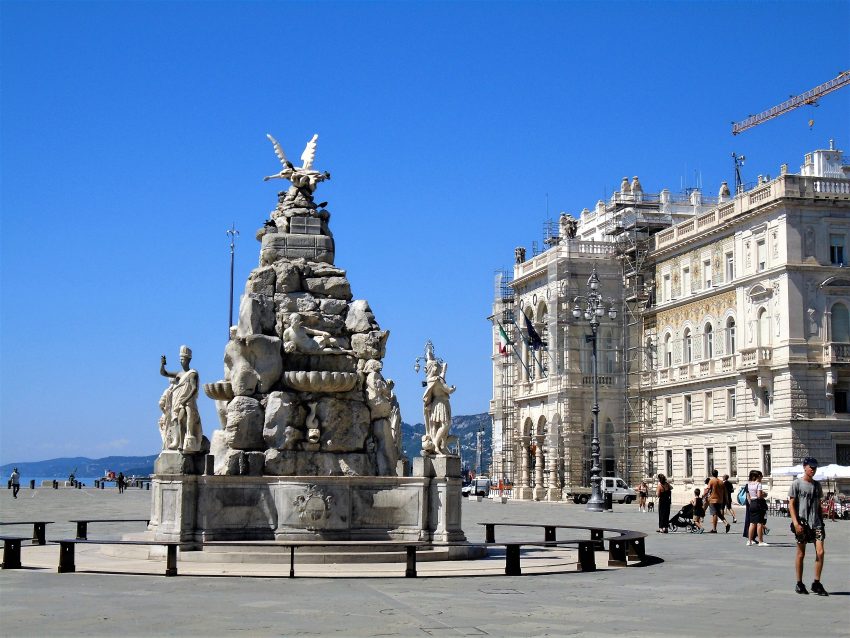
The Fontana dei Quattro Continenti (Fountain of the Four Continents) is a Baroque fountain set in Trieste's showpiece main square, Piazza Unità d'Italia, with the City Hall and grand palazzi as its backdrop. It's one of those landmarks you'll likely “accidentally” find while strolling the waterfront, then end up circling for details and photos.
Because it sits right on Trieste's most popular pedestrian route, it's ideal for a self-guided walking tour: pair it with the seafront, the square's architecture, and a coffee stop nearby. For the best views, step back toward the open side of the piazza for a wide composition, then move in close to study the allegorical figures and carved details.
Table of Contents
- History and Significance of the Fontana dei Quattro Continenti
- Things to See and Do in the Fontana dei Quattro Continenti
- How to Get to the Fontana dei Quattro Continenti
- Practical Tips on Visiting the Fontana dei Quattro Continenti
- Where to Stay Close to the Fontana dei Quattro Continenti
- Is the Fontana dei Quattro Continenti Worth Visiting?
- For Different Travelers
- FAQs for Visiting Fontana dei Quattro Continenti
- Nearby Attractions to the Fontana dei Quattro Continenti
History and Significance of the Fontana dei Quattro Continenti
Commissioned in the mid-18th century and created between 1751 and 1754 by sculptor Giovanni Battista Mazzoleni, the fountain was designed to celebrate Trieste’s growing importance as a trading city. At the time, Trieste’s fortunes were closely tied to its status as a free port and its role as a gateway between Central Europe and the Adriatic.
The “four continents” theme reflects the worldview of the era: Europe, Asia, Africa, and America are personified as allegorical statues, a visual statement that commerce and culture flowed into Trieste from across the known world. Between them, river figures and water symbolism reinforce the idea of connection, movement, and exchange.
One of the most talked-about details is the veiled face of the figure associated with the Nile, a nod to the then-unknown source of the river. It’s a small artistic choice that turns a quick look into a more thoughtful stop, especially if you enjoy decoding symbolism in public monuments.
Things to See and Do in the Fontana dei Quattro Continenti
Start by walking a slow loop around the basin to spot the four continental figures and the river imagery between them. The sculptural style is theatrical and expressive, and it rewards close viewing: look for posture, attributes, and the way the stonework guides your eye upward.
Next, use the fountain as a “center point” for appreciating Piazza Unità d’Italia itself. The square’s scale and symmetry make it one of Trieste’s most memorable spaces, and the fountain helps anchor your photos—especially when you frame it with the City Hall behind.
Finally, treat this as a short, high-impact stop on a broader itinerary: combine it with a waterfront stroll and a café break. Many travelers find the atmosphere of the piazza—events, music, and everyday city life—just as enjoyable as the fountain’s artistry.
How to Get to the Fontana dei Quattro Continenti
The nearest airports are Trieste Airport (TRS) and, for more international connections, Venice Marco Polo (VCE) and Ljubljana Jože Pučnik (LJU). For the best deals and a seamless booking experience, check out these flights to Trieste on Booking.com.
Trieste is well connected by rail, and arriving at Trieste Centrale makes it easy to continue on foot or by local transport toward Piazza Unità d'Italia. Use Omnio to easily compare schedules, book train tickets, and find the best prices all in one place for a hassle-free journey across Italy.
If you’re traveling by car, aim for a central garage and continue on foot, since the square itself is in a busy, walkable core where driving and parking can be inconvenient. If you are looking to rent a car in Italy I recommend having a look at Discover Cars, first, as they compare prices and review multiple car rental agencies for you.
Practical Tips on Visiting the Fontana dei Quattro Continenti
- Entrance fee: Free.
- Opening hours: 24 Hours.
- Best time to visit: Go early morning for calmer photos, or around sunset when the piazza’s light and seafront atmosphere feel most dramatic.
- How long to spend: 10–20 minutes is enough for a full look; plan longer if you’re pairing it with a coffee stop and people-watching in the square.
- Accessibility: The piazza is largely flat and pedestrian-friendly, with step-free access around the fountain area; surfaces can be slick in rain.
- Facilities: There are plenty of cafés, restrooms in nearby venues, and services throughout the city center, but none are dedicated specifically to the fountain.
Where to Stay Close to the Fontana dei Quattro Continenti
Base yourself in Trieste’s city center around Piazza Unità d’Italia and the waterfront for the easiest walking access to major sights, cafés, and evening strolls.
Savoia Excelsior Palace Trieste A classic waterfront choice with an elegant, historic feel; it’s ideal if you want to step outside and be in the piazza area within minutes.
Grand Hotel Duchi d’Aosta Right on the main square, this is the splurge pick for travelers who want the fountain and the city’s most iconic views essentially on their doorstep.
DoubleTree by Hilton Trieste A polished, reliable option in a striking historic building, great for comfort-focused stays with easy access to the old town and the waterfront.
Hotel Continentale A strong mid-range base near shopping streets and cafés, convenient for walking loops that include the piazza, Canal Grande, and the seafront.
NH Trieste Handy if you’re arriving by train and want a straightforward hotel with quick access to the center without paying “on-the-square” prices.
Is the Fontana dei Quattro Continenti Worth Visiting?
Yes—especially because it’s effectively a free, open-air museum piece in Trieste’s most impressive public space. Even if you’re not a “fountain person,” the combination of sculpture, symbolism, and the piazza’s architecture makes it a high-reward stop for minimal effort.
Honest Pivot: if you're short on time and prefer big interior attractions (museums, castles, or viewpoints), you can treat this as a quick photo stop rather than a dedicated destination. It's best appreciated as part of a walking route, not as a standalone trip across town.
What Other Travellers Say...

Reviews are very positive overall, with travelers praising the fountain’s sculptural detail and its prime setting in Piazza Unità d’Italia amid impressive buildings and a lively atmosphere. Many enjoy it as an easy stop on a walk, often paired with a coffee break and people-watching in the square. Common downsides mentioned include occasional vandalism and the fountain sometimes not running, which can make the visit feel less impactful for some.


For Different Travelers
The fountain works well for most visitors because it’s central, quick to see, and easy to combine with other highlights. Your experience mainly depends on timing: quiet mornings feel contemplative, while afternoons and evenings can be lively with events and crowds.
Families with Kids
Kids often enjoy the “spot the continents” idea and the dramatic figures, especially if you turn it into a quick scavenger hunt for details. Keep the visit short and pair it with gelato or a snack break nearby.
The main family challenge is behavior and safety: this is a monument, not a play structure, and the stone edges can be slippery. A good approach is to set expectations before you arrive and focus on photos and storytelling rather than climbing.
Couples & Romantic Getaways
For couples, the fountain is a natural stop on an evening passeggiata, with the piazza’s grand façades and the sea nearby setting the mood. It’s also an easy “anchor point” for meeting up before dinner.
If you like photography, come at golden hour and frame the fountain with the open side of the square for a cinematic look. Afterward, linger with a coffee or aperitivo while the square shifts from daytime bustle to evening glow.
Budget Travelers
This is one of Trieste’s best budget-friendly highlights: no ticket, no lines, and it sits in a part of town you’ll likely explore anyway. It’s also a great place to pause and plan your next steps using the square as a navigational hub.
To keep costs down, skip the priciest terrace seating and grab a takeaway coffee, then enjoy it while walking the waterfront. You’ll still get the atmosphere without paying “front-row” prices.
History Buffs
History lovers will appreciate how the fountain reflects 18th-century ideas about geography, trade, and power—especially the way Trieste is positioned as a welcoming commercial crossroads. The allegories are a compact lesson in how cities advertised themselves through public art.
Look closely at the symbolic choices (including the veiled Nile figure) and then zoom out to the surrounding buildings for context on Trieste’s civic identity. It’s a satisfying stop because the monument and the setting tell one connected story.
FAQs for Visiting Fontana dei Quattro Continenti
Getting There
Tickets & Entry
Visiting Experience
Tours, Context & Itineraries
Photography
Accessibility & Facilities
Food & Breaks Nearby
Safety & Timing
Nearby Attractions to the Fontana dei Quattro Continenti
- Piazza Unità d’Italia: Trieste’s grand main square, famous for its monumental buildings and open view to the sea.
- Palazzo del Municipio (City Hall): The landmark building facing the square, a key reference point for navigating the historic center.
- Molo Audace: A beloved pier for sea views and sunset walks, just a short stroll from the piazza.
- Canal Grande di Trieste: A photogenic canal area with cafés and bridges, ideal for an easy extension to your walk.
- Teatro Romano di Trieste: An atmospheric Roman-era site that adds a deeper historical layer to a city-center itinerary.
The Fontana dei Quattro Continenti appears in our Complete Guide to Visiting Trieste!

Moira & Andy
Hey! We're Moira & Andy. From hiking the Camino to trips around Europe in Bert our campervan — we've been traveling together since retirement in 2020!
This website uses affiliate links which may earn a commission at no additional cost to you!
Planning Your Visit
24 Hours.
Free.
Nearby Attractions
- Palazzo del Municipio (0.0) km
Historic Building, Square and Town Hall - Civico Museo d'Arte Orientale (0.1) km
Attraction and Museum - Palazzo del Lloyd Triestino (0.1) km
Attraction, Historic Building and Palace - Palazzo della Luogotenenza Austriaca (0.1) km
Historic Building, Palace and Square - Teatro Lirico Giuseppe Verdi (0.1) km
Arts Venue, Opera House and Theatre - Molo Audace (0.2) km
Pier, Viewing Point and Walk - Arco di Riccardo (0.2) km
City Gate, Monument and Roman Site - Antiquarium di via del Seminario (0.3) km
Attraction, Historic Site and Roman Site - Teatro Romano di Trieste (0.3) km
Roman Site, Ruins and Theatre - Civico Museo Teatrale Carlo Schmidl (0.4) km
Historic Building, Museum and Theatre