Exeter City Wall
City Gate and City Walls in Exeter
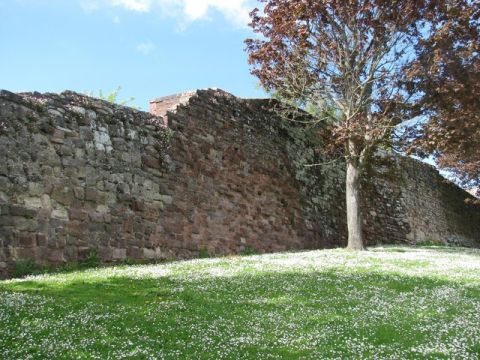
Exeter's City Wall is one of the most extraordinary historic features in the city, tracing a line through almost two millennia of change. Built originally by the Romans and strengthened across the Saxon, medieval, and Tudor periods, the wall is one of the top attractions in Exeter for travellers who want to understand how the city grew, defended itself, and celebrated major civic events.
Walking alongside the surviving stretches reveals everything from moss-covered Roman stonework to imposing medieval gateways. The wall encloses the old heart of Exeter and remains a highlight of any walking tour of Exeter, especially for those who enjoy exploring places where the city's past is still etched into its everyday landscape.
Table of Contents
- History and Significance of Exeter City Wall
- Things to See and Do in Exeter City Wall
- How to Get to Exeter City Wall
- Practical Tips on Visiting Exeter City Wall
- Where to Stay close to Exeter City Wall
- Add a Is Exeter City Wall Worth Visiting?
- FAQs for Visiting Exeter City Wall
- Nearby Attractions to Exeter City Wall
History and Significance of Exeter City Wall
The story of Exeter’s City Wall begins with the Roman settlement of Isca Dumnoniorum, founded in the 1st century AD. To protect this important administrative centre, the Romans built robust defences-stone walls, ramparts, and gates-that would define the city’s footprint for centuries. Remarkably, much of their original work still forms the core of the surviving structure.
In the Anglo-Saxon and medieval periods, the wall was repaired, strengthened, and expanded to defend the flourishing city. As Exeter prospered through trade, cloth production, and its strategic role in the South West, the wall became a symbol of civic pride and security. It repelled rebellions, served as a backdrop to royal visits, and framed major public events from processions to proclamations.
Over nearly 2,000 years, the wall has evolved with the city. While some sections were lost to redevelopment, approximately 70% remains-one of the most complete city walls in England. Today it stands not only as a protective structure of the past but also as a living timeline of Exeter’s resilience, identity, and historic depth.
Things to See and Do in Exeter City Wall
Visitors can follow a route along many surviving sections of the wall, taking in viewpoints over Exeter Cathedral, Northernhay Gardens, and the surrounding streets. The mix of Roman, medieval, and later work makes it one of the best places to visit in Exeter for appreciating how architecture and defence developed over time.
Key highlights include stretches near the Cathedral Close, where Roman stonework blends with medieval rebuilding, and the impressive remains near Northernhay Gardens. The contrast between the ancient walls and the peaceful modern gardens creates a striking atmosphere, inviting visitors to pause and imagine life inside the fortified city.
Interpretation boards help explain the layers of construction, the city’s defensive needs across time, and the role the walls played during conflicts, ceremonies, and royal visits. Exploring these segments offers an enriching combination of discovery, scenery, and local storytelling.
How to Get to Exeter City Wall
The City Wall runs around the historic core of Exeter, making it easy to reach from most central locations. The nearest airports are Exeter Airport and Bristol Airport, both offering accessible regional and international routes. For the best deals and a seamless booking experience, check out these flights to Exeter on Booking.com.
For travellers arriving by train, Exeter Central and Exeter St David's railway stations are both within walking distance of major sections of the wall, with frequent services from across the South West and beyond. Train schedules and bookings can be found on Omio.
Travelling by car is straightforward, with multiple city-centre car parks close to the Cathedral Quarter and Northernhay Gardens. From there, you can explore the wall on foot section by section.
Practical Tips on Visiting Exeter City Wall
- Best time to visit Exeter City Wall: Early morning or late afternoon provides soft light and pleasant walking conditions.
- Entrance fee in Euros: Free to explore; the wall is accessible from public streets and parks.
- Opening hours: Open year-round as it forms part of the city’s public spaces.
- Official website: Information is available through Exeter City Council and local heritage pages.
- How long to spend: One to two hours depending on how many sections you choose to explore.
- Accessibility: Surfaces vary; some parts are level, while others are uneven or include steps.
- Facilities: Nearby cafés, benches, and toilets can be found across the city centre.
- Photography tip: Capture the wall where it borders Northernhay Gardens for one of the most atmospheric views.
- Guided tours: Some local walking tours include detailed explanations of the wall’s construction and history.
- Nearby food options: Plenty of cafés, pubs, and restaurants around the Cathedral Quarter and High Street.
Where to Stay close to Exeter City Wall
Choosing accommodation near Exeter’s historic centre makes it easy to explore the surviving stretches of the City Wall. A refined option is Mercure Exeter Rougemont Hotel, ideally placed for visiting Northernhay Gardens and nearby walls. Travellers wanting an elegant stay can choose Hotel du Vin Exeter, offering calm surroundings and easy access to Cathedral Close. For a modern, reliable base, Leonardo Hotel Exeter provides comfortable rooms within a short walk of key wall sections.
Add a Is Exeter City Wall Worth Visiting?
Yes, Exeter's City Wall is definitely worth visiting, especially for travellers who enjoy historic walks and discovering how a city's physical boundaries shaped its development. Its impressive age, high level of preservation, and varied architectural layers make it one of the things to do in Exeter for anyone interested in Roman Britain, medieval defence, or local heritage.
What Other Travellers Say...

Castle Gatehouse on Castle St, Exeter sits beside the city gardens as a surviving section of the Norman Rougemont/Exeter Castle; while much of the original castle is ruined and some public paths around the mound are cordoned off, the gatehouse itself remains standing and is an imposing, well-preserved reminder of the original fortifications.



FAQs for Visiting Exeter City Wall
Nearby Attractions to Exeter City Wall
- Exeter Cathedral - A magnificent Gothic cathedral at the heart of the city.
- Northernhay Gardens - Historic gardens featuring Roman and Saxon walls.
- Royal Albert Memorial Museum - Exeter's main museum with rich collections.
- Exeter Castle (Rougemont Castle) - Norman fortress built into the Roman walls.
- St Nicholas Priory - Exeter's oldest building, offering an immersive Tudor experience.
The Exeter City Wall appears in our Complete Guide to Visiting Exeter!

Moira & Andy
Hey! We're Moira & Andy. From hiking the Camino to trips around Europe in Bert our campervan — we've been traveling together since retirement in 2020!
This website uses affiliate links which may earn a commission at no additional cost to you!
Planning Your Visit
Nearby Attractions
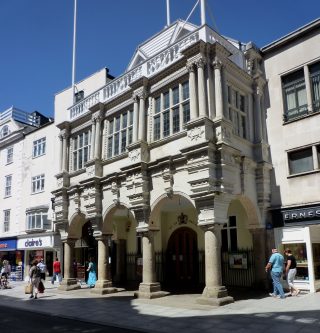
- Exeter Guildhall (0.2) km
Historic Building - St Nicholas Priory (0.2) km
Historic Building, Historic Site and Museum - Royal Albert Memorial Museum (0.2) km
Museum - Tuckers Hall (0.3) km
Historic Building - Exeter Cathedral (0.3) km
Cathedral - Northernhay Gardens (0.4) km
Park - Athelstan’s Tower (0.4) km
Tower - Exeter Castle (Rougemont Castle) (0.4) km
Castle - Cricklepit Mill (0.5) km
Mill - Medieval Exe Bridge (0.5) km
Bridge