Exeter Cathedral
Cathedral in Exeter
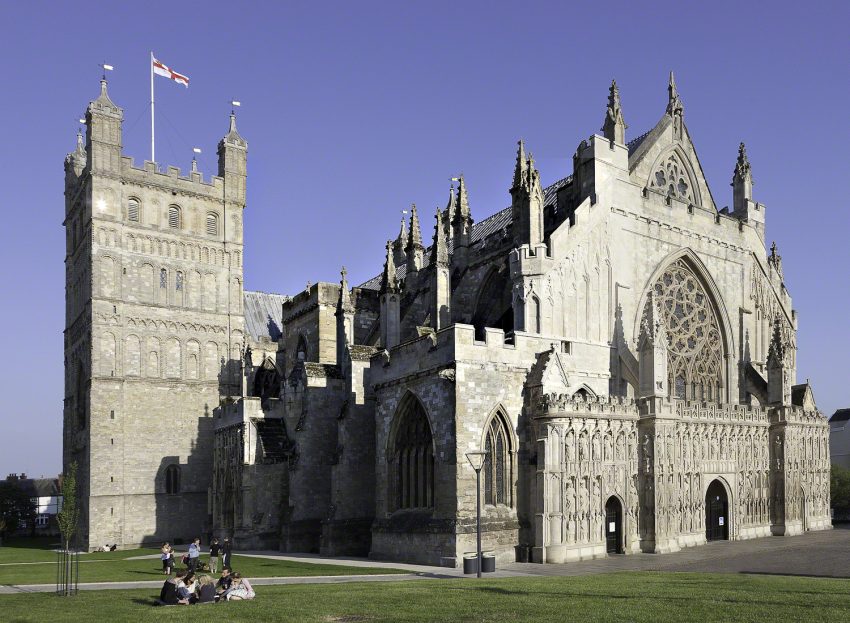
Exeter Cathedral is one of the best places to visit in Exeter for travellers who love history, architecture and atmospheric sacred spaces. Formally known as the Cathedral Church of Saint Peter in Exeter, it has dominated the city's skyline for nearly a thousand years. The present Gothic building-completed around 1400-features some of the most remarkable medieval craftsmanship in England, including an extraordinary astronomical clock, intricate misericords and the longest unbroken medieval stone vault in the world.
The cathedral’s story spans Saxon origins, Norman ambition, Gothic transformation, Civil War destruction, Victorian restoration and wartime resilience during the Baedeker Blitz. Today it remains a living place of worship, cultural centre and architectural wonder, where choral evensong echoes through spaces shaped by generations of devotion.
Table of Contents
- History and Significance of Exeter Cathedral
- Things to See and Do in Exeter Cathedral
- How to Get to Exeter Cathedral
- Practical Tips on Visiting Exeter Cathedral
- Where to Stay close to Exeter Cathedral
- Is Exeter Cathedral Worth Visiting?
- FAQs for Visiting Exeter Cathedral
- Nearby Attractions to Exeter Cathedral
History and Significance of Exeter Cathedral
Exeter's origins as a cathedral city trace back to 1050, when Bishop Leofric moved the seat of Devon and Cornwall from Crediton to Exeter for safety from sea raids. The early minster that served the community soon proved inadequate, prompting the great Norman rebuilding project under Bishop William Warelwast beginning in 1107.
By the mid-13th century, the Norman style was considered outdated. Under Bishop Walter Bronescombe, the cathedral was redesigned in the Decorated Gothic style, inspired by Salisbury, though the twin Norman towers were retained. Built from local stone and Purbeck Marble, the new structure was complete by about 1400.
Exeter Cathedral endured damage during the Dissolution, further losses during the Civil War and significant destruction in the 1942 Baedeker Blitz, when a bomb obliterated St James's Chapel. Many of its most precious artefacts had fortunately been removed for safekeeping. Restoration work after the war uncovered remnants of earlier Roman and Norman structures beneath the site.
Things to See and Do in Exeter Cathedral
Visitors can marvel at the cathedral’s unrivalled stone vault, an architectural achievement stretching the entire length of the nave without interruption. The famous 14th-century astronomical clock-with its sun, moon and hour indicators-remains a highlight for many.
The misericords carved in the 1200s and 1300s depict lively medieval scenes, while the Bishop’s Throne, a towering example of English woodwork, stands as a masterpiece of medieval carpentry. Guided tours help reveal hidden stories, from royal baptisms to Civil War upheaval and wartime survival.
Choral evensong, held daily, is a deeply atmospheric experience that connects visitors to the cathedral’s long musical tradition.
How to Get to Exeter Cathedral
The nearest major airport is Exeter Airport, located just a short drive from the city centre. For the best deals and a seamless booking experience, check out these flights to Exeter on Booking.com.
Exeter St David's and Exeter Central stations connect the city to London, Bristol, Plymouth and the wider region, making the cathedral easy to reach on foot from central stops. Train schedules and bookings can be found on Omio.
Visitors arriving by car will find parking in central Exeter, with several public car parks a short walk from the cathedral close.
Practical Tips on Visiting Exeter Cathedral
- Best time to visit Exeter Cathedral: Weekday mornings for quieter exploration.
- Entrance fee in Euros: Standard admission fee applies; check cathedral website.
- Opening hours: Typically open daily with variations for services and events.
- Official website: Exeter Cathedral official site for updates and ticketing.
- How long to spend: 1-2 hours to explore fully.
- Accessibility: Good overall, with level access to most areas.
- Facilities: Café, shop, toilets and visitor centre available.
- Photography tip: Look upward in the nave to capture the full sweep of the vaulted ceiling.
- Guided tours: Regular tours available, including roof tours in certain seasons.
- Nearby food options: Numerous cafés and restaurants around Cathedral Close and the city centre.
Where to Stay close to Exeter Cathedral
Exeter offers many comfortable places within walking distance of the cathedral. For heritage charm, consider The Royal Clarence Hotel (Under Reconstruction/Reopening Timelines Vary). A modern option nearby is Mercure Exeter Southgate Hotel. Travellers seeking boutique ambience may enjoy Hotel du Vin Exeter.
Is Exeter Cathedral Worth Visiting?
Absolutely. Exeter Cathedral is one of England's most beautiful and historically layered sacred buildings. Its combination of medieval architecture, remarkable craftsmanship, rich musical tradition and powerful wartime stories make it unforgettable-whether you're an architecture enthusiast, a history lover or a casual visitor.
What Other Travellers Say...

Exeter Cathedral on The Cloisters is a medieval Gothic church celebrated for its long vaulted ceiling and astronomical clock; visitors note friendly staff, an on-site cafe, gift shop and toilets, peaceful interior with detailed painted ceiling bosses and carved choir seats, and tours such as roof walks and a Treasures tour showcasing the Exeter Book; the close grounds offer grassy spots to sit (or walls if it's wet), and seasonal activity outside—like preparations for the Christmas market—can affect the visit and timing and admission prices may vary so it's worth checking for discounts.


FAQs for Visiting Exeter Cathedral
Nearby Attractions to Exeter Cathedral
- Exeter Castle - Historic remains of the city's Norman stronghold.
- Royal Albert Memorial Museum - A major museum of art, culture and natural history.
- Exeter's Underground Passages - Medieval tunnels once used for water pipes.
- Quayside - A scenic historic waterfront with shops, cafés and walks.
- Rougemont Gardens - A peaceful green space beside the old city walls.
The Exeter Cathedral appears in our Complete Guide to Visiting Exeter!

Moira & Andy
Hey! We're Moira & Andy. From hiking the Camino to trips around Europe in Bert our campervan — we've been traveling together since retirement in 2020!
This website uses affiliate links which may earn a commission at no additional cost to you!
Planning Your Visit
9am-5pm Mon-Sat, 11.30am-5pm Sun
adult/child £7.50/free
Nearby Attractions
- Exeter Guildhall (0.2) km
Historic Building - Royal Albert Memorial Museum (0.3) km
Museum - Exeter Castle (Rougemont Castle) (0.3) km
Castle - Exeter City Wall (0.3) km
City Gate and City Walls - Wynard’s Almshouses (0.4) km
Historic Building - St Nicholas Priory (0.4) km
Historic Building, Historic Site and Museum - Underground Passages (0.4) km
Museum and Tunnel - Tuckers Hall (0.4) km
Historic Building - Exeter Customs House (0.4) km
Historic Building and Tourist Office - Athelstan’s Tower (0.4) km
Tower