Exeter Customs House
Historic Building and Tourist Office in Exeter
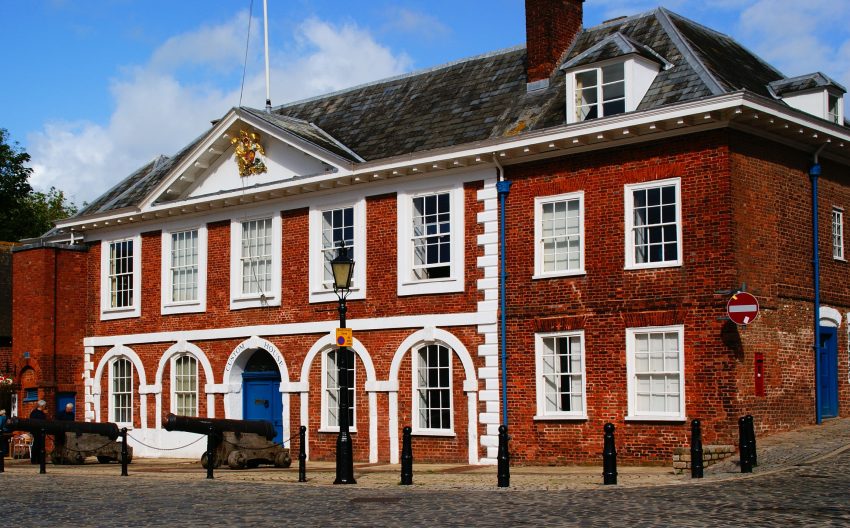
Exeter Customs House in Exeter, England, is a historic quayside building that now works as a visitor centre and exhibition space. Built in 1680, it sits on the city's old port area and gives a clear view of how Exeter once handled trade through the river and canal system.
Inside, visitors notice the decorated plaster ceilings, staircase and displays that explain the city's maritime trade, cloth industry and quayside development. It suits people who want a short, practical stop with architecture, local history and clear interpretation in one place, while still leaving time to explore Exeter Quay outside.
Table of Contents
History and Significance of Exeter Customs House
Exeter's quayside has been used since Roman times, long before the Customs House was built. During the 13th and 14th centuries, rival merchants constructed weirs near Topsham that blocked ships from reaching the city. This led to major navigational challenges and limited Exeter's access to foreign markets.
The breakthrough came in the 16th century when engineer John Trew constructed the first stretch of the Exeter Canal between 1564 and 1566. This innovation allowed cargo vessels to bypass the weirs and reach closer to the city once more, revitalising trade. With increased imports and exports-particularly of the region's high-quality woollen cloth-the need for a dedicated customs building became clear.
Completed in 1680, the Customs House became a symbol of Exeter's commercial resurgence. Its fine architecture reflects the prosperity generated by the cloth industry and the growing importance of regulated trade. Today, the building stands as one of the most significant surviving 17th-century structures on any English quayside.
Things to See and Do in Exeter Customs House
The interior of the Customs House showcases richly decorated plaster ceilings, an elegant wooden staircase and historic rooms that once oversaw the city’s maritime trade. The visitor centre brings this past vividly to life through interactive displays, artefacts and models.
Highlights include items from the cloth industry-such as tenter hooks and tillet blocks-as well as documents, illustrations and maps that trace the evolution of Exeter's port. The audiovisual presentation “Exeter, 2000 Years of History” provides an engaging overview from Roman settlement to modern city.
After exploring indoors, visitors can stroll along Exeter Quay to enjoy shops, cafés, canal views and access to riverside walking and cycling trails.
How to Get to Exeter Customs House
The nearest major airport is Exeter Airport, located a short drive from the city centre. For the best deals and a seamless booking experience, check out these flights to Exeter on Booking.com.
Exeter St David's and Exeter Central stations offer frequent rail connections from London, Bristol, Plymouth and the wider region. The quayside is easily reached on foot from Exeter Central. Train schedules and bookings can be found on Omio.
Visitors arriving by car can use various city-centre and quayside car parks, with pedestrian access leading directly to the Customs House.
Practical Tips on Visiting Exeter Customs House
- Best time to visit Exeter Customs House: Year-round; mornings are quieter.
- Entrance fee in Euros: Free entry.
- Opening hours: Open most days; check local listings for seasonal changes.
- Official website: Visit Exeter’s tourism pages for updated information.
- How long to spend: 30-60 minutes.
- Accessibility: Good overall, though some historic features involve steps.
- Facilities: Visitor centre, toilets and nearby cafés on the quayside.
- Photography tip: Capture the ornate plaster ceilings inside and the historic quayside outside.
- Guided tours: The starting point for Exeter Red Coat Guided Tours.
- Nearby food options: Excellent cafés, pubs and restaurants along Exeter Quay.
Where to Stay close to Exeter Customs House
Exeter offers a range of accommodation near the quayside. For a comfortable riverside stay, consider Hotel du Vin Exeter. A modern and convenient option is Mercure Exeter Southgate Hotel. Nearby, Leonardo Hotel Exeter provides good access to both the city centre and the quay.
Is Exeter Customs House Worth Visiting?
Yes, Exeter Customs House is well worth visiting. Its combination of striking 17th-century architecture, engaging exhibitions and scenic quayside setting makes it a rewarding stop for anyone exploring Exeter. It offers a clear and enjoyable window into the city's maritime heritage and industrial past.
What Other Travellers Say...
Custom House Visitor Centre at 46 The Quay, Exeter, offers a friendly information hub in a historic building with notable decorated ceilings; visitors praise helpful staff, leaflets and a short film about Exeter's history, and complimentary guided “redcoat” tours, while some find the interior displays largely poster-based and in need of more artifacts or dynamic presentation—though ongoing decorating work has not diminished its charm or worth a visit.





FAQs for Visiting Exeter Customs House
The Exeter Customs House appears in our Complete Guide to Visiting Exeter!

Moira & Andy
Hey! We're Moira & Andy. From hiking the Camino to trips around Europe in Bert our campervan — we've been traveling together since retirement in 2020!
This website uses affiliate links which may earn a commission at no additional cost to you!
Planning Your Visit
Monday – Sunday, 10.00am to 5.00pm
Free
Nearby Attractions
- Cricklepit Mill (0.1) km
Mill - Exeter Ship Canal (0.2) km
Canal - Medieval Exe Bridge (0.3) km
Bridge - Tuckers Hall (0.3) km
Historic Building - St Nicholas Priory (0.4) km
Historic Building, Historic Site and Museum - Exeter Cathedral (0.4) km
Cathedral - Wynard’s Almshouses (0.4) km
Historic Building - Exeter Guildhall (0.5) km
Historic Building - Exeter City Wall (0.6) km
City Gate and City Walls - Royal Albert Memorial Museum (0.7) km
Museum