Elevador de Santa Justa, Lisbon
Viewing Point in Lisbon
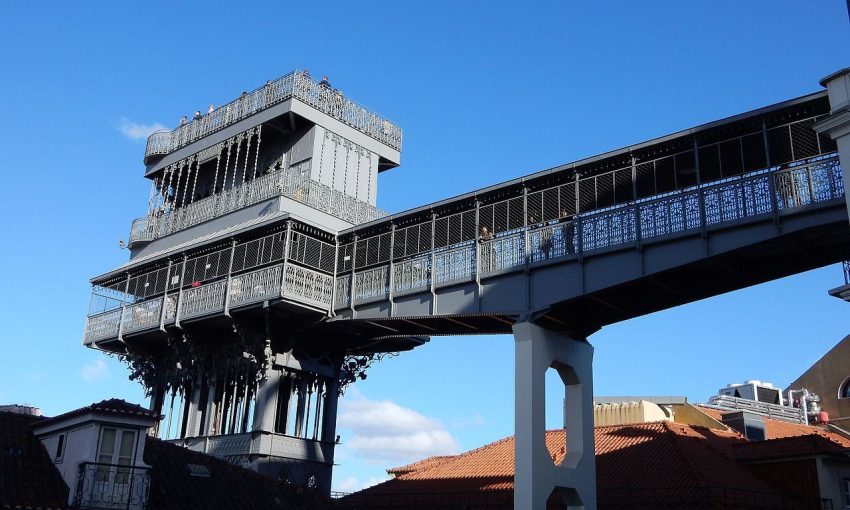
Rising above the tiled streets of the Baixa, the Elevador de Santa Justa is a filigree tower of wrought iron that looks like something from a steampunk sketchbook. Built to connect downtown Lisbon with the higher Carmo district, this 19th-century lift climbs 45 metres to a terrace where the city opens out in every direction: the castle on one hill, the river on the other, and the grid of Pombaline streets right at your feet. It is one of the top attractions in Lisbon if you love a mix of industrial heritage, city views, and a touch of romance.
Originally part of Lisbon's public transport network, the lift has now become almost entirely a tourist experience, with lines of people snaking around its base for a few moments inside the wood-panelled cabin. With a fare of around €5.30 for a short ride, it's not the cheapest way to change levels in the city, and locals will happily tell you about side streets and stairways that get you to the top for free. Still, as the sun sinks behind the hills and the lights of Baixa flicker on, the viewing platform becomes a favourite evening hangout for couples and photographers, a highlight of any walking tour of Lisbon that passes through the downtown.
Table of Contents
- History and Significance of Elevador de Santa Justa
- Things to See and Do in Elevador de Santa Justa
- How to Get to Elevador de Santa Justa
- Practical Tips on Visiting Elevador de Santa Justa
- Where to Stay close to Elevador de Santa Justa
- Is Elevador de Santa Justa Worth Visiting?
- FAQs for Visiting Elevador de Santa Justa
- Nearby Attractions to Elevador de Santa Justa
History and Significance of Elevador de Santa Justa
The Elevador de Santa Justa was conceived at a time when Lisbon was rapidly modernising and grappling with its famously steep hills. Late 19th-century engineers looked for mechanical solutions to ease movement between the different levels of the city, resulting in a network of lifts and funiculars that stitched together neighbourhoods like Baixa, Chiado, Bairro Alto, and Graça. Santa Justa stands out among these as the only vertical lift, a true tower rather than a sloping tramway, soaring above the tightly packed streets between Rossio and Rua do Ouro.
From the beginning, the structure was designed not just as an engineering solution but as a work of urban art. Its neo-Gothic styling, with pointed arches, tracery, and decorative ironwork, echoed the ruined Igreja do Carmo it would eventually link to at the top. This marriage of function and form made the lift a symbol of Lisbon’s embrace of modern technology without abandoning its architectural character. Over time, as new transport systems were introduced and walking routes improved, the lift’s practical role diminished, but its status as an emblem of the city only grew stronger.
Today, Elevador de Santa Justa is protected as a national monument and preserved as part of Lisbon's historic transport heritage. Its cabins, ironwork, and viewing platforms have been restored and adapted to cope with modern visitor numbers, but the basic experience remains the same: step into a compact wooden cabin, feel the gentle rise as the streets drop away below, and emerge into open air with the Baixa laid out beneath you. It is a small journey in distance but a big leap in perspective, connecting everyday street life with Lisbon's skyline in the space of a few seconds.
Things to See and Do in Elevador de Santa Justa
The classic experience is to join the queue in the Baixa and ride the lift from street level up to the terrace. As you wait, take time to appreciate the details in the ironwork: floral motifs, geometric patterns, and delicate arches that feel almost lace-like despite being made of metal. The cabin itself, with wooden benches and brass fittings, adds to the sense of stepping back into the early 1900s for a brief moment. When the doors open at the top, you step straight out onto a balcony with sweeping views towards Rossio, Praça do Comércio, and the Tagus.
Above this first level, a spiral staircase leads up to the higher viewing platform, where the panorama widens further. From here, the castle crowns one hill, the ruined arches of the Carmo convent are almost at eye level, and the grid of Baixa streets looks like a model city. It's a superb place to get your bearings when you first arrive in Lisbon, and equally magical at night when the streets glow and the trams trace bright lines through the darkness. This spot quickly becomes one of the must-see places in Lisbon for visitors who enjoy pairing history with a dramatic cityscape.
If you'd rather avoid the queues or the ticket cost, you can approach from above instead. Walking up from Baixa through Chiado and around to Largo do Carmo brings you to the upper walkway that connects directly to the lift structure. From here you can enjoy excellent views and the atmosphere of the terrace without necessarily riding the cabin itself. Nearby, the ruins of Igreja do Carmo, the small Museu Arqueológico, and the calm, tree-shaded Largo do Carmo make it easy to turn a quick viewpoint stop into a wider wander through one of Lisbon's most atmospheric corners.
How to Get to Elevador de Santa Justa
Elevador de Santa Justa stands right in the Baixa district, a short walk from Rossio Square and Rua Augusta, so reaching it from most central neighbourhoods is straightforward on foot. Most international visitors arrive at Lisbon Humberto Delgado Airport, where you can take the metro into the city centre and then stroll down towards Rossio and Rua de Santa Justa to find the lift's base. For the best deals and a seamless booking experience, check out these flights to Lisbon on Booking.com.
If you are coming into Lisbon by train, long-distance services typically arrive at Oriente or Santa Apolónia stations.Train schedules and bookings can be found on Omio. From there, the metro will bring you to Baixa-Chiado or Rossio; both stations are only a few minutes' walk from the lift, with plenty of signs pointing towards key landmarks in Baixa. Many tram and bus routes also pass through or near the downtown area, so it's easy to fold a visit to the Elevador de Santa Justa into a wider day of sightseeing around the city centre.
Travelling by car into Baixa is possible but often not recommended, as streets are busy, parking is limited, and much of the area is best explored on foot.If you are looking to rent a car in Portugal I recommend having a look at Discover Cars, first, as they compare prices and review multiple car rental agencies for you. If you do drive, consider using one of the underground car parks on the edge of the historic centre and then walking in; this way you avoid the stress of navigating narrow lanes while still keeping the lift and surrounding attractions within easy reach.
Practical Tips on Visiting Elevador de Santa Justa
- Suggested tips: Expect queues, especially in high season and at sunset; if you mainly care about the view, consider walking up to Largo do Carmo and using the upper access to the terrace instead of riding the lift.
- Best time to visit: Early morning offers fewer crowds and softer light, while late afternoon and sunset provide the most dramatic views over Baixa and the castle.
- Entrance fee: Adults: €5
- Opening hours: Daily: 9am to 9pm
- Official website: https://www.visitlisboa.com/en/places/elevador-de-santa-justa
- How long to spend: Allow 30-60 minutes for the ride, terrace, and photos; longer if you also plan to explore the Carmo ruins and Largo do Carmo afterwards.
- Accessibility: The lift itself provides step-free access between Baixa and the terrace, but the upper viewing platform is reached by a narrow spiral staircase, and surrounding streets are steep and cobbled.
- Facilities: Onsite facilities are minimal, but you'll find cafés, restaurants, and shops all around Baixa and Largo do Carmo for toilets, snacks, and a drink after your visit.
- Photography tip: Sunset and blue hour are superb for capturing the illuminated streets of Baixa and the castle beyond; bring a steady hand or a small, discreet support, as tripods may be awkward in crowds.
- Guided tours: Several city and neighbourhood walking tours pass by the lift or include it as a viewpoint stop, adding context about Lisbon's hills, earthquakes, and historic transport systems.
- Nearby food options: The streets around Rossio, Rua Augusta, and Largo do Carmo are packed with cafés and bars, from traditional pastelarias to stylish rooftop spots with their own views over the city.
Where to Stay close to Elevador de Santa Justa
Staying near Elevador de Santa Justa puts you right in the middle of Lisbon's historic core, with the Baixa at your feet and Chiado and Bairro Alto just a short climb away. For a boutique stay almost next door to the lift, Hotel Santa Justa Lisboa offers stylish rooms in a renovated Pombaline building, perfect if you want to step straight out into the heart of downtown. A short walk uphill, Lisboa Carmo Hotel gives you a quieter base overlooking Largo do Carmo, with easy access to the upper walkway of the lift as well as the nearby convent ruins. Another characterful option is The Lift Boutique Hotel, set in a historic building close to the base of the elevator and ideal if you like the idea of waking up just moments from one of Lisbon’s most iconic structures.
Is Elevador de Santa Justa Worth Visiting?
If you enjoy viewpoints and urban history, Elevador de Santa Justa is definitely worth visiting, but how you experience it is up to you. Riding the lift itself is atmospheric and photogenic, especially if you like vintage engineering and don't mind the fare, while approaching via Largo do Carmo offers many of the same views with fewer queues. Either way, the combination of wrought iron architecture, sweeping cityscape, and its role as a vertical link between Baixa and the Carmo district makes it one of the things to do in Lisbon that neatly ties together the city's hills, history, and everyday street life.
What Other Travellers Say...

Santa Justa Lift on R. de Santa Justa in Lisbon is a cast-iron, neo-Gothic elevator noted for intricate ironwork that links the lower streets with Carmo Square; visitors praise the spectacular panoramas from the top but warn it attracts heavy tourist crowds and a paid ride that some say isn't necessary since you can reach the same viewpoint by climbing nearby stairs through the Carmo area for free, with several reviewers recommending the walk (or visiting at sunset) to avoid queues while noting the lift itself is a charming, if slow, piece of engineering.


FAQs for Visiting Elevador de Santa Justa
Nearby Attractions to Elevador de Santa Justa
- Igreja do Carmo and Museu Arqueológico: Evocative Gothic church ruins and a small archaeological museum overlooking the city from Largo do Carmo.
- Rossio Square (Praça Dom Pedro IV): Historic central square with wave-pattern pavements, fountains, and lively cafés, just a short stroll from the lift.
- Rua Augusta and Baixa: Pedestrianised shopping street and surrounding grid of Pombaline avenues, ideal for wandering, people-watching, and street photography.
- Chiado district: Elegant neighbourhood of theatres, bookshops, and cafés, sitting just above the lift and perfect for combining culture, coffee, and views.
- Praça do Comércio: Grand riverside square framed by arcades and government buildings, a scenic place to finish a walk down from the elevator towards the Tagus.
The Elevador de Santa Justa appears in our Complete Guide to Visiting Lisbon!

Moira & Andy
Hey! We're Moira & Andy. From hiking the Camino to trips around Europe in Bert our campervan — we've been traveling together since retirement in 2020!
This website uses affiliate links which may earn a commission at no additional cost to you!
Planning Your Visit
Daily: 9am to 9pm
Adults: €5
Nearby Attractions
- Carmo Convent (0.1) km
Convent - Praça do Rossio (0.2) km
Square - Teatro Nacional de São Carlos (0.4) km
Theatre - Arco da Rua Augusta (0.5) km
Historic Building and Viewing Point - Miradouro de São Pedro de Alcântara (0.5) km
Viewing Point - São Jorge Castle (0.6) km
Castle - Lisbon Cathedral (0.6) km
Cathedral - Museu Nacional de História Natural e da Ciência (1.2) km
Museum - National Pantheon (1.3) km
Historic Building - São Vicente de Fora (1.3) km
Monastery