Duomo di Verona
Cathedral in Verona
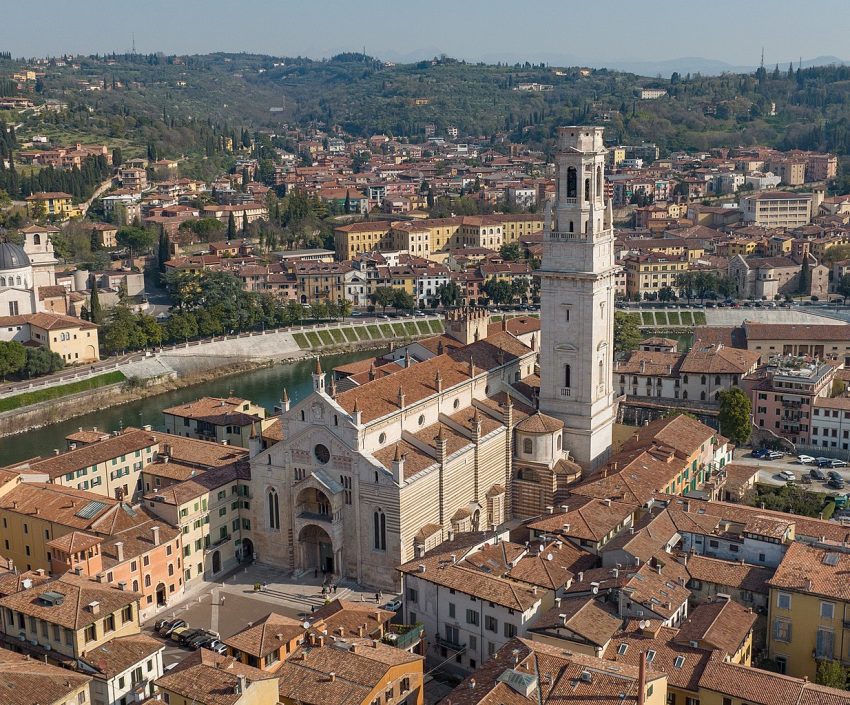
Verona Cathedral sits in a calm pocket of the historic centre, tucked inside a small medieval square near the Adige's bend and a short walk from Ponte Pietra. Known locally as the Duomo, it's the city's main cathedral and episcopal seat, but what makes it special for visitors is how much is gathered into one place: a grand church, an atmospheric baptistery, archaeological layers, and quiet cloister spaces that feel a world away from the busier piazzas.
If you're building a short list, this is one of the must-see places in Verona because it blends deep history with genuinely memorable art, without the “theme-park” feel that can sometimes creep into famous Italian churches. It also fits neatly into a walking tour of Verona, especially if you like linking landmarks with little pauses in shaded squares and river-view lanes.
Table of Contents
- History and Significance of the Verona Cathedral
- Things to See and Do in the Verona Cathedral
- How to Get to the Verona Cathedral
- Practical Tips on Visiting the Verona Cathedral
- Where to Stay Close to the Verona Cathedral
- Is the Verona Cathedral Worth Visiting?
- For Different Travelers
- FAQs for Visiting Verona Cathedral
- Nearby Attractions to the Verona Cathedral
History and Significance of the Verona Cathedral
Verona Cathedral stands on a site that has carried Christian worship for many centuries, with earlier palaeo-Christian churches on the same ground. Those earlier buildings were heavily damaged in the great earthquake of 1117, and the cathedral that visitors see today rose in the Romanesque era that followed, later consecrated in 1187 and dedicated to the Virgin Mary under the title Santa Maria Matricolare.
Although the cathedral’s core plan has remained consistent, it has absorbed layers of change over time, which is part of its appeal: Romanesque structure and portals sit alongside later chapels and artistic additions that reflect Verona’s shifting tastes and patrons. That “built-over-centuries” quality gives the interior a lived-in richness rather than a single-style museum feel.
As the cathedral of the Diocese of Verona, it has never been just a monument; it's still a functioning place of worship with an active calendar. That matters practically, too, because visiting hours can pause for services, and the overall atmosphere stays more contemplative than many headline attractions in the city centre.
Things to See and Do in the Verona Cathedral
Begin outside with a slow look at the Romanesque façade details and the way the cathedral complex opens into a small, almost secret-feeling square. Inside, the standout art moment for many visitors is Titian’s Assumption of the Virgin, housed in a side chapel and impressive both for its scale and the fact that it feels like a major Renaissance painting hiding in plain sight.
Do not limit yourself to the main nave. The cathedral is part of a wider complex, and the add-ons are where the visit becomes more distinctive: the Baptistery of San Giovanni in Fonte is known for its striking octagonal font carved from a single block of marble, and the Church of Sant’Elena links the site back to its earliest layers, with archaeological remains and mosaics that make the timeline feel tangible.
If you have even a little extra time, seek out the Canons’ Cloister for a quieter, greener break in the middle of the city. It’s the kind of place that resets your pace: less about ticking off highlights, more about noticing stonework, light, and the hush that historic religious spaces do so well.
How to Get to the Verona Cathedral
Verona Cathedral is in the historic centre near Piazza Duomo, an easy walk from Ponte Pietra and a manageable walk from Piazza delle Erbe if you're moving through the old town on foot. The nearest airport is Verona Villafranca Airport (VRN), with Milan Bergamo (BGY) and Venice Marco Polo (VCE) as common alternatives if flight times and prices suit your itinerary better. For the best deals and a seamless booking experience, check out these flights to Verona on Booking.com.
If you arrive by train at Verona Porta Nuova, you can reach the centre by bus or taxi, or walk if you prefer a scenic approach through the city. Use Omnio to easily compare schedules, book train tickets, and find the best prices all in one place for a hassle-free journey across Italy.. City buses are frequent, and it’s simplest to aim for stops in the central area and then finish the last stretch on foot through the historic lanes.
Driving into the old town is rarely the most efficient option due to restricted traffic zones and limited central parking, so it’s better to park at the edge of the centre and walk in. If you are looking to rent a car in Italy I recommend having a look at Discover Cars, first, as they compare prices and review multiple car rental agencies for you.
Practical Tips on Visiting the Verona Cathedral
- Entrance fee: €4 (single church); €8 cumulative ticket for the four historic churches.
- Opening hours: (Summer) 01 March – 30 June; 01 September – 31 October: Monday – Friday: 11:00–17:30. Saturday & pre-holidays: 11:00–15:30. Sunday & religious holidays: 13:30–17:30. 01 July – 31 August: Monday – Friday: 10:30–17:30. Saturday & pre-holidays: 10:30–15:30. Sunday & religious holidays: 13:30–17:30. (Winter) 01 November – 28 February: Monday – Friday: 11:00–17:00. Saturday & pre-holidays: 11:00–15:30. Sunday & religious holidays: 13:30–17:30.
- Official website: https://www.chieseverona.it/en/our-churches/the-cathedral-complex
- Best time to visit: Aim for late morning on a weekday for a calmer interior, or mid-afternoon on Sunday once visitor hours open after services.
- How long to spend: Plan 60-90 minutes if you want to include the baptistery, cloister, and archaeological elements rather than just the main cathedral.
- Accessibility: The cathedral complex is generally manageable, but expect uneven paving around the square and occasional pinch-points inside during busy periods.
- Facilities: There are no “theme-park” style amenities, but you are close to cafés and services in the centre, so it’s easy to pair the visit with a break nearby.
Where to Stay Close to the Verona Cathedral
For a culture-heavy itinerary, the best base is Verona’s Centro Storico so you can walk to major sights early and late, when the streets are at their most atmospheric.
If you want a polished, highly central stay that keeps you close to the cathedral and the main pedestrian lanes, NH Collection Palazzo Verona is an excellent choice for comfort and location. For an elegant historic-centre option that feels classic Verona and keeps you within easy walking distance of the Duomo area, Hotel Accademia is a reliable, well-placed base. If your trip leans romantic and you want to be right in the storybook core of the city, Relais de Charme Il Sogno di Giulietta puts you close to evening strolls and the most atmospheric lanes.
Is the Verona Cathedral Worth Visiting?
Yes, especially if you enjoy places where you can feel the city’s layers rather than just photograph them. The cathedral complex rewards curiosity: a Romanesque core, Renaissance art, and earlier-Christian traces that make the history feel immediate rather than abstract.
It’s also a smart pick if you want a quieter counterbalance to Verona’s busier sights. Even in peak season, the cathedral square and cloister spaces tend to feel calmer, which makes the experience more reflective and less rushed.
What Other Travellers Say...

Verona Cathedral, on Piazza Vescovado, is a striped Romanesque duomo whose restrained exterior gives way to a richly frescoed interior filled with notable artworks; visitors report impressive frescoes that use perspective to mimic marble panelling, a gilded organ with painted hinged panels, a dramatic dome scene of the Virgin and saints, and ample seating to linger and appreciate the craftsmanship. Paid admission covers the baptistry, a side church and archaeological excavations, and there's a value ticket option that grants access to four notable Verona churches; some visitors find other local churches more engaging, while many praise the scale and artistry and recommend including the cathedral on an art or architecture itinerary.


For Different Travelers
Families with Kids
Treat the cathedral complex as a short, varied “mini-adventure” rather than a long church visit. Kids often respond well to the idea of a complex with different spaces, especially if you frame it as “cathedral, hidden cloister, and an ancient-history layer” with a clear start and finish.
Go earlier in the day to avoid crowding, and keep the visit moving with a simple goal like spotting the biggest painting, the unusual font shape in the baptistery, and one quiet corner in the cloister. A quick gelato stop afterward makes the pace feel intentional and upbeat.
Couples & Romantic Getaways
This is a strong couples' stop because it feels intimate and slightly tucked away from the busiest flows, especially around Piazza Duomo. The combination of candlelit interior atmosphere and quiet exterior lanes near the river makes it easy to slow down and enjoy Verona beyond the headline romance spots.
Pair it with a walk to Ponte Pietra and viewpoints across the Adige for a simple, memorable loop. It's the kind of route where the mood comes from small details and calm spaces, not just the big-ticket landmarks.
Budget Travelers
Verona Cathedral is good value because the ticket covers multiple elements in one compact area, and the experience is substantial even if you keep it brief. If you're watching costs, consider the cumulative church ticket if you plan to visit more than one of Verona's major churches, since it can be a more efficient way to see the city's religious-art highlights.
Time your visit for a quieter window so you can absorb the atmosphere without feeling pressured to move on. The cathedral square is also a good place to pause for a low-cost break before continuing your walking route.
FAQs for Visiting Verona Cathedral
Getting There
Tickets & Entry
Visiting Experience
Tours, Context & Itineraries
Photography
Accessibility & Facilities
Food & Breaks Nearby
Safety & Timing
Nearby Attractions to the Verona Cathedral
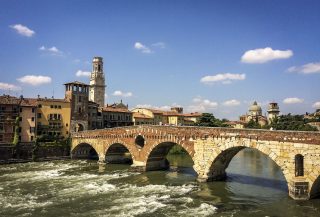
- Ponte Pietra - Verona's most atmospheric riverside bridge, perfect for a quick photo stop and an easy link to viewpoints.
- Teatro Romano - A historic riverside theatre area that adds a different angle on Verona beyond the central piazzas.
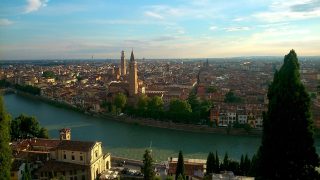
- Castel San Pietro Viewpoint - A high, panoramic look over the rooftops and the Adige that pairs naturally with the cathedral area.
- Piazza delle Erbe - The city's liveliest square, ideal for cafés, market energy, and a classic Verona street-life pause.
- Torre dei Lamberti - A standout climb for wide city views, especially satisfying after exploring Verona's churches and squares on foot.
The Duomo di Verona appears in our Complete Guide to Visiting Verona!

Moira & Andy
Hey! We're Moira & Andy. From hiking the Camino to trips around Europe in Bert our campervan — we've been traveling together since retirement in 2020!
This website uses affiliate links which may earn a commission at no additional cost to you!
Planning Your Visit
(Summer) 01 March - 30 June; 01 September - 31 October: Monday - Friday: 11:00-17:30. Saturday & pre-holidays: 11:00-15:30. Sunday & religious holidays: 13:30-17:30. 01 July - 31 August: Monday - Friday: 10:30-17:30. Saturday & pre-holidays: 10:30-15:30. Sunday & religious holidays: 13:30-17:30.
(Winter) 01 November - 28 February: Monday - Friday: 11:00-17:00. Saturday & pre-holidays: 11:00-15:30. Sunday & religious holidays: 13:30-17:30.
€4 (single church); €8 cumulative ticket for the four historic churches.
Nearby Attractions
- Palazzo Miniscalchi (0.2) km
Museum - Ponte Pietra (0.2) km
Bridge and Historic Site - Basilica di Santa Anastasia (0.3) km
Church - Loggia del Consiglio (0.4) km
Historic Building - Museo Archeologico al Teatro Romano (0.4) km
Historic Building and Museum - Piazza dei Signoria (0.4) km
Square - Arche Scaligere (0.4) km
Tomb - Piazza Delle Erbe (0.4) km
Square - Torre dei Lamberti (0.5) km
Tower - Castel San Pietro (0.5) km
Castle