Drumburgh Castle, Carlisle
Castle near Carlisle
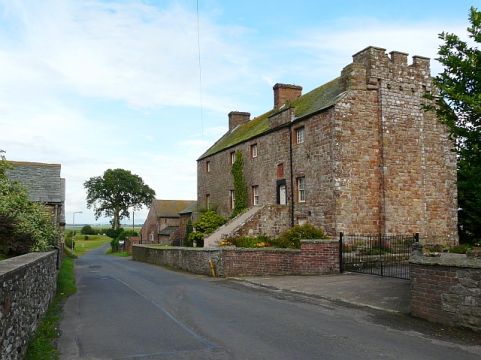
Drumburgh Castle is one of the must-see places in Carlisle's wider Solway region for visitors fascinated by fortified houses, Roman remnants, and the turbulent history of the Anglo-Scottish border. Located in the village of Drumburgh in the parish of Bowness, this compact yet powerful structure is a classic example of a pele tower-small fortified residences constructed between the 14th and 16th centuries to defend against raiders and cross-border warfare. Built using red sandstone taken from Hadrian's Wall, the castle stands on or near the site of a Roman fort, linking ancient and medieval defences in a landscape long contested by Scots and English forces.
The castle as it appears today evolved over many centuries. From its 14th-century licence to crenellate to major rebuilding in 1518 and further alterations in the 17th and 19th centuries, Drumburgh Castle reflects changing needs for defence, comfort, and prestige. This spot is often visited on tours of the Solway coastline thanks to its distinctive red sandstone walls, impressive first-floor entrance, and carved heraldic details that speak to the families who shaped its history.
Table of Contents
- History and Significance of Drumburgh Castle
- Things to See and Do in Drumburgh Castle
- How to Get to Drumburgh Castle
- Practical Tips on Visiting Drumburgh Castle
- Where to Stay close to Drumburgh Castle
- Is Drumburgh Castle Worth Visiting?
- FAQs for Visiting Drumburgh Castle
- Nearby Attractions to Drumburgh Castle
History and Significance of Drumburgh Castle
Drumburgh Castle began as a fortified residence for Richard le Brun, who in 1307 received a Royal licence from King Edward II to crenellate his dwelling. He likely fortified an existing 13th-century hall house to better withstand attacks in this turbulent frontier region. Its location near a major ford across the Solway Firth made the area strategically important, as this was a frequent point of conflict between England and Scotland.
The castle was later rebuilt by Thomas Dacre in 1518, creating what contemporary observers described as “neither castle nor tower but a house of strength.” Dacre incorporated his initials and coat of arms above the first-floor entrance-details that survive today and provide a direct link to one of the most influential border families.
Further alterations took place between 1678 and 1681 under John Alglionby, and in the 19th century a stable wing was added. The western end wall was rebuilt in the late 1970s after structural deterioration, with careful attention to preserving the castle’s original appearance. Today, the building stands as a fascinating blend of medieval defence, Tudor symbolism, and later domestic adaptation, with fragments of a Roman shrine incorporated into the stonework.
Things to See and Do in Drumburgh Castle
Drumburgh Castle remains a striking structure, even though it is not open regularly for public interior visits. Its exterior features are well worth viewing, especially the distinctive first-floor entrance reached by a set of 16th-century stone steps. Above the door, the Dacre coat of arms and sculpted details highlight the building's history as a residence of power and local authority.
The use of red sandstone taken directly from Hadrian's Wall adds another layer of historic interest, giving visitors a glimpse of how Roman remains were reused in later centuries. Below the parapet, carved stone eagle finials offer decorative flourishes uncommon in smaller border fortifications.
The surrounding village and landscape also invite exploration. The castle stands on or near the site of a Roman fort, and the route of Hadrian's Wall passes close by. The Solway estuary, with its wide skies and shifting tides, provides a dramatic backdrop to this fortified house.
How to Get to Drumburgh Castle
Drumburgh is located west of Carlisle along the Solway Coast. Travellers arriving by air usually fly into Newcastle International Airport before continuing by train or car to Carlisle and then onward to Drumburgh. For the best deals and a seamless booking experience, check out these flights to Carlisle on Booking.com.
Carlisle Railway Station provides easy access to the region, with Drumburgh reachable by local bus, taxi, or bicycle along the Hadrian's Wall cycle route. Train schedules and bookings can be found on Omio. Driving is straightforward via the A689 or the Bowness-on-Solway road, with roadside parking available near the castle.
Practical Tips on Visiting Drumburgh Castle
- Best time to visit Drumburgh Castle: Daylight hours for clear views of the tower and surrounding landscape.
- Entrance fee in Euros: Exterior viewing is free; interior access varies as it is private property.
- Opening hours: Viewable from the outside at any time.
- Official website: Check local heritage listings for occasional open days.
- How long to spend: 20-30 minutes for the castle exterior; longer if walking the Solway paths.
- Accessibility: Village roads are level; steps lead to the upper entrance but are not for public use.
- Facilities: Limited services in Drumburgh; amenities available in nearby Bowness-on-Solway.
- Photography tip: Capture the tower in late afternoon light to highlight the red sandstone.
- Guided tours: Occasional local history tours may include Drumburgh’s exterior.
- Nearby food options: Pubs and cafés in Bowness-on-Solway and Carlisle.
Where to Stay close to Drumburgh Castle
For convenience and access to the Solway coastline, consider staying in Carlisle or nearby villages. Options include The Halston for a stylish stay in the city. For a quieter village atmosphere near Hadrian's Wall, The Kings Arms is an excellent base. Another option is Pinegrove Hotel, offering easy driving access to the western stretches of the Wall.
Is Drumburgh Castle Worth Visiting?
Yes. Drumburgh Castle is a compelling stop for anyone exploring the Solway Coast, Hadrian's Wall, or the history of the Anglo-Scottish border. Its blend of Roman materials, medieval defence, Tudor reconstruction, and later alterations tells a rich story that reflects centuries of frontier life. Even viewed only from the outside, the castle offers a memorable glimpse into the region's layered past.
What Other Travellers Say...

Drumburgh Castle in Bowness, Drumburgh, Wigton is a private historic house set along the Solway coast; visitors note only the exterior can be seen but praise it as a fine example of a 16th-century fortified bastle/house of strength and appreciate the quiet coastal setting, scenic causeway drive and views across the countryside, Lakeland mountains and toward Scotland, with friendly locals who look out for walkers on the Hadrian's Wall route.


FAQs for Visiting Drumburgh Castle
Nearby Attractions to Drumburgh Castle
- Bowness-on-Solway: Western terminus of Hadrian's Wall with scenic estuary views.
- Port Carlisle: Historic canal port with coastal walks and industrial remains.
- Hadrian's Wall Path: Long-distance footpath along the Roman frontier.
- Rickerby Park Tower: A Victorian folly in riverside parkland near Carlisle.
- Carlisle Castle: A major medieval fortress with 900 years of border history.
The Drumburgh Castle appears in our Complete Guide to Visiting Carlisle!

Moira & Andy
Hey! We're Moira & Andy. From hiking the Camino to trips around Europe in Bert our campervan — we've been traveling together since retirement in 2020!
This website uses affiliate links which may earn a commission at no additional cost to you!
Nearby Attractions
- Port Carlisle (3.1) km
Village - St Michael's Church (5.1) km
Church - Solway Junction Railway (6.1) km
Historic Site - Burgh by Sands (6.2) km
Village - Cumbria Museum of Military Life (13.5) km
Museum - Carlisle Castle (13.6) km
Castle - Tullie House (13.7) km
Gallery and Museum - Carlisle Cathedral (13.8) km
Cathedral - Guildhall Museum (13.9) km
Historic Building - Rickerby Park Tower (15.0) km
Tower