Diocletian's Palace, Split
Historic Building, Historic Site and Palace in Split
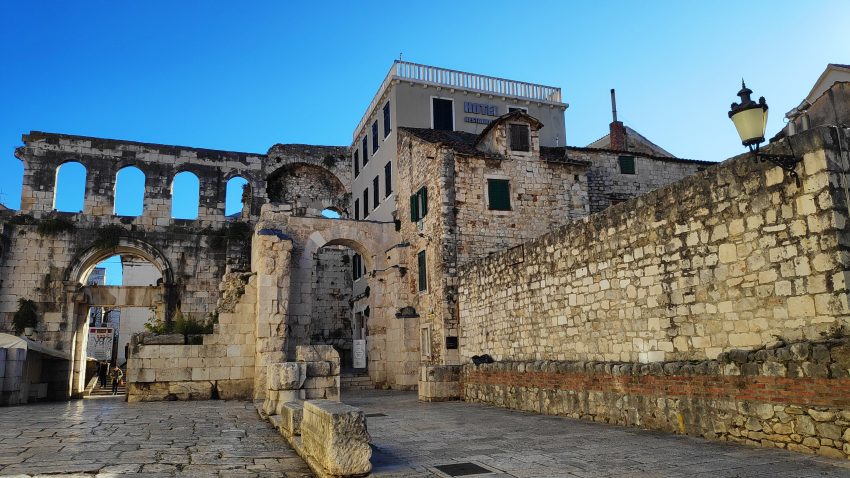
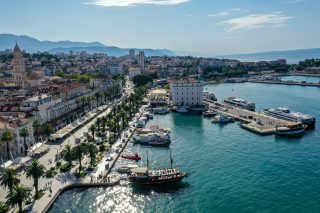
Diocletian's Palace is the beating heart of Split, Croatia: a vast Roman-era palace complex that has evolved into a real, lived-in neighborhood of stone lanes, courtyards, shops, homes, and cafés. Rather than a single building you walk through once, it feels like an ancient city within the city, where you can drift from grand squares to quiet passageways in minutes.
The easiest way to understand what you're seeing is to join a short walking tour that hits the Peristyle, the key gates, and the famous substructures (cellars) beneath the palace. If you prefer exploring independently, start at the Peristyle and then loop down to the waterfront Riva via the southern gates for some of the best atmosphere and photos.
Table of Contents
- History and Significance of the Diocletian’s Palace
- Things to See and Do in the Diocletian’s Palace
- How to Get to the Diocletian’s Palace
- Practical Tips on Visiting the Diocletian’s Palace
- Where to Stay Close to the Diocletian’s Palace
- Is the Diocletian’s Palace Worth Visiting?
- For Different Travelers
- FAQs for Visiting Diocletian’s Palace
- Nearby Attractions to the Diocletian’s Palace
History and Significance of the Diocletian’s Palace
Built as a retirement residence for the Roman Emperor Diocletian in the late 3rd to early 4th century, the palace was designed as both an imperial home and a fortified complex. Its layout blends luxury and military practicality, with monumental gates, thick walls, and a central ceremonial core.
What makes Diocletian's Palace truly special is continuity: instead of becoming a static ruin, it was gradually absorbed into the growing medieval town of Split. Over centuries, temples became churches, corridors became streets, and Roman stonework became the foundation for everyday life.
Today, the palace is recognized as part of the UNESCO-listed historic core of Split, and it remains one of Europe's most vivid examples of an ancient structure that still functions as a living urban space.
Things to See and Do in the Diocletian’s Palace
Begin at the Peristyle, the palace’s central ceremonial courtyard, where columns, arches, and worn stone steps create a dramatic stage-like setting. From here, it’s easy to branch out to the palace’s narrow lanes and let yourself get pleasantly lost among tiny squares, stairways, and hidden corners.
For the most memorable interior experience, head to the Substructures (often called the cellars), a vast underground area that mirrors the palace above and is famous for its atmospheric halls. It’s also one of the best places to appreciate the scale of the original Roman engineering.
If you want a classic Split viewpoint, consider paying to enter the cathedral complex and climbing the bell tower nearby for panoramic views over the terracotta rooftops and the Adriatic. Many visitors also enjoy spotting recognizable filming locations from Game of Thrones while walking the palace lanes.
How to Get to the Diocletian’s Palace
The nearest major airports are Split Airport (SPU) and, for some itineraries, Zadar Airport (ZAD); from either, you can continue to Split by shuttle, taxi, or bus. For the best deals and a seamless booking experience, check out these flights to Split on Booking.com.
Split is connected by rail within Croatia, and you can arrive at Split train station and walk to the palace in just a few minutes along the waterfront. Train schedules and bookings can be found on Omio..
If you’re traveling by car, aim for a garage or paid lot outside the tight Old Town and walk in, since the palace area is largely pedestrian and parking is limited.
Practical Tips on Visiting the Diocletian’s Palace
- Official website: https://mgs.hr/en/visit-us/price-lists-and-working-hours/
- Entrance fee: Free to wander the palace area; paid entry applies to specific sites inside (e.g., Substructures of Diocletian's Palace: €10; concessions: €8).
- Opening hours: Daily: Open 24 hours.
- Best time to visit: Go early in the morning for cooler temperatures, softer light, and far fewer crowds, especially in peak season.
- How long to spend: Plan 1.5–3 hours for a highlights wander, or half a day if you want the substructures plus a bell-tower climb and plenty of photo stops.
- Accessibility: The palace is uneven underfoot with steps and narrow passages; some areas are partially wheelchair accessible, but expect cobbles and occasional stair-only routes.
- Facilities: You’ll find abundant cafés, restaurants, small shops, and restrooms nearby, with the best selection just outside the busiest lanes.
Where to Stay Close to the Diocletian’s Palace
Base yourself in or right next to Split Old Town for the easiest early-morning exploring and late-evening atmosphere.
If you want to step out straight into the palace lanes, choose a stay inside the historic core, but be aware that some rooms can pick up street noise in peak season. For a calmer night, look just west toward the Riva and Marmontova Street, or slightly north of the walls for quick access without the tightest crowds.
Cornaro Hotel A polished, full-service option a short walk from the palace, ideal if you want modern comfort, a strong breakfast, and easy Old Town access.
Hotel Park Split A classic upscale stay closer to Bačvice Beach, great for travelers who want palace sightseeing plus a beach-and-promenade routine.
Heritage Hotel 19 A boutique pick near the waterfront, well-suited for couples who want a quieter base while staying walkable to the palace.
Jupiter Luxury Hotel A memorable choice right in the palace area, perfect if you want to sleep inside the historic atmosphere and maximize early/late exploring.
Vila Nepos A high-end, apartment-style stay within the palace zone, ideal for travelers who want extra space and a more private, residential feel.
Is the Diocletian’s Palace Worth Visiting?
Yes, it's absolutely worth visiting: Diocletian's Palace isn't just a landmark, it's the core experience of Split, where Roman architecture and daily life overlap in a way you rarely see anywhere else. Even if you're not a history specialist, the atmosphere, maze-like lanes, and constant “wow” moments make it a standout.
Honest Pivot: If you strongly dislike crowds, uneven walking surfaces, and busy tourist zones, you may find the palace stressful at midday in peak season. In that case, visit very early, focus on a short guided walk for context, and spend the rest of your time along the Riva or on Marjan Hill for a calmer Split experience.
What Other Travellers Say...

Google reviewers rate Diocletian's Palace very highly, praising it as a beautifully preserved heritage site that feels like a living Roman city rather than a static monument. Visitors consistently love the architecture, the maze-like lanes that are fun to explore, and the option to pay for standout add-ons like the bell tower and other interior sites. Common tips include arriving early for quieter streets and better photos, while the main drawbacks mentioned are heavy crowds later in the day and lots of stairs/uneven walking that can be challenging for some travelers.


For Different Travelers
Diocletian's Palace works for almost every travel style because it can be as structured or as spontaneous as you want. You can do a quick highlights loop, a deep-dive tour, or simply treat it as the most atmospheric route between cafés and viewpoints.
The key is matching your timing and ticketed add-ons to your pace: some travelers are happy with free wandering, while others will want the substructures and a viewpoint climb to round out the visit.
Families with Kids
Kids often enjoy the palace as a real-life maze, with gates, courtyards, and narrow passages that feel like an adventure rather than a museum. A short, story-driven walking tour can help keep attention high without overloading them with dates.
Plan a flexible route with snack stops and a clear “finish line” like the waterfront promenade. If you add a bell-tower climb, make sure everyone is comfortable with stairs and heights.
Couples & Romantic Getaways
For couples, the palace is at its best in the early morning and evening, when the stone glows and the lanes feel more intimate. Wandering without a strict plan is part of the romance here, especially when you stumble into a quiet courtyard or a tucked-away wine bar.
Pair the visit with a sunset walk along the Riva and a dinner just outside the busiest lanes. If you want a shared “big moment,” add a viewpoint climb for photos over the rooftops.
Budget Travelers
Diocletian's Palace is a budget-friendly highlight because you can experience a huge amount just by walking the public areas. The best value is to focus on free exploration, then choose only one paid add-on (often the substructures) if you want an interior experience.
Consider joining a small-group walking tour for context rather than buying multiple separate entries. You'll get the story, the layout, and the best photo angles without paying for every site.
History Buffs
History lovers can easily spend hours here by looking beyond the headline sights and paying attention to how Roman, medieval, and modern Split layer together. The palace is a rare case where the “afterlife” of the monument is as interesting as its imperial origin.
To go deeper, combine a guided tour with time in the substructures and a slow circuit of the gates and walls. You’ll leave with a much clearer sense of the original plan and how the city adapted it over time.
FAQs for Visiting Diocletian’s Palace
Getting There
Tickets & Entry
Visiting Experience
Tours, Context & Itineraries
Photography
Accessibility & Facilities
Food & Breaks Nearby
Safety & Timing
Nearby Attractions to the Diocletian’s Palace
- Split Riva Promenade: The city's waterfront walkway, perfect for sunset strolls and café breaks right by the palace.
- Cathedral of Saint Domnius: A landmark within the palace complex, known for its historic interior and optional viewpoint climb.
- Marjan Hill: A green escape above the city with walking paths and scenic overlooks over Split and the islands.
- Bačvice Beach: Split’s most famous city beach, great for a swim break after sightseeing.
- People's Square (Narodni trg): A charming Old Town square with historic façades and a relaxed café scene.
The Diocletian's Palace appears in our Complete Guide to Visiting Split!

Moira & Andy
Hey! We're Moira & Andy. From hiking the Camino to trips around Europe in Bert our campervan — we've been traveling together since retirement in 2020!
This website uses affiliate links which may earn a commission at no additional cost to you!
Planning Your Visit
Daily: Open 24 hours.
Free to wander the palace area; paid entry applies to specific sites inside (e.g., Substructures of Diocletian’s Palace: €10; concessions: €8).
Nearby Attractions
- Cathedral of St. Domnius (0) km
Cathedral and Religious Building - Podrum (0) km
Historic Room, Historic Site and Roman Site - Vestibule (0) km
Courtyard, Historic Room and Historic Site - Temple of Jupiter (0) km
Historic Site, Religious Building and Roman Site - Ethnographic Museum (0) km
Attraction, Historic Building and Museum - City Museum of Split (0.1) km
Historic Building, Historic Site and Museum - Bronze Gate (0.1) km
Attraction, City Gate and Historic Site - Silver Gate (0.1) km
City Gate, City Walls and Historic Site - Iron Gate and Church of Our Lady of the Bell Tower (0.1) km
Church, City Gate and Historic Site - Church of Saint Martin (0.1) km
Church and Historic Site