Dien Tho Residence, Hue
Historic Building in Hue
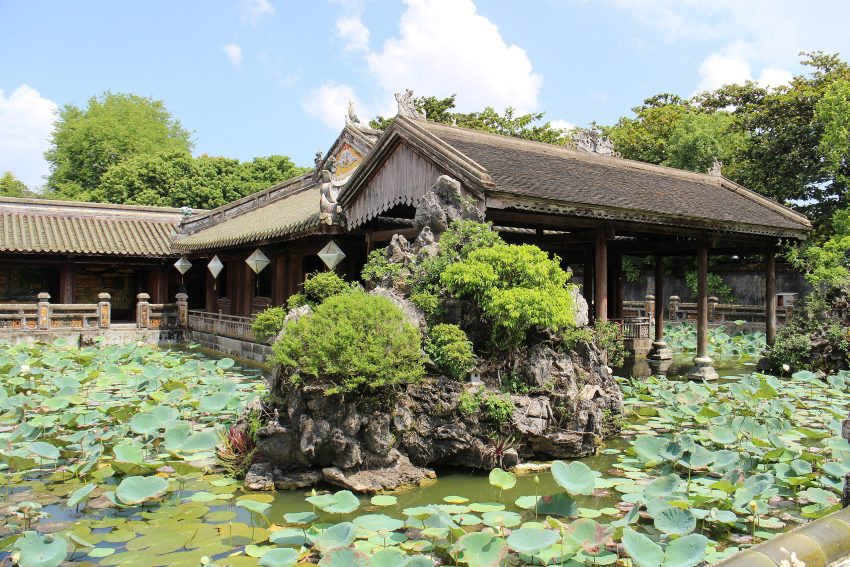
The Dien Tho Residence, built in 1804, served as the luxurious living quarters and audience hall for the Queen Mothers of the Nguyen Dynasty. Situated in the northeastern area of the Imperial City, this partially ruined yet captivating complex showcases a blend of Vietnamese and French architectural styles, reflecting changing tastes across centuries. Its atmospheric halls and shaded courtyards make it one of the top sights in Hue.
Today’s visitors can explore restored rooms, view exhibitions of embroidered royal garments, and admire historical photos that reveal the residence’s former grandeur. The residence was later occupied by Emperor Bao Dai, whose 1930s-era reception rooms have been recreated with elegant period furniture. Outside, a charming pleasure pavilion beside a lily pond now houses a small café, offering a peaceful place to pause during your exploration.
Table of Contents
- History and Significance of Dien Tho Residence
- Things to See and Do in Dien Tho Residence
- How to Get to Dien Tho Residence
- Practical Tips on Visiting Dien Tho Residence
- Where to Stay close to Dien Tho Residence
- Is Dien Tho Residence Worth Visiting?
- FAQs for Visiting Dien Tho Residence
- Nearby Attractions to Dien Tho Residence
History and Significance of Dien Tho Residence
Originally constructed during the rule of Emperor Gia Long in 1804, the Dien Tho Residence was designed as a private sanctuary for the Queen Mothers-women who held great influence within the inner workings of the Nguyen court. As mothers to reigning emperors, they played key advisory roles, and their residence reflected their elevated status and ceremonial importance.
Over time, the residence grew into an extensive compound, blending traditional Vietnamese architectural features with later French influences introduced during the colonial era. This merging of styles gives the complex a layered, multicultural feel that distinguishes it from many of the other structures in the Imperial City. The residence endured multiple periods of damage, but enough of its original design remains to convey the dignity and refinement of its occupants.
In the 20th century, the residence became associated with Emperor Bao Dai, the last emperor of Vietnam. The recreated reception rooms from this period provide a rare glimpse into his personal life and the shifting aesthetics of the palace in the 1930s. Together, these historical layers make Dien Tho Residence an evocative monument to the personal and political lives of the Nguyen royal family.
Things to See and Do in Dien Tho Residence
Visitors can explore the audience hall, which now serves as an exhibition space. Here, photographs document the residence’s historical uses, while displays of embroidered royal garments highlight the craftsmanship and stylistic detail of Nguyen-era court attire. These exhibits give a vivid sense of the daily life and ceremonial roles of the queen mothers.
The residence’s restored rooms, including Bao Dai’s former reception area, transport visitors to the early 20th century. Period furniture and subtle decorative details recreate the atmosphere of a palace adapting to modern influences. These rooms are among the most engaging areas for those intrigued by the later years of the Nguyen dynasty.
One of the complex’s most charming elements is the pleasure pavilion overlooking a peaceful lily pond. Now converted into a small café, it offers an idyllic spot to rest with a drink and enjoy the tranquil surroundings. This blend of historic architecture and modern convenience creates a memorable pause within the broader Imperial City experience.
How to Get to Dien Tho Residence
Phu Bai International Airport is the nearest airport to Hue, located about 16 kilometres to the south of the city centre and offering regular domestic flights. For the best deals and a seamless booking experience, check out these flights to Hue on Booking.com.
Hue Railway Station connects the city with major hubs such as Da Nang, Hanoi, and Ho Chi Minh City and sits a short journey away from the Imperial City. Train schedules and bookings can be found on Omio.
For those travelling by car, the Citadel is easily reached, with parking areas available near its main entrances. After entering the Imperial Enclosure, clear pathways guide visitors toward the northeastern area where the Dien Tho Residence is located.
Practical Tips on Visiting Dien Tho Residence
- Suggested tips: Take time to explore the exhibitions and restored rooms to understand the residence’s many historical layers.
- Best time to visit: Early morning or late afternoon for softer light and more comfortable conditions.
- Entrance fee: Included in the Imperial City ticket.
- Opening hours: Usually 8:00-17:30, though seasonal variations occur.
- How long to spend: Around 30-45 minutes depending on interest.
- Accessibility: The complex is mostly accessible, though some uneven surfaces remain.
- Facilities: A small café is located on-site near the lily pond; restrooms are available within the wider Imperial City.
- Photography tip: Capture the reflection of the pavilion in the lily pond for a serene composition.
- Guided tours: Many citadel tours include Dien Tho Residence for its social and architectural significance.
- Nearby food options: Cafés and restaurants can be found just outside the Citadel walls.
Where to Stay close to Dien Tho Residence
Staying near the Imperial City provides convenient access to Dien Tho Residence and other major heritage sites. The sophisticated Azerai La Residence offers riverside elegance and excellent amenities. Visitors seeking a boutique experience may appreciate Le Domaine de Cocodo, known for its tranquil atmosphere. Another nearby choice is Villa Hue, ideal for travellers wanting comfort close to the city’s historic core.
Is Dien Tho Residence Worth Visiting?
Dien Tho Residence is absolutely worth visiting, especially for those interested in the personal stories and daily lives of Vietnam's last imperial family. Its evocative architecture, detailed exhibitions, and mix of restored and semi-ruined spaces offer a captivating insight into the world of the Nguyen queen mothers and the later years of the dynasty. The addition of a peaceful café overlooking a lily pond makes the experience all the more enjoyable.
What Other Travellers Say...

Dien Tho Palace, located at 75 Lê Huân in the outer courtyard of the Imperial City, is the elegant former residence of the Queen Mother; visitors note its intricate, imposing architecture and multiple grand entrances, gardens that many find especially lovely, peaceful spots to sit and relax, and covered walkways decorated with portraits, though some find the interior rooms unremarkable and maintenance varies so watch your step in wet weather and expect an entrance fee.


FAQs for Visiting Dien Tho Residence
Nearby Attractions to Dien Tho Residence
- Purple Forbidden City: Former private residence of the Nguyen emperors.
- Hien Lam Pavilion: A grand three-story memorial within the Dynastic Temple complex.
- The Mieu Temple: Ancestral shrine honoring Nguyen emperors.
- Thai Hoa Palace: The ceremonial throne hall of the Nguyen Dynasty.
- Truong Sanh Residence: Another historic palace within the Imperial City.
The Dien Tho Residence appears in our Complete Guide to Visiting Hue!

Moira & Andy
Hey! We're Moira & Andy. From hiking the Camino to trips around Europe in Bert our campervan — we've been traveling together since retirement in 2020!
This website uses affiliate links which may earn a commission at no additional cost to you!
Planning Your Visit
Nearby Attractions
- Cung Truong Sanh (0.1) km
Historic Building - Hung Mieu Temple (0.2) km
Historic Building - Mieu Temple (0.2) km
Historic Building - Halls of the Mandarins (0.3) km
Historic Building - Forbidden Purple City (0.3) km
Historic Building - Hien Lam Pavilion (0.3) km
Historic Building - Nhat Thanh Lau (0.3) km
Historic Building - Thai Hoa Palace (0.3) km
Palace - The Royal Library (0.3) km
Historic Building - Tu Phuong Vo Su Tower (0.4) km
Historic Building