Cours Mirabeau, Aix en Provence
Historic Site and Street in Aix en Provence
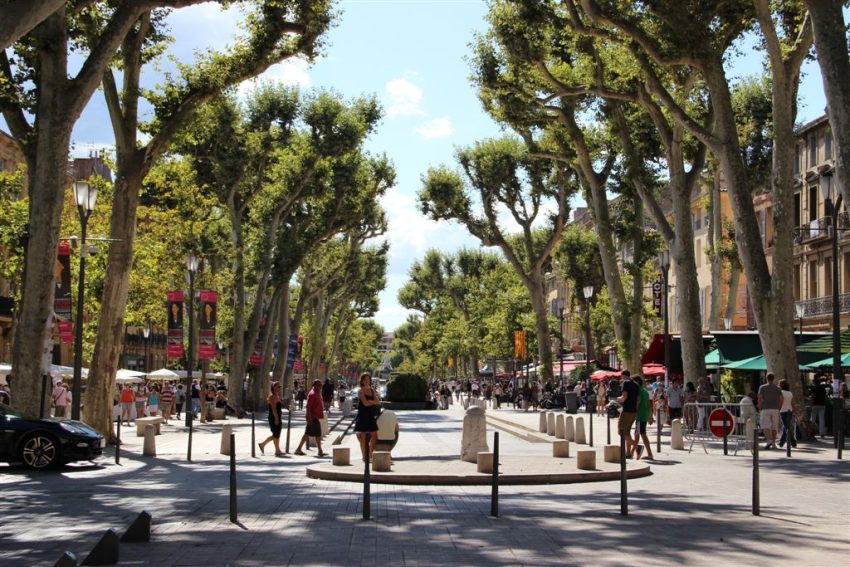
Cours Mirabeau is the beating heart of Aix-en-Provence-a broad, leafy boulevard where past and present intertwine beneath the shade of centuries-old plane trees. Once a promenade for nobles and merchants, today it's a vibrant gathering place lined with cafés, boutiques, and fountains. Walking here feels like stepping into a living postcard of southern France, making it one of the must-see places in Aix-en-Provence.
Stretching between the Rotonde Fountain and the old Mazarin Quarter, Cours Mirabeau captures the essence of Aix's charm and rhythm. The elegant facades, the aroma of coffee drifting from brasseries, and the music of fountains create a perfect backdrop for an afternoon stroll. This grand boulevard is a highlight of any walking tour of Aix, offering a window into the city's refined heritage and lively present.
History and Significance of Cours Mirabeau
The Cours Mirabeau owes its origins to the 17th century when Archbishop Michel Mazarin, brother of Cardinal Mazarin, ordered the demolition of Aix's southern ramparts in 1649. His goal was to expand the city and create a boulevard fit for the aristocracy of his newly developed Mazarin Quarter. Architect Jean Lombard helped bring Mazarin's vision to life, designing a gracious carriage route where Aix's elite could parade their carriages and enjoy leisurely Sunday strolls.
Originally known simply as “le Cours,” the boulevard took fifteen years to complete, transforming a defensive wall into a social and architectural showcase. Spanning 1,445 feet in length and 138 feet in width, it became the symbol of Aix's prosperity and refinement. In 1876, it was renamed Cours Mirabeau in honor of Honoré-Gabriel Riqueti, Comte de Mirabeau-the fiery orator and revolutionary who represented Aix at the Estates General in 1789. Though he publicly championed liberty, Mirabeau secretly supported the monarchy, and his death in 1791 was mourned across France. The boulevard's name thus reflects both the grandeur and contradictions of the city's past.
Things to See and Do in Cours Mirabeau
Cours Mirabeau is not just a street-it's an experience. Begin at the majestic Fountain of the Rotunda, built in 1860 by Théophile de Tournadre, its sculpted figures symbolizing Justice, Agriculture, and Fine Arts. Stroll eastward, and you'll encounter the Fountain of the Nine Canons (1651) by Laurent Vallon and the Mossy Fountain (1667) by Jacques Fosse, where warm spring water nourishes the thick moss cascading down its stone. Each fountain tells part of the story of Aix's enduring romance with water.
As you walk, admire the grand 17th- and 18th-century mansions that line the boulevard, their wrought-iron balconies and carved portals recalling the city's aristocratic heyday. Many have since been transformed into banks, shops, and cultural venues, blending old-world charm with modern life. Stop for a coffee at Les Deux Garçons, a historic café once frequented by Paul Cézanne and Émile Zola, and watch the world pass by. Whether you come for history, people-watching, or simply to soak up the Provençal atmosphere, Cours Mirabeau remains one of the top attractions in Aix-en-Provence.
How to Get There
Cours Mirabeau runs through the center of Aix-en-Provence, connecting the old town with the Mazarin Quarter. The nearest station is Gare SNCF d’Aix-en-Provence. You can use SNCF Connect to check schedules, compare routes, and purchase tickets for National (SNCF ) and regional trains (TER). For a more streamlined experience, we recommend using Omio, which allows you to easily compare prices, schedules, and book tickets for both National and Regional travel across all of Europe, all in one place. For those driving into the city, parking is available nearby at Rotonde or Pasteur Car Park. If you are looking to rent a car in France I recommend having a look at Discover Cars, first, as they compare prices and review multiple car rental agencies for you. The boulevard is pedestrian-friendly, and its wide sidewalks make it perfect for exploring on foot.
Practical Tips on Visiting Cours Mirabeau
- Best time to visit Cours Mirabeau: Early morning for peaceful walks or late afternoon when the cafés come alive.
- Entrance fee in Euros: Free.
- Opening hours: Accessible at all hours.
- Official website: www.aixenprovence.fr
- How long to spend: 1-2 hours for a full stroll and café stop.
- Accessibility: Flat, even pavement; easily accessible for wheelchairs and strollers.
- Facilities: Numerous cafés, shops, and public benches along the boulevard.
- Photography tip: Capture the line of fountains under dappled light or the evening glow from café terraces.
- Guided tours: Regularly included in Aix-en-Provence walking-tours.
- Nearby food options: Les Deux Garçons, Brasserie Le Grillon, and several patisseries along Rue Fabrot.
Is Cours Mirabeau Worth Visiting?
Without question. Cours Mirabeau is the soul of Aix-en-Provence-a place where history, art, and daily life flow together like the fountains that adorn it. Whether you're following in the footsteps of Cézanne, browsing market stalls, or enjoying a quiet espresso under the trees, it captures the city's timeless beauty. It's not just a street-it's an experience that defines Aix itself.
What Other Travellers Say...

Fontaine Moussue on Cours Mirabeau in Aix-en-Provence is a picturesque, moss- and fern-covered fountain that visitors praise as a great photo spot; reviewers note its natural, overgrown appearance and cite the open, pedestrian-friendly surroundings with nearby cafés and shops that feel safe and family-friendly.


FAQs for Visiting
Nearby Attractions to Cours Mirabeau
- Place de l'Hôtel de Ville - Aix's main square, lined with Baroque façades and lively markets.
- Saint-Sauveur Cathedral - A stunning mix of Romanesque, Gothic, and Baroque architecture.
- Place d'Albertas - A refined 18th-century square with a cast-iron fountain and symmetrical design.
- Pavillon de Vendôme - A Baroque residence and museum surrounded by peaceful gardens.
- Musée Granet - Home to an outstanding art collection, including works by Cézanne and Picasso.
The Cours Mirabeau appears in our Complete Guide to Visiting Aix en Provence!

Moira & Andy
Hey! We're Moira & Andy. From hiking the Camino to trips around Europe in Bert our campervan — we've been traveling together since retirement in 2020!
This website uses affiliate links which may earn a commission at no additional cost to you!
Planning Your Visit
24 Hours
Free
Nearby Attractions
- Hotel de Caumont (0.1) km
Arts Venue and Historic Building - Fontaine Moussue (0.1) km
Fountain, Historic Site and Viewing Point - Place d’Albertas (0.1) km
Fountain - Église du Saint-Esprit (0.1) km
Church, Historic Building and Religious Building - Fontaine Des Augustins (0.2) km
Attraction, Fountain and Historic Site - Fountain of the Four Dolphins (0.2) km
Fountain - Fontaine Du Roi René (0.2) km
Fountain, Monument and Square - Fontaine de la Rotonde (0.2) km
Fountain - Palais de Justice (0.2) km
Historic Building - Place et Fontaine d’Albertas (0.3) km
Fountain