Corso Italia, Pisa
Street in Pisa
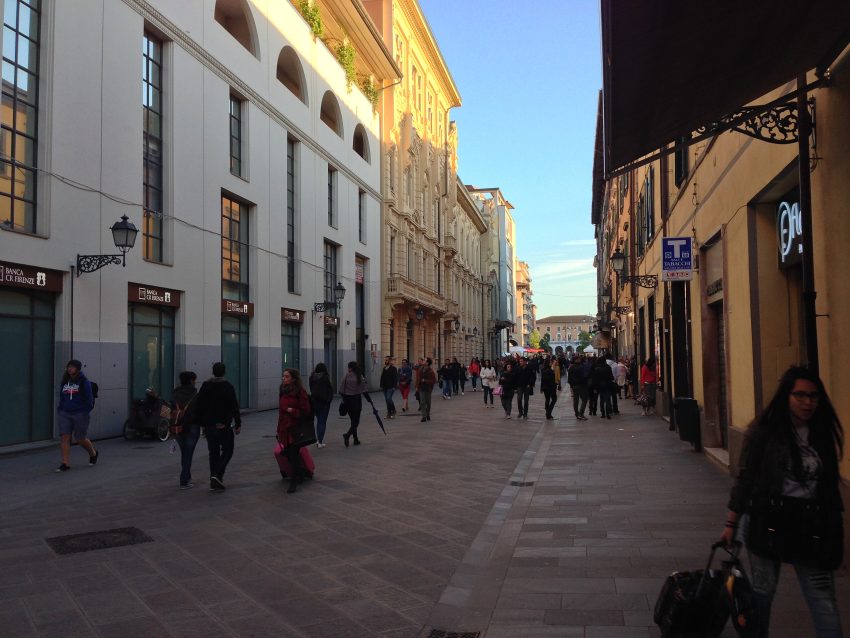
Corso Italia is one of the main arteries of modern Pisa, a mostly pedestrian street that runs straight from the station district towards the Arno and the historic heart of the city. It is where commuters hurry to work in the morning, students drift between lectures and espresso stops, and visitors get their first feel for the city's rhythm before they ever see the Leaning Tower. With a mix of high street brands, local boutiques and plenty of bar counters to lean on with a cappuccino or spritz, it is one of the things to do in Pisa if you want to experience local life rather than just ticking off monuments.
Because Corso Italia links the area around Piazza Vittorio Emanuele II to the river, it works as your natural route into and out of town, and a highlight of any walking tour of Pisa that tries to join up the railway station, the Lungarni embankments and the medieval core. You might start your day here with breakfast on a terrace, wander slowly towards the Arno with a little window shopping along the way, and then peel off into side streets leading to older squares and churches. In the evening, the same street fills with people on their passeggiata, giving it a busy but friendly feel that is very different from the quieter residential lanes nearby.
Table of Contents
History and Significance of Corso Italia
Corso Italia owes its importance to its position between Pisa Centrale station and the river. As rail travel grew in the 19th and 20th centuries, the area around the station became a new gateway to the city, and the street that led most directly from the station to the centre naturally developed into a commercial spine. Over time, older buildings were adapted or replaced to accommodate shops and services, turning the route into a classic Italian shopping street.
While it does not have the medieval arcades of Borgo Stretto or the marble splendour of the Campo dei Miracoli, Corso Italia is significant because it shows you how Pisa functions today. It is where everyday errands happen, where locals shop for clothes, shoes and home goods, and where you feel the mix of residents, students and visitors that make up the modern city. In a sense, walking Corso Italia is like reading the latest chapter of Pisa's story, written in window displays and café menus instead of stone carvings.
As the main pedestrian link between Piazza Vittorio Emanuele II and the Arno, Corso Italia also helps you orient yourself. Once you know this axis, it becomes easy to navigate: the station and square at one end, the river and Logge di Banchi at the other, with smaller streets peeling off towards churches, museums and historic lanes. That practical role is part of its charm, especially if you are using Pisa as a base for wider Tuscan travel and find yourself repeatedly arriving and leaving by train.
Things to See and Do in Corso Italia
The simplest pleasure on Corso Italia is to stroll from one end to the other at different times of day. Start at Piazza Vittorio Emanuele II and head north, watching the mix of architecture change as you leave the station area and move towards the older core. Along the way you will pass clothing chains, shoe shops, gelaterie and bakeries, plus smaller independent boutiques tucked between more recognisable names. There are plenty of chances to stop for coffee, grab a slice of pizza al taglio or browse window displays.
Pay attention to the side streets as you walk. Some lead towards residential neighbourhoods, others take you quickly to the Lungarni and the river, and a few wind into older quarters where medieval buildings sit almost hidden behind the more modern front line of the shopping street. It is worth occasionally stepping off Corso Italia for a block or two to find quieter corners, then coming back to the main flow when you are ready. This simple pattern of dipping in and out makes the street feel less like a corridor and more like a network.
Corso Italia also works well as a bridge between sightseeing clusters. You can use it to connect the station and Piazza Vittorio Emanuele II with the Logge di Banchi near the river, then cross towards Borgo Stretto, the Lungarni of Pisa and, eventually, the Campo dei Miracoli. Along the way, look out for small details such as decorated cornices, old shop signs and courtyards glimpsed through gates. Even if you are not in a shopping mood, the people watching, street performers and general energy make it a pleasant place to linger for a while.
How to Get to Corso Italia
If you are flying into Pisa, you will most likely arrive at Pisa International Airport Galileo Galilei; from there, take the people mover or a taxi to Pisa Centrale, and from the station forecourt it is only a short walk to Piazza Vittorio Emanuele II, where Corso Italia begins. For the best deals and a seamless booking experience, check out these flights to Pisa on Booking.com.
By train, simply travel to Pisa Centrale; exit the station towards Piazza Vittorio Emanuele II and you will see Corso Italia running directly north from the square towards the river, clearly signed and easy to follow on foot. Use Omnio to easily compare schedules, book train tickets, and find the best prices all in one place for a hassle-free journey across Italy.
If you are travelling by car, follow signs into Pisa and head towards the station district or nearby public car parks, then leave your vehicle and continue on foot to Piazza Vittorio Emanuele II, from where Corso Italia stretches straight towards the Arno. If you are looking to rent a car in Italy I recommend having a look at Discover Cars, first, as they compare prices and review multiple car rental agencies for you.
Practical Tips on Visiting the Corso Italia
- Suggested tips: Use Corso Italia as your main walking route between the station, the river and the historic centre, combining errands, coffee stops and people watching as you go.
- Best time to visit: Late morning and early evening are ideal, when shops are open, locals are out and the street has the most atmosphere without being overwhelmingly busy.
- Entrance fee: There is no entrance fee; Corso Italia is a public street that you can explore freely at any time.
- Opening hours: The street itself is always open, but individual shops usually close for a few hours at lunchtime and in the evening, so plan shopping for standard Italian business hours.
- How long to spend: Allow at least 30-60 minutes to walk the street in both directions, browse a few shops and stop for a drink or snack along the way.
- Accessibility: Corso Italia is mostly flat and pedestrianised, making it convenient for wheelchairs and strollers, though occasional cobblestones or crowded patches may require a bit of patience.
- Facilities: You will find plenty of cafés, bars, ATMs and shops along the street and in Piazza Vittorio Emanuele II, so it is a good place to pick up essentials before heading to other sights.
- Photography tip: For good street scenes, stand at either end of Corso Italia and shoot along its length to capture the perspective of façades, shopfronts and the flow of people.
- Guided tours: Some city tours use Corso Italia as a starting or linking route, but it is very easy to explore independently with a map or simple city plan.
- Nearby food options: From simple bakeries and gelato counters to sit down trattorias in side streets, there is no shortage of places to eat within a short walk of the main shopping stretch.
Where to Stay close to the Corso Italia
If you want to be right in the flow between the station and the centre, staying near Corso Italia is very convenient. A good option within easy walking distance is NH Pisa, directly opposite Pisa Centrale and just a short stroll from the southern end of Corso Italia. For a slightly quieter but still central base, Hotel Bologna Pisa puts you close to both Corso Italia and the Lungarni, ideal if you like to mix shopping with riverside walks. If you prefer to be nearer the Leaning Tower and main monuments but still want straightforward access to Corso Italia, Grand Hotel Duomo lets you walk through the historic centre and down towards the shopping street whenever you need a change of pace.
Is the Corso Italia Worth Visiting
Corso Italia is definitely worth including in your Pisa itinerary, especially if you are arriving or leaving by train and want an easy, engaging way to move between the station and the river. It adds a modern, everyday layer to a visit that might otherwise focus only on medieval and Romanesque highlights, and it shows you how locals actually live, shop and socialise. Even if you are not keen on buying anything, the simple act of strolling, people watching and stopping for a coffee or gelato helps balance out time spent queuing at the Leaning Tower or navigating tour groups in the Campo dei Miracoli. Think of it as Pisa's living corridor, tying together different parts of the city in a very walkable way.
What Other Travellers Say...
Reviews Summary
Corso Italia is a lively pedestrian shopping street in Pisa lined with Italian and international boutiques offering clothing and cosmetics, making it a good spot for window-shopping, fashion finds, and casual strolling through the city center.
FAQs for Visiting Corso Italia
Nearby Attractions to the Corso Italia
- Piazza Vittorio Emanuele II: The large square by Pisa Centrale with its monument to Vittorio Emanuele II and surrounding civic buildings, marking the southern end of Corso Italia.
- Logge di Banchi: A historic arcaded loggia at the northern end of the street, once used for cloth and grain markets and now an atmospheric link to the Lungarni.
- Lungarni of Pisa: The scenic embankments along the Arno, ideal for a relaxed stroll once you reach the river end of Corso Italia.
- Narrow Street (Borgo Stretto): A medieval shopping and café street just across the river, offering a more historic contrast to the modern feel of Corso Italia.
- Campo dei Miracoli: Pisa's iconic ensemble of cathedral, baptistery, Camposanto and the Leaning Tower, reachable on foot via the river and historic streets from the top of Corso Italia.
The Corso Italia appears in our Complete Guide to Visiting Pisa!

Moira & Andy
Hey! We're Moira & Andy. From hiking the Camino to trips around Europe in Bert our campervan — we've been traveling together since retirement in 2020!
This website uses affiliate links which may earn a commission at no additional cost to you!
Planning Your Visit
The street itself is always open, but individual shops usually close for a few hours at lunchtime and in the evening, so plan shopping for standard Italian business hours.
There is no entrance fee; Corso Italia is a public street that you can explore freely at any time.
Nearby Attractions
- Murale Tuttomondo (0.2) km
Historic Site - Piazza Vittorio Emanuele II (0.2) km
Square - Logge di Banchi (0.4) km
Historic Building - Palazzo Blu (0.4) km
Gallery and Palace - Church of Santa Maria della Spina (0.4) km
Church - Santa Maria della Spina (0.4) km
Church - Lungarni of Pisa (0.6) km
- Borgo Stretto (0.6) km
Street - Museum of the Ancient Ships (0.6) km
Historic Building and Museum - Palazzo Vecchio de Palazzo Medici (0.7) km
Historic Building and Palace