Collegiate Church of Saint-Émilion
Church in Saint-Émilion
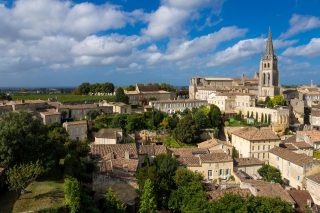
The Collegiate Church of Saint-Émilion is the kind of place you stumble into for “a quick look” and end up lingering-partly because it's so calm, and partly because it feels like the town's spiritual backbone. Set in the upper part of Saint-Émilion, it's a substantial 12th-century church that still reads as confident and official, with an interior that rewards slow walking and a glance upward. If you're piecing together your day on a walking tour of Saint-Émilion, this is one of the must-see places in Saint-Émilion because it's both a landmark and a breather from the busier tasting circuit.
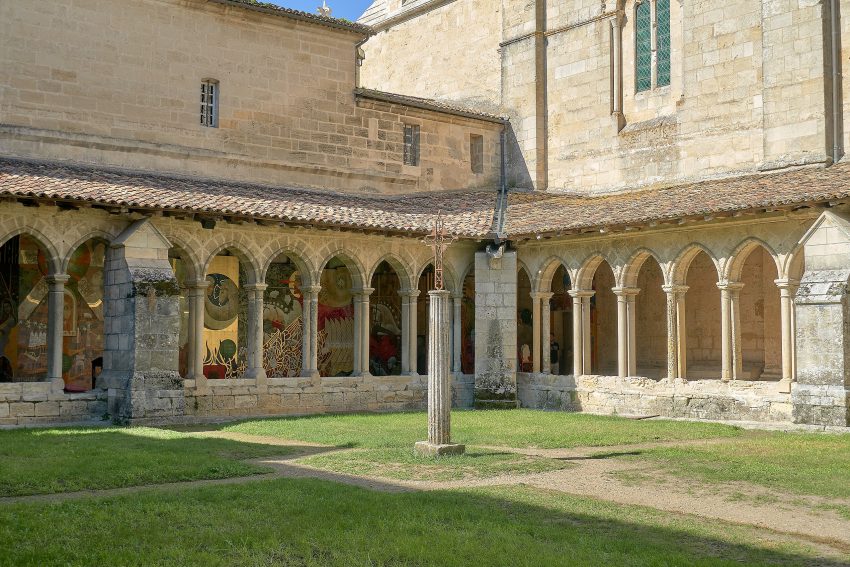
Just next door, the cloister adds a different mood: quieter, greener, and more intimate, like a pocket of stillness tucked behind the stone façades. It's also where Saint-Émilion surprises you-medieval architecture framing a monumental modern artwork, the Apocalypse, which makes the whole visit feel less like a museum stop and more like a living place that keeps evolving.
Table of Contents
- History and Significance of the Collegiate Church of Saint-Émilion
- Things to See and Do in the Collegiate Church of Saint-Émilion
- How to Get to the Collegiate Church of Saint-Émilion
- Practical Tips on Visiting the Collegiate Church of Saint-Émilion
- Where to Stay Close to the Collegiate Church of Saint-Émilion
- Is the Collegiate Church of Saint-Émilion Worth Visiting?
- For Different Travelers
- FAQs for Visiting the Collegiate Church of Saint-Émilion
- Nearby Attractions to the Collegiate Church of Saint-Émilion
History and Significance of the Collegiate Church of Saint-Émilion
The church was built to house a community of Augustinian canons, and its scale reflects the authority they carried in Saint-Émilion’s religious life. In practical terms, they were the town’s “official” spiritual administrators, delegated from Bordeaux’s ecclesiastical power structure, and the site was designed to match that status.
Architecturally, the Collegiate Church shows its long timeline. Romanesque foundations give way to later Gothic interventions, especially where the building was reshaped and extended between the 13th and 15th centuries, so you can read different eras as you move through the space. It's an easy place to appreciate how Saint-Émilion grew not just as a wine town, but as a medieval community that invested heavily in institutions and symbolism.
The cloister explains daily life more quietly than the church itself. It was a working, praying courtyard at the heart of the monastic complex, with doorways leading to rooms that structured the canons’ routine; even today, details like the sealed arches where the chapter room once stood hint at what has been lost and repurposed over time.
Things to See and Do in the Collegiate Church of Saint-Émilion
Start inside the church with a slow loop, letting your eyes adjust from bright streets to the softer interior light. Look for the way the building transitions between styles-this isn’t a single “perfect” moment of architecture, but a layered one, where later Gothic ambition sits on earlier Romanesque strength.
Next, step into the cloister for the atmosphere shift. It’s quieter, often less crowded than the most famous underground sites, and it’s the kind of place where you naturally lower your voice and notice small details: carved stone, tombs, and the geometry of the courtyard that frames the sky.
Finally, make time for the Apocalypse artwork in the cloister, a monumental contemporary interpretation of Revelation that stretches across the space and changes how you experience the medieval setting. It’s bold, dramatic, and unexpectedly moving-less “religious souvenir” and more immersive visual storytelling that stays with you after you leave.
How to Get to the Collegiate Church of Saint-Émilion
For most international visitors, Bordeaux-Mérignac Airport (BOD) is the nearest major airport, with straightforward onward travel toward Saint-Émilion via Bordeaux. For the best deals and a seamless booking experience, check out these flights to Saint-Émilion on Booking.com.
By train, the usual approach is to travel via Bordeaux Saint-Jean to the Saint-Émilion station, then walk uphill into the historic centre or take a short taxi ride if you prefer to save your legs for exploring the town itself. You can use SNCF Connect to check schedules, compare routes, and purchase tickets for National (SNCF ) and regional trains (TER). For a more streamlined experience, we recommend using Omio, which allows you to easily compare prices, schedules, and book tickets for both National and Regional travel across all of Europe, all in one place.
Buses and local shuttles can be useful in the wider area, but once you’re in the historic centre, walking is typically the simplest way to move between monuments.
If you’re driving, plan to park outside the tight medieval core and approach on foot, since the upper-town streets can be narrow and pedestrian-oriented. If you are looking to rent a car in France I recommend having a look at Discover Cars, first, as they compare prices and review multiple car rental agencies for you.
Practical Tips on Visiting the Collegiate Church of Saint-Émilion
- Entrance fee: Free
- Opening hours: Daily: 08:00–19:00; Guided Tour available from the Tourist Office
- Official website: https://www.saint-emilion-tourisme.com/en/explorer/les-incontournables/les-12-monuments/l-eglise-collegiale-et-son-cloitre
- Best time to visit: Late morning or mid-afternoon works well for a quieter interior, while early evening can feel especially atmospheric as the town calms down.
- How long to spend: Give it 30-45 minutes if you want the church plus a slow cloister circuit, and longer if you like lingering with the artwork and architectural details.
- Accessibility: The church is generally easier than many medieval sites, but surfaces can be uneven and some access points around the cloister may involve steps.
- Facilities: There are limited facilities on-site, so plan café stops and restrooms around the nearby main lanes of the historic centre.
Where to Stay Close to the Collegiate Church of Saint-Émilion
For a culture-heavy itinerary where you want to walk to monuments and dinner easily, base yourself in or right beside the medieval centre; if your main priority is vineyards, calm, and space, choose a property just outside town among the vines.
If you want a classic “stay in the heart of it” option, Au Logis des Remparts puts you close to the main sights and makes early walks through the lanes feel effortless. For a high-end splurge with serious culinary credibility, Hôtel de Pavie is as central as it gets and ideal if you want Saint-Émilion’s evenings to be the highlight. If you prefer a quieter base with a spa-style feel while staying close to town, Château Hôtel Grand Barrail is a strong choice for downtime between tastings.
Is the Collegiate Church of Saint-Émilion Worth Visiting?
Yes-especially because it’s one of Saint-Émilion’s most rewarding “no-pressure” stops. You can experience a major monument without committing to a long, timed visit, and the mix of church, cloister, and contemporary art gives you variety in a compact footprint.
It's also a great counterbalance to cellar-heavy days. After underground tours and tastings, the open air of the cloister and the calm of the church feel like a reset, while still keeping you firmly in the town's history.
What Other Travellers Say...

Saint-Émilion Collegial Catholic Church on Pl. Pierre Meyrat is a peaceful, free-to-enter medieval church that visitors praise for its soothing atmosphere, soaring vaulted ceilings, clean unadorned columns and varied architecture—where an older Romanesque section contrasts with a larger Gothic area around the altar. Guests note an extraordinary cloister accessed by a side door, the chance to climb to high ground near the clock tower for views, and convenient modern touches such as candle purchases and card-friendly donations.


For Different Travelers
Families with Kids
This works well for families because it’s flexible: you can pop in briefly, keep moving, and still feel like you saw something substantial. The cloister is often the easiest win, giving kids a more open space to look around while adults enjoy the atmosphere.
If you’re travelling with very young children, keep expectations simple and focus on a short visit rather than a deep architectural read. Aim for a quieter time so you’re not navigating tight corners with a stroller.
Couples & Romantic Getaways
For couples, the Collegiate Church and cloister are an excellent “slow moment” between tastings and viewpoints. The quiet setting, stone textures, and gentle pace make it feel intimate without being overly curated.
Pair it with a leisurely wander afterward-pick a nearby terrace, share something local, and let the calm of the cloister set the tone for the rest of your afternoon.
Budget Travelers
This is a strong budget-friendly stop because you can see a major monument without needing a ticket or a tour. It also helps you build a full Saint-Émilion day on foot, which is often the cheapest and most satisfying way to travel here.
Use it as a core anchor, then spend selectively on what matters most-one memorable tasting, a château visit, or a special meal rather than lots of paid attractions.
History Buffs
History lovers will enjoy how clearly this site reflects institutional power in medieval Saint-Émilion, from the canons' role to the architectural evolution across centuries. The cloister, in particular, helps you imagine daily rhythms and hierarchies that shaped the town's “official” life.
Spend time looking for the story in the details-sealed doorways, tombs, and stylistic transitions-and you'll leave with a sharper sense of how Saint-Émilion functioned beyond wine.
FAQs for Visiting the Collegiate Church of Saint-Émilion
Getting There
Tickets & Entry
Visiting Experience
Tours, Context & Itineraries
Photography
Accessibility & Facilities
Food & Breaks Nearby
Safety & Timing
Nearby Attractions to the Collegiate Church of Saint-Émilion
- Monolithic Church of Saint-Émilion: A dramatic underground monument that shows the town's limestone story at full scale.
- Tour du Roy: A medieval keep with a climbable viewpoint that gives you the best “map view” of town and vineyards.
- Cloître des Cordeliers: A serene cloister setting that pairs history with local sparkling wine tastings.
- Les Grandes Murailles viewpoint: A scenic edge-of-town walk with open vineyard views and classic Saint-Émilion photo angles.
- Château Ausone viewpoint area: A beautiful corner of town where grand vineyards meet some of the loveliest quiet lanes.
The Collegiate Church of Saint-Émilion appears in our Complete Guide to Visiting Saint-Émilion!

Moira & Andy
Hey! We're Moira & Andy. From hiking the Camino to trips around Europe in Bert our campervan — we've been traveling together since retirement in 2020!
This website uses affiliate links which may earn a commission at no additional cost to you!
Planning Your Visit
Daily: 08:00-19:00; Guided Tour available from the Tourist Office
Free
Nearby Attractions
- Logis de Malet (0.1) km
Historic Building - Bell Tower of the Monolithic Church (0.1) km
Tower - Monolithic Church of Saint-Émilion (0.1) km
Church - Place de l’Église Monolithe (0.1) km
Square - Mairie de Saint-Émilion (0.1) km
Town Hall - Chapelle de la Trinité (0.1) km
Church - Hermitage of Saint Emilion (0.1) km
Religious Building - Porte de la Cadène (0.1) km
City Gate - Cloître des Cordeliers (0.2) km
Convent - Washhouses of Saint-Émilion (0.2) km
Historic Site