COAC (Col·legi d’Arquitectes de Catalunya), Barcelona
Arts Venue and Historic Building in Barcelona
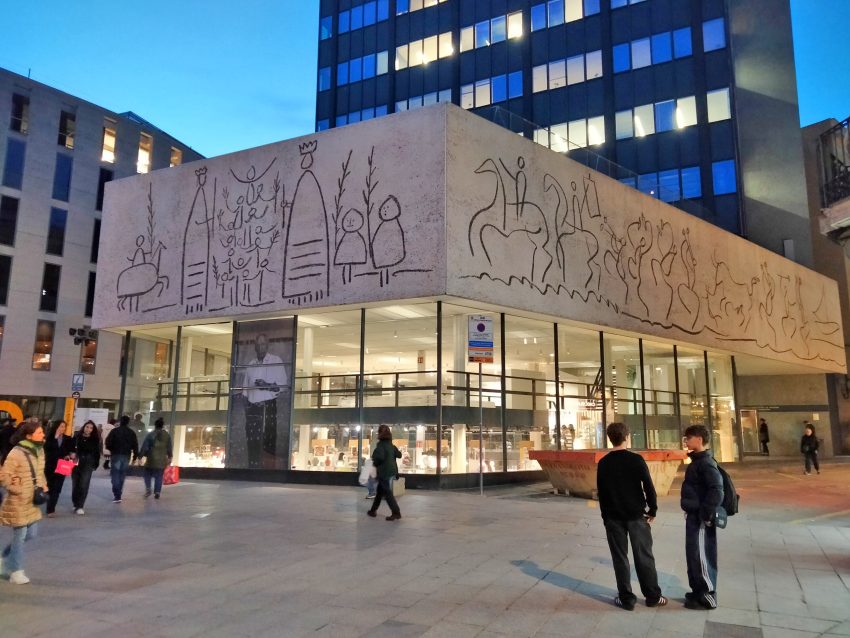
COAC (Col·legi d'Arquitectes de Catalunya) sits on Plaça Nova, directly opposite Barcelona Cathedral, making it one of the easiest “wow” stops to add to a Gothic Quarter wander. Even if you're not an architecture specialist, the building's exterior is a standout thanks to the Picasso friezes that wrap around the façade.
It's especially satisfying on a walking tour of the Barri Gòtic: you can pair COAC with the Cathedral, Plaça del Rei, and the nearby lanes in one compact loop. For the best views, circle the building slowly and look up from different corners of Plaça Nova to catch the friezes in changing light.
History and Significance of the COAC (Col·legi d’Arquitectes de Catalunya)
COAC is the professional home of Catalonia's architects, and its Plaça Nova headquarters has long been a symbolic address: right at the threshold between the Roman-and-medieval layers of the old city and the modern life of central Barcelona. Its position opposite the Cathedral makes it feel like part of the city's public stage, not just an institutional building.
What elevates it from “important office” to “must-notice landmark” is the artistic and cultural layer: the Picasso friezes on the exterior have become a visual signature of Plaça Nova. They're one of those Barcelona details many travelers walk past at first—until someone points up and suddenly the whole square changes.
In recent years, the building's role has also leaned into public-facing culture through architecture programming, talks, and exhibitions, reinforcing COAC as a place where design is discussed, debated, and shared—not only practiced.
Things to See and Do in the COAC (Col·legi d’Arquitectes de Catalunya)
Start outside. The Picasso friezes are the headline attraction for most visitors, and you don’t need a ticket to appreciate them. Do a full lap around the building to see how the artwork reads differently from each side, then step back toward the Cathedral steps for a wider, more balanced photo.
If you're able to go inside during public hours or events, look for architecture exhibitions, talks, and cultural programming that can add context to what you're seeing in the city streets. COAC is a great “reset stop” between major sights—more reflective, less crowded, and often calmer than the busiest Gothic Quarter corners.
Also keep an eye out for the on-site café/restaurant experience mentioned by visitors: it can be a surprisingly peaceful break when nearby tourist-heavy spots are packed, especially around lunchtime.
How to Get to the COAC (Col·legi d’Arquitectes de Catalunya)
The nearest major airport is Barcelona–El Prat (BCN), with Girona–Costa Brava (GRO) and Reus (REU) sometimes useful depending on your flights and season. For the best deals and a seamless booking experience, check out these flights to Barcelona on Booking.com.
If you're arriving by train, Barcelona Sants is the main hub; from there you can connect by Metro or taxi to the Gothic Quarter area around Jaume I or Liceu, then walk to Plaça Nova. Train schedules and bookings can be found on Omio.
Driving into central Barcelona is rarely the easiest option due to traffic restrictions and limited parking, so consider parking outside the core and finishing by Metro or on foot. If you are looking to rent a car in Spain I recommend having a look at Discover Cars, first, as they compare prices and review multiple car rental agencies for you.
Practical Tips on Visiting the COAC (Col·legi d’Arquitectes de Catalunya)
- Official website: https://www.centreobertarquitectura.com/
- Entrance fee: Free.
- Opening hours: Monday – Friday: 10:00–19:00. Saturday: 10:00–14:00. Closed on Sunday.
- Best time to visit: Go in the morning for softer light on the façade, or late afternoon when the square feels lively but not as hectic as midday.
- How long to spend: 10–20 minutes is enough for the exterior friezes; add 30–60 minutes more if you’re timing it with an exhibition or event.
- Accessibility: Plaça Nova is flat and easy to reach on foot; interior access can vary by event setup, so confirm ahead if you need step-free entry.
- Facilities: You’ll find plenty of nearby cafés and public amenities in the Cathedral area; on-site offerings depend on what’s open that day.
Where to Stay Close to the COAC (Col·legi d’Arquitectes de Catalunya)
Base yourself in the Gothic Quarter or the adjacent El Born area for the easiest walking access to COAC, the Cathedral, and many of Barcelona's classic old-town sights.
Hotel Neri Relais & Châteaux A luxe, atmospheric pick right in the Gothic Quarter—ideal if you want a quiet, design-forward stay steps from Plaça Nova.
Catalonia Catedral A practical, comfortable option extremely close to the Cathedral area, great for early-morning walks before the crowds build.
H10 Madison A stylish hotel with a rooftop scene that’s perfect for couples or friends who want old-town convenience with a modern finish.
Hotel Barcelona Catedral Reliable and central, with an easy in-and-out location for sightseeing days that start in the Gothic Quarter and end elsewhere.
Mercer Hotel Barcelona A splurge-worthy boutique stay with serious character—excellent if you want a memorable “Barcelona old city” experience.
Is the COAC (Col·legi d’Arquitectes de Catalunya) Worth Visiting?
Yes—especially if you're already exploring the Cathedral and the Gothic Quarter. The Picasso friezes make COAC a high-impact, low-effort stop: it's visually distinctive, culturally meaningful, and takes almost no extra time to work into your route.
Honest Pivot: if your schedule is tight and you're not interested in architecture, design, or public art details, you might treat it as a quick glance rather than a dedicated visit. It shines most for travelers who enjoy noticing the “layers” of Barcelona beyond the headline attractions.
What Other Travellers Say...

Reviews are very positive overall, with visitors highlighting the building’s central location by the Cathedral and the striking Picasso artwork on the façade. Several people describe it as a worthwhile stop for architecture and design lovers, and some mention a surprisingly calm on-site restaurant/café that feels like a refuge from the crowded streets nearby. A recurring downside is that access can be limited during renovations or when the interior is only open for specific events, so you may need to plan around what’s publicly available.


For Different Travelers
COAC works best as a flexible add-on: a quick exterior highlight for casual sightseers, or a deeper stop if you can align your visit with exhibitions and events. Because it's in such a central spot, it's easy to tailor to your pace and interests.
Families with Kids
Kids often respond well to the simple “treasure hunt” aspect—spotting the friezes, finding favorite shapes, and comparing what they see from different angles in the square. It’s also a good break point between bigger-ticket sights, with plenty of space to pause.
If you're traveling with a stroller, the surrounding streets can be narrow and busy, but Plaça Nova itself is straightforward. Keep the visit short and pair it with a snack stop nearby to keep energy up.
Couples & Romantic Getaways
For couples, COAC is a small, cultured moment in the middle of the Gothic Quarter—perfect for slowing down and noticing details together. The Cathedral-facing setting also makes it feel cinematic, especially in the softer light of morning or early evening.
Turn it into a mini-itinerary: friezes and photos in Plaça Nova, a stroll through the Gothic lanes, then drinks or tapas in nearby El Born. It's a simple plan that feels very “Barcelona” without over-scheduling.
Budget Travelers
This is an easy win for budget travelers because the best part—the exterior artwork and the location—costs nothing. You can build a full old-town walking loop around it and save paid attractions for the experiences you care about most.
If you're watching spending, consider timing your day so COAC is a mid-route rest stop rather than a detour. The area is packed with alternatives for affordable bites, bakeries, and quick coffee.
History Buffs
History buffs will appreciate COAC as part of a dense historical setting: Roman remnants, medieval streets, and the Cathedral precinct all converge here. The building adds a modern cultural layer to a square that already tells multiple centuries of Barcelona's story.
Use it as a lens: look outward from Plaça Nova to trace how the city evolved—then come back to the friezes as a reminder that Barcelona's heritage isn't only preserved, it's continuously reinterpreted.
FAQs for Visiting COAC (Col·legi d’Arquitectes de Catalunya)
Getting There
Tickets & Entry
Visiting Experience
Tours, Context & Itineraries
Photography
Accessibility & Facilities
Food & Breaks Nearby
Safety & Timing
Nearby Attractions to the COAC (Col·legi d’Arquitectes de Catalunya)
- Barcelona Cathedral (Catedral de Barcelona): The Gothic centerpiece of the old town, directly facing Plaça Nova.
- Plaça del Rei: A historic square with medieval architecture and a strong “old Barcelona” atmosphere.
- MUHBA (Barcelona History Museum): A deep dive into the city's past, with excellent context for the surrounding quarter.
- Las Ramblas: Barcelona's famous promenade, an easy walk from Plaça Nova for people-watching and quick connections.
- El Born: A nearby neighborhood for boutiques, tapas, and a more local-feeling stroll after the Gothic Quarter.
The COAC (Col·legi d’Arquitectes de Catalunya) appears in our Complete Guide to Visiting Barcelona!

Moira & Andy
Hey! We're Moira & Andy. From hiking the Camino to trips around Europe in Bert our campervan — we've been traveling together since retirement in 2020!
This website uses affiliate links which may earn a commission at no additional cost to you!
Planning Your Visit
Monday - Friday: 10:00-19:00.
Saturday: 10:00-14:00.
Closed on Sunday.
Free.
Nearby Attractions
- Mercat Gòtic (0.0) km
Attraction, Bazaar and Market - Plaça Nova (0.0) km
Square - Casa de l'Ardiaca (0.1) km
Archive, Courtyard and Historic Building - Cathedral of Barcelona (0.1) km
Cathedral, Historic Building and Religious Building - Church of Saint Philip Neri (0.1) km
Church, Historic Building and Religious Building - Plaça de Sant Felip Neri (0.1) km
Square - Museu Frederic Marès (0.1) km
Historic Site, Museum and Sculpture - Pont del Bisbe (0.2) km
Attraction and Bridge - Palau del Lloctinent (0.2) km
Archive, Historic Building and Palace - Els Quatre Gats (0.2) km
Arts Venue, Café and Historic Building