Civico Museo Teatrale Carlo Schmidl, Trieste
Historic Building, Museum and Theatre in Trieste
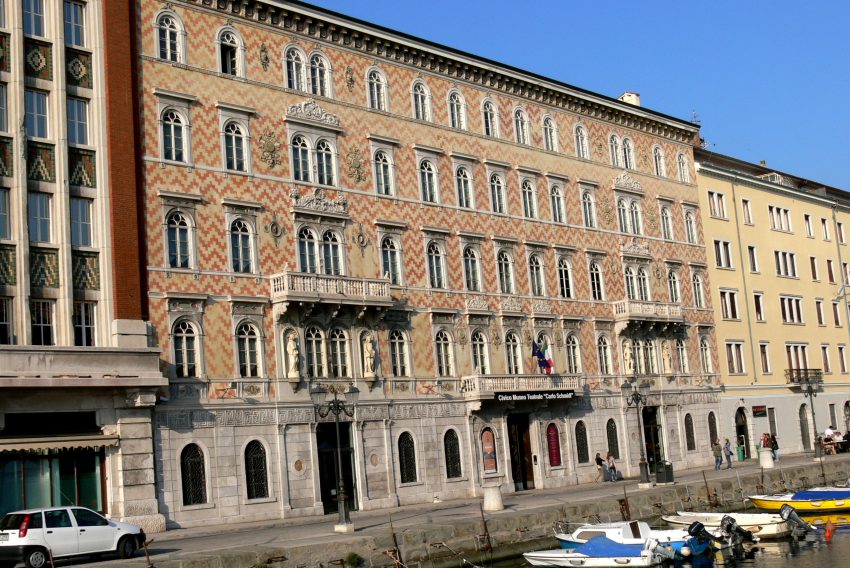
Civico Museo Teatrale Carlo Schmidl is one of Trieste's most rewarding small museums, dedicated to the city's rich theatre and music life. Housed inside the striking Palazzo Gopcevich on Via Rossini, it pairs elegant historic interiors with collections that range from instruments and scores to costumes, posters, and stage ephemera.
It's an easy add-on to a walking tour of central Trieste: stroll the Canal Grande, admire the palace façade from the water's edge, then head inside for an hour of culture that feels both local and surprisingly international. If you're choosing “best places to see” in the Borgo Teresiano area, this museum fits perfectly between cafés, the canal, and the city's grand 19th-century streets.
Table of Contents
- History and Significance of the Civico Museo Teatrale Carlo Schmidl
- Things to See and Do in the Civico Museo Teatrale Carlo Schmidl
- How to Get to the Civico Museo Teatrale Carlo Schmidl
- Practical Tips on Visiting the Civico Museo Teatrale Carlo Schmidl
- Where to Stay Close to the Civico Museo Teatrale Carlo Schmidl
- Is the Civico Museo Teatrale Carlo Schmidl Worth Visiting?
- For Different Travelers
- FAQs for Visiting Civico Museo Teatrale Carlo Schmidl
- Nearby Attractions to the Civico Museo Teatrale Carlo Schmidl
History and Significance of the Civico Museo Teatrale Carlo Schmidl
The museum traces its roots to Carlo Schmidl, a music publisher and collector whose passion for preserving Trieste’s performing-arts memory helped shape the institution. Over time, the collection grew into a civic reference point for anyone curious about how opera, theatre, and concert life evolved in this port city where cultures and languages have long overlapped.
Its current home, Palazzo Gopcevich, adds a second layer of significance: you’re not only seeing objects in display cases, you’re also moving through a landmark building that reflects Trieste’s 19th-century prosperity and cosmopolitan identity. The setting makes the visit feel like a blend of museum and architectural stop.
Beyond the displays, the Schmidl is also known as a documentation hub, with materials that support research into local performance history. That “museum plus archive” character is part of what makes it feel more substantial than its size suggests.
Things to See and Do in the Civico Museo Teatrale Carlo Schmidl
Start with the musical-instrument displays, which are often the highlight for visitors: you’ll see everything from historic instruments to mechanical music curiosities that connect directly to how people heard music before recordings became everyday. Even if you’re not a musician, the variety and craftsmanship make this section surprisingly engaging.
Next, look for theatre costumes, posters, photographs, and other stage memorabilia that bring Trieste’s performance scene to life. These pieces are especially fun if you’ve visited Teatro Verdi or have an opera night planned, because you’ll recognize names, styles, and the city’s long-running love for spectacle.
Finally, keep an eye out for smaller “wonder cabinet” moments: marionettes, optical and pre-cinema items, and temporary exhibitions that change what you’ll find from one visit to the next. The palace rooms themselves are part of the experience, so take a moment to look up at ceilings and details as you move through.
How to Get to the Civico Museo Teatrale Carlo Schmidl
The nearest major airports are Trieste Airport (TRS) for the quickest arrival, with Venice Marco Polo (VCE) as a common alternative if you're combining Trieste with a wider northern Italy itinerary. For the best deals and a seamless booking experience, check out these flights to Trieste on Booking.com.
Trieste is well connected by rail, and arriving at Trieste Centrale is a convenient option if you're coming from Venice, Udine, or other cities in the region; from the station, you can continue on foot, by bus, or with a short taxi ride toward the Canal Grande area. Use Omnio to easily compare schedules, book train tickets, and find the best prices all in one place for a hassle-free journey across Italy.
If you’re traveling by car, aim for a garage or paid parking on the edge of the center and finish the last stretch on foot, since the museum sits in a busy, walkable part of town near the canal. If you are looking to rent a car in Italy I recommend having a look at Discover Cars, first, as they compare prices and review multiple car rental agencies for you.
Practical Tips on Visiting the Civico Museo Teatrale Carlo Schmidl
- Official website: https://www.museoschmidl.it/
- Entrance fee: Adults: €5.00; Reduced: €4.00; Schools: €1.00; Audioguide: €3.50. Free entry on the first Sunday of the month and on November 3.
- Opening hours: Wednesday – Sunday: 10:00–17:00. Closed on Monday, Tuesday.
- Best time to visit: Late morning on a weekday is ideal for a calmer experience, then pair it with a Canal Grande stroll and a café stop nearby.
- How long to spend: Plan 60–90 minutes for the highlights; add time if you like reading labels closely or catching a temporary exhibition.
- Accessibility: The museum is inside a historic building; expect elevators and stairs depending on the route, and it’s smart to confirm any specific needs before you go.
- Facilities: You’ll find ticketing on site and a museum-style visit flow; plan your main meal at nearby cafés and restaurants around the canal.
Where to Stay Close to the Civico Museo Teatrale Carlo Schmidl
Base yourself in central Trieste (Borgo Teresiano / Canal Grande area) for the easiest walking access to the museum, the waterfront, and the city's main sights.
Savoia Excelsior Palace Trieste A classic choice for a special stay: you're near the waterfront promenade, and it's a short, scenic walk back toward the Canal Grande and Palazzo Gopcevich.
DoubleTree by Hilton Trieste Great for comfort and transport convenience, with an easy walk to the museum and a central base for exploring on foot.
NH Trieste A practical pick close to Trieste Centrale, ideal if you're arriving by train and want a straightforward route to the canal and museum.
Hotel Continentale A solid mid-range option in the heart of the shopping and café streets, making it easy to build the museum into a relaxed day of wandering.
Urban Hotel Design A stylish boutique stay that suits travelers who want a modern feel while remaining close to the historic center and the Canal Grande.
Is the Civico Museo Teatrale Carlo Schmidl Worth Visiting?
Yes, especially if you enjoy museums that feel specific to a city rather than generic. The combination of musical instruments, theatre history, and the beautiful Palazzo Gopcevich setting makes it a high-value stop that fits neatly into a central Trieste day.
Honest Pivot: if you’re short on time and not interested in music, theatre, or small-object collections, you may prefer to prioritize Trieste’s big “open-air” highlights (piazzas, viewpoints, waterfront walks) and skip this in favor of more panoramic experiences.
What Other Travellers Say...

Reviews are overwhelmingly positive, with visitors praising the rich collection of musical instruments, theatre costumes, and smaller curiosities like puppets and optical items, all set inside an impressive historic palace overlooking the Canal Grande. Many mention it as a great-value stop that's easy to add to a central walk. Common downsides are minor: it can feel niche if you're not interested in music or theatre, and the museum's compact size means some travelers may wish for more extensive displays.


For Different Travelers
The Schmidl works best as a compact, culture-rich break between outdoor sightseeing stops. Because it’s central, it’s easy to tailor the visit to your pace and interests.
Families with Kids
Kids who like “curious objects” tend to enjoy the variety here, especially the more visual items like costumes, puppets, and unusual instruments. Keeping the visit shorter and turning it into a scavenger-hunt style walk through the rooms can help maintain attention.
Pair it with a post-museum treat along the Canal Grande, where there's plenty to see outside without needing another ticket. It's a good rainy-day option when you want something indoors that still feels tied to the city.
Couples & Romantic Getaways
For couples, the museum is a charming, low-stress cultural stop that complements a romantic Trieste itinerary. The palace interiors and canal setting make it feel more atmospheric than a typical niche museum.
Consider visiting before an evening performance elsewhere in the city, or use it as a conversation-starter stop before a long aperitivo by the water. It’s especially appealing if you like arts-focused travel.
Budget Travelers
This is a strong value visit: it's centrally located, easy to reach on foot, and typically priced lower than many major-city museums. You can build an entire day around free walking (Canal Grande, waterfront, central streets) and use the museum as your paid “anchor” attraction.
If you’re watching costs, time your visit around other low-cost highlights nearby and keep meals simple with bakeries and casual cafés in the center. The museum’s compact size also means you won’t feel pressured to spend hours to “get your money’s worth.”
History Buffs
History lovers will appreciate how the museum tells Trieste’s story through performance culture, which often reflects politics, language, and identity shifts over time. The posters, programs, and archival feel give a sense of how the city presented itself to audiences across generations.
Also, the building itself is part of the historical experience, offering a tangible link to Trieste’s 19th-century merchant era. Even a quick visit can add depth to what you’ve seen outside in the Borgo Teresiano.
FAQs for Visiting Civico Museo Teatrale Carlo Schmidl
Getting There
Tickets & Entry
Visiting Experience
Tours, Context & Itineraries
Photography
Accessibility & Facilities
Food & Breaks Nearby
Safety & Timing
Nearby Attractions to the Civico Museo Teatrale Carlo Schmidl
- Canal Grande (Trieste): A photogenic canal lined with cafés and bridges, perfect for a relaxed stroll before or after the museum.
- Piazza Unità d’Italia: Trieste’s grand main square opening to the sea, ideal for architecture lovers and sunset views.
- Teatro Lirico Giuseppe Verdi: The city's historic opera house, a natural pairing if the museum sparks your interest in performances.
- Borgo Teresiano: The elegant central district of grid streets, neoclassical façades, and everyday Trieste life.
- Molo Audace: A long pier reaching into the Adriatic, offering one of the best simple viewpoints in the city.
The Civico Museo Teatrale Carlo Schmidl appears in our Complete Guide to Visiting Trieste!

Moira & Andy
Hey! We're Moira & Andy. From hiking the Camino to trips around Europe in Bert our campervan — we've been traveling together since retirement in 2020!
This website uses affiliate links which may earn a commission at no additional cost to you!
Planning Your Visit
Wednesday - Sunday: 10:00-17:00.
Closed on Monday, Tuesday.
Adults: €5.00; Reduced: €4.00; Schools: €1.00; Audioguide: €3.50. Free entry on the first Sunday of the month and on November 3.
Nearby Attractions
- Canal Grande (0.1) km
Attraction, Canal and Promenade - Teatro Lirico Giuseppe Verdi (0.3) km
Arts Venue, Opera House and Theatre - Molo Audace (0.3) km
Pier, Viewing Point and Walk - Palazzo della Luogotenenza Austriaca (0.3) km
Historic Building, Palace and Square - Fontana dei Quattro Continenti (0.4) km
Fountain, Sculpture and Square - Palazzo del Lloyd Triestino (0.4) km
Attraction, Historic Building and Palace - Palazzo del Municipio (0.4) km
Historic Building, Square and Town Hall - Teatro Romano di Trieste (0.4) km
Roman Site, Ruins and Theatre - Civico Museo d'Arte Orientale (0.5) km
Attraction and Museum - Antiquarium di via del Seminario (0.5) km
Attraction, Historic Site and Roman Site