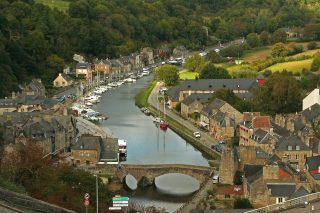
Cité d’Alet, Saint-Malo
Historic Site in Saint-Malo
The Cité d'Alet is the rocky peninsula in Saint-Servan where Saint-Malo's story feels at its most “geographical”: water on three sides, big skies, and viewpoints that make you understand instantly why people chose this place long before the walled city took shape. It's one of the top sights in Saint-Malo for panoramic walking, because you get a wide-angle perspective over the Rance estuary, the bay, and the coastline toward Dinard without needing a long hike.
What makes it especially rewarding is how naturally it fits into a walking tour of Saint-Malo that goes beyond Intra-Muros. You can come here for the views alone, but you also pick up traces of older Saint-Malo-Roman-era foundations, later defensive thinking, and the stark wartime remnants that still sit in the landscape.
Table of Contents
- History and Significance of the Cité d’Alet
- Things to See and Do in the Cité d’Alet
- How to Get to the Cité d’Alet
- Practical Tips on Visiting the Cité d’Alet
- Where to Stay Close to the Cité d’Alet
- Is the Cité d’Alet Worth Visiting?
- For Different Travelers
- FAQs for Visiting the Cité d’Alet
- Nearby Attractions to the Cité d’Alet
History and Significance of the Cité d’Alet
Cité d'Alet is often described as the original heart of the area before the main settlement consolidated around the current walled city. Its position at the mouth of the Rance made it strategically valuable, and that logic shows up again and again throughout its history: whoever controlled this headland could watch movement on the water and protect the approaches.
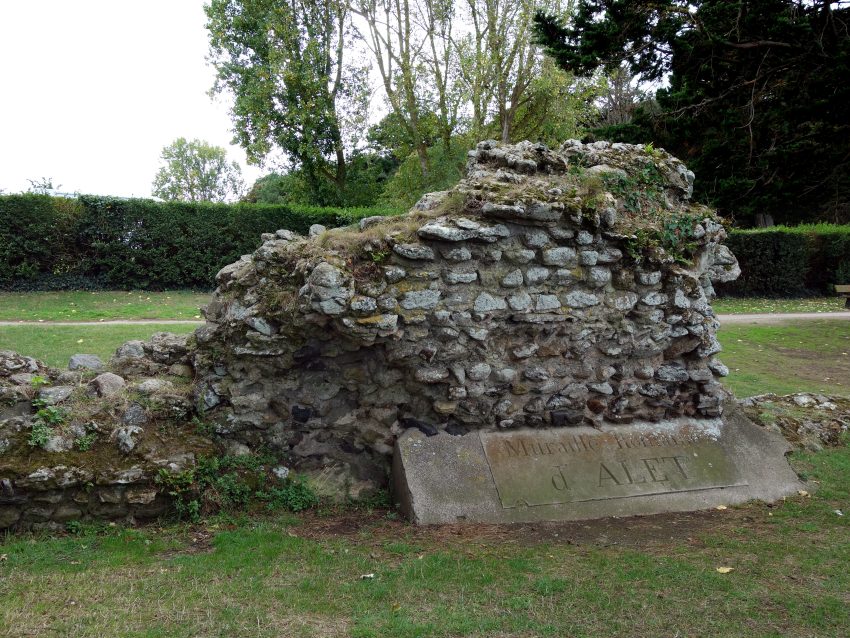
The site’s Roman-era layer is part of what gives it depth. Even if the surviving remains are modest, the idea of a fortified coastal settlement here makes sense when you stand at the viewpoints and see how the peninsula commands the estuary and the sea approaches.
World War II adds the most immediate, visible contrast. German fortifications and bunkers were placed here to control the harbour entrance and coastal approaches, and that wartime infrastructure still shapes the atmosphere, especially when you move from open viewpoints into more enclosed, concrete spaces that feel deliberately defensive.
Things to See and Do in the Cité d’Alet
Start with the viewpoints and let the landscape set the tone. The best moments are often the simplest: watching boats track the channel on the Rance, looking across toward Dinard, and seeing the walled city from an angle that makes it feel like a fortress floating between sea and sky.
Then follow the walking paths through the peninsula’s greener, quieter sections. The wooded stretches make the place feel more like a local park than a headline attraction, which is exactly why it works so well as a calmer counterbalance to the busy streets of Intra-Muros.
If you’re drawn to military history, seek out the wartime remnants as you walk. Even without going deep into interpretation, the forms are expressive: thick concrete, narrow openings, and sightlines designed for surveillance. It’s also a strong photography spot, especially when you frame the coastline through foreground textures-stone, scrub, and the hard geometry of fortifications.
How to Get to the Cité d’Alet
Cité d'Alet sits in Saint-Servan, outside the Intra-Muros walls, so it's easiest to treat it as a purposeful outing rather than a quick detour from the old town. The nearest airports for reaching Saint-Malo are Dinard-Pleurtuit-Saint-Malo (DNR) and Rennes-Saint-Jacques (RNS). For the best deals and a seamless booking experience, check out these flights to Saint-Malo on Booking.com.
Saint-Malo train station is the main rail hub, and from there you can reach Saint-Servan by local bus or taxi, then walk the final stretch to the peninsula viewpoints.You can use SNCF Connect to check schedules, compare routes, and purchase tickets for National (SNCF ) and regional trains (TER). For a more streamlined experience, we recommend using Omio, which allows you to easily compare prices, schedules, and book tickets for both National and Regional travel across all of Europe, all in one place. If you’re already in Intra-Muros, you can also walk along the waterfront toward Saint-Servan, which turns the journey into a scenic coastal approach.
Local buses are a practical option if you want to save your energy for the peninsula paths rather than the transfer, especially in peak season when the old town feels crowded.
If you are driving, park in Saint-Servan near the peninsula access points and finish on foot, which keeps the visit simple and avoids the tightest Intra-Muros traffic.If you are looking to rent a car in France I recommend having a look at Discover Cars, first, as they compare prices and review multiple car rental agencies for you.
Practical Tips on Visiting the Cité d’Alet
- Entrance fee: Free
- Opening hours: 24 Hours
- Best time to visit: Go late afternoon for softer light over the estuary and a calmer feel, or pick a clear morning if you want crisp views and fewer people.
- How long to spend: 60-90 minutes for a satisfying loop with viewpoint stops, longer if you like slow photography or want to explore every path.
- Accessibility: Expect uneven surfaces, occasional slopes, and exposed edges at viewpoints, so it can be challenging for limited mobility and less suitable for strollers on some routes.
- Facilities: Bring water and a light wind layer, as the peninsula can feel much cooler than the city streets and amenities are limited compared with Intra-Muros.
Where to Stay Close to the Cité d’Alet
For a culture-heavy itinerary, base yourself Intra-Muros so you can walk to the ramparts, cathedral, and main sights early and late; for a quieter trip focused on waterfront walks and local neighbourhood atmosphere, Saint-Servan is the best area to base yourself.
If you want a practical base in Saint-Servan for easy access to the peninsula and the harbour feel, Hôtel Ar Terra Nova keeps you close without feeling touristy. For a classic stay inside the walls that suits first-time sightseeing and easy evenings, Hôtel France et Chateaubriand puts you right at the old town’s main gateway. If you prefer sea-facing promenade energy with simple access to Saint-Servan and Intra-Muros on foot, Best Western Alexandra works well for a walk-heavy itinerary.
Is the Cité d’Alet Worth Visiting?
Yes, especially if you want Saint-Malo to feel bigger than the walled city. The viewpoints give you a genuinely different perspective on the coastline and harbour geography, and the quieter paths make it feel like a local escape rather than another busy stop.
It’s also worth it if you like places where history is embedded in the terrain. The mix of ancient strategic logic and modern wartime remnants makes the peninsula feel layered, and the sea-and-estuary setting ties it all together.
What Other Travellers Say...

Archaeological Regional Center Alet on Rue de Gaspé in Saint-Malo offers a warm, professional welcome and a strong focus on regional history; visitors praise the knowledgeable staff, a well-curated cultural site and an impressive selection of books available to consult or buy on site.


For Different Travelers
Families with Kids
This works well for families who want space to roam and a change from narrow old-town streets. The best approach is to keep it simple: viewpoints first, then a short loop, then back for food, rather than trying to “cover everything.”
Because there are exposed edges and uneven paths, it’s best for kids who can walk confidently and follow basic safety cues. Choose calmer weather so the wind doesn’t turn a fun walk into a battle.
Couples & Romantic Getaways
For couples, the Cité d'Alet is quietly atmospheric, especially in softer light when the estuary looks glassy and the city skyline feels cinematic. It's a place for slow conversation and shared views rather than structured sightseeing.
Pair it with a Saint-Servan waterfront stroll and an unhurried drink afterwards. The peninsula adds a calmer, more local chapter to a Saint-Malo trip that might otherwise stay inside the walls.
Budget Travelers
This is a high-value stop because it’s free and delivers some of the best panoramas in the area. You can build a full, satisfying half-day around walking: peninsula viewpoints, waterfront routes, and self-guided exploring without paying for an attraction.
If you’re watching costs, bring a picnic-style snack and treat it as a scenic anchor between other free highlights like ramparts viewpoints and beach walks.
FAQs for Visiting the Cité d’Alet
Getting There
Visiting Experience
Tours, Context & Itineraries
Photography
Accessibility & Facilities
Nearby Attractions to the Cité d’Alet
- Mémorial 39/45: A powerful WWII bunker museum experience that adds depth to Saint-Malo’s liberation story.
- Tour Solidor: The medieval triple-towered fortress by the Rance, ideal for pairing with a Saint-Servan waterfront stroll.
- Port Solidor: A photogenic marina corner with a calm harbour feel and easy waterside walking.
- Plage des Bas-Sablons: A quieter local beach in Saint-Servan that works well as a relaxed shoreline stop.
- Saint-Malo Ramparts: The classic Intra-Muros wall walk, perfect for contrasting with the peninsula's broader panoramas.
The Cité d’Alet appears in our Complete Guide to Visiting Saint-Malo!

Moira & Andy
Hey! We're Moira & Andy. From hiking the Camino to trips around Europe in Bert our campervan — we've been traveling together since retirement in 2020!
This website uses affiliate links which may earn a commission at no additional cost to you!
Planning Your Visit
24 Hours
Free
Nearby Attractions
- Mémorial 39-45 (0.2) km
Museum - Tour Solidor (0.4) km
Museum and Tower - Môle Des Noires Lighthouse (0.8) km
Lighthouse - La Demeure de Corsaire (1.1) km
Historic Building and Museum - Bastion de la Hollande (1.1) km
Tower - Plage de Bon-Secours (1.2) km
Beach - Saint-Vincent Cathedral (1.3) km
Cathedral - Maison du Québec (1.4) km
Arts Venue - Saint-Malo Ramparts (1.4) km
City Walls - Tour Bidouane (1.5) km
Tower