Citania de Santa Luzia, Viana do Castelo
Historic Site in Viana do Castelo
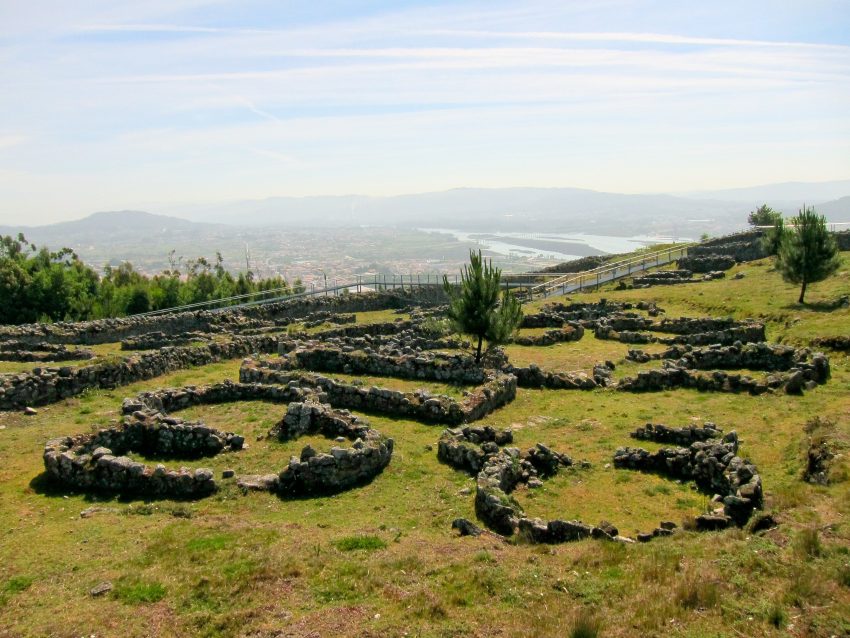
Citânia de Santa Luzia is the “old town” of Monte de Santa Luzia: a fortified Iron Age settlement later shaped by Roman presence, perched high above Viana do Castelo where the land drops toward the Lima estuary and the Atlantic beyond. It's an open-air archaeological site with a quiet, windswept feel-more like walking through a stone blueprint than visiting a conventional museum-yet the setting is dramatic enough that you'll catch yourself stopping just to look outward.
What makes it memorable is the mix of history and landscape. You can trace circular house plans, spot vestibules and atrium-like entrances, and imagine daily life in a community built to watch the river mouth and the coastal approaches. If you're planning a walking tour of Viana do Castelo, this spot is one of the must-see places in Viana do Castelo to add on as a hilltop chapter: part ruins, part viewpoint, and entirely different in mood from the streets below.
Table of Contents
- History and Significance of the Citânia de Santa Luzia
- Things to See and Do in the Citânia de Santa Luzia
- How to Get to the Citânia de Santa Luzia
- Practical Tips on Visiting the Citânia de Santa Luzia
- Where to Stay Close to the Citânia de Santa Luzia
- Is the Citânia de Santa Luzia Worth Visiting?
- For Different Travelers
- FAQs for Visiting Citânia de Santa Luzia
- Nearby Attractions to the Citânia de Santa Luzia
History and Significance of the Citânia de Santa Luzia
Citânia de Santa Luzia is considered one of the most important castros in northern Portugal because it captures a long span of occupation, from the Iron Age into the Roman era, in a location chosen for control as much as shelter. From this ridge you can read the logic of the site instantly: it dominates the approaches to the Lima River mouth, a strategic corridor in antiquity when rivers functioned as real transport routes rather than scenic backdrops.
The settlement is also valuable for what it reveals about change over time. Protohistoric planning and building traditions are still visible in the layout and defensive intent, while Romanisation can be sensed in how space was reworked and organised as influences and systems shifted across the region. For anyone interested in how “everyday life” evolves under new political and economic realities, Citânia offers a rare, walk-through case study.
Things to See and Do in the Citânia de Santa Luzia
Begin by taking a slow loop through the core ruins, letting the circular foundations guide you rather than rushing to “see everything.” Some structures show distinctive polygonal stonework, and several floor plans include vestibule-like thresholds that make the houses feel designed, not improvised. Keep an eye out for evidence of ovens and domestic working areas-small details that bring the site to life more than any grand monument could.
Next, treat the perimeter as a viewpoint walk. The ruins sit in a landscape that was chosen to observe and control, so the best way to understand the citânia is to look out from it: the river valley, the estuary, the coastline, and the patchwork of green hills that define this corner of Minho. On a clear day, it’s easy to understand why the hill became a focal point for both settlement and later pilgrimage sites nearby.
Finally, pair the visit with nearby Monte de Santa Luzia highlights for a compact hilltop itinerary. Citânia works particularly well before or after the basilica terraces, because you get two different “readings” of the same landscape: one through archaeology, the other through architecture and views.
How to Get to the Citânia de Santa Luzia
The closest major airport for most travelers is Porto Airport (OPO), with onward connections to Viana do Castelo by rail or road. For the best deals and a seamless booking experience, check out these flights to Viana do Castelo on Booking.com. Vigo Airport (VGO) can also be useful if you're coming from Galicia and want a shorter cross-border route into northern Portugal. For the best deals and a seamless booking experience, check out these flights to Viana do Castelo on Booking.com.
Viana do Castelo has direct rail links along the northern line, making it an easy arrival from Porto and other towns in the region. Train schedules and bookings can be found on Omio. From the station area, you can connect to Monte de Santa Luzia via taxi/rideshare or by using the Santa Luzia funicular and then walking the final stretch to the ruins.
Buses are another workable option, especially for budget itineraries, but schedules can be less frequent than trains, so it’s worth timing your day to avoid long waits. Once you’re in town, the “last mile” is the main consideration: the site is uphill and exposed, so plan footwear and layers accordingly.
If you're driving, follow signs for Monte de Santa Luzia and aim to park near the main hilltop areas, then walk to the archaeological zone from there. If you are looking to rent a car in Portugal I recommend having a look at Discover Cars, first, as they compare prices and review multiple car rental agencies for you.
Practical Tips on Visiting the Citânia de Santa Luzia
- Entrance fee: Adult: €2.
- Opening hours: Tuesday – Sunday: 10:00–12:30 & 14:00–18:00. Closed on Monday; 1 January; Easter Sunday; 1 May; 25 December; 20 August (municipal holiday).
- Official website: https://bilheteira.patrimoniocultural.gov.pt/pt/monument/6
- Best time to visit: Go in the first hour after opening or later afternoon for softer light, fewer people, and better photos without harsh glare.
- How long to spend: Allow 60-90 minutes for an unhurried circuit plus viewpoint stops; add time if you’re combining it with the hilltop basilica.
- Accessibility: The site is uneven and outdoors, with rough paths and stone surfaces, so it can be challenging for limited mobility.
- Facilities: Expect minimal on-site amenities; bring water, sun protection, and a wind layer, as conditions can change quickly on the hill.
Where to Stay Close to the Citânia de Santa Luzia
For a culture-heavy itinerary, base yourself in Viana do Castelo's historic centre near the main squares and restaurants, but if your priority is hilltop views and quick access to Monte de Santa Luzia, staying up by the sanctuary area is the most convenient choice.
For the “wake up above the city” option, Pousada de Viana do Castelo is hard to beat for location and atmosphere, especially if sunrise or evening panoramas are part of your plan. If you prefer a central base that keeps the station, old streets, and dining easy, Hotel Laranjeira is a practical, walkable choice. For a coastal-leaning stay that still works for quick trips back into town, Hotel Flôr de Sal suits travelers who want sea air alongside city sightseeing.
Is the Citânia de Santa Luzia Worth Visiting?
Yes-especially if you like places where you can physically walk the outline of history rather than viewing it behind glass. The ruins are not “showy” in a polished way, but they’re atmospheric, and the combination of settlement remains plus commanding views makes the visit feel larger than the footprint of the site.
It’s also an excellent complement to Viana do Castelo’s churches, squares, and maritime sights. Citânia adds a deeper time layer to the trip: a reminder that the city’s story didn’t begin with baroque façades, but with strategic hilltops and communities built to watch the river and coast.
What Other Travellers Say...

Citania Santa Luzia sits on a mountaintop in Viana do Castelo as an open‑air museum built over Iron Age ruins; visitors praise the overhead walkways that offer strong views and the chance to explore ground‑level remains, though some find the metal structures intrusive and note a lack of explanatory panels. Entry is inexpensive and access can be reached via the Santa Luzia elevator plus a short walk; parking is small and there's limited bike parking, but a disabled path is available. Overall it's a compact, atmospheric archaeological site—worth a short visit, especially if combined with the nearby church.


For Different Travelers
Families with Kids
This is a good pick for families who do well with outdoor sites, because kids can move, explore, and “spot the shapes” of old houses without the quiet rules of indoor museums. Framing it as a mini adventure-finding circular homes, imagining ovens, and looking for the best viewpoint-helps keep it engaging.
The main challenge is terrain. Paths can be uneven and slippery in wet weather, so sturdy shoes matter, and younger kids may need closer supervision around stone edges and rough ground.
Couples & Romantic Getaways
For couples, Citânia is less about romance in the classic sense and more about shared discovery: a calm, windswept walk through ruins with wide-open views and a feeling of being above it all. It’s especially rewarding in late afternoon when the light softens and the hill feels quieter.
Pair it with the sanctuary terraces nearby and then return to town for dinner. The contrast-ancient stones and big skies followed by warm lights in the old centre-makes for a satisfying, storybook-style evening.
Budget Travelers
Citânia is high value: a low-cost ticket for a distinctive experience that doubles as a viewpoint stop. If you time it well, you can build a full day around it by combining the hilltop area with free strolling in the historic centre and riverside.
To keep costs down, use rail into Viana do Castelo and walk or use the funicular selectively depending on energy. Bring water and a snack so you're not forced into a pricey “emergency café” moment on the hill.
History Buffs
If you’re interested in Protohistory and Romanisation, this is one of those sites where the academic terms become tangible. You can see how defensive placement, settlement planning, and domestic architecture work together-and how later influence reshapes, rather than replaces, what came before.
Go slowly and look for construction details: polygonal stonework, thresholds and vestibules, and the way houses cluster into neighbourhood-like pockets. The site rewards careful observation more than speed.
FAQs for Visiting Citânia de Santa Luzia
Getting There
Tickets & Entry
Visiting Experience
Tours, Context & Itineraries
Photography
Accessibility & Facilities
Food & Breaks Nearby
Safety & Timing
Nearby Attractions to the Citânia de Santa Luzia
- Santuário de Santa Luzia: The hilltop basilica nearby, famous for its architecture and panoramic terraces over the city and coastline.
- Elevador de Santa Luzia (Funicular): A scenic way to reach Monte de Santa Luzia that turns the ascent into part of the experience.
- Praça da República: Viana do Castelo's central square, ideal for cafés, people-watching, and historic centre wandering after the hilltop.
- Navio Hospital Gil Eannes: A museum ship you can explore room by room, offering a vivid look into maritime and medical history.
- Museu do Traje: A strong companion stop for understanding local identity through traditional dress, textiles, and regional culture.
The Citania de Santa Luzia appears in our Complete Guide to Visiting Viana do Castelo!

Moira & Andy
Hey! We're Moira & Andy. From hiking the Camino to trips around Europe in Bert our campervan — we've been traveling together since retirement in 2020!
This website uses affiliate links which may earn a commission at no additional cost to you!
Planning Your Visit
Tuesday - Sunday: 10:00-12:30 & 14:00-18:00.
Closed on Monday; 1 January; Easter Sunday; 1 May; 25 December; 20 August (municipal holiday).
Adult: €2.
Nearby Attractions
- Santuário de Santa Luzia (0.4) km
Basilica - Elevador de Santa Luzia (1.0) km
Railway - Igreja da Misericórdia de Viana do Castelo (1.4) km
Church - Praça da República (1.4) km
Square - Sé Catedral de Viana do Castelo (1.5) km
Cathedral - Museu de Artes Decorativas (1.5) km
Historic Building and Museum - Casa dos Nichos (1.6) km
Historic Site and Museum - Navio Hospital Gil Eannes (1.7) km
Museum - Forte de Santiago da Barra (1.8) km
Castle - Castro de S. Lourenço (17.6) km
Historic Site