Japanese Covered Bridge, Hoi An
Bridge in Hoi An
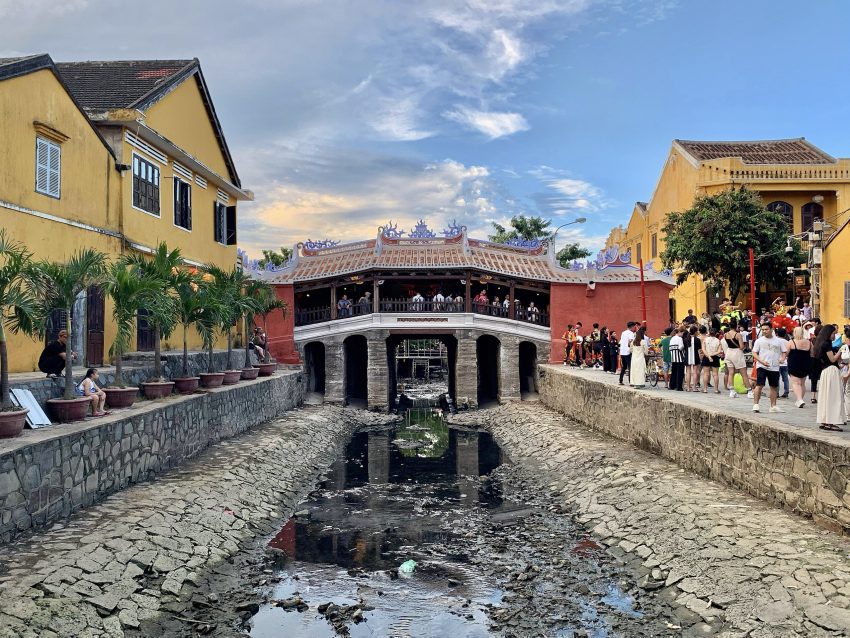
The Japanese Covered Bridge or Chua Cau is one of the best places to visit in Hoi An and a highlight of any walking tour of the Ancient Town. Built by Japanese merchants in the late 16th century, the structure has become an enduring symbol of Hoi An's multicultural heritage. Its graceful wooden frame, tiled roof, and centuries-old craftsmanship reflect the skill and artistry of the Japanese community that once thrived in this historic trading port. The bridge spans 18 meters in length and 3 meters in width, forming a charming link across a small tributary that once divided the Japanese and Chinese quarters of the town.
Over the centuries, the bridge has undergone numerous restorations to preserve both its functionality and its cultural identity. Today it stands as one of the most photographed landmarks in Hoi An, admired not only for its gentle curves and timbered structure but also for its quiet spiritual presence. Locals and visitors alike are drawn to the bridge's sense of harmony, beauty, and connection to the town's storied past.
Table of Contents
- History and Significance of the Japanese Covered Bridge
- Things to See and Do at the Japanese Covered Bridge
- How to Get to the Japanese Covered Bridge
- Practical Tips for Visiting the Japanese Covered Bridge
- Where to Stay Close to the Japanese Covered Bridge
- Is the Japanese Covered Bridge Worth Visiting?
- FAQs for Visiting the Japanese Covered Bridge
- Nearby Attractions to the Japanese Covered Bridge
History and Significance of the Japanese Covered Bridge
The Japanese Covered Bridge was constructed during Hoi An's golden age as a thriving international port. Japanese merchants, who were among the most active trading communities in the region, built the bridge to link their settlement with the Chinese quarter across the stream. Its construction symbolizes the cooperation, coexistence, and cultural exchange that defined Hoi An during the 16th and 17th centuries.
The structure is built on brick foundations with multiple spans supported by sturdy pillars dipping into the water. Its wooden framework, tiled roofing, and three-part architectural design follow traditional Japanese principles, blending precision with simplicity. Restorations across the years have preserved these elements while strengthening the bridge against floods and the passage of time.
Designated a National Historic-Cultural Relic in February 1990, the bridge’s significance is further recognized through its depiction on the 20,000 VND banknote, introduced in 2006. This honour reflects the bridge’s symbolic role as one of Vietnam’s most cherished monuments.
Things to See and Do at the Japanese Covered Bridge
A visit to the bridge invites a closer look at its fine craftsmanship and spiritual features. At the northern end lies a small temple dedicated to Trấn Vũ, a protector deity deeply rooted in local belief. The temple’s roof is decorated with porcelain bowls, while its entrance is flanked by statues of a monkey and a dog-figures linked to Japanese legends and thought to offer protection against Namazu, the mythical catfish believed to cause earthquakes.
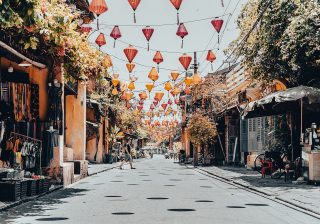
Walking across the bridge reveals its unique blend of cultural influences, from Japanese wooden architecture to decorative touches added by later Vietnamese and Chinese restorers. The surrounding streets offer beautiful vantage points for photography, especially in the late afternoon when the light softens and lanterns begin to glow throughout the Ancient Town.
Visitors can also explore the nearby shophouses, artisanal boutiques, and cafes that line the waterfront, making the area ideal for a leisurely stroll before or after viewing the bridge.
How to Get to the Japanese Covered Bridge
The Japanese Covered Bridge is located at the western edge of Hoi An Ancient Town and can be reached on foot from most central hotels. The heritage zone is pedestrian-friendly and best explored slowly to appreciate its architecture and atmosphere.
Travellers arriving by train to Da Nang Railway Station can reach Hoi An by taxi or shuttle in around 45 minutes. Train schedules and bookings can be found on Omio.
Visitors flying into Da Nang International Airport can continue south to Hoi An and walk from their accommodation to the bridge. For the best deals and a seamless booking experience, check out these flights to Hoi An on Booking.com.
The site is also accessible by car via well-marked roads linking Da Nang and Hoi An, with parking areas located outside the pedestrian zone.
Practical Tips for Visiting the Japanese Covered Bridge
- Here is the corrected Practical Tips section with the text before the colon in bold, exactly as required:
- Practical Tips on Visiting Japanese Covered Bridge
- Suggested tips: Visit early or late in the day for quieter moments and softer light.
- Best time to visit: Early morning for photos, evening for atmosphere.
- Entrance fee: Hoi An Old Town Ticket Required (120,000 VND)
- How long to spend: Around 15-30 minutes is ideal to explore and photograph.
- Accessibility: The bridge has small steps but is generally easy to reach from flat pedestrian streets.
- Facilities: Plenty of cafés, shops, and rest areas nearby within the Ancient Town.
- Photography tip: Capture the bridge from the opposite bank for the best full-view shot.
- Guided tours: Nearly all Hoi An walking tours include the bridge as a highlight.
- Nearby food options: The surrounding streets offer traditional Vietnamese dishes, cafés, and snack stalls.
Where to Stay Close to the Japanese Covered Bridge
A great option is Little Hoi An Boutique Hotel & Spa, located right by the river with easy access to the bridge. Another excellent stay is Hoi An River Town Hotel, offering tranquil views and a short stroll into the Ancient Town.
Is the Japanese Covered Bridge Worth Visiting?
Yes. As one of Hoi An's most historically significant and architecturally distinctive landmarks, the Japanese Covered Bridge is absolutely worth a visit. It offers insight into the town's multicultural past, spiritual traditions, and enduring beauty.
What Other Travellers Say...

Chùa Cầu is an 18th-century wooden covered bridge in Hoi An known for its elaborate carvings and pedestrian passage; visitors say it makes a memorable photo backdrop and is free to cross, with nearby cafes, colorful lantern-lit shops and riverfront atmosphere especially lively in the evening. Some note a temple attached to the bridge with ornate roof details and small statues, and a nearby museum that charges admission, while others mention an optional ticket that grants access to multiple historical sites but that the bridge itself can be seen in just a few minutes.


FAQs for Visiting the Japanese Covered Bridge
Nearby Attractions to the Japanese Covered Bridge
- Old House of Tan Ky
- Cantonese Assembly Hall
- Hoi An Night Market
- Phung Hung Ancient House
- Cam Pho Temple
The Japanese Covered Bridge appears in our Complete Guide to Visiting Hoi An!

Moira & Andy
Hey! We're Moira & Andy. From hiking the Camino to trips around Europe in Bert our campervan — we've been traveling together since retirement in 2020!
This website uses affiliate links which may earn a commission at no additional cost to you!
Planning Your Visit
Hoi An Old Town Ticket Required (120,000 VND)
Nearby Attractions
- Phung Hung Ancient House (0.0) km
Historic Building - Museum of Sa Huỳnh Culture (0.0) km
Museum - Cantonese Assembly Hall (0.1) km
Historic Building - Ba Mu Temple (0.1) km
Buddhist Temple - Duc An Ancient House (0.1) km
Historic Building - Phap Bao Temple (0.2) km
Pagoda - Ancient House of Tan Ky (0.2) km
Historic Building - Cam Pho Temple (0.2) km
Buddhist Temple - Tran Family Chapel (0.3) km
Historic Building - Museum of Trade Ceramics (0.4) km
Museum