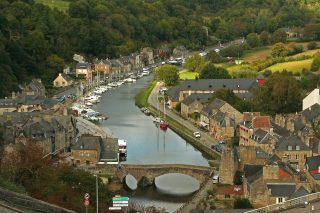
Château de Saint-Malo
Castle in Saint-Malo

The Château de Saint-Malo sits on the eastern edge of Intra-Muros like a stone “lock” on the old town, built by the Dukes of Brittany to keep a famously independent port in check. It's a fortress first and foremost-thick walls, commanding towers, and a position that makes immediate sense once you see how it guards the approach between the mainland and the walled city.
For visitors, it's one of the top attractions in Saint-Malo because it's both a landmark and a practical waypoint: you'll pass it naturally as you move between the gates, the ramparts, and the busiest old-town squares. It also fits seamlessly into a walking tour of Saint-Malo, especially if you like stops that combine real military architecture with easy, scenic city exploration.
Table of Contents
- History and Significance of the Château de Saint-Malo
- Things to See and Do in the Château de Saint-Malo
- How to Get to the Château de Saint-Malo
- Practical Tips on Visiting the Château de Saint-Malo
- Where to Stay Close to the Château de Saint-Malo
- Is the Château de Saint-Malo Worth Visiting?
- For Different Travelers
- FAQs for Visiting the Château de Saint-Malo
- Nearby Attractions to the Château de Saint-Malo
History and Significance of the Château de Saint-Malo
The château's story is tied to power as much as protection. Commissioned by the Dukes of Brittany from the 15th century onward, it was designed to assert ducal authority over Saint-Malo and to control access to the port-an unmistakable statement in granite that the city's independence had limits. Over time, the complex expanded and adapted, reflecting changing military technology and political priorities from the late medieval period into the early modern era.
Several of its best-known towers read like chapters in that evolution. The Grand Donjon (1424) established the fortress's defensive core, while later additions strengthened its firepower and coverage. Tour La Générale reinforced the château's presence, and Tour Quic-en-Groigne-commissioned by Anne of Brittany around the turn of the 16th century-carries a name that still feels perfectly Saint-Malo: roughly, “grumble if you like,” a nod to local resistance to new fortifications.
In 1886, the château was protected as a historic monument, ensuring that this heavy, strategic silhouette remained part of the city’s identity. In modern times, parts of the complex have served civic functions (including the Hôtel de Ville), and the collections that were once displayed here were closed to the public in 2019 as the city began work toward its future maritime museum project-so today, the château is best approached as a monument to walk around, read, and photograph, rather than a guaranteed indoor museum visit.
Things to See and Do in the Château de Saint-Malo
Begin with the outside, because the château’s impact is really about mass and position. Walk the perimeter to understand how it “pins” the corner of Intra-Muros, then look up at the towers and try to trace the differences in shape and stonework-those subtle shifts are where the centuries show through.
If you enjoy defensive architecture, Tour Quic-en-Groigne is the detail to seek out, not just for the story behind the name, but for how it fits into the overall logic of angles, sightlines, and coverage. The Grand Donjon’s presence is equally satisfying, even from street level, because it reads as the original anchor point-a tower built to endure, not to charm.
Finally, use the château as a springboard. It’s perfectly positioned for a short loop: château exterior first, then up onto the ramparts for sea views, then down into the lanes for cafés and the old-town atmosphere. Even without stepping inside, it’s a stop that helps the whole city “click” into a coherent shape.
How to Get to the Château de Saint-Malo
The château is inside Saint-Malo's Intra-Muros, right by the main flow of visitors entering the walled city, so once you're in the old town it's an easy walk from the primary gates and squares. The nearest airports most travellers use are Dinard-Pleurtuit-Saint-Malo (DNR) and Rennes-Saint-Jacques (RNS). For the best deals and a seamless booking experience, check out these flights to Saint-Malo on Booking.com.
Saint-Malo has a train station with frequent connections via Rennes, and from the station you can reach Intra-Muros by local bus, taxi, or a straightforward walk if you're travelling light.You can use SNCF Connect to check schedules, compare routes, and purchase tickets for National (SNCF ) and regional trains (TER). For a more streamlined experience, we recommend using Omio, which allows you to easily compare prices, schedules, and book tickets for both National and Regional travel across all of Europe, all in one place. After you enter the walled city, follow the main streets toward the eastern edge of the ramparts area and you’ll naturally arrive at the château.
If you’re driving, the simplest plan is to park in one of the main car parks just outside the walls and continue on foot into Intra-Muros.If you are looking to rent a car in France I recommend having a look at Discover Cars, first, as they compare prices and review multiple car rental agencies for you.
Practical Tips on Visiting the Château de Saint-Malo
- Entrance fee: Free to see from outside and around the ramparts
- Opening hours: 24 Hours - Exterior and viewpoints are always accessible (open-air monument); interior access varies because parts are integrated with the Hôtel de Ville, and the former city museum spaces have been closed since 2019.
- Official website: https://www.saint-malo.fr/mes_contacts/le-chateau/
- Best time to visit: Aim for early morning if you want quieter streets and cleaner photos, or late afternoon when the light softens on the stone and the ramparts views feel more dramatic.
- How long to spend: 20-40 minutes for a relaxed exterior circuit, or 60-90 minutes if you’re pairing it with a ramparts loop and nearby old-town stops.
- Accessibility: The area around the château is walkable, but expect uneven historic paving and occasional steps if you combine it with ramparts access.
- Facilities: Treat the château as an outdoor heritage stop, then use the cafés, restrooms, and shops around the central Intra-Muros streets for breaks.
Where to Stay Close to the Château de Saint-Malo
For a culture-heavy itinerary, the best area to base yourself is Intra-Muros so you can walk to the château, ramparts, and main sights at quieter hours; if your focus is beach time and a calmer seafront rhythm, base yourself along Le Sillon and walk into the old town when you want history.
Staying inside the walls makes the château feel like part of your daily routine rather than a scheduled stop-you can circle it early, return for photos in different light, and never worry about transport. Hôtel Bristol Union is a practical, well-placed base for walking everywhere in Intra-Muros. For a smaller, quieter option that still keeps you close to the old town’s core lanes, Hôtel des Abers works well for early starts and easy evenings. If you like a simple, comfortable stay near the action without feeling overwhelmed by the busiest corners, Hôtel Le Nautilus is another solid choice.
Is the Château de Saint-Malo Worth Visiting?
Yes-because it's the piece of Saint-Malo that explains the city's power dynamics as well as its defenses. The ramparts tell you how the city faced the sea; the château tells you how rulers faced the city itself, and that tension is part of what makes Saint-Malo feel so distinct.
It’s also worth it because it costs you almost no time. You can appreciate the fortress in a quick loop, then fold it into the rest of your Intra-Muros wander without detours, making it a high-impact stop even on a tight schedule.
What Other Travellers Say...

Château de Saint-Malo, at 35400 Saint-Malo, France, sits near the port and offers expansive views from its promenade and ramparts — visitors recommend entering through the Saint-Vincent Gate and walking the roughly 2 km circuit for harbor, beach and island vistas, especially at sunset; the site includes large fortifications and keeps, a seawater pool on the coast, and the Grand Donjon houses a museum about the town and region, while the town hall occupies barracks added later; crowds and steep steps mean early morning is best and access can be difficult for those with reduced mobility.


For Different Travelers
Families with Kids
For families, the château works best as a “fortress moment” rather than a long lesson: big towers, thick walls, and the simple idea of guarding a city gate. Make it interactive-spot the different towers, pick a favourite, then head up to a ramparts section for the reward of sea views.
If you’re juggling energy levels, keep the visit short and pair it with something immediate nearby, like a snack stop or a beach viewpoint. The advantage of this location is that you can always pivot quickly-nothing here forces you into a long, indoor commitment.
Couples & Romantic Getaways
The château is a strong start to a romantic old-town loop because it feels cinematic without trying: stone walls, narrow lanes, and the sense of stepping into a place built to withstand storms and sieges. Circle the exterior slowly, then head onto the ramparts for a wind-swept view that makes Saint-Malo feel larger than its footprint.
Later in the day, come back when the light warms up and the streets quieten slightly. The château’s edges and angles look especially good at golden hour, and it’s an easy lead-in to dinner in the lanes nearby.
Budget Travelers
This is a great budget stop because the best experience is free: walking the perimeter, reading the site through its architecture, and pairing it with the ramparts for panoramic views. You can build a full, satisfying old-town circuit around it without paying for timed entry or ticketed exhibitions.
If you're keeping costs tight, bring a bakery snack and make the château your “anchor” point before continuing the walk. Saint-Malo rewards this style of travel-big atmosphere, strong views, and plenty of outdoor heritage that doesn't require a paid itinerary.
History Buffs
History lovers will appreciate that this isn’t just a picturesque castle-it’s a political tool in stone, built to project ducal control over a port that had its own identity and ambitions. The tower sequence (especially Grand Donjon and Quic-en-Groigne) reads like a timeline of shifting threats and evolving fortification strategy.
For extra context, connect the château to what you see on the ramparts: the city defended itself outward, but the château also helped manage authority inward. That dual purpose is what makes it such a satisfying stop for anyone who likes history that feels tangible rather than abstract.
FAQs for Visiting the Château de Saint-Malo
Getting There
Tickets & Entry
Visiting Experience
Tours, Context & Itineraries
Photography
Food & Breaks Nearby
Safety & Timing
Nearby Attractions to the Château de Saint-Malo
- Saint-Malo Ramparts: Walk the wall-top circuit for panoramic views over beaches, islets, and the harbor approaches.
- Porte Saint-Vincent: The main historic gateway into Intra-Muros, perfect for orienting your route and people-watching in the nearby square.
- Saint-Vincent Cathedral: A calm interior landmark with stained glass and a strong sense of Saint-Malo's resilience after World War II.
- Bastion de la Hollande: A broad ramparts lookout with cannons and one of the best places to pause and watch the tides.
- Plage de Bon-Secours: The classic beach below the walls, ideal for a scenic stroll and a different angle on the fortifications.
The Château de Saint-Malo appears in our Complete Guide to Visiting Saint-Malo!

Moira & Andy
Hey! We're Moira & Andy. From hiking the Camino to trips around Europe in Bert our campervan — we've been traveling together since retirement in 2020!
This website uses affiliate links which may earn a commission at no additional cost to you!
Planning Your Visit
24 Hours – Exterior and viewpoints are always accessible (open-air monument); interior access varies because parts are integrated with the Hôtel de Ville, and the former city museum spaces have been closed since 2019.
Free to see from outside and around the ramparts
Nearby Attractions
- Place Chateaubriand (0.1) km
Square - Porte Saint-Vincent (0.1) km
City Gate - Saint-Malo Ramparts (0.1) km
City Walls - Plage de l'Éventail (0.2) km
Beach - Étoile du Roy (0.2) km
Museum - Saint-Vincent Cathedral (0.3) km
Cathedral - Maison du Québec (0.4) km
Arts Venue - Fort National (0.4) km
Castle - Tour Bidouane (0.4) km
Tower - La Demeure de Corsaire (0.5) km
Historic Building and Museum