Château de Chinon, Tours (Loire)
Castle near Tours (Loire)
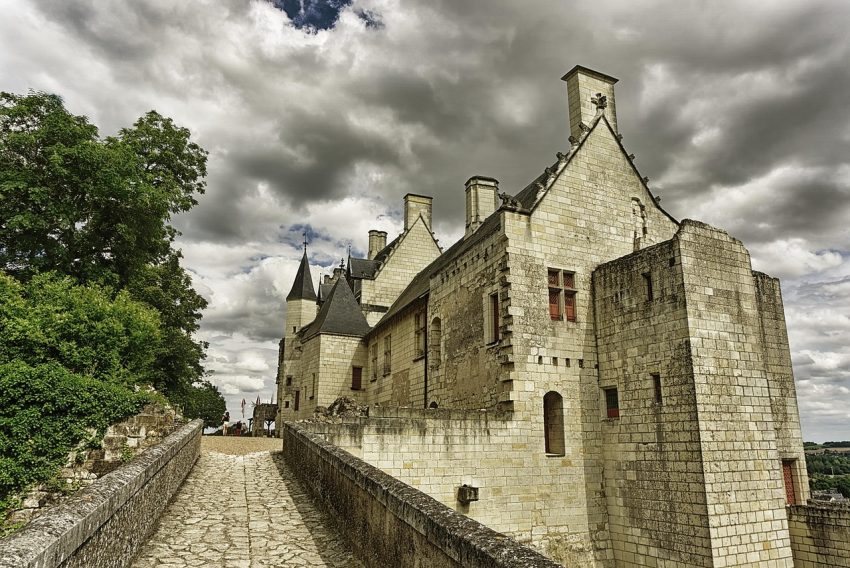
Château de Chinon (often presented as the Royal Fortress of Chinon) stretches along a rocky ridge above the town, looking out over the Vienne River and the patchwork vineyards beyond. It's not a single postcard château but a long, layered fortification with walls, towers, courtyards, and viewpoints that make you feel the medieval logic of the landscape: control the spur, command the valley, and you control the route.
What makes it special is how many big stories converge here without the site ever feeling like a museum piece. You can stand where Henry II Plantagenet once held court and where Joan of Arc came to meet the future Charles VII, then walk a few minutes and find yourself alone on a rampart with only wind and birds for company. If you are choosing just a handful of stops in town, this is one of the top attractions in Chinon and an easy anchor for a walking tour of Chinon.
Table of Contents
- History and Significance of the Château de Chinon
- Things to See and Do in the Château de Chinon
- How to Get to the Château de Chinon
- Practical Tips on Visiting the Château de Chinon
- Where to Stay Close to the Château de Chinon
- Is the Château de Chinon Worth Visiting?
- For Different Travelers
- FAQs for Visiting Château de Chinon
- Nearby Attractions to the Château de Chinon
History and Significance of the Château de Chinon
The fortress’s roots reach back to the early medieval period, with major phases shaped by the rival powers who understood exactly why this ridge mattered. In the 12th century, it became closely tied to the Plantagenets, serving as a key residence and administrative centre for an empire that linked England to vast territories in France. The emotional weight of that chapter is hard to miss once you know that Henry II died here in 1189, turning the fortress into something more intimate than mere stone and strategy.
During the Hundred Years’ War, Chinon shifted from a symbol of dynastic administration to a turning-point stage for France itself. Joan of Arc’s arrival in 1429 and her meeting with Charles VII has become one of the defining episodes associated with the fortress, not just for the legend, but for how it captures the precariousness of the moment: a contested crown, a hesitant court, and a young woman insisting history could still change.
The château you see today is also a story of survival and interpretation. Parts were neglected, parts were restored, and the site has been re-presented to help visitors understand what’s missing as much as what remains. That mix of authenticity, reconstruction, and open sky is part of the appeal: you’re walking through a fortress that still reads as a place of power, not just a ruin.
Things to See and Do in the Château de Chinon
Start by treating the ridge like a timeline. The fortress is often described as “three castles” stretched along the promontory, and walking its length helps you understand how defensive logic became lived space: where you would watch, where you would retreat, and where you would host. The changing views are not just pretty-they explain why Chinon mattered.
Make time for the viewpoints over the Vienne River, especially if the light is shifting. The best moments here are often simple: a rampart walk, a tower silhouette, the town roofs below, and the sense that the river corridor has always been the real prize. If you enjoy photography, wide shots work best, because the long shape of the site is part of its identity.
Finally, look out for the visit tools and interpretation features that add texture without overwhelming the atmosphere. Done well, they help you picture halls, prisons, and daily routines that are no longer visible, so the fortress feels like a functioning medieval complex rather than a collection of disconnected stones.
How to Get to the Château de Chinon
The closest airports are Tours Val de Loire Airport (TUF) and Poitiers-Biard Airport (PIS), with Paris Charles de Gaulle (CDG) and Paris Orly (ORY) offering the widest flight choices. For the best deals and a seamless booking experience, check out these flights to Tours (Loire) on Booking.com.
From Paris, the simplest rail route is to take a TGV from Paris Montparnasse to Tours or Saint-Pierre-des-Corps, then connect to a regional train to Chinon station. You can use SNCF Connect to check schedules, compare routes, and purchase tickets for National (SNCF ) and regional trains (TER). For a more streamlined experience, we recommend using Omio, which allows you to easily compare prices, schedules, and book tickets for both National and Regional travel across all of Europe, all in one place.
Once you arrive in Chinon, you can walk up from the centre if you do not mind a climb, or take a local bus from Chinon station toward the “Cimetière” stop, which leaves you a short walk from the fortress entrance. Taxis are also a practical choice if you want to save your energy for the ramparts.
By car, Chinon is an easy drive from Tours and works well as part of a Loire Valley loop, with the benefit of flexibility if you are pairing it with nearby abbeys and châteaux. If you are looking to rent a car in France I recommend having a look at Discover Cars, first, as they compare prices and review multiple car rental agencies for you.
Practical Tips on Visiting the Château de Chinon
- Entrance fee: Adults: €12.50
- Opening hours: (Summer) Daily: 09:30–19:00. (Winter) Daily: 09:30–18:00.
- Official website: https://forteressechinon.fr/
- Best time to visit: Go early for quieter walls and clearer photos, or later in the afternoon for warmer light over the river valley.
- How long to spend: Allow 2-3 hours for a relaxed walk across the ridge, with extra time if you like viewpoints and interpretation stops.
- Accessibility: Expect uneven ground, steps, and some gradients; it’s most enjoyable at a steady pace with good shoes.
- Facilities: Plan for an outdoor-heavy visit; bring water, and use the town below for cafés and longer breaks.
Where to Stay Close to the Château de Chinon
For a culture-heavy itinerary, base yourself in central Chinon near the old town and river so you can walk to the fortress and restaurants easily; if your main focus is vineyards and countryside drives, staying just outside town gives you calmer evenings and quicker access to the surrounding wine routes.
For a convenient, classic base in the heart of town, Best Western Hôtel De France keeps you close to the historic centre and within easy reach of the climb up to the fortress. If you prefer a smaller, characterful stay with a local feel, Hôtel Diderot is a strong choice for atmosphere and a slower-paced Chinon experience. For a quieter setting while still staying walkable to the centre, Hôtel Rive Sud sits near the river and works well if you like finishing the day with an evening stroll.
Is the Château de Chinon Worth Visiting?
Yes, especially if you want a fortress that feels expansive and real rather than a quick “castle photo stop.” Chinon rewards you with scale, views, and a rare concentration of medieval history where the stories are anchored to a landscape that still makes strategic sense.
It’s also a great choice if you enjoy places that let you wander. The experience is as much about moving along walls, reading the ridge, and looking out over the valley as it is about any single room or artefact.
What Other Travellers Say...

Forteresse Royale de Chinon sits above the town at 4 Rue du Château and offers extensive medieval remains with connections to Henry II, Joan of Arc and the Knights Templar; visitors praise the fortress for its gorgeous views, well-explained displays and family-friendly trails and activities, including tablets for augmented-history experiences and replica siege engines, though some interpretive panels rely on QR codes that didn’t always work and food options can be limited so many recommend bringing a picnic.


For Different Travelers
Families with Kids
This is a strong family stop if you frame it as exploration: walls to follow, towers to spot, and plenty of outdoor space to move around. Choose a few key viewpoints as “missions,” then let the rest of the visit unfold naturally so it feels like discovery rather than homework.
Bring snacks and plan a reward break in town afterward, because the climb and walking distance can feel longer for kids. If you have a stroller, consider alternatives or a lighter route, since surfaces and steps can be challenging.
Couples & Romantic Getaways
Chinon is perfect for couples who like places with atmosphere rather than polish. The ramparts and river views feel especially cinematic in late afternoon, and the old town below makes the post-visit part easy: a slow walk, a glass of local wine, and dinner with a view.
Treat it as a half-day highlight rather than something to rush. The romance here is in the pacing-quiet corners, wide horizons, and the sense of being somewhere that has watched centuries pass.
Budget Travelers
This is a high-value visit because it fills a solid chunk of the day with walking, views, and history in one ticketed site. Budget travellers can keep costs down by arriving by train via Tours and using the town itself for picnics and affordable meals.
If you want the best “value feel,” focus on the full ridge walk and viewpoints rather than trying to speed-run every detail. Chinon is at its best when you give it time.
History Buffs
Chinon is essential for anyone interested in the Plantagenets and the shifting power map of medieval France. It’s one of those places where political history becomes spatial: you can see how administration, defence, and symbolism were built into the same walls.
Pair it with nearby sites linked to royal and religious power to deepen the story, because Chinon sits at the crossroads of military strategy, dynastic ambition, and national mythology.
FAQs for Visiting Château de Chinon
Getting There
Tickets & Entry
Visiting Experience
Tours, Context & Itineraries
Photography
Food & Breaks Nearby
Nearby Attractions to the Château de Chinon
- Medieval Old Town of Chinon: A maze of historic lanes and timbered façades that feels best explored slowly between viewpoints and cafés.
- Saint-Mexme Chapel and the surrounding quarter: A quiet historic area with a strong sense of Chinon’s older religious and civic layers.
- Maison des Vins de Chinon: A convenient place to learn about Chinon AOC wines and sample local bottles in a low-pressure setting.
- Royal Abbey of Fontevraud: One of the Loire’s most impressive abbey complexes, rich in Plantagenet connections and atmosphere.
- Château d'Ussé: A classic Loire fairy-tale silhouette that makes a beautiful contrast to Chinon's rugged fortress character.
The Château de Chinon appears in our Complete Guide to Visiting Tours (Loire)!

Moira & Andy
Hey! We're Moira & Andy. From hiking the Camino to trips around Europe in Bert our campervan — we've been traveling together since retirement in 2020!
This website uses affiliate links which may earn a commission at no additional cost to you!
Planning Your Visit
(Summer) Daily: 09:30-19:00.
(Winter) Daily: 09:30-18:00.
Adults: €12.50
Nearby Attractions
- Château d’Ussé (10) km
Castle - Château d’Azay-le-Rideau (20.1) km
Castle - Château de Langeais (21.7) km
Castle - Château de Saumur (25.3) km
Castle - Château de Villandry (28.5) km
Castle - La Forteresse de Montbazon (38.4) km
Castle - Jardin Botanique De Tours (40.6) km
Gardens - Musee du Compagnonnage (42.4) km
Museum - Musée des Beaux-Arts de Tours (42.8) km
Museum - Cathédrale Saint-Gatien (42.8) km
Cathedral