Château de Saumur, Angers
Castle near Angers
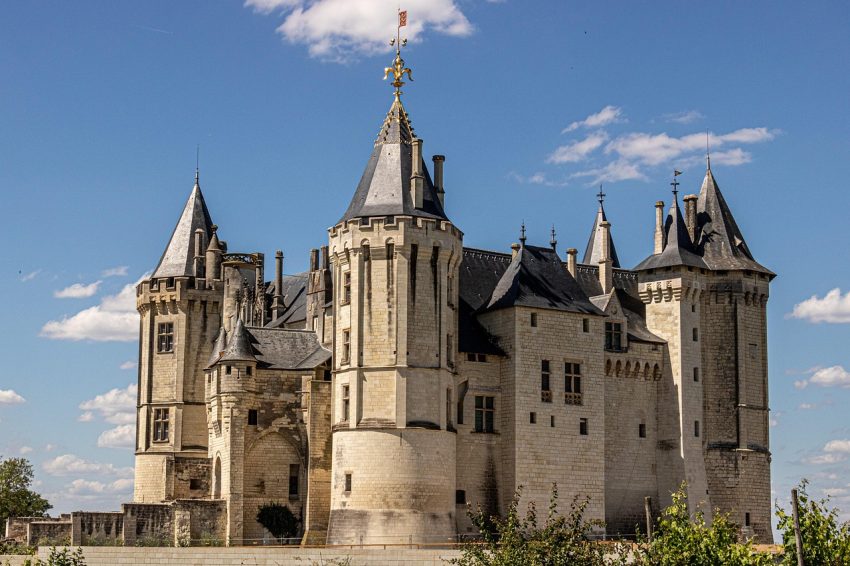
Château de Saumur is a hilltop castle-museum in Saumur, in the Loire Valley near Angers. Set above the Loire and the old town, it combines a medieval fortress profile with the more refined appearance of a residence shaped by the Dukes of Anjou.
The visit is best for travelers who want a compact mix of architecture, museum rooms, and views rather than a full-day château experience. The exterior, terraces, decorative arts displays, ceramics, tapestries, and horse-related collections give useful context, though the uphill approach and stairs make it easier for visitors comfortable on foot.
History and Significance
Fortress Above the Loire
The château's origins reach back to the 10th century, when Theobald I, Count of Blois, established a stronghold in a strategic position above the Loire and Thouet rivers. Its elevated site helped control movement through this part of Anjou and made it a valuable target for rival powers.
Fulk Nerra of Anjou later took control, and the castle became tied to the wider power struggles of western France. Under Plantagenet influence, including the period associated with Henry II of England, the fortress formed part of a contested borderland between French and English-linked territories.
Ducal Residence and Later Uses
In the 14th and 15th centuries, the Dukes of Anjou reshaped the fortress into a more comfortable residence. Louis I of Anjou and later King René are closely associated with this transformation, which gave the château much of the refined outline visitors recognise today.
Its later history was less courtly. The building served as a residence for governors, then as a prison and arms depot before the city of Saumur acquired it in 1906 for use as a municipal museum, preserving a site that might otherwise have continued to decline.
Things to See and Do
The main reason to go inside is the museum visit. The rooms display decorative arts, ceramics, tapestries, and objects connected with Saumur’s equestrian traditions, so the experience feels more like a city museum in a castle than a furnished royal residence.
If I had limited time, I would prioritise the terraces, the exterior silhouette, and the views over the Loire before moving through the collections. The raised position gives a clear sense of why the site mattered, and the river-facing side is often the most memorable part of a short visit.
Look for the contrast between defensive mass and residential detail as you move around the courtyards and façades. Casual visitors sometimes rush straight inside, but the approach up through Saumur and the views back toward the town help explain the château better than any single display case.
How to Get to the Château de Saumur
The most useful major airport is usually Nantes Atlantique, while Tours Val de Loire and Angers-Loire are regional options depending on available flights. For the best deals and a seamless booking experience, check out these flights to Angers on Booking.com.
Saumur station has TER links with Angers, Tours, Nantes, Blois and Orléans; from the station, take bus line A to the Château stop or walk uphill if you are comfortable with the climb. You can use SNCF Connect to check schedules, compare routes, and purchase tickets for National (SNCF ) and regional trains (TER). For a more streamlined experience, we recommend using Omio, which allows you to easily compare prices, schedules, and book tickets for both National and Regional travel across all of Europe, all in one place.
By car, use the Parking du Château near Esplanade Hubert-Landais, but driving is mainly useful if you are combining the visit with wineries, troglodyte sites, or villages outside Saumur. If you are looking to rent a car in France I recommend having a look at Discover Cars, first, as they compare prices and review multiple car rental agencies for you.
Where to Stay Close
For this visit, base yourself in central Saumur around the old town and Loire quays if you want the easiest access to the château, restaurants, river walks, and the station. This works better than staying in Angers unless Saumur is only a day trip within a wider Loire itinerary.
Hôtel Anne d’Anjou The Originals Collection suits travelers who want to be close to the river and below the château, with an easy walk into the old town. Hôtel Saint Pierre is a central old-town option for visitors who prefer restaurants and pedestrian streets nearby. ibis Styles Saumur Gare Centre is more practical for rail arrivals, early departures, or anyone who wants simpler station access rather than the most atmospheric base.
Is the Château de Saumur Worth Visiting?
Château de Saumur is worth a short stop, especially for the hilltop setting, exterior architecture, Loire views, and compact museum collections. It is best for visitors already in Saumur or planning a Loire Valley route through Anjou. Treat it as optional if you are expecting lavish furnished rooms, a large palace interior, or a fully accessible visit without slopes and stairs; for some travelers, the exterior and viewpoint will be more rewarding than the museum rooms.
What Other Travellers Say...
Château de Saumur sits on a hilltop above the town at Esp. Hubert-Landais, Saumur, and has long served as a medieval fort, residence, prison, armory and now a city museum; visitors praise its impressive architecture, varied museum displays (including fashion, ceramics and equestrian-related objects), ramparts with free access and enchanting valley views, on-site restaurants and helpful staff, while noting steep steps up to the site, some incongruous exhibits and occasional cleanliness issues in the toilets—there is an admission charge for the museum and keep and opening hours run most days from 10:00–13:00 and 14:00–17:30 (closed Monday).





Practical Tips on Visiting the Château de Saumur
- Best time to visit: April to October gives the most comfortable weather for the uphill approach and terraces. Summer has longer opening patterns, while winter visits can be shorter and more dependent on seasonal hours.
- How long to spend: Allow 1.5 to 2.5 hours for the museum, terraces, and exterior views. If you only want photos and the setting, a shorter stop from the town below can be enough.
- Accessibility: The château sits above town, and parts of the approach and visit involve slopes or stairs. Travelers with limited mobility should plan the route carefully and avoid assuming every upper area will be easy to reach.
- Facilities: Expect standard visitor facilities such as ticketing, toilets, and museum areas, with cafés and restaurants mainly in the old town and along the river below. Bring water on warm days because the climb can feel exposed.
FAQs for Visiting the Château de Saumur
Getting There
Tickets & Entry
Visiting Experience
Tours, Context & Itineraries
Photography
Accessibility & Facilities
Food & Breaks Nearby
Safety & Timing
The Château de Saumur appears in our Complete Guide to Visiting Angers!

Moira & Andy
Hey! We're Moira & Andy. From hiking the Camino to trips around Europe in Bert our campervan — we've been traveling together since retirement in 2020!
This website uses affiliate links which may earn a commission at no additional cost to you!
Planning Your Visit
Closed on December 25, & January 1 to February 7
February 8 - March 31: Open Tuesday to Sunday, 10:00-13:00 & 14:00-17:30.
April 1 - June 30 & September 1 - 30: Open **Tuesday to Sunday and holiday Mondays, 10:00-18:00.
July 1 - August 31: Open daily, 10:00-19:00. Open on July 14 and August 15.
October 1 - December 31: Open Tuesday to Sunday, 10:00-13:00 & 14:00-17:30.
Adults: €9.50
Nearby Attractions
- Château de Chinon (25.3) km
Castle - Château d’Ussé (27.5) km
Castle - Château de Brissac (30.4) km
Castle - Château de Langeais (36.9) km
Castle - Château d’Azay-le-Rideau (40.6) km
Castle - Château à Motte in Saint-Sylvain-d'Anjou (41.3) km
Castle - La Maison Bleue (43) km
Historic Building - Hôtel de Ville d'Angers (43) km
Town Hall - Jardin des Plantes (43) km
Gardens - Museum of Natural Sciences (43.1) km
Museum