Château de Brest
Castle in Brest
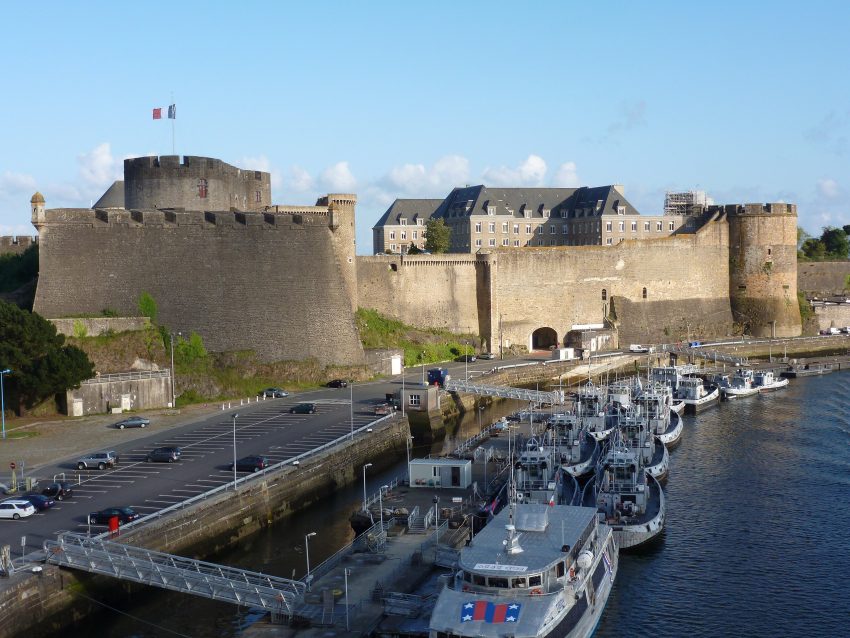
The Château de Brest is one of the must-see places in Brest, a monumental fortress guarding the mouth of the Penfeld River and overlooking one of the world's great natural harbors. With more than 1,700 years of continuous occupation, it offers a remarkable journey through time, from its origins as a Roman castellum to its role as a modern military stronghold. Its walls, towers, and ramparts reflect centuries of conflict, strategy, and engineering prowess.
Stepping inside the château feels like walking through the city's layered past. Now home to the Musée National de la Marine, it invites visitors to explore naval heritage, shipbuilding traditions, and stories of maritime exploration. Its commanding views of the harbor and historic riverbanks make the château a highlight of any walking tour of Brest, especially for travelers drawn to military history and dramatic coastal settings.
Table of Contents
- History and Significance of the Château de Brest
- Things to See and Do in the Château de Brest
- How to Get There
- Practical Tips on Visiting the Château de Brest
- Where to Stay close to the Château de Brest
- Is the Château de Brest Worth Visiting?
- FAQs for Visiting the Château de Brest
- Nearby Attractions to the Château de Brest
History and Significance of the Château de Brest
The site began as a Roman castellum in the 3rd century, part of a coastal defense system protecting the region from raids and incursions. Its strategic location at the entrance of the Penfeld made it invaluable, and over the following centuries the fortifications grew in size and complexity. By the Middle Ages, it had become a heavily fortified structure contested by regional powers.
During the Hundred Years' War, the English occupied the château, recognizing its strategic importance. Later, in the 17th century, the fortress underwent major enhancements under the direction of Vauban, Louis XIV's renowned military engineer. Vauban's work transformed it into one of the strongest citadels in Brittany, with reinforced walls, new bastions, and improved defenses designed to withstand evolving warfare technologies.
In the 20th century, the château again played a key defensive role during World War II, when German forces occupied the site and integrated it into their coastal fortifications. Despite this turbulent history, the fortress survived and was adapted to new roles. Today, it stands as both a living monument to Brest's military past and a cultural center that connects visitors to maritime history through the Musée National de la Marine.
Things to See and Do in the Château de Brest
A visit to the château begins with its dramatic setting. Walk along the ramparts for panoramic views of the Penfeld River, the harbor, and the iconic Pont de Recouvrance. The medieval towers, thick stone walls, and courtyards evoke the fortress's long defensive history.
Inside, the Musée National de la Marine displays ship models, maritime artifacts, naval uniforms, and exhibits that explore France's shipbuilding traditions and oceanic exploration. Rooms dedicated to famous sailors and naval engineers provide a deeper understanding of the region's maritime legacy. Visitors can also explore underground passages and vaulted chambers that once served as storage rooms and defensive corridors.
Throughout the year, temporary exhibitions and cultural events enrich the experience. Whether you’re interested in medieval fortifications, oceanic history, or simply dramatic landscapes, the château offers a memorable and immersive visit.
How to Get There
The Château de Brest sits at the mouth of the Penfeld River, close to central Brest and the harbor. Visitors arriving by air can reach the site from Brest Bretagne Airport in about 20 minutes. For the best deals and a seamless booking experience, check out these flights to Brest on Booking.com.
If traveling by car, parking areas are available near the harbor and around the château’s entrance. If you are looking to rent a car in France I recommend having a look at Discover Cars, first, as they compare prices and review multiple car rental agencies for you.
Those arriving by train can reach the château by walking or taking a short bus or tram ride from Brest station. You can use SNCF Connect to check schedules, compare routes, and purchase tickets for National (SNCF ) and regional trains (TER). For a more streamlined experience, we recommend using Omio, which allows you to easily compare prices, schedules, and book tickets for both National and Regional travel across all of Europe, all in one place.
Practical Tips on Visiting the Château de Brest
- Best time to visit the Château de Brest: Spring to autumn for pleasant weather and clear harbor views.
- Entrance fee in Euros: Varies by exhibition; discounts available for families and students.
- Opening hours: Open year-round except major holidays; seasonal variations apply.
- Official website: See the Musée National de la Marine Brest website.
- How long to spend: One to two hours depending on interest in the museum.
- Accessibility: Some areas have stairs and uneven surfaces; partial accessibility only.
- Facilities: Restrooms, museum shop, multilingual panels, and occasional guided-tours.
- Photography tip: Capture the château from across the Penfeld for the best exterior shot.
- Guided-tours: Offered on select days, providing deeper insights into the site's military past.
- Nearby food options: Cafés and restaurants available in the harbor area and along Rue de Siam.
Where to Stay close to the Château de Brest
For those wanting to stay near the château and harbor, Oceania Brest Centre offers a comfortable and central base. Another convenient option is Hôtel l'Amirauté, well placed for exploring the city’s historic sites. If you prefer easy access to main routes and a quiet atmosphere, Hôtel Center Brest provides reliable comfort within reach of the harbor district.
Is the Château de Brest Worth Visiting?
Yes, the Château de Brest is absolutely worth visiting. Its exceptional history, impressive architecture, and engaging naval museum make it one of the most significant landmarks in Brittany. The sweeping harbor views and immersive exhibits provide a rewarding experience for history lovers, photographers, and curious travelers alike.
What Other Travellers Say...

Musée National de la Marine sits in the Château de Brest overlooking the bay and invites visitors to follow a well-signed tour through a medieval fortress that houses naval exhibits: detailed ship models, artifacts, paintings and audiovisual displays that trace shipbuilding and France's maritime history, with large wooden sculptures near the end of the route. The museum blends indoor galleries and outdoor sections, offers multilingual audio guides (extra cost) that families found engaging for children, and only the entrance and first floor are fully accessible—allow about two hours to see the full exhibition and enjoy the harbor views.


FAQs for Visiting the Château de Brest
Nearby Attractions to the Château de Brest
- Tour Tanguy: A medieval tower housing the Musée du Vieux Brest.
- Pont de Recouvrance: A dramatic vertical-lift bridge spanning the Penfeld.
- Port of Brest: A vibrant maritime hub with coastal views and ship activity.
- Cours Dajot: A scenic promenade offering panoramic views of the harbor.
- Océanopolis: A major marine discovery center with themed ocean exhibits.
The Château de Brest appears in our Complete Guide to Visiting Brest!

Moira & Andy
Hey! We're Moira & Andy. From hiking the Camino to trips around Europe in Bert our campervan — we've been traveling together since retirement in 2020!
This website uses affiliate links which may earn a commission at no additional cost to you!
Planning Your Visit
April to September: 10 a.m. – 6:30 p.m. daily
October to March: 1:30-6:30 p.m. daily except Tuesdays (except school holidays in zone B)
Annual closure : from January 6 to February 7, 2024.
Adults: €9.00
Nearby Attractions
- Musée National de la Marine (0) km
Museum - Tour Tanguy (0.3) km
Tower - Maison de la Fontaine-Brest (0.4) km
Arts Venue - Maison de la Fontaine (0.4) km
Historic Building - Pont de Recouvrance (0.4) km
Bridge - Musée des Beaux-Arts de Brest (0.6) km
Gallery - Cours Dajot (0.6) km
Walk - Capucins Cable Car (0.6) km
Cable Car - Port of Brest (0.7) km
Port - Rue de Siam (0.8) km
Street