Cathedral of St. Domnius, Split
Cathedral and Religious Building in Split
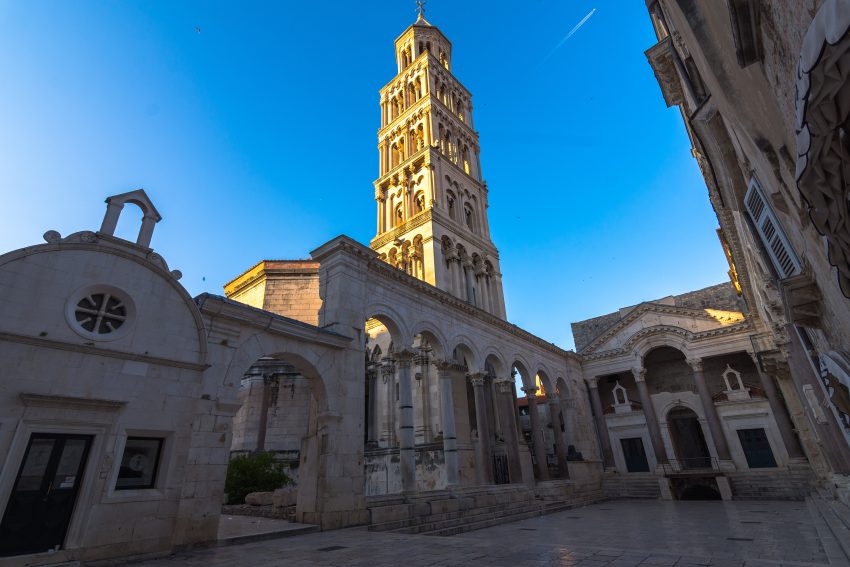
The Cathedral of St. Domnius sits at the very heart of Split's Old Town, tucked inside Diocletian's Palace and opening directly onto the Peristyle square. What makes it special is the setting: you're not just visiting a church, but stepping into a Roman imperial mausoleum that was transformed into a cathedral, with layers of history visible in stone, sculpture, and centuries-old details.
Most travelers first encounter the cathedral on a walking tour of Diocletian's Palace, where guides help you connect the palace's Roman layout to today's living city. For the best views, pair your visit with the nearby bell tower climb, and for the best atmosphere, linger around the Peristyle before or after you go inside.
Table of Contents
- History and Significance of the Cathedral of St. Domnius
- Things to See and Do in the Cathedral of St. Domnius
- How to Get to the Cathedral of St. Domnius
- Practical Tips on Visiting the Cathedral of St. Domnius
- Where to Stay Close to the Cathedral of St. Domnius
- Is the Cathedral of St. Domnius Worth Visiting?
- For Different Travelers
- FAQs for Visiting Cathedral of St. Domnius
- Nearby Attractions to the Cathedral of St. Domnius
History and Significance of the Cathedral of St. Domnius
The Cathedral of St. Domnius is one of Split's defining landmarks because it embodies the city's biggest historical pivot: the shift from Roman imperial power to Christian medieval life. The core structure began as Emperor Diocletian's mausoleum, built as part of his vast palace complex, and later became a cathedral—an unusually direct example of how ancient spaces were repurposed rather than replaced.
Inside, you’ll notice how the building’s form still hints at its original function, while later additions reflect centuries of worship and civic identity. The cathedral is closely tied to St. Domnius (Sveti Duje), Split’s patron saint, and it remains an active religious site, which adds a living, local dimension that many “museum-like” monuments lack.
Because it's embedded within Diocletian's Palace (a UNESCO-listed area), the cathedral also works as a key waypoint for understanding Split's Old Town. Even if you're not deeply into church history, it's one of the clearest places to see how Roman architecture and medieval craftsmanship coexist in a single, compact space.
Things to See and Do in the Cathedral of St. Domnius
Start by taking in the cathedral’s interior details at a slow pace: the stonework, the sense of vertical space, and the way light changes as you move around. It’s a relatively small visit compared with Europe’s giant cathedrals, but that’s part of the appeal—you can appreciate the highlights without feeling overwhelmed.
If you're building a “best of Split” itinerary, the bell tower is the classic add-on for panoramic views over terracotta rooftops, the harbor, and the Adriatic. The climb is narrow and can feel exposed in places, but it's one of the most rewarding viewpoints in the Old Town.
To round out the experience, consider pairing the cathedral with nearby palace sights on the same loop: Peristyle, the palace basements, and the surrounding lanes. This area is at its best when you treat it as a walkable cluster rather than isolated stops.
How to Get to the Cathedral of St. Domnius
The nearest airports are Split Airport (SPU), which is the main gateway for international and regional flights, and (for some itineraries) Zadar Airport (ZAD) as a secondary option for Dalmatia. For the best deals and a seamless booking experience, check out these flights to Split on Booking.com.
If you’re traveling by train, you can arrive at Split’s main railway station near the ferry port and Riva waterfront, then walk into the Old Town in roughly 10–15 minutes. Train schedules and bookings can be found on Omio.
If you’re coming by car, aim to park outside the tight Old Town zone and walk in, since the palace area is pedestrian-focused and parking is limited and often expensive in peak season.
Practical Tips on Visiting the Cathedral of St. Domnius
- Official website: https://smn.hr/split-katedrala
- Entrance fee: Check official website.
- Opening hours: Check official website.
- Best time to visit: Go early in the morning for cooler temperatures and fewer tour groups, or later in the afternoon for softer light around the Peristyle.
- How long to spend: Plan 30–60 minutes for the cathedral itself, and add extra time if you’re also climbing the bell tower or visiting nearby palace highlights.
- Accessibility: The surrounding Old Town streets are stone-paved and can be uneven; interior access may involve steps, and the bell tower climb is not suitable for limited mobility.
- Facilities: Facilities in the immediate monument spaces can be limited; it’s easiest to plan a café stop on the Riva or in the lanes around the Peristyle before or after.
Where to Stay Close to the Cathedral of St. Domnius
Base yourself in or just beside Split’s Old Town if you want to walk everywhere, maximize early/late access to the palace area, and keep restaurants and waterfront strolls within minutes.
Cornaro Hotel Cornaro is a strong pick for travelers who want a polished, full-service stay close to the Old Town, with an easy walk to the cathedral and a comfortable retreat after busy sightseeing.
Hotel Park Split Hotel Park is ideal if you want a classic, upscale hotel feel near Bačvice Beach while still being within walking distance of the cathedral and the palace lanes.
Heritage Hotel 19 This boutique option is great for a quieter stay just outside the densest Old Town foot traffic, while keeping the cathedral and Riva within an easy stroll.
Marmont Heritage Hotel Marmont is a smart choice for travelers who want to sleep inside the historic core, with character and atmosphere that match the palace setting.
Hotel Vestibul Palace Vestibul Palace is included for its location and sense of place—staying here feels like extending your Diocletian's Palace visit into the evening.
Is the Cathedral of St. Domnius Worth Visiting?
Yes—especially if you're already exploring Diocletian's Palace. The cathedral is one of those rare sights where the “headline” is genuinely unique: an imperial Roman mausoleum adapted into a functioning cathedral, right in the middle of Split's everyday life, with a bell tower viewpoint that's hard to beat.
Honest Pivot: If you’re not interested in religious interiors and you dislike tight climbs or crowds, you may prefer to admire the cathedral from the Peristyle and spend your time on the palace basements, the waterfront, or a beach break instead. You’ll still get the atmosphere of the site without committing to an interior visit.
What Other Travellers Say...

Built in 305 CE, this cathedral dedicated to the city's patron saint has a Romanesque bell tower.


For Different Travelers
The Cathedral of St. Domnius works well as a flexible stop: you can keep it brief and scenic, or go deeper with context, add-ons, and a guided walk through the palace area.
Families with Kids
For families, the best hook is the “castle-like” feeling of the palace lanes and the excitement of a viewpoint climb if your kids are old enough and comfortable with heights. Keep the cathedral interior portion short and focus on spotting details and telling the story of a Roman emperor’s palace turned into a living neighborhood.
If you’re traveling with younger kids, plan a reward stop afterward—gelato on the Riva or a quick break in the shade near the Peristyle helps keep the visit upbeat. Strollers can be tricky on the stone streets, so a carrier can be easier in the tightest lanes.
Couples & Romantic Getaways
Couples will love how cinematic this area feels, especially in the evening when the palace stones warm in color and the Peristyle becomes a natural stage. The cathedral visit pairs nicely with a slow wander through the Old Town followed by sunset drinks along the waterfront.
For a more romantic rhythm, go early for a quieter interior experience, then return later just to soak up the atmosphere outside. It’s one of Split’s best “two-moods-in-one-day” sights.
Budget Travelers
Budget travelers can get a lot of value here because the cathedral sits in a broader area that’s rewarding even without paid add-ons. You can spend time exploring the palace lanes, people-watching on the Peristyle, and walking the Riva without committing to a big-ticket attraction.
If you do pay for one upgrade, prioritize the viewpoint experience (like the bell tower) for maximum “wow per euro.” Then balance the day with low-cost eats—Split has plenty of bakeries and casual spots just outside the busiest lanes.
History Buffs
History lovers should treat the cathedral as a key chapter in the story of Split: Roman architecture, medieval adaptation, and a living religious site layered into a UNESCO-level urban core. It's a compact place where you can connect the palace's original purpose to the city's later identity.
To get more out of it, do a guided walking tour first, then revisit the cathedral with the story in mind. The details land differently once you understand what belonged to Diocletian's complex and what was added later.
FAQs for Visiting Cathedral of St. Domnius
Getting There
Tickets & Entry
Visiting Experience
Tours, Context & Itineraries
Photography
Accessibility & Facilities
Food & Breaks Nearby
Safety & Timing
Nearby Attractions to the Cathedral of St. Domnius
- Peristyle Square: The ceremonial heart of Diocletian's Palace and the best place to absorb the cathedral's setting.
- Diocletian's Palace Cellars: Atmospheric underground halls that help explain the palace's original layout.
- Riva Promenade: Split's waterfront walkway for an easy stroll, people-watching, and café stops.
- Golden Gate (Porta Aurea): A major palace entrance that's a great waypoint for a self-guided Old Town loop.
- Pjaca (People's Square): A lively historic square with cafés and a different architectural feel from the palace core.
The Cathedral of St. Domnius appears in our Complete Guide to Visiting Split!

Moira & Andy
Hey! We're Moira & Andy. From hiking the Camino to trips around Europe in Bert our campervan — we've been traveling together since retirement in 2020!
This website uses affiliate links which may earn a commission at no additional cost to you!
Planning Your Visit
Check official website.
Check official website.
Nearby Attractions
- Diocletian's Palace (0) km
Historic Building, Historic Site and Palace - Podrum (0) km
Historic Room, Historic Site and Roman Site - Vestibule (0) km
Courtyard, Historic Room and Historic Site - Temple of Jupiter (0) km
Historic Site, Religious Building and Roman Site - Ethnographic Museum (0) km
Attraction, Historic Building and Museum - City Museum of Split (0.1) km
Historic Building, Historic Site and Museum - Bronze Gate (0.1) km
Attraction, City Gate and Historic Site - Silver Gate (0.1) km
City Gate, City Walls and Historic Site - Iron Gate and Church of Our Lady of the Bell Tower (0.1) km
Church, City Gate and Historic Site - Church of Saint Martin (0.1) km
Church and Historic Site