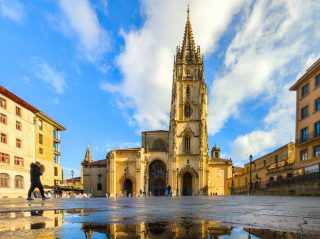
Catedral de la Asunción de Santander
Cathedral in Santander
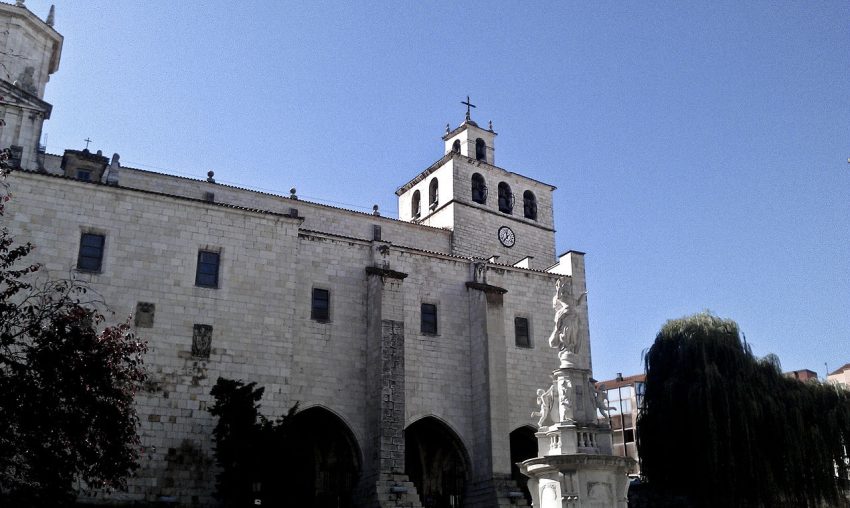
Santander Cathedral sits right in the city centre, rising from the Somorrostro hill like a compact fortress that happens to be a cathedral. It's a Gothic complex with a rare, layered feel: a lower church from the early 13th century (the Iglesia del Santísimo Cristo) and an upper church largely shaped in the 14th century, connected by a sober cloister that dates to the 15th. Even before you step inside, the setting makes sense of Santander's history-this is a place built to last, shaped by centuries, and still woven into daily life.
What I love here is how much variety you get in one stop: a dim, intimate lower church that feels medieval in the bones, a taller upper nave with Gothic proportions, and a cloister that acts like a pause button in the middle of the city. It's one of the best places to visit in Santander if you want something that mixes architecture, atmosphere, and local identity, and it fits neatly into a walking tour of Santander because it's so central and easy to pair with nearby squares, markets, and the bayfront.
Table of Contents
- History and Significance of the Santander Cathedral
- Things to See and Do in the Santander Cathedral
- How to Get to the Santander Cathedral
- Practical Tips on Visiting the Santander Cathedral
- Where to Stay Close to the Santander Cathedral
- Is the Santander Cathedral Worth Visiting?
- For Different Travelers
- FAQs for Visiting Santander Cathedral
- Nearby Attractions to the Santander Cathedral
History and Significance of the Santander Cathedral
The cathedral complex is best understood as two churches stacked in time as well as in space. The lower church, the Iglesia del Santísimo Cristo, dates to the early 13th century and carries that transitional feel where early Gothic structure still leans toward Romanesque calm-low heights, heavy presence, and a sense of shelter rather than spectacle. Above it, the upper church took shape in the 14th century, with later modifications that reflect how working cathedrals evolve: rebuilt, adjusted, and reinterpreted as tastes and needs shift.
One of the most defining moments in its modern story was the great Santander fire of 1941, which devastated much of the interior and forced major rebuilding. That restoration is part of what you're seeing today-an old structure with a 20th-century chapter written into it. The cathedral also holds a deeply local layer of memory through the tomb and mausoleum of Marcelino Menéndez Pelayo, a celebrated Santander-born intellectual, turning this into a place where civic identity and sacred space overlap in a very Spanish way.
Things to See and Do in the Santander Cathedral
Start in the lower church (Iglesia del Santísimo Cristo) if it’s open to visitors, because it sets the emotional tone: cooler air, lower vaults, and a quiet that feels removed from the streets above. It’s the part that most strongly conveys “13th century,” and it’s often where people slow down without meaning to. If you’re the kind of traveler who enjoys the texture of old stone and the feeling of layered time, this is the section that tends to linger in the memory.
Upstairs, take a slow look at the overall structure: three naves, a clear Gothic rhythm, and a head with polygonal chapels that pull your eye forward. The cloister is a different experience altogether-square, restrained, and almost undecorated, with pointed arches that feel purposeful rather than ornamental. It’s an excellent place to breathe, take a few photos, and notice how the cathedral holds space as well as it holds history.
Finally, seek out the Menéndez Pelayo mausoleum (by Victorio Macho) and the broader commemorative elements tied to local figures and events. Even if you're not deeply into art history, it adds narrative: this is not just a monument to faith, but a monument that Santander has repeatedly rebuilt, reowned, and reexplained to itself.
How to Get to the Santander Cathedral
The nearest airport is Santander Airport (SDR), and Bilbao Airport (BIO) is the main alternative if you're coming from farther afield or combining Santander with the wider Basque coast. For the best deals and a seamless booking experience, check out these flights to Santander on Booking.com.
If you arrive by train, Santander’s main station is close enough that the cathedral is a straightforward walk through the centre, especially if you like seeing the city unfold gradually rather than stepping straight into a tourist zone. Train schedules and bookings can be found on Omio.
Local buses are useful if you’re staying out toward El Sardinero or other neighbourhoods, but once you’re central, walking is usually the simplest way to link the cathedral with nearby plazas and the waterfront. If you’re driving, plan to use a central car park and treat the cathedral as a walk-first stop, since the streets around the core are better navigated on foot. If you are looking to rent a car in Spain I recommend having a look at Discover Cars, first, as they compare prices and review multiple car rental agencies for you.
Practical Tips on Visiting the Santander Cathedral
- Entrance fee: Adults: €2.00
- Opening hours: Monday – Friday: 10:00–13:00 & 16:30–19:30. Saturday: 10:00–13:00 & 16:30–20:00. Sunday: 10:00–13:30 & 17:00–21:00.
- Official website: https://diocesisdesantander.com/catedral-de-santander/
- Best time to visit: Aim for a non-service window when the interior is quieter, then linger in the cloister for a calmer, reflective feel.
- How long to spend: A focused visit takes about 45 minutes, but it’s worth allowing extra time if you want to move slowly between the lower church, upper church, and cloister.
- Accessibility: The complex includes changes in level between sections, so expect some steps and uneven surfaces typical of historic buildings.
- Facilities: It’s in the heart of the city, so cafés, shops, and restrooms are easy to find nearby even if they’re not all inside the complex.
Where to Stay Close to the Santander Cathedral
For a culture-heavy itinerary, base yourself in central Santander around the historic core and bayfront so you can walk everywhere; if your priority is beach time and a resort rhythm, El Sardinero is the better base and you can dip into the centre when you want history.
If you want maximum convenience within a short stroll of the cathedral and the central sights, Hotel Bahía is a strong option with an easy, walkable location that keeps logistics simple. For a stylish city-centre base that works well for evenings out and quick routes to plazas and markets, Hotel Silken Coliseum is a reliable pick. If you like being close to transport links as well as the old centre, abba Santander hotel is particularly practical for short stays and early departures.
Is the Santander Cathedral Worth Visiting?
Yes-because it gives you a condensed, meaningful slice of Santander: medieval foundations, Gothic architecture, a cloister pause, and a modern rebuilding story all in one compact visit. It's especially worthwhile if you want a sight that feels rooted in the city's identity rather than something that could be “anywhere.”
Even if you’re not usually a cathedral person, the two-level structure and the atmosphere of the lower church make it different from a quick pop-in. It’s the kind of stop that quietly upgrades your understanding of the city centre.
What Other Travellers Say...

Catedral de Santander sits in the city centre and comprises two connected churches with Gothic elements and historic statuary; visitors praise its light, unexpectedly bright interior, colourful windows at the back, pleasant cloisters and a small peaceful garden area, and note there's a modest paid entry (with a free small chapel on the side) although opening times can be limited so plan ahead and walk around the exterior for good photo spots.


For Different Travelers
Families with Kids
This can work well for families if you keep it short and focus on the “two churches in one” idea, which kids often find intriguing. The cloister is also a useful reset point-quieter, more open, and good for a calm moment before continuing to more energetic stops.
Plan the visit around attention spans: a quick lower church look, a brief upstairs walk, and then back out to the nearby squares for space and snacks. It’s a good cultural stop without needing a long, structured museum-style commitment.
Couples & Romantic Getaways
For couples, the cathedral is best as a slower, moodier stop in the middle of a day of wandering. The lower church and the cloister naturally create a quieter pace, and that contrast-busy streets outside, stillness within-often makes the visit feel more memorable.
Pair it with a relaxed stroll afterward through the centre toward the waterfront, and you'll get that classic Santander rhythm of history into sea air. It's an easy, intimate stop that doesn't demand planning.
Budget Travelers
This is a high-value visit because it delivers atmosphere and history without needing a big spend. Treat it as one of your central anchors, then build a walking route that links nearby squares, markets, and the bayfront so you can fill a day with minimal transport costs.
If you’re watching your budget, it’s also a smart “weather-proof” option: even when the bayfront is windy, the cathedral and cloister give you a calmer, sheltered experience in the middle of town.
History Buffs
History buffs will appreciate the layered chronology: early 13th-century foundations below, 14th-century Gothic development above, and the 20th-century rebuilding after the 1941 fire. The cathedral is also a good place to think about Santander as a port city with deep, resilient institutions-religious, civic, and cultural.
Look for the subtle evidence of modification over time rather than expecting a perfectly “pure” Gothic interior. That evolution is part of the appeal, and it’s what makes the complex feel like a living historical record.
FAQs for Visiting Santander Cathedral
Getting There
Tickets & Entry
Visiting Experience
Tours, Context & Itineraries
Photography
Accessibility & Facilities
Food & Breaks Nearby
Safety & Timing
Nearby Attractions to the Santander Cathedral
- Plaza Porticada: A grand civic square nearby that’s great for soaking up Santander’s architectural character in a few minutes.
- Mercado de la Esperanza: A classic market for local produce and seafood, perfect for a quick, everyday snapshot of city life.
- Paseo de Pereda: The bayfront promenade where you can switch from stone-and-history to sea air and waterfront views.
- Jardines de Pereda: A green pause point by the bay that's ideal for a relaxed stroll or a bench break between sights.
- Centro Botín: A striking modern arts centre on the waterfront, excellent for exhibitions or simply enjoying the architecture and viewpoints.
The Catedral de la Asunción de Santander appears in our Complete Guide to Visiting Santander!

Moira & Andy
Hey! We're Moira & Andy. From hiking the Camino to trips around Europe in Bert our campervan — we've been traveling together since retirement in 2020!
This website uses affiliate links which may earn a commission at no additional cost to you!
Planning Your Visit
Monday - Friday: 10:00-13:00 & 16:30-19:30.
Saturday: 10:00-13:00 & 16:30-20:00.
Sunday: 10:00-13:30 & 17:00-21:00.
Adults: €2.00
Nearby Attractions
- Jardines de Pereda (0.2) km
Park - Botín Center (0.3) km
Gallery - Paseo de Pereda (0.6) km
Walk - Península de la Magdalena (3.1) km
Park - Palacio de la Magdalena (3.5) km
Palace - Cabo Mayor Lighthouse (3.6) km
Lighthouse - Santander Airport (4.0) km
Airport - Puente de Vizcaya (65.7) km
Bridge - Doña Casilda Park (73.3) km
Park - Museo Bellas Artes de Bilbao (73.5) km
Museum