Castelo de Tomar
Castle in Tomar
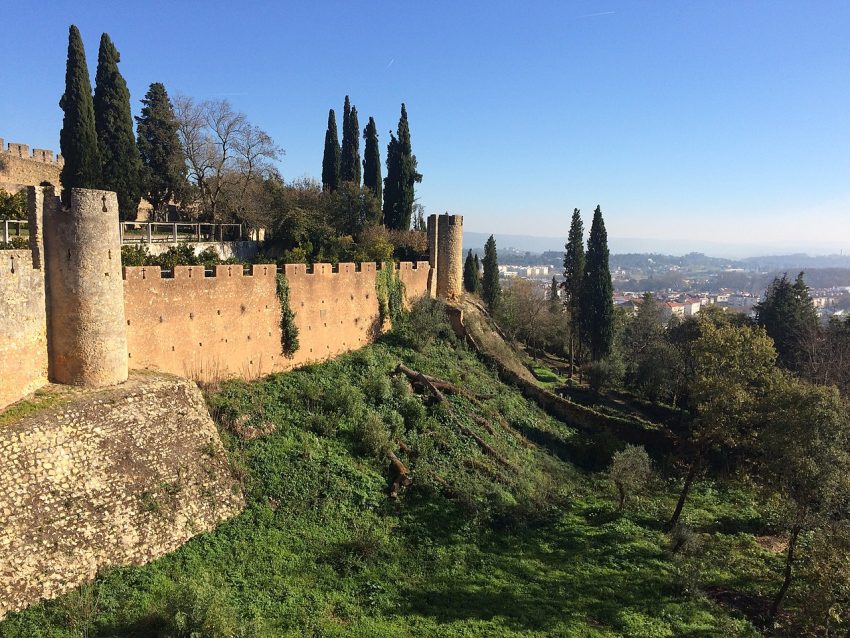
The Convent of Christ (Convento de Cristo) crowns a hill on the western side of Tomar, wrapping a Templar castle and a later convent complex into one monumental, walkable site. It is vast without feeling overwhelming, because the visit unfolds in layers: fortified walls and courtyards first, then richly detailed cloisters, chapels, and the famous circular oratory that makes the whole place feel unmistakably different from Portugal's more conventional monasteries.
If you're planning a walking tour of Tomar, this is one of the top attractions in Tomar to build the day around, simply because it gives you the city's “Templar to Age of Discoveries” story in a single, concentrated stop. It's also the kind of place that improves with time: the longer you linger, the more you notice how Romanesque, Gothic, Manueline, Renaissance, Mannerist, and Baroque elements sit side by side without losing coherence.
Table of Contents
- History and Significance of the Convent of the Knights of Christ
- Things to See and Do in the Convent of the Knights of Christ
- How to Get to the Convent of the Knights of Christ
- Practical Tips on Visiting the Convent of the Knights of Christ
- Where to Stay Close to the Convent of the Knights of Christ
- Is the Convent of the Knights of Christ Worth Visiting?
- For Different Travelers
- FAQs for Visiting Convent of Christ
- Nearby Attractions to the Convent of Christ
History and Significance of the Convent of the Knights of Christ
UNESCO inscribed the Convent of Christ in Tomar as a World Heritage Site in 1983, recognising the complex as a major landmark in Western history and Portuguese identity. It began as a Templar foundation, established in 1160 by Gualdim Pais, and the castle-and-convent ensemble grew over centuries into a kind of architectural timeline carved in stone.
When the Templars were suppressed in the early 14th century, Portugal redirected their legacy rather than erasing it. The site became associated with the Order of Christ, and under Infante D. Henrique (Prince Henry the Navigator) the convent expanded, helping cement the link between Tomar, the Order's symbolism, and Portugal's maritime horizon.
Architecturally, the complex is famous for its contrasts: a martial, defensive outer shell and an inward-facing spiritual and ceremonial core. The round Charola (the Templars’ oratory), influenced by Jerusalem’s Holy Sepulchre, is the emotional centrepiece, while later Manueline additions and Renaissance cloisters reflect the wealth and ambition of Portugal’s 15th-16th century moment.
Things to See and Do in the Convent of the Knights of Christ
Start with the Charola: its circular geometry changes how you move and look, and it’s the part of the complex that best preserves the “Templar idea” in architectural form. From there, follow the internal logic of the site as it evolves outward into later spaces, noticing how doorways, arches, and galleries signal shifts in period and purpose.
Do not rush past the Manueline highlights, especially the Chapter Room and the celebrated Chapter Window, where maritime symbolism and sculpted exuberance feel like a manifesto in stone. Then slow down in the cloisters, where the mood turns quieter and more monastic, and finish with time on the walls and viewpoints for a sense of why the hilltop position mattered strategically as well as spiritually.
How to Get to the Convent of the Knights of Christ
The most convenient airport for Tomar is Lisbon Airport (LIS), with Porto Airport (OPO) a practical alternative if you're travelling across central Portugal as part of a longer route. For the best deals and a seamless booking experience, check out these flights to Tomar on Booking.com.
From Lisbon, trains run on the Lisbon - Entroncamento - Tomar corridor, and Tomar station is close enough to reach the historic centre by a straightforward walk or a short taxi ride before you climb up to the convent complex. Train schedules and bookings can be found on Omio.
Intercity buses also connect Lisbon and other regional hubs with Tomar, which can be useful if train times don't suit your day, but you'll still want to plan for an uphill final approach once you're in town.
By car, Tomar is an easy drive from Lisbon via the A1/A23 axis, and having a car is useful if you want to pair the convent with rural Templar sites and small towns nearby. If you are looking to rent a car in Portugal I recommend having a look at Discover Cars, first, as they compare prices and review multiple car rental agencies for you.
Practical Tips on Visiting the Convent of the Knights of Christ
- Entrance fee: Adults: €15.00.
- Opening hours: (Summer) June – September: 09:00–18:30. (Winter) October – May: 09:00–17:30. Closed: January 1; March 1; Easter Sunday; May 1; December 24; December 25.
- Official website: https://www.museusemonumentos.pt/pt/museus-e-monumentos/convento-de-cristo
- Best time to visit: Aim for a weekday morning if you want the Charola and cloisters to feel calmer and more contemplative.
- How long to spend: Give yourself at least 2-3 hours; it’s a large complex and the best parts reward slower pacing.
- Accessibility: Expect uneven surfaces, steps, and historic thresholds; if mobility is a concern, plan a selective route and take breaks between sections.
- Facilities: Treat it as a monument visit rather than a full-service museum day; it’s wise to bring water and plan a proper meal back in town.
Where to Stay Close to the Convent of the Knights of Christ
For a culture-heavy itinerary, base yourself in Tomar’s historic centre so you can walk to the main sights and return easily for evenings by the river; if your priority is smoother logistics and quick onward connections, staying closer to the station-edge of town can make arrivals and departures simpler.
For a classic, comfortable base with an established reputation and an easy walk into the centre, Hotel dos Templários is a strong all-rounder. If you prefer a more boutique, city-centre feel near the riverfront atmosphere, Thomar Boutique Hotel keeps you close to cafés, viewpoints, and an easy climb toward the monument. For a quieter setting in parkland that still stays walkable to the centre, Estalagem Santa Iria Hotel & Spa is well suited to travellers who want a calmer base after busy sightseeing days.
Is the Convent of the Knights of Christ Worth Visiting?
Yes, because it’s not a single building so much as a compact history of Portugal’s power, faith, and imagination expressed through architecture. You get the drama of a Templar stronghold, the intimacy of sacred spaces, and the symbolism of the Age of Discoveries, all without needing to change locations.
It’s also one of those rare monuments that works for both first-time visitors and detail-obsessed return trips. The first visit gives you the headline “wow,” and later visits deepen into materials, craftsmanship, and the slow evolution of the complex.
What Other Travellers Say...

Convent of Christ in Tomar is a hilltop Roman Catholic convent and castle complex famed for its ornate Manueline sculpture, medieval cloisters and vast, labyrinthine interior; visitors say it can easily take half a day or more to explore, with cloisters, a striking circular Charola church, frescoes and richly decorated windows to photograph, plus gardens, exhibitions (including medieval clothing), an on-site souvenir shop and cafe, and limited parking and accessibility in places — note some areas may be under maintenance and access can be restricted.


For Different Travelers
Families with Kids
This visit works best for families when you treat it as a sequence of “zones” rather than a complete checklist. Do the castle feel first (walls, courtyards, views), then one or two interior highlights, and leave before fatigue sets in.
Kids often respond well to the circular Charola because it feels different from ordinary churches and encourages them to look around rather than forward. Bringing snacks and planning a post-visit reward in Tomar can make the day flow much more smoothly.
Couples & Romantic Getaways
For couples, the convent is at its best when you lean into atmosphere: quieter corners of cloisters, light-and-shadow details, and the slow climb that makes arrival feel earned. It’s an easy place to share a “we found something special” feeling, even though it’s famous, because the complex is big enough to escape the busiest pockets.
Pair it with a relaxed afternoon in Tomar’s old streets and a riverside dinner, letting the monument be the day’s anchor rather than the whole day. That rhythm keeps the visit memorable without becoming a marathon.
Budget Travelers
It’s excellent value because you’re getting multiple layers of experience in one ticket: fortress, convent, viewpoints, and major architectural highlights. Budget travellers can control costs by arriving early, taking a long, unhurried visit, then keeping the rest of the day walking-based in Tomar’s compact centre.
If you're optimising for spend, skip unnecessary transport inside Tomar and treat the uphill walk as part of the experience. You'll leave feeling like you did a full “major sight” day without stacking extra costs.
History Buffs
For history-focused travellers, this is one of Portugal’s most rewarding sites because it connects institutions to built form: you can literally see how the Templars’ frontier logic transitions into the Order of Christ’s later prestige and symbolism. The architecture is also unusually legible across periods, making it a rare place where style changes feel like historical chapters rather than decorative noise.
If you want depth, slow down in transitional spaces: doorways, chapter rooms, and points where later corridors meet older walls. Those seams are where the complex tells its most interesting story.
FAQs for Visiting Convent of Christ
Getting There
Tickets & Entry
Visiting Experience
Tours, Context & Itineraries
Photography
Accessibility & Facilities
Food & Breaks Nearby
Safety & Timing
Nearby Attractions to the Convent of Christ
- Church of Santa Maria do Olival: A key Templar-era church with a quiet, atmospheric interior and strong historical significance for Tomar.
- Synagogue of Tomar: One of Portugal's best-preserved medieval synagogues, offering a compact but powerful window into the town's Jewish history.
- Praça da República and Igreja de São João Baptista: Tomar’s central square and church pairing, ideal for an easy town-centre loop after the convent.
- Pegões Aqueduct: A striking piece of engineering associated with the convent’s broader landscape story, excellent for a short side trip.
- Mata Nacional dos Sete Montes: A green, restorative walk close to the monument, perfect for decompressing after a detail-heavy visit.
The Castelo de Tomar appears in our Complete Guide to Visiting Tomar!

Moira & Andy
Hey! We're Moira & Andy. From hiking the Camino to trips around Europe in Bert our campervan — we've been traveling together since retirement in 2020!
This website uses affiliate links which may earn a commission at no additional cost to you!
Planning Your Visit
(Summer) June - September: 09:00-18:30.
(Winter) October - May: 09:00-17:30.
Closed: January 1; March 1; Easter Sunday; May 1; December 24; December 25.
Adults: €15.00.
Nearby Attractions
- Ruínas de Conímbriga (55.4) km
Historic Site - Jardins da Quinta das Lágrimas (66.3) km
Historic Site and Park - Portugal dos Pequenitos (66.6) km
Amusement Park - Botanical Garden of the University of Coimbra (67) km
Gardens - San Sebastian Aqueduct (67.1) km
Aqueduct - Biblioteca Joanina (67.1) km
Historic Building and Library - Paço das Escolas (67.2) km
Historic Building - Largo da Portagem (67.2) km
Square - University Tower (67.2) km
Historic Building and Tower - Church of St. Bartholomew (67.3) km
Church