Castellum Aquae, Nimes
Attraction, Historic Building and Roman Site in Nimes
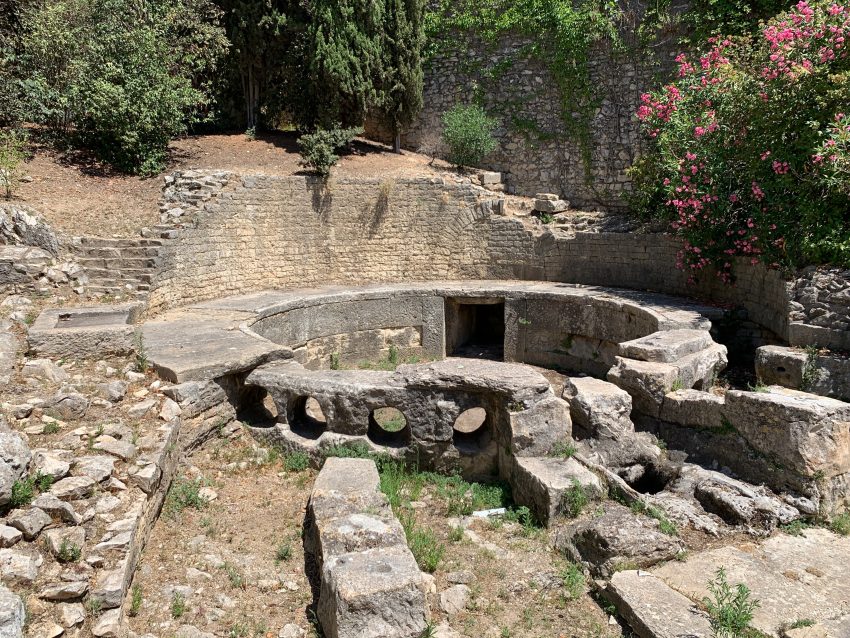
Tucked into the leafy heights above central Nimes, the Castellum Aquae (also known as the Castellum Divisorium) is one of the city's most quietly fascinating Roman remains: a circular distribution basin where water arriving by aqueduct was split and sent out across ancient Nemausus.
It's not a “big-ticket” monument like the Arena or the Maison Carrée, but it's a perfect stop on a self-guided Roman walking tour, especially if you're already exploring the Jardins de la Fontaine and heading up toward Tour Magne for the best panoramic views.
Table of Contents
- History and Significance of the Castellum Aquae
- Things to See and Do in the Castellum Aquae
- How to Get to the Castellum Aquae
- Practical Tips on Visiting the Castellum Aquae
- Where to Stay Close to the Castellum Aquae
- Is the Castellum Aquae Worth Visiting?
- For Different Travelers
- FAQs for Visiting Castellum Aquae
- Nearby Attractions to the Castellum Aquae
History and Significance of the Castellum Aquae
The Castellum Aquae marked the arrival point of Nimes' Roman aqueduct system, built in the mid-1st century CE, the same ambitious water network for which the Pont du Gard is the most famous surviving landmark. In practical terms, it helped stabilize the city's water supply, especially when local springs ran low, and supported the growth of public baths and expanding neighborhoods.
What makes the site special is how clearly it communicates Roman engineering logic. Rather than being a decorative monument, it’s infrastructure you can still read: a purpose-built basin designed to regulate flow, keep debris out, and distribute water efficiently.
The structure’s story also includes a long “lost and found” chapter. Known historically, it was later buried and only rediscovered in the 19th century, then protected as a historic monument—one reason you can still stand beside a piece of the city’s working Roman water system today.
Things to See and Do in the Castellum Aquae
Start by circling the basin and looking for the fan-like arrangement of circular outlets along the inner wall. These openings once connected to lead pipes that carried water into different parts of the city, and they’re the key detail that turns the Castellum from “a round ruin” into a real, legible distribution hub.
Next, look for the way water would have entered and overflowed. Even without water running today, the geometry of the inlet and the logic of the overflow help you imagine how the system balanced supply, pressure, and cleanliness—an ancient solution to a very modern urban problem.
Finally, use the Castellum as a context stop rather than a standalone destination. Pair it with the Jardins de la Fontaine, the Temple of Diana, and the climb to Tour Magne; together, they create a compact route that mixes ruins, shade, and some of the most enjoyable walking in Nimes.
How to Get to the Castellum Aquae
For flights, the nearest practical airports are Nimes-Alès-Camargue-Cévennes (limited routes), Montpellier Méditerranée, and Marseille Provence, with onward connections into the city. For the best deals and a seamless booking experience, check out these flights to Nimes on Booking.com.
Nimes is easy to reach by rail, with trains into Nîmes station (including fast services on major routes), and from there you can walk, take a local bus, or grab a short taxi ride toward the Jardins de la Fontaine area. You can use SNCF Connect to check schedules, compare routes, and purchase tickets for National (SNCF ) and regional trains (TER). For a more streamlined experience, we recommend using Omio, which allows you to easily compare prices, schedules, and book tickets for both National and Regional travel across all of Europe, all in one place.
If you're driving, aim for central Nimes parking (public garages are the simplest option) and then continue on foot, as the streets near the gardens can be narrow and busy. If you are looking to rent a car in France I recommend having a look at Discover Cars, first, as they compare prices and review multiple car rental agencies for you.
Practical Tips on Visiting the Castellum Aquae
- Official website: https://www.nimes.fr/que-faire-a-nimes/patrimoine/les-monuments-romains/le-castellum
- Entrance fee: Free.
- Opening hours: 24 Hours.
- Best time to visit: Go in the morning for softer light and fewer people, or late afternoon when the gardens feel cooler and the climb toward Tour Magne is more comfortable.
- How long to spend: Plan 10–20 minutes at the Castellum itself, or 1.5–2.5 hours if you're combining it with the Jardins de la Fontaine and Tour Magne.
- Accessibility: Expect uneven ground and steps in the surrounding garden area; the Castellum is best for visitors comfortable with short inclines and historic surfaces.
- Facilities: Treat this as an outdoor heritage stop—use cafés and restrooms around the Jardins de la Fontaine and central Nimes before or after your visit.
Where to Stay Close to the Castellum Aquae
Base yourself in central Nimes so you can walk to the Roman monuments, restaurants, and the Jardins de la Fontaine without relying on transport.
Maison Albar Hotels L’Imperator A polished, iconic choice close to the gardens, ideal if you want a special stay with a sense of Nimes’ classic elegance and an easy walk to the Castellum.
Best Western Le Marquis de La Baume Set in a handsome historic building in the old town, this is a strong pick for travelers who want character plus a central base for walking routes.
Hôtel Jardins Secrets A boutique option known for its intimate feel; great if you want a quieter retreat after sightseeing-heavy days.
Appart’City Collection Nîmes Arènes Convenient for train arrivals and longer stays, with apartment-style comfort that works well if you like extra space and a practical setup.
Ibis Nîmes Centre A reliable, budget-friendly base that keeps you within easy reach of the center and makes it simple to build a full Roman itinerary.
Is the Castellum Aquae Worth Visiting?
Yes—especially if you enjoy seeing how a Roman city actually worked. It's quick, free, and unusually “explainable” on-site: the outlets and basin shape make the purpose instantly understandable, and it fits naturally into a walk through the Jardins de la Fontaine.
Honest Pivot: if you’re short on time and only want the headline monuments, prioritize the Arena, Maison Carrée, and the Musée de la Romanité. The Castellum is best for travelers who like quieter ruins, engineering details, and connecting-the-dots context rather than dramatic architecture.
What Other Travellers Say...


For Different Travelers
The Castellum Aquae is a small stop with big storytelling potential. Because it's outdoors and easy to combine with nearby highlights, it works well as a flexible add-on rather than a destination you plan your whole day around.
Families with Kids
Kids often enjoy the “ancient plumbing” angle—turn it into a quick challenge: spot the outlets and imagine which neighborhoods they served. Pair it with time in the Jardins de la Fontaine so there's space to move around after the history.
Keep expectations simple: this isn’t a hands-on museum, and the visit is short. It works best as a 10-minute curiosity stop on the way to a viewpoint or a snack break.
Couples & Romantic Getaways
For couples, the Castellum is a low-key, uncrowded pause that feels like a local discovery, especially when you visit during golden hour. The nearby gardens and the walk up toward Tour Magne make it easy to turn the stop into a scenic mini-itinerary.
If you like photography, the circular forms and stone textures are especially appealing in softer light. Follow it with an aperitif in the center for a classic Nimes evening rhythm.
Budget Travelers
This is an easy win: it's free, outdoors, and pairs with other walkable sights, so you can build a full day of Roman Nimes without stacking ticket costs. Bring water in warm months and plan your route to include shaded stretches in the gardens.
Because it's quick, it also fits nicely between other stops without needing paid transport. Use it as a “connector” sight while walking from the center toward the Jardins de la Fontaine area.
History Buffs
History lovers will appreciate how rare and specific this structure is: it’s not just “Roman ruins,” it’s a clearly identifiable piece of municipal infrastructure. The Castellum helps you understand the city’s relationship to the Pont du Gard and the broader aqueduct system.
To deepen the context, visit after (or before) the Musée de la Romanité, then come here to see the real-world endpoint of that engineering story. It’s a satisfying way to translate museum knowledge into a physical place.
FAQs for Visiting Castellum Aquae
Getting There
Tickets & Entry
Visiting Experience
Tours, Context & Itineraries
Photography
Accessibility & Facilities
Food & Breaks Nearby
Safety & Timing
Nearby Attractions to the Castellum Aquae
- Jardins de la Fontaine: Nimes' signature garden complex, ideal for shaded strolling and linking multiple Roman-era sights.
- Temple of Diana: Atmospheric Roman ruins within the gardens, a quick and photogenic stop.
- Tour Magne: A hilltop Roman tower offering some of the best panoramic views over Nimes.
- Maison Carrée: A remarkably preserved Roman temple in the city center, perfect for architecture lovers.
- Arènes de Nîmes: The city’s Roman amphitheatre and a must-see for first-time visitors.
The Castellum Aquae appears in our Complete Guide to Visiting Nimes!

Moira & Andy
Hey! We're Moira & Andy. From hiking the Camino to trips around Europe in Bert our campervan — we've been traveling together since retirement in 2020!
This website uses affiliate links which may earn a commission at no additional cost to you!
Planning Your Visit
24 Hours.
Free.
Nearby Attractions
- Antonin Square (0.3) km
Fountain, Monument and Square - Les Halles de Nimes (0.4) km
Market - Carre d'Art (0.5) km
Museum - Maison Carree (0.5) km
Historic Building, Monument and Roman Site - Place de l'Horloge (0.5) km
Area, Attraction and Square - Tour Magne (0.5) km
Monument, Tower and Viewing Point - Nimes Cathedral (0.6) km
Cathedral, Church and Religious Building - Jardins de la Fontaine (0.6) km
Fountain, Gardens and Park - Musee du Vieux Nimes (0.6) km
Museum - Rue de l'Aspic (0.6) km
Area and Street