Casa de los Campomanes, Oviedo
Historic Building in Oviedo
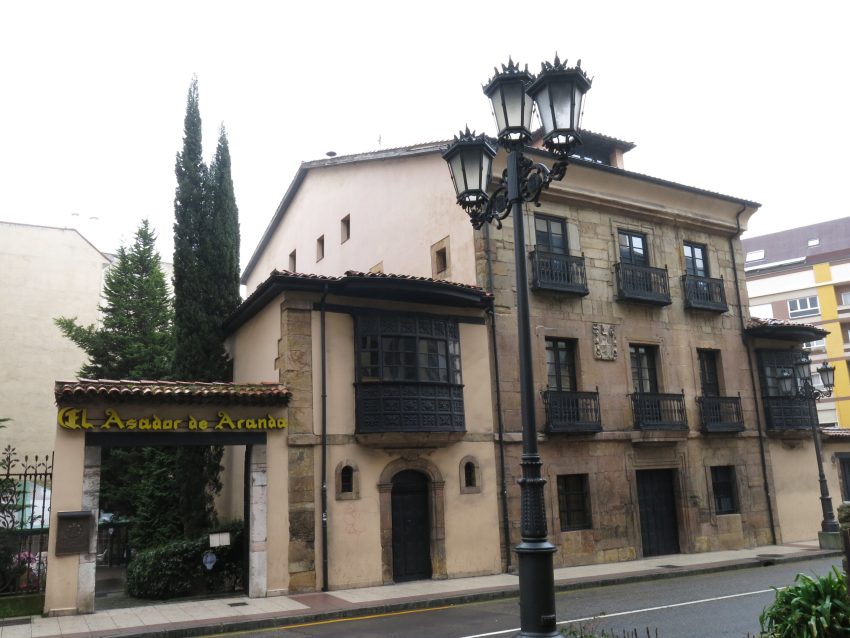
Casa de los Campomanes is a small but striking historic building in Oviedo's old quarter, best appreciated from the street for its finely worked stone façade and the family coat of arms that still anchors it to the city's noble past. It's the kind of place you might miss if you're rushing, but it rewards anyone who enjoys architecture details and the layered history of Asturias' capital.
Because it sits right in the walkable historic center, the easiest way to visit is to include it on a self-guided stroll (or a guided walking tour) that also takes in Oviedo Cathedral, the nearby plazas, and the tight lanes where many of the city's protected buildings cluster. For the best look, approach slowly, stand back to take in the full frontage, then move closer to study the masonry and heraldic elements.
Table of Contents
- History and Significance of the Casa de los Campomanes
- Things to See and Do in the Casa de los Campomanes
- How to Get to the Casa de los Campomanes
- Practical Tips on Visiting the Casa de los Campomanes
- Where to Stay Close to the Casa de los Campomanes
- Is the Casa de los Campomanes Worth Visiting?
- For Different Travelers
- FAQs for Visiting Casa de los Campomanes
- Nearby Attractions to the Casa de los Campomanes
History and Significance of the Casa de los Campomanes
Casa de los Campomanes dates to the 17th century (commonly cited as 1662) and is associated with the Campomanes family, a name closely tied to Asturias' Enlightenment-era political and intellectual life. Even if you don't go inside, the exterior tells a story of status and craftsmanship through its stonework and emblematic shield.
Architecturally, it reads as a compact urban noble house: rectangular in plan, rising several stories, and designed to project permanence through dressed stone on the main front. In a city where medieval, baroque, and later styles overlap within a few blocks, it’s a useful “anchor point” for understanding how Oviedo’s historic center evolved.
Today, its significance is also about context: it's part of the broader protected monumental fabric of central Oviedo, where many buildings are valued less as standalone attractions and more as pieces of a coherent historic streetscape.
Things to See and Do in the Casa de los Campomanes
Start with the façade. The best “activity” here is slow looking: trace the lines of the stone blocks, note how openings are arranged across floors, and spend a minute with the coat of arms to spot symbolic shapes and carving depth.
Next, use it as a waypoint for a short architecture loop. Pair it with nearby palaces, churches, and civic buildings so you can compare styles and materials within a 10–20 minute radius on foot; it’s especially satisfying if you like photographing doors, balconies, and street-level details.
Finally, treat it as a pause in your Old Town walk. The surrounding streets are ideal for a coffee stop and people-watching, and the building works well as a “micro-sight” between bigger-ticket visits like the cathedral complex and major museums.
How to Get to the Casa de los Campomanes
The nearest airports are Asturias Airport (OVD) for the region, with larger international options via Santander Airport (SDR) or Bilbao Airport (BIO) if you're building a wider northern Spain itinerary. For the best deals and a seamless booking experience, check out these flights to Oviedo on Booking.com.
Oviedo is well connected by rail, and arriving at the main station makes it straightforward to continue by taxi, bus, or a walk into the historic center depending on your luggage and timing. Train schedules and bookings can be found on Omio.
If you’re driving, aim for a central parking garage on the edge of the Old Town and finish the last stretch on foot, since the historic core has narrow streets and limited access in places. If you are looking to rent a car in Spain I recommend having a look at Discover Cars, first, as they compare prices and review multiple car rental agencies for you.
Practical Tips on Visiting the Casa de los Campomanes
- Entrance fee: Free.
- Opening hours: 24 Hours.
- Best time to visit: Go in the morning for softer light on the stone façade, or late afternoon for warmer tones and fewer tour groups in the lanes.
- How long to spend: Plan 10–20 minutes as a quick stop, or 30–45 minutes if you’re doing an architecture-focused photo walk nearby.
- Accessibility: The street viewing is generally easy in the center of Oviedo, but expect uneven paving and occasional curb changes typical of historic streets.
- Facilities: There are no dedicated visitor facilities on-site; rely on nearby cafés, public restrooms in larger attractions, and services around the cathedral area.
Where to Stay Close to the Casa de los Campomanes
Base yourself in central Oviedo (Old Town / city center) for the easiest walking access to Casa de los Campomanes and the city's main sights.
Eurostars Hotel de la Reconquista A classic choice for travelers who want a landmark stay with a sense of occasion, plus an easy walk to the historic core.
Barceló Oviedo Cervantes A comfortable, polished base near the center that works well if you want modern amenities while staying close to Old Town walks.
NH Oviedo Principado Great for being right in the action—ideal if you want to step out and immediately be among shops, cafés, and key monuments.
Hotel Fruela A reliable mid-range option with a central location that makes it easy to pop back for a break between sightseeing stops.
Soho Boutique Oviedo A stylish pick for travelers who like contemporary design and want to stay within a short stroll of the Old Town’s lanes.
Is the Casa de los Campomanes Worth Visiting?
Yes—if you enjoy historic architecture and the feel of a city revealed through small details, Casa de los Campomanes is absolutely worth a short stop. It's not a “big interior visit” type of attraction; it's a street-level highlight that adds texture to an Old Town walk and helps you notice how much heritage is packed into central Oviedo.
Honest Pivot: If you prefer attractions with guaranteed interior access, exhibits, or a structured visitor experience, you can skip this and focus on the cathedral complex and museums instead. It’s best for travelers who like to wander, look up, and connect the dots between buildings.
For Different Travelers
Casa de los Campomanes works best as a flexible add-on: a quick look during a walking route, a photo stop, or a history “breadcrumb” between bigger sights. Because it's centrally located, it rarely requires special planning—just a bit of attention.
Families with Kids
For families, this is a short, low-effort stop that won’t test anyone’s patience. Turn it into a mini game by asking kids to spot the coat of arms and describe what they think the symbols mean.
Pair it with a nearby square or a treat stop so the visit feels like part of a fun loop rather than a standalone “building stop.” It’s best used as a quick visual highlight between more interactive attractions.
Couples & Romantic Getaways
Couples will like how naturally it fits into a slow Old Town stroll—especially if you’re doing a café-to-café wander. The carved stone and historic atmosphere make a nice backdrop for photos without the pressure of timed entry.
Plan it around golden hour and then continue to a scenic plaza or a cozy dinner spot nearby. It’s a small moment that adds charm to a day of city exploring.
Budget Travelers
Budget travelers will appreciate that this is essentially a free, walk-by attraction in the heart of the city. It adds cultural value to your itinerary without requiring tickets or advance planning.
Use it as part of a DIY architecture route: combine it with other nearby historic buildings and churches, and you'll get a rich sense of Oviedo with minimal spend.
History Buffs
History buffs will enjoy placing the building within Oviedo’s 17th-century urban fabric and the broader story of noble families and civic power in Asturias. Even a brief stop can spark curiosity about how the city’s protected center was shaped over centuries.
To deepen the experience, connect it to nearby institutions and monuments that explain the region’s political and cultural evolution. It’s a small piece, but it fits into a much bigger historical puzzle.
FAQs for Visiting Casa de los Campomanes
Getting There
Tickets & Entry
Visiting Experience
Tours, Context & Itineraries
Photography
Accessibility & Facilities
Food & Breaks Nearby
Safety & Timing
Nearby Attractions to the Casa de los Campomanes
- Oviedo Cathedral (Catedral de San Salvador): The city's headline monument, known for its Gothic presence and the broader cathedral complex.
- Plaza de la Catedral: A classic Old Town gathering point that’s great for photos and soaking up the historic atmosphere.
- Museo de Bellas Artes de Asturias: A strong fine-arts museum with a central location that pairs well with an Old Town walk.
- Museo Arqueológico de Asturias: A go-to stop for regional history, housed in a historic setting near other major sights.
- Campo de San Francisco: Oviedo's beloved central park, ideal for a relaxing break after exploring the stone streets of the center.
The Casa de los Campomanes appears in our Complete Guide to Visiting Oviedo!

Moira & Andy
Hey! We're Moira & Andy. From hiking the Camino to trips around Europe in Bert our campervan — we've been traveling together since retirement in 2020!
This website uses affiliate links which may earn a commission at no additional cost to you!
Planning Your Visit
24 Hours.
Free.
Nearby Attractions
- Calle Gascona (0.1) km
Street - Palacio de Valdecarzana-Heredia (0.1) km
Historic Building, Historic Site and Palace - Benedictine Monastery of San Pelayo (0.1) km
Convent, Monastery and Religious Building - Cathedral of San Salvador (0.2) km
Cathedral, Historic Building and Religious Building - Capilla de la Balesquida (0.2) km
Church, Historic Building and Religious Building - Iglesia de San Tirso El Real (0.2) km
Church, Historic Building and Religious Building - Camposagrado Palace (0.2) km
Historic Building, Monument and Palace - San Vicente Monastery in Oviedo (0.2) km
Historic Building, Monastery and Museum - Museum of Fine Arts of Asturias (0.2) km
Arts Venue and Museum - Plaza de Feijoo (0.2) km
Historic Site and Square