Carrer Nou de la Rambla, 10
Historic Building in Barcelona
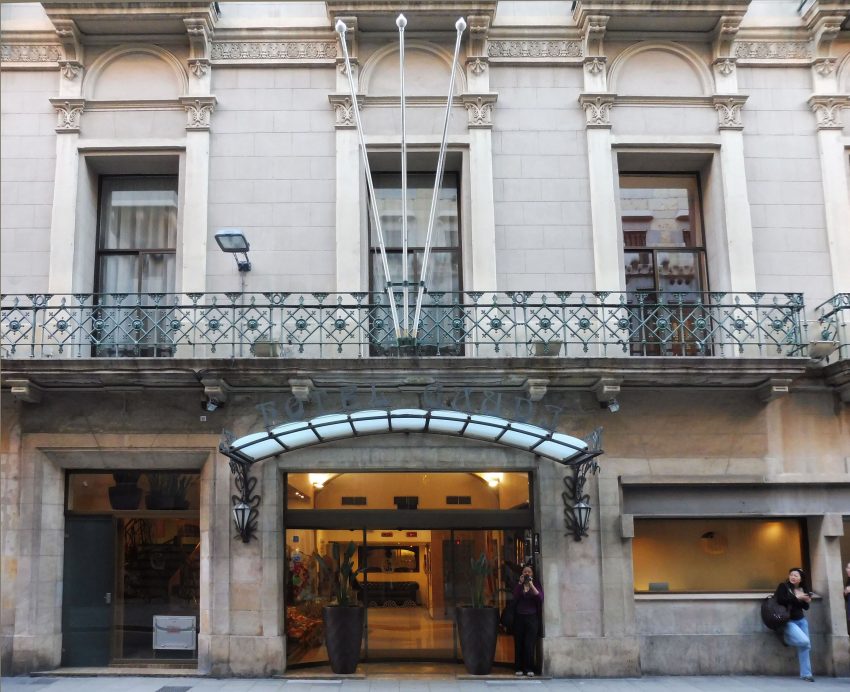
Carrer Nou de la Rambla, 10 is not a museum you “do” so much as a pinpoint you stand beside: a real address tied to Pablo Picasso's Barcelona years, when he was bouncing between Barcelona and Paris and his palette darkened into the emotional tones of the Blue Period. It's in El Raval, a few minutes off La Rambla, and it works best as a short, reflective pause rather than a long visit.
The building’s significance is what happened at the top of it: in 1902, Picasso rented a studio here with painter Josep Rocarol and sculptor Àngel Fernández de Soto. From this rooftop vantage, he painted Barcelona roof terraces and sketched the nightlife next door at the Eden Concert, a variety hall whose performers (including cuplé singers) fed the city's bohemian energy even as his work turned inward. Add this stop to a Picasso-in-Barcelona walking route that also links nearby Modernisme and Gothic Quarter highlights.
Table of Contents
- History and Significance of Carrer Nou de la Rambla, 10
- Things to See and Do in Carrer Nou de la Rambla, 10
- How to Get to Carrer Nou de la Rambla, 10
- Practical Tips on Visiting Carrer Nou de la Rambla, 10
- Where to Stay Close to Carrer Nou de la Rambla, 10
- Is Carrer Nou de la Rambla, 10 Worth Visiting?
- For Different Travelers
- FAQs for Visiting Carrer Nou de la Rambla, 10
History and Significance of Carrer Nou de la Rambla, 10
Between 1901 and 1904, Picasso's life was defined by movement between Barcelona and Paris, unstable money, and makeshift rooms that matched his mood. The studio at Carrer Nou de la Rambla, 10 belongs to that gritty, formative chapter: a working base in El Raval where he shared space with fellow artists and pushed deeper into the themes that define the Blue Period-poverty, isolation, addiction, and the raw human figure.
What makes this address unusually vivid is how specific the creative routine was. The studio sat at the top of the building overlooking rooftops, and the Eden Concert next door added a stream of music-hall imagery that Picasso and his circle repeatedly returned to in sketches. In other words, this isn’t a vague “he lived somewhere nearby” location; it’s a documented worksite that helps you place his early modernism inside the real city streets.
Things to See and Do in Carrer Nou de la Rambla, 10
Start by treating it like a “stand-and-imagine” stop: look up at the building and picture the top-floor studio and roofline views that show up in his Barcelona rooftop works. Because you can't reliably access interiors (it's not a public attraction), the win here is context-connecting a plain facade to a major turning point in modern art.
Then, do what Picasso did: look outward. Scan the surrounding lanes of El Raval, where the city's textures shift quickly from grand La Rambla energy to narrow streets with a more local, working edge. From here, it's a natural mini-route to pair art history with architecture-especially if you cross over to Palau Güell and then loop back toward Plaça Reial for a quick reset.
If you want to make the stop feel less abstract, combine it with a short “Blue Period mood” checklist: rooftops and light angles (daytime), street portraits and everyday scenes (late afternoon), and a brief detour to a classic old-school bar nearby for atmosphere.
How to Get to Carrer Nou de la Rambla, 10
Barcelona-El Prat Airport (BCN) is the closest airport, with the simplest options being Aerobús to Plaça de Catalunya or a metro/train connection into the centre, then onward by metro or taxi to the lower end of La Rambla. For the best deals and a seamless booking experience, check out these flights to Barcelona on Booking.com.
If you arrive by train, Barcelona Sants is the main hub; from there, take the metro (L3 toward Liceu/Drassanes) or a short taxi ride, then walk a few minutes into El Raval. Train schedules and bookings can be found on Omio.
By metro, the closest stations are typically Liceu (L3) or Drassanes (L3), followed by a short walk. City buses run along La Rambla and nearby arterials, but in this area walking is usually faster than waiting for the “perfect” bus.
Driving is rarely worth it for this stop because El Raval’s streets are tight and parking is limited; if you must come by car, aim for a paid garage and do the last stretch on foot. If you are looking to rent a car in Spain I recommend having a look at Discover Cars, first, as they compare prices and review multiple car rental agencies for you.
Practical Tips on Visiting Carrer Nou de la Rambla, 10
- Entrance fee: Free
- Opening hours: 24 Hours, House viewed from street.
- Official website: https://museupicassobcn.cat/en/picasso-i-barcelona/itinerari-virtual-per-la-barcelona-de-picasso
- Best time to visit: Go in the morning for quieter streets and cleaner photos; late afternoon works well if you're linking it with nearby sights around La Rambla.
- How long to spend: 5-15 minutes on-site, then build value by pairing it with Palau Güell, Plaça Reial, or a Picasso-themed loop.
- Accessibility: The viewing experience is street-level, but pavements can be narrow and busy; wheelchair users may prefer approaching via the wider La Rambla end.
- Facilities: No dedicated visitor facilities at the address; use nearby cafés, metro stations, and public amenities around La Rambla.
Where to Stay Close to Carrer Nou de la Rambla, 10
For a culture-heavy itinerary, base yourself centrally (Gothic Quarter/El Born) for walkability to major sights; if your trip prioritizes nightlife and late evenings, staying nearer El Raval and the lower Rambla end keeps you close to the action.
If you want a direct Picasso link, Serras Barcelona is a strong pick, tied to a key early-work Barcelona address and perfectly placed for walking between the waterfront, the Gothic Quarter, and El Raval. For a stylish, central base a short walk away, Hotel Neri Relais & Châteaux puts you deep in the Gothic Quarter, ideal for combining a Picasso route with cathedral-area landmarks.
For something smaller and very walkable to both El Raval and the Gothic Quarter’s dining lanes, Wittmore Hotel is well positioned for short, on-foot days without relying on transport.
Is Carrer Nou de la Rambla, 10 Worth Visiting?
Yes-if you like travel that pins big stories to small coordinates. It’s a quick stop, but it makes Picasso’s Blue Period feel less like a museum label and more like a lived chapter in a specific neighbourhood, with rooftops, heat, noise, and the pull of the music hall next door.
Honest pivot: skip it if you only enjoy attractions with interiors, exhibits, or big visuals. This is fundamentally an “on-the-street” location, so if your time is tight, you’ll get more immediate payoff from Museu Picasso or major architecture sites.
For Different Travelers
Families with Kids
Treat this as a “two-minute story stop” rather than a history lesson: point out that a world-famous artist once worked here and ask kids to spot rooftops, balconies, and street details he might have drawn. Pair it with a nearby square (Plaça Reial) where kids can move around, then save the longer art focus for a museum visit.
Couples & Romantic Getaways
Work it into a slow walk from the Gothic Quarter to the lower Rambla end: a quick stop here, then Palau Güell for architecture, then sunset by Port Vell. It's a good “shared context” moment-short, atmospheric, and easy to fold into a day that ends with tapas nearby.
Budget Travelers
This is an ideal free stop that still feels meaningful, especially if you’re doing a self-guided Picasso route on foot. Keep costs down by linking several nearby highlights into one walking loop and using metro only when you’re crossing the city.
History Buffs
Use the address as a gateway into turn-of-the-century Barcelona: the bohemian Raval, the rise of variety halls, and the way urban poverty and nightlife shaped creative circles. You'll get more out of it if you read a little about the Blue Period beforehand, then “map” the themes onto what you see in the neighbourhood today.
FAQs for Visiting Carrer Nou de la Rambla, 10
Getting There
Visiting Experience
Tours, Context & Itineraries
Photography
Accessibility & Facilities
The Carrer Nou de la Rambla, 10 appears in our Complete Guide to Visiting Barcelona!

Moira & Andy
Hey! We're Moira & Andy. From hiking the Camino to trips around Europe in Bert our campervan — we've been traveling together since retirement in 2020!
This website uses affiliate links which may earn a commission at no additional cost to you!
Planning Your Visit
24 Hours, House viewed from street.
Free
Nearby Attractions
- Palau Güell (0) km
Historic Building, Historic Site and Palace - Gran Teatre del Liceu (0.1) km
Arts Venue, Opera House and Theatre - Església de Sant Agustí Nou del Raval (0.2) km
Church - Església de Sant Jaume (0.3) km
Church, Historic Building and Religious Building - Museu de Cera de Barcelona (0.3) km
Attraction and Museum - Carrer d'Avinyó, 44 (0.3) km
Area, Attraction and Street - Barcelona Maritime Museum (0.4) km
Historic Building, Historic Site and Museum - Mercat de la Boqueria (0.4) km
Attraction, Bazaar and Market - Basílica de Santa Maria del Pi (0.4) km
Basilica, Church and Tower - Plaça de Sant Josep Oriol (0.4) km
Square