Basilica S.Maria Gloriosa dei Frari, Venice
Church in Venice
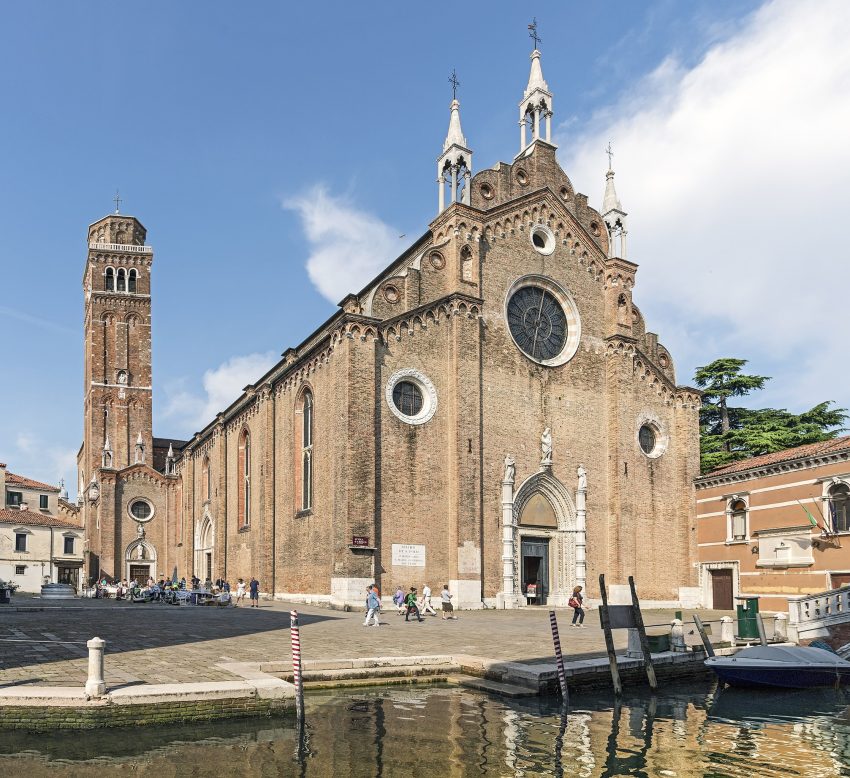
Basilica dei Frari is the church I recommend when you want Venice to feel quieter, deeper, and more “real” than the postcard version. Set on Campo dei Frari in San Polo, it's a vast Venetian Gothic basilica built in warm brick, with a plain, almost modest exterior that makes the interior reveal feel even more dramatic once you step inside.
What you find within is one of the must-see places in Venice: monumental tombs, soaring space, and art that would headline any museum, including Titian's Assumption of the Virgin and the Pesaro Madonna. It also slips easily into a walking tour of Venice, because you can pair it with the Rialto area, the Grand Canal viewpoints, and the small backstreets of San Polo that still feel wonderfully local.
Table of Contents
- History and Significance of the Basilica dei Frari
- Things to See and Do in the Basilica dei Frari
- How to Get to the Basilica dei Frari
- Practical Tips on Visiting the Basilica dei Frari
- Where to Stay Close to the Basilica dei Frari
- Is the Basilica dei Frari Worth Visiting?
- For Different Travelers
- FAQs for Visiting the Basilica dei Frari
- Nearby Attractions to the Basilica dei Frari
History and Significance of the Basilica dei Frari
The Frari is closely tied to the Franciscan tradition in Venice, and you can sense that heritage in the building's priorities: scale, clarity, and a focus on the interior experience rather than lavish exterior showmanship. Its brick Gothic silhouette is a reminder that Venice's grandeur isn't only marble façades on the waterline; some of its most powerful architecture sits slightly inland, rooted in everyday neighbourhood life.
Inside, the church becomes a kind of Venetian pantheon. Doges, artists, and prominent figures were commemorated here with grand wall monuments that trace changing tastes in sculpture, symbolism, and status. It's one of the best places in the city to see how Venice honoured its great names, not just with inscriptions, but with fully staged works of art.
The Frari's artistic significance is impossible to overstate for anyone interested in Venetian painting. Titian's altarpieces are not “nice additions” in a side chapel; they are defining, room-shaping works that set the emotional and visual tone of the basilica, and they remain key reference points for how Renaissance Venice understood colour, light, and sacred storytelling.
Things to See and Do in the Basilica dei Frari
Make a slow approach down the central space and let your eyes adjust upward first. The scale is part of the message: tall columns, long sightlines, and an atmosphere that feels cool and measured even on busy days. This is a church that rewards patience, because the details reveal themselves in layers rather than all at once.
The essential stops are Titian’s Assumption of the Virgin at the high altar and the Pesaro Madonna, each remarkable for different reasons: one for its commanding vertical drama, the other for its sophisticated, staged composition. Even if you’re not usually an “altarpiece person,” these works are so embedded in the space that they become part of how you understand Venice’s artistic identity.
Then give time to the monuments and tombs, which are among the most striking in the city for sheer scale and ambition. Keep an eye out for the remaining rood screen, a rare survival in Venice that changes how you experience the church's internal divisions and ceremonial flow. If you want a quieter moment, step away from the centre and take a few minutes in the side aisles, where the basilica's grandeur feels more contemplative than theatrical.
How to Get to the Basilica dei Frari
The nearest airports are Venice Marco Polo (VCE) and Treviso (TSF), and from both you'll transfer into the historic centre by shuttle bus and vaporetto, or by direct boat services depending on budget and luggage. For the best deals and a seamless booking experience, check out these flights to Venice on Booking.com.
If you’re arriving by train, Venezia Santa Lucia is the main station on the island, and from there the Frari is reachable on foot through Santa Croce and San Polo in roughly 15-25 minutes, depending on your pace and bridges. Use Omnio to easily compare schedules, book train tickets, and find the best prices all in one place for a hassle-free journey across Italy.
By vaporetto, the most convenient approach is usually via nearby stops around San Tomà, Riva di Biasio, or Piazzale Roma, then a short walk through the lanes to Campo dei Frari.
If you’re travelling by car, park at Piazzale Roma or Tronchetto, then continue on foot or by vaporetto toward San Polo. If you are looking to rent a car in Italy I recommend having a look at Discover Cars, first, as they compare prices and review multiple car rental agencies for you.
Practical Tips on Visiting the Basilica dei Frari
- Entrance fee: €5 (adult); €2 (students aged 12–29); €3 (over 65); free for children under 12 and eligible visitors.
- Opening hours: (Summer) Easter Sunday – 31 October. Monday – Friday: 09:00–19:30. Saturday: 09:00–18:00. Sunday & Public holidays: 13:00–18:00. (Winter) 01 November – Easter Sunday. Monday – Saturday: 09:00–18:00. Sunday & Public holidays: 13:00–18:00.
- Official website: www.basilicadeifrari.it
- Best time to visit: Go early in the morning for a calmer interior and more time with the art before tour groups build, or late afternoon when the space feels quieter again.
- How long to spend: Plan 45-75 minutes if you want to see the key artworks, monuments, and side aisles without rushing.
- Accessibility: Expect historic flooring and a large interior footprint, so allow extra time if you move slowly and aim for the most direct routes through the church.
- Facilities: Treat it as a focused visit rather than a linger-and-café stop; for breaks, use the surrounding San Polo area where options are better and less crowded.
Where to Stay Close to the Basilica dei Frari
For a culture-heavy itinerary, base yourself in San Polo or Santa Croce so you can walk to major sights early and late; if your focus is transport convenience and easy station access, stay closer to Piazzale Roma and the canal-side routes.
If you want to be genuinely close to the Frari while staying in a neighbourhood that feels lived-in, Ca' San Polo puts you right in the district’s rhythm, with easy walking access to both the church and the Rialto direction. For a comfortable base with a calmer feel but still within easy reach of the Frari on foot, Hotel Tiziano is well placed for pairing San Polo sights with Dorsoduro’s galleries and canals. If your priority is smooth arrivals and departures while still being walkable to the Frari, Hotel Moresco is a strong choice near the transport edge of the historic centre.
Is the Basilica dei Frari Worth Visiting?
Yes, especially if you want Venice’s art and history in a setting that feels substantial rather than purely scenic. The Frari delivers the rare combination of a genuinely grand interior, museum-level masterpieces in their original context, and a sense of Venice’s civic memory expressed through monuments and tombs.
It’s also a smart counterbalance to the intensity of San Marco. If the main square is Venice’s public stage, the Frari feels like the city’s quieter archive: still magnificent, but more reflective, and often more emotionally resonant.
What Other Travellers Say...

Basilica S. Maria Gloriosa dei Frari on San Polo is an imposing Gothic church whose interior houses major works by Titian alongside notable tombs and monuments, including pieces by Canova and Donatello; visitors praise the impressive, art-filled nave and varied sculptures and paintings, note a relatively modest exterior, and report generally friendly staff and available audio guides (though a few mention slow service at the ticket desk).


For Different Travelers
Families with Kids
The Frari works best for families when you keep it visual and goal-based: choose a few “big” things to find, like the enormous paintings and the grand tombs, rather than trying to see everything. A shorter, more focused visit usually lands better than a long art-heavy circuit.
If your kids are small, plan a quick decompression afterward in Campo San Polo or along the nearby canals, where there’s more open space to reset. The contrast between the huge interior and a casual outdoor break helps everyone enjoy the stop.
Couples & Romantic Getaways
For couples, the Frari is a quieter kind of Venice romance: less glitter, more atmosphere, and a sense of the city's depth. It's ideal as a slow morning visit followed by a wandering route through San Polo's lanes, with no need to chase a packed schedule.
If you like travel moments that feel personal, linger for a few minutes in the side aisles where the crowd noise fades. It’s one of those places where simply standing still together feels like part of the experience.
Budget Travelers
The Frari is a paid church, but it offers strong value because what you see inside would easily justify museum pricing elsewhere. Treat it as your “one paid culture stop” in the neighbourhood, then build the rest of the day around free canal walks and small squares nearby.
To keep costs down, avoid sitting in the most tourist-heavy café zones afterward and instead walk a few minutes into the San Polo backstreets. You’ll usually find better prices and a more relaxed atmosphere.
History Buffs
If you care about Venetian history, the Frari is outstanding because it preserves memory in stone: monuments, inscriptions, and the deliberate placement of commemorations. You get an unusually clear sense of who Venice celebrated and how tastes shifted across centuries.
For extra context, look at the church as a civic space as well as a sacred one. The scale, the memorials, and the major commissions together tell a story about status, patronage, and the republic’s long habit of turning identity into art.
FAQs for Visiting the Basilica dei Frari
Getting There
Tickets & Entry
Visiting Experience
Tours, Context & Itineraries
Photography
Accessibility & Facilities
Nearby Attractions to the Basilica dei Frari
- Scuola Grande di San Rocco: A short walk away, packed with dramatic Tintoretto cycles that make it one of Venice's most powerful art interiors.
- Campo San Polo: One of Venice's largest squares, ideal for a breather and a feel for neighbourhood Venice beyond the headline sights.
- Rialto Bridge: The classic crossing and market-zone hub, easy to combine with the Frari as a walk-through route.
- Ca’ Pesaro: A Grand Canal palace housing modern art and Asian collections, a strong contrast to the Frari’s Gothic and Renaissance focus.
- Santa Maria dei Miracoli: A jewel-box church known for its marble-clad interior, perfect if you want a smaller, highly decorative counterpoint.
The Basilica S.Maria Gloriosa dei Frari appears in our Complete Guide to Visiting Venice!

Moira & Andy
Hey! We're Moira & Andy. From hiking the Camino to trips around Europe in Bert our campervan — we've been traveling together since retirement in 2020!
This website uses affiliate links which may earn a commission at no additional cost to you!
Planning Your Visit
(Summer) Easter Sunday - 31 October. Monday - Friday: 09:00-19:30. Saturday: 09:00-18:00. Sunday & Public holidays: 13:00-18:00.
(Winter) 01 November - Easter Sunday. Monday - Saturday: 09:00-18:00. Sunday & Public holidays: 13:00-18:00.
€5 (adult); €2 (students aged 12-29); €3 (over 65); free for children under 12 and eligible visitors.
Nearby Attractions
- Leonardo da Vinci Museum (0.1) km
Museum - Scuola Grande di San Rocco (0.1) km
Arts Venue and Historic Building - Ca' Rezzonico (0.4) km
Gallery and Historic Building - San Giacomo dall'Orio (0.4) km
Church - Museo Fortuny (0.5) km
Museum - Museo di Storia Naturale di Venezia (0.6) km
Museum - Ponte dell'Accademia (0.6) km
Bridge - Mercato di Rialto (Rialto Market) (0.6) km
Market - Chiesa dei Santi Geremia e Lucia (0.6) km
Church - Palazzo Contarini del Bovolo (0.7) km
Palace


