Basilica Romanica di San Piero a Grado, Pisa
Church in Pisa
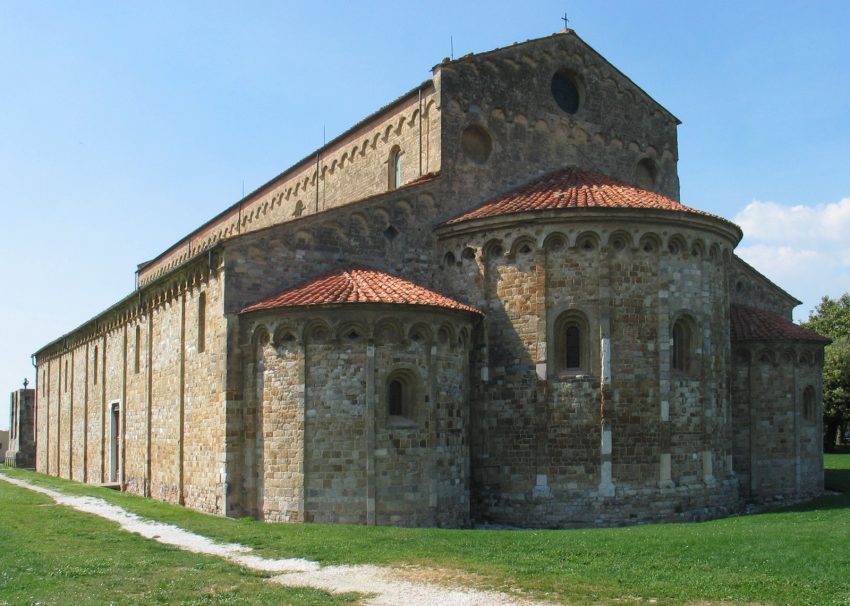
A short drive out of the city towards Marina di Pisa brings you to the Basilica Romanica di San Piero a Grado, a quiet yet atmospheric church standing where the old Pisan port once met the sea. According to tradition, this is where St Peter first set foot in Italy in the 1st century AD, and as you walk around the basilica's stone exterior and step inside its wide, column-lined nave, it is easy to sense just how long this place has been a gateway between land, water and faith. With its unusual double line of apses, weathered stone and traces of ceramic bowls once set into the walls, it feels a world away from the crowds yet is still one of the must-see places in Pisa.
San Piero a Grado is rewarding not only for its architecture but also for the layers of history under your feet. Archaeological excavations have revealed remains of a Paleo-Christian church and earlier Roman structures, showing that worship has taken place here since at least the 4th century, on foundations that once stood alongside the ancient Porto Pisano. Inside, the long nave glows with a remarkable cycle of medieval frescoes and the calm, timber-roofed interior encourages you to linger, explore the details and step behind the church to view the excavated ruins. Although it lies too far to be included in most quick city strolls, it is often visited on walking tours of Pisa that follow the historic road towards the sea and link the riverside city with its maritime past.
Table of Contents
- History and Significance of the Basilica Romanica di San Piero a Grado
- Things to See and Do in the Basilica Romanica di San Piero a Grado
- How to Get to the Basilica Romanica di San Piero a Grado
- Practical Tips on Visiting the Basilica Romanica di San Piero a Grado
- Where to Stay close to the Basilica Romanica di San Piero a Grado
- Is the Basilica Romanica di San Piero a Grado Worth Visiting
- FAQs for Visiting Basilica Romanica di San Piero a Grado
- Nearby Attractions to the Basilica Romanica di San Piero a Grado
History and Significance of the Basilica Romanica di San Piero a Grado
The story of the Basilica Romanica di San Piero a Grado begins with the legend that St Peter landed here around 44 AD on his way to Rome, celebrating mass on a makeshift altar by the old port. Long before the current church was built, the site already held a Paleo-Christian sanctuary constructed over Roman structures associated with the harbour settlement known as Gradus Arnensis. Over the centuries these early buildings were replaced, enlarged and eventually superseded by the Romanesque basilica that still stands today, begun in the 10th century and substantially remodelled in the late 11th and early 12th centuries.
In the Middle Ages, this was effectively Pisa's seafront church, standing beside a branch of the Arno and the broader coastal lagoon that formed the Porto Pisano. Pilgrims travelling towards Rome stopped here on their way along the Via Francigena and related routes, and the basilica became an important spiritual staging point; a Gothic ciborium at the western end still marks the spot where Peter is said to have prayed. As the coastline gradually retreated and the river shifted, the port silted up and the area became inland farmland, but the church remained as a landmark in an open plain, its once-maritime context now part of the story you imagine rather than see.
Architecturally, San Piero a Grado is a textbook example of Pisan Romanesque with some highly distinctive twists. Instead of a conventional façade, the church has apses at both ends: three smaller apses to the east and a single large apse to the west, making the building feel almost reversible. The stone exterior mixes tufa and local marbles, punctuated by pilaster strips, blind arches and rows of circular openings where ceramic bowls, or bacini ceramici, were once inserted. These imported pieces from Islamic and Mediterranean workshops would have added colour and sparkle to the walls; many originals are now preserved in Pisa's Museo Nazionale di San Matteo.
Things to See and Do in the Basilica Romanica di San Piero a Grado
Step inside the basilica and the first impression is of space and light: a broad rectangular hall divided into a nave and two side aisles by sturdy re-used columns with classical capitals, all supporting a timber truss roof. Take time to walk slowly along each aisle and notice how the arches are painted and how the geometry of the building subtly pulls your eye towards the eastern end. The sense of calm here is very different from the more crowded monuments back in town, and it is easy to sit for a while and simply absorb the atmosphere.
The highlight for many visitors is the extraordinary fresco cycle that runs along the nave walls. Painted in the early 14th century by Deodato Orlandi of Lucca, the scenes are arranged in three horizontal bands: at the bottom a procession of popes from St Peter to John XVIII; above that, narrative panels depicting episodes from the lives of St Peter, St Paul, Constantine and St Sylvester; and at the top, the symbolic walls of the Heavenly City. Even where the colours have faded or restoration work is visible, the sheer ambition of the storytelling is striking, and the papal portraits are particularly important because the only other comparable early cycle is in Rome.
Behind the church you can peer down into the excavated area where the remains of earlier Paleo-Christian structures and Roman buildings are visible, giving a tangible sense of how the sacred use of the site evolved over more than a millennium. Walk around the exterior to appreciate the strange double-apse layout and look for the restored base of the bell tower, which was blown up by retreating German troops in 1944 and only partially rebuilt after the war. A small granite marker recalls the basilica’s designation as a “Messenger Monument of Peace” by UNESCO clubs, adding a modern layer of meaning to this ancient sanctuary.
How to Get to the Basilica Romanica di San Piero a Grado
Most international visitors will arrive via Pisa International Airport Galileo Galilei, which sits just south of the city; from there you can take a taxi, hire car or local bus towards Marina di Pisa and ask to get off at San Piero a Grado along Viale Gabriele D'Annunzio. For the best deals and a seamless booking experience, check out these flights to Pisa on Booking.com.
If you are travelling by train, head first to Pisa Centrale, well connected to Florence, Lucca and other Tuscan cities; from the station, local buses towards San Piero a Grado or Marina di Pisa, or a pre-booked taxi, will bring you out to the basilica in around 20-30 minutes depending on traffic. Use Omnio to easily compare schedules, book train tickets, and find the best prices all in one place for a hassle-free journey across Italy.
Reaching the basilica by car is straightforward: follow the main road out of Pisa towards Marina di Pisa along Viale Gabriele D'Annunzio, then turn off at San Piero a Grado, where you will find parking spots near the church or along nearby streets, making it easy to combine your visit with a coastal drive or a stop at the seaside later in the day. If you are looking to rent a car in Italy I recommend having a look at Discover Cars, first, as they compare prices and review multiple car rental agencies for you.
Practical Tips on Visiting the Basilica Romanica di San Piero a Grado
- Suggested tips: Combine a visit here with a stop in Marina di Pisa or a walk in the countryside so the trip out from the city feels like a relaxed half-day excursion rather than a quick in-and-out stop.
- Best time to visit: Late morning or mid-afternoon gives you softer light on the stonework and a quieter interior; in high summer, aim for earlier or later in the day to avoid the worst heat.
- Entrance fee: Free entry; donations to the church are welcome.
- Opening hours: Hours can vary with religious services and seasons
- How long to spend: Allow around 45-60 minutes to explore the interior frescoes, walk around the exterior and take a look at the archaeological remains behind the church.
- Accessibility: The basilica is on flat ground with a few steps at the entrances; access for those with limited mobility is generally easier here than in many hilltop Tuscan churches, but assistance may still be needed on uneven surfaces outside.
- Facilities: There are limited facilities immediately on site, so bring water and plan restroom stops in Pisa or Marina di Pisa; small bars and cafés can usually be found along the main road.
- Photography tip: Capture wide shots of the unusual double-apse exterior from the side, then move inside and focus on details of the fresco bands and columns; remember to turn off flash if signs request it.
- Guided tours: If you join a wider Pisa or coastal tour that includes San Piero a Grado, you will benefit from extra context on the frescoes and archaeology; otherwise, look for leaflets or QR codes inside that explain the main scenes.
- Nearby food options: Consider stopping at a roadside trattoria or café between Pisa and Marina di Pisa, where you can try simple Tuscan dishes before or after your visit to the basilica.
Where to Stay close to the Basilica Romanica di San Piero a Grado
If you want to be based in Pisa but still have easy access to the basilica and the coast, staying near the western side of the city works well. Grand Hotel Bonanno offers a convenient location within walking distance of the historic centre and quick driving access to the road out towards San Piero a Grado and Marina di Pisa, making it a good base if you are planning to explore both the city and its surroundings. For a more contemporary feel with straightforward road links and parking, Hotel San Ranieri sits near the main routes leading around Pisa, which is handy if you have a hire car and intend to make several day trips. Travellers who prefer to stay even closer to the sea could look at accommodation in Marina di Pisa and then visit the basilica en route to or from the coast, balancing beach time with cultural sightseeing.
Is the Basilica Romanica di San Piero a Grado Worth Visiting
The Basilica Romanica di San Piero a Grado is very much worth the short detour from central Pisa, especially if you are interested in early Christian history, medieval art or the maritime past of the city. Its unusual architecture, with apses at both ends, a Romanesque exterior studded with ceramic basins and a spacious, column-lined interior, already sets it apart from more typical Tuscan churches. Add to that the rich fresco cycle by Deodato Orlandi, the archaeological remains of Paleo-Christian and Roman structures and the evocative setting in flat countryside along the old road to the sea, and you have a site that adds depth and nuance to any Pisa itinerary. For many visitors, the calm here is a welcome contrast to the busy Campo dei Miracoli, and a visit rounds out your understanding of how Pisa's history has always been tied to water, trade and pilgrimage.
What Other Travellers Say...

San Piero a Grado, on Via Vecchia di Marina in Pisa, is a Romanesque Catholic basilica on an ancient site with medieval frescoes and portraits of popes up to the 15th century; visitors praise its peaceful, evocative atmosphere, preserved older architecture within the church, notable wall paintings by Deodato Orlandi, ongoing excavations, free entry, and limited parking nearby.


FAQs for Visiting Basilica Romanica di San Piero a Grado
Nearby Attractions to the Basilica Romanica di San Piero a Grado
- Marina di Pisa: A relaxed seaside resort with a promenade, pebble beaches and views along the coast, ideal to pair with a visit to the basilica.
- Parco Naturale Migliarino San Rossore Massaciuccoli: A coastal nature reserve of dunes, pinewoods and wetlands, great for walks, bike rides and guided nature tours.
- Piazza dei Miracoli in Pisa: The famous square with the Leaning Tower, cathedral, baptistery and Camposanto, offering the classic postcard views of the city.
- Museo Nazionale di San Matteo: An important museum housing medieval and Renaissance artworks and many of the original ceramic basins and sculptures removed from Pisan churches.
- Narrow Street Borgo Stretto: A historic shopping street with arcades, boutiques and cafés, perfect for a stroll before or after visiting the basilica and other sights.
The Basilica Romanica di San Piero a Grado appears in our Complete Guide to Visiting Pisa!

Moira & Andy
Hey! We're Moira & Andy. From hiking the Camino to trips around Europe in Bert our campervan — we've been traveling together since retirement in 2020!
This website uses affiliate links which may earn a commission at no additional cost to you!
Planning Your Visit
Hours can vary with religious services and seasons
Free entry; donations to the church are welcome.
Nearby Attractions
- Pisa International Airport (3.9) km
Airport - Torre Guelfa (5.2) km
Tower - Museum of the Ancient Ships (5.3) km
Historic Building and Museum - Murale Tuttomondo (5.4) km
Historic Site - Piazza Vittorio Emanuele II (5.4) km
Square - Corso Italia (5.6) km
Street - Lungarni of Pisa (5.6) km
- Santa Maria della Spina (5.6) km
Church - Palazzo Blu (5.8) km
Gallery and Palace - Logge di Banchi (5.9) km
Historic Building