Basilica of Sant’Apollinare Nuovo, Ravenna
Basilica in Ravenna

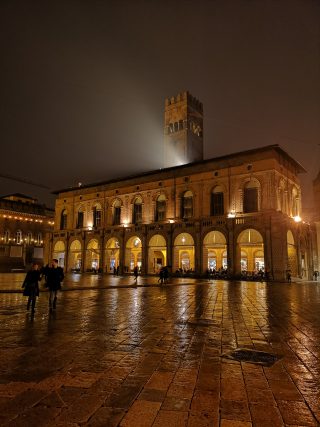
On Via di Roma, the Basilica of Sant'Apollinare Nuovo announces itself with a calm brick façade and a striking cylindrical bell tower, one of the most recognisable silhouettes in Ravenna's historic centre. From the outside it can feel almost restrained, but the moment you step into the nave you realise why it is prized: the walls become a continuous ribbon of mosaic storytelling, guiding you forward like a ceremonial procession.
If you want a monument where you can truly feel how mosaics shape space, this is one of the top attractions in Ravenna, and it's a highlight of any walking tour of Ravenna because it sits in the centre and rewards a slow, linear visit. It's also worth remembering that Sant'Apollinare Nuovo is not the same as Sant'Apollinare in Classe, which lies outside the city, so planning your route with the names clearly separated will save you a lot of confusion.
Table of Contents
- History and Significance of the Basilica of Sant’Apollinare Nuovo
- Things to See and Do in the Basilica of Sant’Apollinare Nuovo
- Practical Tips on Visiting the Basilica of Sant’Apollinare Nuovo
- Where to Stay close to the Basilica of Sant’Apollinare Nuovo
- Is the Basilica of Sant’Apollinare Nuovo Worth Visiting?
- FAQs for Visiting Basilica of Sant’Apollinare Nuovo
- For Different Travelers
- Nearby Attractions to the Basilica of Sant’Apollinare Nuovo
History and Significance of the Basilica of Sant’Apollinare Nuovo
Sant'Apollinare Nuovo was built in the late 5th to early 6th century under the Gothic king Theodoric, close to his palace, originally serving as a palatine chapel for Arian worship. That origin is crucial, because the basilica's later history is essentially a record of political and theological change carved into the building's identity and imagery.
When Ravenna came under Byzantine control in the mid-6th century, the church was converted to Orthodox Christianity and rededicated, reflecting the new imperial and doctrinal order. The dedication associated with St Martin of Tours, known for opposing heresy, makes the shift explicit: the basilica became a statement that Ravenna's public religious life now aligned with Orthodox authority.
Later tradition holds that the remains of Saint Apollinaris were transferred here from Classe, and the church took on its current name, with “Nuovo” distinguishing it from older associations and, in modern travel terms, distinguishing it from the basilica in Classe. The result is a monument that is not just beautiful, but historically articulate: it shows how a single building can be repurposed, reinterpreted, and renamed as regimes and beliefs change.
Things to See and Do in the Basilica of Sant’Apollinare Nuovo
Begin outside with a quick look at the brick façade and the bell tower. The exterior feels clean and controlled, and that simplicity makes the interior mosaic impact even stronger. If you have time, step back across Via di Roma to frame the tower properly, because it's one of the classic Ravenna architectural forms.
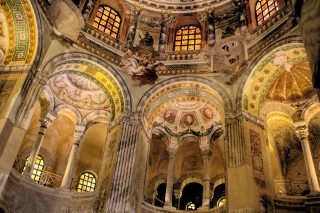
Inside, the essential experience is walking slowly along the central nave and letting the mosaics “read” in sequence. The scale is unusual: rather than one dominant apse composition, the basilica offers long bands of imagery that stretch across the walls, creating a sense of movement and rhythm. This is where you notice how mosaics function like architecture, not just decoration, shaping the way you look and the way you walk.
Look for the stylistic shifts that reveal different phases of production and revision. The basilica is famous for showing how Ravenna’s mosaic language evolves from Theodoric’s era into the Byzantine period associated with Justinian, and even if you’re not an art historian, you can often feel the difference in figure treatment, formality, and visual emphasis as your eye moves through the cycle.
Give yourself time to stand still in a few spots rather than continuously walking. When you pause, the procession effect becomes clearer: repeated figures, consistent spacing, and the bright, patterned backgrounds create a hypnotic, almost musical cadence that is very different from the concentrated apse drama of San Vitale.
Practical Tips on Visiting the Basilica of Sant’Apollinare Nuovo
- Suggested tips: Walk the nave twice: first for the overall “procession” effect, then again slowly to pick out details and stylistic changes.
- Best time to visit: Early morning for a quieter nave and clearer viewing angles, or later afternoon when the interior often feels calmer again.
- Entrance fee: €10.50
- Opening hours: Daily: 9:00 – 19:00
- Official website: http://www.ravennamosaici.it/
- How long to spend: 45-75 minutes, longer if you enjoy comparing mosaic styles and taking time to re-walk the nave.
- Accessibility: Generally straightforward, but historic thresholds and surfaces may require care; check current step-free access details if needed.
- Facilities: Limited inside; nearby Via di Roma and the surrounding centre have cafés and services within a few minutes’ walk.
- Photography tip: If permitted, avoid flash and take a few wider shots that show the mosaics in long bands along the nave walls.
- Guided tours: A guide is particularly helpful here because the basilica’s meaning is tied to its Arian-to-Orthodox transformation and the resulting mosaic revisions.
- Nearby food options: Plan a meal around the centre after your visit; this area is well served for quick lunches, aperitivo, and relaxed dinners.
Where to Stay close to the Basilica of Sant’Apollinare Nuovo
For an easy, walk-everywhere stay, choose central Ravenna so you can visit Sant'Apollinare Nuovo early, return later, and move between monuments without transport. NH Ravenna is a practical base near the station and close to Via di Roma. For a more boutique, historic-centre feel within walking distance of the basilica, Albergo Cappello is well placed for evening strolls. If you prefer a polished hotel that keeps you central while still quiet enough for rest between sightseeing, Palazzo Bezzi Hotel is an excellent option.
Is the Basilica of Sant’Apollinare Nuovo Worth Visiting?
Yes, and it's one of the easiest “musts” in Ravenna because it delivers a world-class mosaic experience in a simple, accessible format. The basilica's long nave makes the art feel immersive in a way that's different from the more concentrated masterpieces of San Vitale and Galla Placidia, so it adds variety rather than repetition.
It’s also worth visiting for the history embedded in the decoration. Few monuments show political and religious transition so clearly through imagery, and even a short visit leaves you with a sharper sense of how Ravenna’s identity shifted from Gothic court culture to Byzantine authority.
FAQs for Visiting Basilica of Sant’Apollinare Nuovo
What Other Travellers Say...

Basilica di Sant'Apollinare Nuovo on Via di Roma in Ravenna is a richly decorated church known for its extensive mosaics; visitors praise its stunning, shimmering gold mosaics that reveal different effects as light changes, and note large-scale, detailed scenes including processions of saints and Gospel-themed registers. Originally constructed by Theodoric as an Arian church and later rededicated, the basilica's nave features twin rows of columns leading to a raised choir framed by porphyry pillars. Visitors find plenty to see inside, mention limited accessibility for wheelchairs and strollers, note a small gift shop and restroom facilities, and overwhelmingly recommend a visit when in Ravenna.


For Different Travelers
Families with Kids
This basilica is family-friendly because the mosaics create a natural “spotting” activity: repeated figures, patterns, and long scenes that children can follow like a visual parade. Keep the visit engaging by choosing a few simple targets, such as finding repeated motifs or identifying the most vivid colours.
Because the nave is long, it’s also easier for kids to move quietly without feeling confined. Pair it with a break in a nearby piazza afterward so children can reset before the next indoor monument.
Couples & Romantic Getaways
For couples, Sant'Apollinare Nuovo is one of Ravenna's most elegant, unhurried visits. The mosaics have a calming rhythm, and the experience naturally invites you to walk slowly together and pause in the same spots to compare what you notice.
It also works well as part of a day that mixes culture with relaxed wandering. Visit in the late afternoon, then continue into the centre for aperitivo and dinner, using the basilica as the day’s visual anchor.
Budget Travelers
This is a high-value visit because it's central, easy to reach on foot, and often included in combined monument tickets that make a Ravenna UNESCO day more affordable. You can also enjoy much of the experience simply by taking your time; the basilica rewards attention more than it demands extra spending.
Build a walking route that links this with free city wandering and one or two paid highlight interiors, and you'll get a very full Ravenna experience without expensive logistics.
Nearby Attractions to the Basilica of Sant’Apollinare Nuovo
- Dante's Tomb: A quiet memorial corner in the city centre that offers a reflective pause between major monuments.
- Neonian Baptistery: A compact baptistery with a remarkable dome mosaic, ideal for comparing baptism imagery across Ravenna.
- Basilica of San Vitale: Ravenna's most celebrated mosaic interior and one of the world's great early Christian art monuments.
- Mausoleum of Galla Placidia: A small interior that opens into a luminous starry mosaic dome, unforgettable in person.
- Piazza del Popolo: The city's main square, perfect for a café break and a dose of everyday Ravenna life.
The Basilica of Sant’Apollinare Nuovo appears in our Complete Guide to Visiting Ravenna!

Moira & Andy
Hey! We're Moira & Andy. From hiking the Camino to trips around Europe in Bert our campervan — we've been traveling together since retirement in 2020!
This website uses affiliate links which may earn a commission at no additional cost to you!
Planning Your Visit
Daily: 9:00 - 19:00
€10.50
Nearby Attractions
- Basilica di San Giovanni Evangelista (0.2) km
Basilica - Arian Baptistery (0.3) km
Baptistery - Museo Dante (0.3) km
Historic Building and Museum - Dante’s Tomb (0.3) km
Tomb - Basilica of San Francesco (0.3) km
Basilica - MAR – Ravenna Art Museum (0.3) km
Historic Building and Museum - Piazza del Popolo (0.4) km
Square - Archbishop's Museum (0.6) km
Museum - Neonian Baptistery (0.6) km
Baptistery - Archbishop's Chapel of St. Andrew (0.6) km
Church