Basilica di Sant'Antonio, Padova
Basilica in Padova
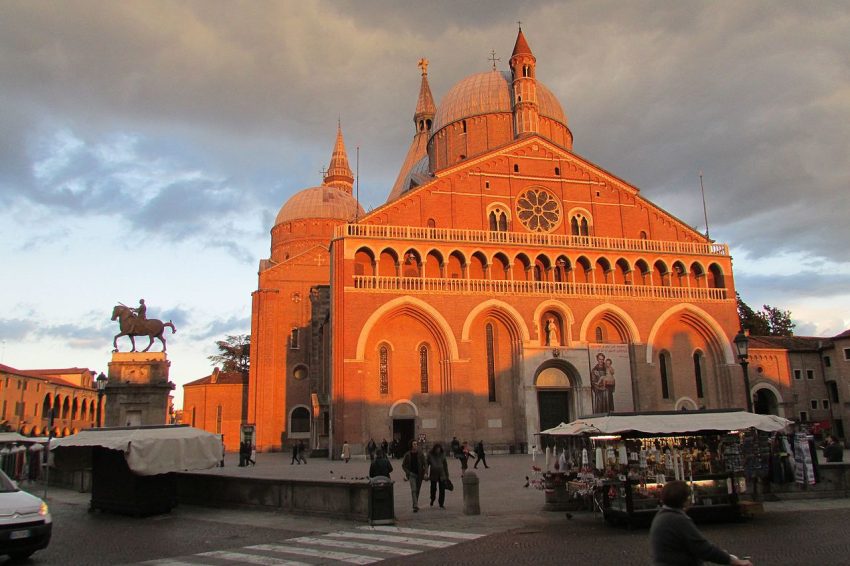
The Basilica Pontificia di Sant'Antonio di Padova, affectionately called “il Santo” by locals, is far more than just another grand church on an Italian itinerary. Dedicated to St Anthony of Padua - the beloved 13th-century preacher who lived, worked and is buried here - the basilica is one of the must-see places in Padua for anyone interested in spirituality, history or art. Pilgrims and travellers from all over the world flock here to pray at the saint's tomb, light candles and leave ex-votos, while casual visitors are captivated by the building's striking mix of domes, towers and chapels.
Architecturally, the basilica is a fascinating fusion of Romanesque solidity, Gothic height and light, and unmistakable Byzantine influences in its domes and decoration. Inside, the atmosphere shifts as you move from the vast nave to intimate side chapels rich with marble, sculpture and painting. The Cappella di Sant'Antonio, lined with high-relief scenes from the saint's life, and Donatello's masterpiece high altar make the church a highlight of any walking tour of Padua, whether you arrive as a pilgrim or simply as a curious traveller.
Table of Contents
- History and Significance of the Basilica of Saint Anthony of Padua
- Things to See and Do in the Basilica of Saint Anthony of Padua
- How to Get to the Basilica of Saint Anthony of Padua
- Practical Tips on Visiting the Basilica of Saint Anthony of Padua
- Where to Stay close to the Basilica of Saint Anthony of Padua
- Is the Basilica of Saint Anthony of Padua Worth Visiting
- FAQs for Visiting Basilica of Saint Anthony of Padua
- Nearby Attractions to the Basilica of Saint Anthony of Padua
History and Significance of the Basilica of Saint Anthony of Padua
Although St Anthony was born in Lisbon, his life and legacy are firmly rooted in Padua, which has claimed him as its own for centuries. After his death in 1231, his reputation for powerful preaching and intercession spread rapidly, and the decision was taken to build a grand basilica over the site where his remains were laid to rest. Construction began around 1232, remarkably soon after his death, reflecting how quickly devotion to the saint had taken hold. Over time, the church grew into a monumental complex, with its characteristic combination of Romanesque, Gothic and Byzantine elements added and refined across the 13th to 15th centuries.
The basilica’s silhouette is instantly recognisable: a central conical dome above the crossing flanked by seven round domes, and two slender bell towers that punctuate the skyline. These features, along with the extensive cloisters and chapels, make il Santo both a house of worship and a visible symbol of Padua’s status as a major religious centre. The basilica is one of Italy’s principal national shrines, recognised by the Holy See, and is still run by the Franciscan order. For many visitors, particularly from Catholic countries, coming here is a once-in-a-lifetime pilgrimage, with long queues forming at the Chapel of the Saint where they touch or pray before his tomb.
Over the centuries, artists and patrons have filled the basilica with exceptional works of art, turning it into an open, living museum of faith. The Cappella di Sant'Antonio in the north aisle, built in the 16th century, is adorned with nine high reliefs and sculptures by masters such as Jacopo Sansovino, Antonio and Tullio Lombardo, depicting scenes from the saint's life with theatrical flair. The high altar, created by Donatello in the mid-15th century, originally featured a complex ensemble of bronzes that set a new standard for Renaissance sculpture in the Veneto. Although altered over time, it still anchors the interior, and Donatello's work remains one of the basilica's greatest treasures.
Things to See and Do in the Basilica of Saint Anthony of Padua
A visit to il Santo usually begins on the broad piazza in front of the basilica, where you can take in its dramatic façade and cluster of domes. Step inside and you are immediately struck by the spacious nave, lined with chapels and side altars, each glowing with candles and flickering votive lights. The play of light on stone, mosaics and gilded details creates an atmosphere that is both grand and intimate.
Make your way to the Cappella di Sant’Antonio, one of the basilica’s most visited spaces. Here, the saint’s tomb sits beneath a richly decorated altar, draped in ex-votos - small offerings left by pilgrims in thanks for favours and miracles attributed to his intercession. Around the chapel are sculpted reliefs showing episodes from his life, filled with expressive figures and finely carved details. This is the emotional heart of the basilica, and even if you are not religious, the devotion of visitors is deeply moving.
Do not miss the high altar area, where Donatello’s bronzes and stone reliefs combine to create a powerful focal point. While some of the original bronze panels are difficult to see clearly, the stone bas-reliefs and the magnificent bronze candelabrum on the left still display the artist’s mastery. Elsewhere in the basilica, you will find side chapels with frescoes, elegant choir stalls, and peaceful cloisters where you can step away from the crowds. Take time to walk the cloister arcades if they are open during your visit; they offer a quieter, contemplative space and a different perspective on the basilica’s vast complex.
How to Get to the Basilica of Saint Anthony of Padua
The Basilica of Saint Anthony stands in the southeastern part of Padua's historic centre, a short walk from Prato della Valle and Piazza del Santo.
For international visitors, the most convenient gateways are Venice Marco Polo and Treviso airports, both of which offer shuttle buses and other transport options directly to Padova, making it easy to combine a visit to the basilica with a wider itinerary in the Veneto. For the best deals and a seamless booking experience, check out these flights to Padova on Booking.com.
By train, head to Padova railway station, which sits on major lines between Venice, Milan and Bologna. From the station you can either take a tram towards the city centre and get off near Prato della Valle, or walk for about 25-30 minutes through the historic streets, following signs to “Basilica del Santo.” Use Omnio to easily compare schedules, book train tickets, and find the best prices all in one place for a hassle-free journey across Italy.
City buses and trams connect many neighbourhoods with Prato della Valle and the area around the basilica, and once you are in the historic centre, most visitors choose to explore on foot, as distances are short and the route is flat. Drivers can reach Padua via the A4 or A13 motorways and then park in one of the car parks on the outskirts or near Prato della Valle; from there, it is a straightforward walk along well-signed streets to the basilica. If you are looking to rent a car in Italy I recommend having a look at Discover Cars, first, as they compare prices and review multiple car rental agencies for you.
Practical Tips on Visiting the Basilica of Saint Anthony of Padua
- Suggested tips: Dress modestly, speak quietly and follow any instructions from the friars or staff; remember this is first and foremost a working place of worship and pilgrimage, not just a tourist attraction.
- Best time to visit: Early morning or late afternoon are usually calmer, especially outside major feast days; evenings can be beautiful for contemplation when the basilica is softly lit.
- Entrance fee: Entry to the basilica is free; donations are appreciated, and there may be separate charges for specific museum areas or guided tours.
- Opening hours: 6.20am-6.45pm Mon-Sat, to 7.45pm Sun
- Official website: www.basilicadelsanto.org
- How long to spend: Allow at least one hour to explore the main nave, the Chapel of the Saint, the high altar and one or two cloisters; art and architecture enthusiasts may want 90 minutes or more.
- Accessibility: The main entrances and nave are reasonably accessible, but some chapels, side areas or cloisters may involve steps; if mobility is a concern, ask staff on site about the easiest routes.
- Facilities: Nearby streets offer cafés, bakeries, souvenir shops and small supermarkets; restrooms are typically available within the basilica complex or close by.
- Photography tip: Respect photography rules, which may restrict photos during services or in certain chapels; when allowed, try capturing the domes and façade from Piazza del Santo and details of sculpture and decoration in side aisles.
- Guided tours: Consider joining a guided tour, especially if you are interested in Donatello’s work or the history of St Anthony’s cult; guides help decode the stories and artworks that could otherwise be easy to overlook.
- Nearby food options: Use your visit as an opportunity to enjoy a coffee or meal around Piazza del Santo or wander towards Prato della Valle, where you will find plenty of local bars, cafés and trattorie.
Where to Stay close to the Basilica of Saint Anthony of Padua
Staying near the Basilica of Saint Anthony means you can enjoy the peaceful early-morning and evening atmosphere around Piazza del Santo, when day-trippers have gone and the area feels more local. A convenient choice within walking distance of both the basilica and the historic squares is Hotel Donatello, located right by the basilica and perfect if you want to attend early Mass or evening services. For a more central base still within an easy stroll of il Santo, Hotel Majestic Toscanelli puts you in the maze of historic streets between the main piazzas and the university. If you prefer to be closer to the station for onward travel while retaining good access to the basilica, Hotel Europa Padova offers comfortable rooms and an easy walking route or tram connection to the church.
Is the Basilica of Saint Anthony of Padua Worth Visiting
Yes, the Basilica of Saint Anthony is absolutely worth visiting, even if you are not on a religious pilgrimage. It combines spiritual significance, layered history and outstanding art in a single, easily accessible site. The mix of Romanesque, Gothic and Byzantine architecture creates a unique skyline and interior, while the tomb of St Anthony, Donatello’s high altar and the richly sculpted Cappella di Sant’Antonio give you a vivid sense of how devotion and artistic ambition intertwined here over the centuries.
For many travellers, visiting il Santo also deepens their overall experience of Padua. When you see how strongly the city still identifies with its patron saint, and how many people continue to come here seeking comfort, healing or simply a quiet place to think, you get a much better feel for Padua as a living, spiritual city rather than just a collection of beautiful buildings. Combined with nearby sights like Prato della Valle, Piazza del Santo, the Oratory of San Giorgio and the Museo Antoniano, the basilica becomes a cornerstone of any meaningful visit to Padua.
What Other Travellers Say...

The Basilica of St. Anthony at Piazza del Santo 11 in Padova is a vast Catholic church topped by Byzantine-style domes, noted for its striking exterior and richly decorated Byzantine interior housing notable artworks and the relics and tomb of St. Anthony; visitors describe a solemn, reverent atmosphere, numerous chapels with impressive art, a prominent altar displaying many relics, occasional personal blessings by priests, free entry, pleasant evening lighting, and advise respecting those who come to pray.


FAQs for Visiting Basilica of Saint Anthony of Padua
Nearby Attractions to the Basilica of Saint Anthony of Padua
- Piazza del Santo - The lively square in front of the basilica, lined with cafés and centred on Donatello's equestrian statue of Gattamelata.
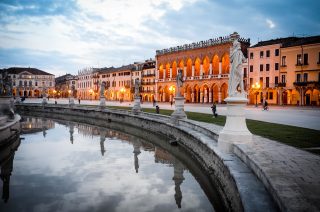
- Prato della Valle - One of Europe's largest squares, with an elliptical park, canal and ring of statues, just a short walk from the basilica.
- Oratory of San Giorgio - An intimate oratory near the basilica, decorated with superb 14th-century frescoes that complement those in the Scrovegni Chapel.
- Museo Antoniano - The basilica’s own museum, showcasing liturgical objects, artworks and relics linked to St Anthony and the church’s history.
- Botanical Garden of Padua - The world's oldest university botanical garden still on its original site, a pleasant walk from the basilica and a peaceful place to unwind.
The Basilica di Sant'Antonio appears in our Complete Guide to Visiting Padova!

Moira & Andy
Hey! We're Moira & Andy. From hiking the Camino to trips around Europe in Bert our campervan — we've been traveling together since retirement in 2020!
This website uses affiliate links which may earn a commission at no additional cost to you!
Planning Your Visit
6.20am-6.45pm Mon-Sat, to 7.45pm Sun
Entry to the basilica is free; donations are appreciated, and there may be separate charges for specific museum areas or guided tours.
Nearby Attractions
- Piazza del Santo (0.1) km
Square - Orto Botanico (0.2) km
Gardens - MUSME - Museum of the History of Medicine (0.4) km
Museum - Prato della Valle (0.5) km
Square - Palazzo Bo (0.7) km
Historic Building and Palace - Cafe Pedrocchi (0.8) km
Historic Building - Palazzo della Ragione (0.8) km
Historic Building and Market - Piazza dei Signori (0.9) km
Square - Duomo di Padova (0.9) km
Cathedral - Torre dell'Orologio (0.9) km
Tower