Bai Dinh Pagoda, Ninh Binh (Tam Coc)
Buddhist Temple near Ninh Binh (Tam Coc)
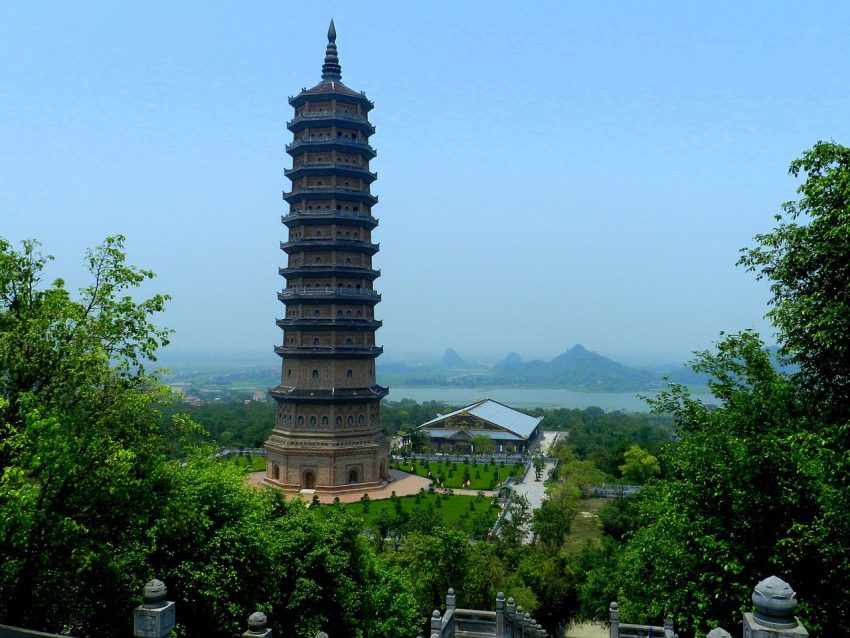
Rising across the hills of Gia Vien District, Bai Dinh Temple Complex is one of the top attractions in Ninh Binh for travellers interested in spirituality, architecture and culture. Set on Bai Dinh Mountain, this immense Buddhist site combines an atmospheric old cave temple with a vast new complex of halls, courtyards and statues, drawing pilgrims from across Vietnam. Lanterns, incense, chanting and long colonnades of Buddha statues give the place a sense of scale and devotion that feels quite different from the quieter pagodas in the countryside.
The new Bai Dinh Temple spreads over Ba Rau Hill near the Hoang Long River, while the original temple lies about 800 metres away at the foot of the mountain, tucked into caves. Walking between them, you move through grand gateways, stone courtyards and staircases lined with Arhat statues, then into cool rock chambers where older shrines honour both Buddhist deities and local mountain spirits. Visit outside the peak festival crowds and you will find that, despite its size, the complex can still feel like a highlight of any walking tour of Ninh Binh, especially later in the afternoon when the light softens over the karst hills.
Table of Contents
- History and Significance of Bai Dinh Temple Complex
- Things to See and Do in the Bai Dinh Temple Complex
- How to Get to the Bai Dinh Temple Complex
- Practical Tips on Visiting the Bai Dinh Temple Complex
- Where to Stay close to the Bai Dinh Temple Complex
- Is the Bai Dinh Temple Complex Worth Visiting
- FAQs for Visiting Bai Dinh Temple Complex
- Nearby Attractions to the Bai Dinh Temple Complex
History and Significance of Bai Dinh Temple Complex
Bai Dinh Temple sits on Bai Dinh Mountain in Gia Vien District, part of the wider Ninh Binh landscape that has long been tied to Vietnam's spiritual and political history. The original temple dates back many centuries and grew up around a cluster of caves on the mountain, where local people worshipped Buddha alongside the protective spirits of the hills. Its hillside location, reached by climbing stone steps, gave it a natural sense of retreat, with worshippers coming to make offerings and seek blessings in a setting that felt close to both earth and sky.
In the early 2000s, a decision was made to create a much larger, modern temple complex nearby to serve as a national Buddhist centre and major pilgrimage site. Construction of the new Bai Dinh Temple began in 2003 on Ba Rau Hill, close to the Hoang Long River, and continued in phases until around 2010. Covering around 700 hectares, it was designed in a traditional Vietnamese style but built at a grand, almost monumental scale, with multiple halls, courtyards, cloisters and statues laid out in terraces up the hillside.
Materials for the new complex were largely sourced from the Ninh Binh region to root it in local craft traditions. Stone and timber from Ninh Binh form much of the structure, Bát Tràng tiles cover the sweeping roofs, and artisans from villages like Ý Yên (bronze), Ninh Van (stone carving), Phú Lộc (woodwork) and Ninh Hải (embroidery) created the statues, reliefs and decorative elements. Reinforced concrete sits beneath the traditional surfaces to support the sheer scale of halls such as the Tam The Hall, whose ridge reaches about 34 metres high and runs for over 59 metres. This blend of modern engineering and classical aesthetics has turned Bai Dinh into a showcase of contemporary Vietnamese temple-building, while the continued presence of the old cave temple maintains a direct link to the site's spiritual origins.
Things to See and Do in the Bai Dinh Temple Complex
Most visits begin at the new complex, where you pass through imposing gates and climb gently up broad stairways flanked by stone lanterns and statues. The first impression is of size and repetition: long corridors lined with hundreds of Arhat statues, each carved with distinct expressions and postures; large courtyards framed by tiled roofs with curved eaves; and distant glimpses of towers and halls climbing the hillside. Take your time here rather than rushing straight to the top, as many of the details and viewpoints appear in the spaces between buildings.
The showpiece of the new complex is the Tam The Hall, one of the largest Buddhist halls in Vietnam. Its high, sweeping roof and massive wooden interior house three monumental Buddha statues representing the past, present and future. Standing before them, you get a sense of how Bai Dinh has been designed to impress pilgrims and visitors alike, with scale used to evoke awe and reflection. Nearby, other large halls, a towering stupa, bronze bells and an enormous seated Buddha add to the feeling that you are walking through a modern religious city rather than a single temple.
A short distance away, the old Bai Dinh Temple offers a completely different atmosphere. Located about 800 metres from the new complex at the base of the mountain, it is reached by walking up more than 300 stone steps through an ornamental gate. Here, small cave shrines embedded in the rock honour both Buddhist figures and natural spirits. The spaces are low and intimate, with rock walls, older statues and a quieter, more contemplative air than the main complex. Visiting both the old and new temples on the same trip gives a powerful sense of continuity and change in Vietnamese Buddhism, from centuries-old cave worship to today’s grand national pilgrimages.
If you come during the Bai Dinh Temple Festival, held on the sixth day of the first lunar month, the complex transforms again. Crowds of pilgrims arrive from all over Vietnam, with ceremonies in the new halls and traditional rites in the old cave temple. Drums, chanting, offerings and processions fill the site, blending formal Buddhist rituals with local cultural practices and making the complex feel very much alive.
How to Get to the Bai Dinh Temple Complex
The nearest major gateway is Hanoi, whose Noi Bai International Airport serves most international and domestic flights into northern Vietnam. For the best deals and a seamless booking experience, check out these flights to Ninh Binh (Tam Coc) on Booking.com. From Hanoi city centre, you first travel south to Ninh Binh before continuing to Bai Dinh.
By train, regular services on the north-south Reunification Line connect Hanoi with Ninh Binh Railway Station in around 2-2.5 hours.Train schedules and bookings can be found on Omio. From Ninh Binh, you can take a taxi, Grab car or pre-arranged transfer to Bai Dinh Temple Complex in about 25-35 minutes, often via the Trang An or Gia Vien area.
Buses and minivans also run from Hanoi's major bus stations (such as Giap Bat and My Dinh) to Ninh Binh, with frequent departures and journey times similar to the train. Many travellers choose to book a day tour from Hanoi that combines Bai Dinh with Trang An or other nearby attractions, which simplifies logistics but offers less flexibility.
If you prefer maximum freedom, travelling by private car or motorbike from Hanoi to Ninh Binh is straightforward along the Phap Van - Cau Gie Expressway before following local roads into Gia Vien District and Bai Dinh. This option works well if you plan to explore several sites in one day, such as Bai Dinh, Trang An, Hoa Lu and Tam Coc, or if you are staying in Ninh Binh and want to visit the complex early in the morning or late in the afternoon when it is quieter.
Practical Tips on Visiting the Bai Dinh Temple Complex
- Suggested tips: Wear comfortable walking shoes and bring water; the complex is huge, with many steps and long walkways, and even if you use electric carts you will still do plenty of walking.
- Best time to visit: The cooler, drier months from November to April are ideal; visiting outside the main festival days will be quieter, while coming around the sixth day of the first lunar month offers intense festival atmosphere but large crowds.
- Entrance fee: Free
- Opening hours: 7:00 AM to 6:00 PM.
- Official website: Website
- How long to spend: Plan at least 3-4 hours to explore both the new complex and the old cave temple; a half day or more is ideal if you want to move slowly, take photos and pause for rest or quiet reflection.
- Accessibility: The site involves long distances and many staircases, particularly to higher halls and the old temple; there are electric carts to help with some sections, but visitors with mobility issues may still find parts challenging.
- Facilities: Expect large parking areas, ticket and information counters, toilets, electric shuttle carts, souvenir stalls and food options around the entrance and main walkways.
- Photography tip: Wide-angle shots work well for capturing the scale of Tam The Hall and long lines of Arhat statues; later afternoon light softens the concrete and tile surfaces and adds depth to the surrounding karst hills.
- Guided tours: Consider hiring a local guide or joining a tour that combines Bai Dinh with Trang An, so you can better understand the symbolism of the statues, halls and festival rituals.
- Nearby food options: Simple restaurants and stalls near the complex serve local dishes, while Ninh Binh city, Trang An and Tam Coc offer a broader selection of cafés, homestays and restaurants for pre- or post-visit meals.
Where to Stay close to the Bai Dinh Temple Complex
If you want to be close to the complex and enjoy quiet evenings in the countryside, Bai Dinh Garden Resort & Spa Ninh Binh makes a convenient base within a short drive of the temple. For a nature-focused stay that also puts you near Trang An’s waterways, Trang An Retreat offers bungalow-style accommodation amid greenery and karst scenery. If you would rather stay in a slightly livelier setting with more dining choices while still being within easy reach of Bai Dinh by taxi or scooter, Ninh Binh Hidden Charm Hotel & Resort places you close to Tam Coc and within comfortable day-trip distance of the temple complex.
Is the Bai Dinh Temple Complex Worth Visiting
If you are interested in Buddhist culture, large-scale religious architecture or simply want to see how Vietnam builds and uses major pilgrimage sites today, Bai Dinh Temple Complex is definitely worth visiting. The contrast between the enormous new halls and the intimate old cave temple gives it a distinctive character, and the involvement of local artisans gives the buildings a richness that repays slow exploration. It also fits naturally into a wider Ninh Binh itinerary, pairing well with the boat landscapes of Trang An or Tam Coc and the historical sites of Hoa Lu. Many travellers leave feeling that even if it is more developed than some smaller pagodas, its energy, views and sense of pilgrimage make it one of the best places to visit in Ninh Binh.
What Other Travellers Say...

Bái Đính Pagoda in Ninh Bình is a vast pilgrimage complex centered on an original Buddhist temple and extensive newer pagodas set in an open courtyard; visitors praise its immense scale, impressive architecture and decorations (including a giant bell tower and large worship area), the long corridor of Arhat statues and large Buddha figures, and agree it can take hours to explore on foot — electric shuttle buggies are available and many recommend taking one for easier access, though walking between sites offers peaceful green scenery; amenities noted include QR-code information and Wi‑Fi at pagodas, refreshment stalls and clean restrooms, and the site is especially atmospheric in the evening when illuminated.


FAQs for Visiting Bai Dinh Temple Complex
Nearby Attractions to the Bai Dinh Temple Complex
- Trang An Scenic Landscape: UNESCO-listed boat routes through caves, temples and karst valleys, easily combined with a visit to Bai Dinh in the same day.
- Hoa Lu Ancient Capital: Vietnam's first royal capital, with temples dedicated to Kings Dinh and Le set among limestone hills and ponds.
- Tam Coc Boat Tour: A peaceful sampan journey along the Ngo Dong River through three caves and rice fields, often called “Ha Long Bay on land.”
- Bich Dong Pagoda: A three-level cave pagoda complex built into a limestone cliff, reached via a stone bridge and offering views over rice paddies.
- Cuc Phuong National Park: Vietnam's oldest national park, known for its biodiversity, forest trails and conservation centres, about an hour's drive from Bai Dinh and Ninh Binh.
The Bai Dinh Pagoda appears in our Complete Guide to Visiting Ninh Binh (Tam Coc)!

Moira & Andy
Hey! We're Moira & Andy. From hiking the Camino to trips around Europe in Bert our campervan — we've been traveling together since retirement in 2020!
This website uses affiliate links which may earn a commission at no additional cost to you!
Planning Your Visit
7:00 AM to 6:00 PM.
Free
Nearby Attractions
- Hoa Lu Ancient Capital (4.5) km
Historic Building - Am Tien Pagoda Cave (5.2) km
Lake and Pagoda - Trang An Caves (6.1) km
River - Bich Dong Pagoda (8.3) km
Buddhist Temple - Thai Vi Temple (8.8) km
Hindu Temple - Mua Caves Viewpoint (8.8) km
Cave and Viewing Point - Tam Coc (10.0) km
Cave and River - Cuc Phuong National Park (27.2) km
National Park - Perfume Pagoda (40.0) km
Buddhist Temple - Museum of Vietnamese Women (83.1) km
Museum