Arco di Riccardo, Trieste
City Gate, Monument and Roman Site in Trieste
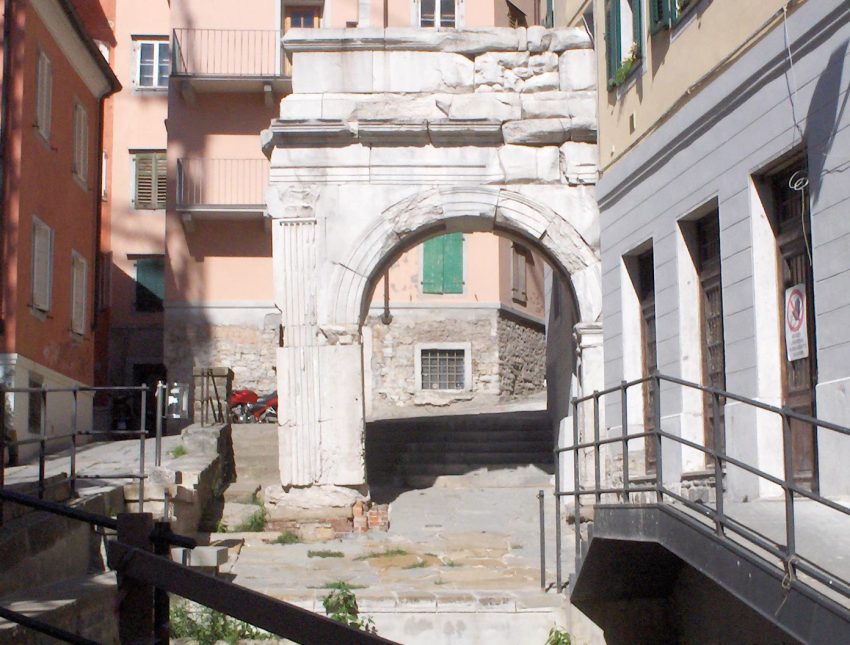
Arco di Riccardo is one of Trieste's most atmospheric Roman-era sights: a stone arch rising unexpectedly from a tiny old-town square, with one side famously woven into the fabric of later buildings. It's the kind of landmark you don't “visit” so much as stumble upon while exploring the city's medieval lanes, then pause to take in how ancient and modern Trieste overlap in a single frame.
Because it sits in the historic core, the best way to experience the arch is on a self-guided walking tour that links Trieste's Roman Theatre, the climb toward San Giusto, and the waterfront promenades. If you're short on time, the arch is also a perfect quick stop between cafés and sightseeing in the old town.
Table of Contents
- History and Significance of the Arco di Riccardo
- Things to See and Do in the Arco di Riccardo
- How to Get to the Arco di Riccardo
- Practical Tips on Visiting the Arco di Riccardo
- Where to Stay Close to the Arco di Riccardo
- Is the Arco di Riccardo Worth Visiting?
- For Different Travelers
- FAQs for Visiting Arco di Riccardo
- Nearby Attractions to the Arco di Riccardo
History and Significance of the Arco di Riccardo
Arco di Riccardo is commonly dated to the late Roman Republican period, around 33–32 BCE, when Trieste (then Tergeste) was being shaped into a Roman colony. Many interpretations describe it as a gate connected to the city's Roman walls, which helps explain why it feels like a threshold even today, standing in a narrow corridor of streets.
There’s also long-standing debate about its original function: beyond being a city gate, some theories connect it to an entrance associated with a sacred area dedicated to Magna Mater (Cybele). That uncertainty is part of what makes the site compelling: you’re looking at a real, surviving piece of Roman urban infrastructure, but with enough mystery to spark curiosity.
Even the name carries layers of legend and language. A popular story links it to Richard the Lionheart, but a more widely accepted explanation is that “Riccardo” evolved from “Cardo,” the main north–south street in Roman town planning, hinting at the arch’s relationship to the ancient street grid.
Things to See and Do in the Arco di Riccardo
Start by viewing the arch from multiple angles, because the setting is the point: one side reads as a standalone Roman monument, while another shows how later construction absorbed it. Look for the scale and proportions up close, then step back to see how the arch frames the tight old-town passageways.
Pair the stop with a short Roman-themed loop. From here it's easy to continue toward the Roman Theatre and then onward to the San Giusto area, turning your visit into a compact “ancient Trieste” itinerary without needing tickets or timed entry.
Finally, treat it as a slow-travel moment. The small square around the arch is ideal for a brief pause, a few photos, and a mental reset before you dive back into Trieste’s maze of lanes, cafés, and hidden corners.
How to Get to the Arco di Riccardo
The nearest airports are Trieste Airport (Ronchi dei Legionari), Venice Marco Polo Airport, and Ljubljana Jože Pučnik Airport, all of which can work depending on your route and flight prices. For the best deals and a seamless booking experience, check out these flights to Trieste on Booking.com.
Trieste is well connected by rail, and arriving at Trieste Centrale makes it straightforward to reach the old town on foot, by local bus, or with a short taxi ride. Use Omnio to easily compare schedules, book train tickets, and find the best prices all in one place for a hassle-free journey across Italy.
If you’re traveling by car, aim for a garage or paid parking area outside the tightest old-town lanes and finish the last stretch on foot. If you are looking to rent a car in Italy I recommend having a look at Discover Cars, first, as they compare prices and review multiple car rental agencies for you.
Practical Tips on Visiting the Arco di Riccardo
- Entrance fee: Free.
- Opening hours: 24 Hours.
- Best time to visit: Go early morning for quiet photos, or in the evening when the old town feels most atmospheric and you can combine it with dinner nearby.
- How long to spend: Plan 10–20 minutes for the arch itself, or 60–90 minutes if you’re linking it with the Roman Theatre and a wider old-town walk.
- Accessibility: The arch is at street level, but the surrounding lanes can be narrow and uneven; expect typical old-town paving and occasional steps on nearby routes.
- Facilities: There are no on-site facilities, but you’ll find cafés, restaurants, and restrooms in nearby venues throughout the old town.
Where to Stay Close to the Arco di Riccardo
Base yourself in Trieste’s central old town if you want to reach the arch, the Roman Theatre, and the waterfront on foot with minimal planning.
Savoia Excelsior Palace Trieste Chosen for its classic Trieste grandeur and prime waterfront location that still keeps you within an easy walk of the old town lanes.
DoubleTree by Hilton Trieste A strong pick for comfort and reliable service in a central position, ideal for walking itineraries that start and end in the historic core.
Urban Hotel Design Included for its boutique feel and stylish rooms, great for travelers who want a modern base close to Trieste’s most walkable neighborhoods.
Hotel Continentale A practical, well-located option near shopping streets and cafés, making it easy to weave the arch into a day of relaxed city exploring.
NH Trieste Recommended for travelers prioritizing transport convenience, with quick access from the station while still being walkable to the old town sights.
Is the Arco di Riccardo Worth Visiting?
Yes, it’s worth visiting, especially if you enjoy places where history is embedded in everyday city life. It’s quick, free, and surprisingly evocative: a genuine Roman monument that doesn’t feel staged, because it’s still part of the living street network.
Honest Pivot: if you prefer big, curated attractions with extensive exhibits, signage, and a “destination” feel, you may find Arco di Riccardo too small and too subtle on its own. In that case, treat it as a brief photo stop on the way to San Giusto, the Roman Theatre, or the waterfront rather than a standalone highlight.
What Other Travellers Say...

Reviews are strongly positive overall, with many visitors calling it a must-see and praising how striking it is to find a well-preserved Roman arch tucked into Trieste’s narrow old-town lanes. Common highlights include the “hidden gem” feel, the contrast of ancient stone against modern buildings, and how easy it is to pair with nearby Roman sights like the theatre. A few travelers note it can be a bit hard to locate in the maze of alleys, and some mention limited on-site explanation about its original purpose.


For Different Travelers
Arco di Riccardo works best as a flexible stop you can scale up or down. You can spend five minutes and move on, or use it as a starting point for a deeper walk through Roman and medieval Trieste.
Families with Kids
Kids often enjoy the “hidden treasure” aspect, since finding the arch through narrow lanes can feel like a mini-adventure. It’s also an easy win for parents because there’s no ticketing, no lines, and no long indoor visit.
To keep it engaging, turn it into a quick scavenger hunt: spot the oldest stones, look for how the arch connects to nearby buildings, then reward everyone with gelato or a snack nearby.
Couples & Romantic Getaways
For couples, the charm is in the setting: a quiet square, warm evening light, and the sense of discovering something ancient in the middle of the city. It’s a natural stop on a slow stroll before aperitivo.
Pair it with a walk to the waterfront for sunset, or build a “hidden Trieste” route through the old town's lanes to keep the day feeling intimate and unhurried.
Budget Travelers
This is a perfect budget-friendly sight: you can see it in minutes, it fits into any walking route, and it doesn't require paid entry. It's also close to other free or low-cost highlights, so you can stack value quickly.
If you’re watching spending, plan a self-guided Roman loop (arch, theatre, viewpoints) and save your splurge for one memorable meal or coffee in a historic café.
History Buffs
History lovers will appreciate that this is not a reconstruction or a museum piece, but a surviving fragment of Roman Trieste integrated into the modern city. The competing theories about its function add depth, especially if you like interpreting urban archaeology.
To get more context, visit it alongside the Roman Theatre and then continue toward San Giusto, where the layers of Roman, medieval, and later Trieste become even more visible.
FAQs for Visiting Arco di Riccardo
Getting There
Tickets & Entry
Visiting Experience
Tours, Context & Itineraries
Photography
Accessibility & Facilities
Food & Breaks Nearby
Safety & Timing
Nearby Attractions to the Arco di Riccardo
- Roman Theatre of Trieste: A compact but impressive Roman-era theatre ruin set into the hillside, easy to combine with the arch.
- Cattedrale di San Giusto Martire: Trieste's hilltop cathedral area with sweeping views and a strong sense of the city's layered history.
- Piazza Unità d’Italia: The city’s grand main square opening to the sea, perfect for photos and people-watching.
- Canal Grande di Trieste: A scenic canal lined with cafés and elegant buildings, ideal for a relaxed stroll.
- Castello di San Giusto: A historic fortress complex offering viewpoints and a deeper dive into Trieste's past.
The Arco di Riccardo appears in our Complete Guide to Visiting Trieste!

Moira & Andy
Hey! We're Moira & Andy. From hiking the Camino to trips around Europe in Bert our campervan — we've been traveling together since retirement in 2020!
This website uses affiliate links which may earn a commission at no additional cost to you!
Planning Your Visit
24 Hours.
Free.
Nearby Attractions
- Antiquarium di via del Seminario (0.2) km
Attraction, Historic Site and Roman Site - Civico Museo d'Arte Orientale (0.2) km
Attraction and Museum - Palazzo del Municipio (0.2) km
Historic Building, Square and Town Hall - Civic Museum of Antiquities "J.J. Winkelman" (0.2) km
Gardens, Historic Site and Museum - Fontana dei Quattro Continenti (0.2) km
Fountain, Sculpture and Square - Teatro Romano di Trieste (0.3) km
Roman Site, Ruins and Theatre - Cattedrale di San Giusto (0.3) km
Cathedral, Church and Religious Building - Palazzo del Lloyd Triestino (0.3) km
Attraction, Historic Building and Palace - Propylaeum and Roman Basilica (0.3) km
Cathedral, Church and Roman Site - Palazzo della Luogotenenza Austriaca (0.3) km
Historic Building, Palace and Square