Ancien Palais du Parlement, Grenoble
Historic Building, Historic Site and Palace in Grenoble
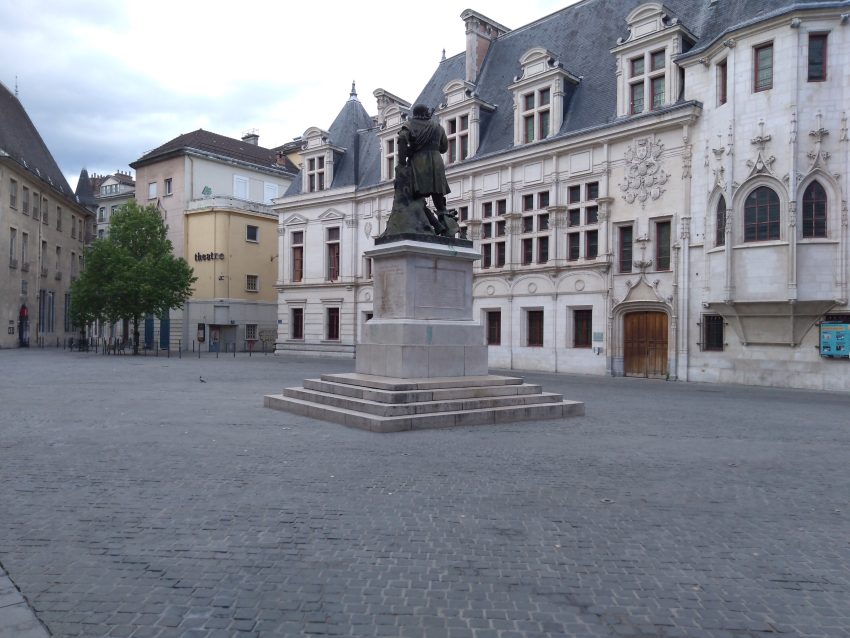
The Ancien Palais du Parlement is one of Grenoble's most eye-catching historic buildings, anchoring Place Saint-André in the city's old town. Even if you only have an hour, its ornate, story-packed facade makes it a rewarding stop on a self-guided stroll through central Grenoble.
Most travelers experience it best as part of a walking tour of the historic center: pair it with nearby lanes, cafés, and viewpoints, then circle back to Place Saint-André for photos when the light hits the stonework. If you're planning a deeper dive, keep in mind that interior access is often limited and may require a guided visit.
Table of Contents
- History and Significance of the Ancien Palais du Parlement
- Things to See and Do in the Ancien Palais du Parlement
- How to Get to the Ancien Palais du Parlement
- Practical Tips on Visiting the Ancien Palais du Parlement
- Where to Stay Close to the Ancien Palais du Parlement
- Is the Ancien Palais du Parlement Worth Visiting?
- For Different Travelers
- FAQs for Visiting Ancien Palais du Parlement
- Nearby Attractions to the Ancien Palais du Parlement
History and Significance of the Ancien Palais du Parlement
For centuries, this building was at the heart of justice in Grenoble and the wider Dauphiné region. It served as the seat of the Parlement du Dauphiné and related judicial institutions, later functioning as Grenoble's courthouse until the early 21st century.
Architecturally, the palace is a visual timeline: older sections reflect late Gothic influences, while later expansions and restorations introduced Renaissance and 19th-century historicist touches. That layered look is part of what makes the exterior so compelling, even if you’re only passing through.
Beyond architecture, the site is woven into Grenoble’s civic identity. The legal and political tensions of the late Ancien Régime in Dauphiné form part of the broader backdrop to events that helped ignite revolutionary momentum in the region, giving the palace a significance that goes well beyond its photogenic frontage.
Things to See and Do in the Ancien Palais du Parlement
Start outside on Place Saint-André and take your time reading the building with your eyes: look for the contrasting wings, decorative details, and the overall symmetry that makes the facade feel almost theatrical. It’s one of those places where a slow lap around the square reveals new carvings and textures.
If you can join a guided visit when available, the interior is where the palace’s purpose comes alive: vaulted passages, historic rooms, and court-related spaces provide context you simply can’t get from the outside. These visits are especially worthwhile if you enjoy civic history, architecture, or the “how a city worked” side of travel.
To round out the experience, treat it as a hub stop on a walking itinerary: combine it with the surrounding old-town streets, a café break on the square, and (if time allows) a scenic ride up to the Bastille for a skyline-and-mountains payoff.
How to Get to the Ancien Palais du Parlement
The nearest major airports are Lyon–Saint Exupéry (LYS) and Grenoble Alpes Isère Airport (GNB), with Geneva Airport (GVA) also a common option for international travelers. For the best deals and a seamless booking experience, check out these flights to Grenoble on Booking.com.
Grenoble is well-connected by rail, and arriving at Grenoble Gare is often the simplest choice; from there you can continue by tram, bus, taxi, or a pleasant walk into the historic center. You can use SNCF Connect to check schedules, compare routes, and purchase tickets for National (SNCF ) and regional trains (TER). For a more streamlined experience, we recommend using Omio, which allows you to easily compare prices, schedules, and book tickets for both National and Regional travel across all of Europe, all in one place.
If you're driving, aim for central Grenoble parking (paid garages are usually easiest) and finish on foot, since the old town around Place Saint-André is best explored as a pedestrian area. If you are looking to rent a car in France I recommend having a look at Discover Cars, first, as they compare prices and review multiple car rental agencies for you.
Practical Tips on Visiting the Ancien Palais du Parlement
- Official website: https://www.grenoble-tourisme.com/fr/catalogue/detail/ancien-palais-du-parlement-413862/
- Entrance fee: Check official website.
- Opening hours: Visits by guided tour only; hours vary—check official website.
- Best time to visit: Come in the morning for quieter photos, or late afternoon for warmer light on the facade and a livelier café atmosphere on Place Saint-André.
- How long to spend: Plan 15–30 minutes for the exterior and the square; allow 60–90 minutes if you’re timing it with a guided visit.
- Accessibility: The square is generally easy to reach on foot and by public transport, but expect typical old-town surfaces (paving and curb transitions) around the area.
- Facilities: There are no guaranteed on-site visitor facilities; rely on nearby cafés, public transport stops, and city-center services.
Where to Stay Close to the Ancien Palais du Parlement
Base yourself in Grenoble's historic center (around Place Grenette/Notre-Dame/Place Saint-André) for the easiest walking access to major sights and dining.
Le Grand Hôtel Grenoble A classic, central pick near shops and transit, ideal if you want a comfortable base within an easy walk of Place Saint-André.
OKKO Hotels Grenoble Jardin Hoche A modern, design-forward stay with a convenient location for both the old town and greener city walks.
Hôtel d’Angleterre Grenoble Hyper-Centre Great for travelers who want a straightforward, well-located hotel surrounded by cafés and city life.
RockyPop Grenoble Hotel A fun, contemporary option with personality, good for couples and friends who want something less traditional.
Mercure Grenoble Centre Président A reliable chain choice if you prefer predictable comfort and don’t mind a slightly longer (but easy) ride or walk into the historic core.
Is the Ancien Palais du Parlement Worth Visiting?
Yes, especially if you're exploring Grenoble on foot: it's one of the city's most distinctive historic facades, set on a square that naturally invites you to slow down, take photos, and connect the dots of local history.
Honest Pivot: if you’re only interested in attractions with guaranteed interior access or museum-style exhibits, this may feel too “exterior-focused” unless you can align your visit with a guided tour or special opening.
What Other Travellers Say...

Reviews are very positive overall, with visitors highlighting the palace's impressive, castle-like look and the sense of history around Place Saint-André. Many appreciate it as one of Grenoble's most worthwhile architectural stops and a strong photo spot on a walking route through the old town. A recurring downside is that the experience can feel limited if you're expecting extensive interior access or a larger attraction beyond the exterior and square.


For Different Travelers
The Ancien Palais du Parlement works best as a flexible stop: it can be a quick photo-and-stroll moment or a deeper history experience if you catch a guided visit. Your enjoyment depends on whether you're happy appreciating a landmark from the outside.
Families with Kids
Kids tend to enjoy the “castle-like” look and the open space of the square, which makes this an easy, low-stress stop between bigger activities. It’s also a good place for a quick reset with a snack break nearby.
If you’re traveling with younger children, treat it like a short scavenger hunt: spot carvings, count arches, and look for contrasting stone colors. Keep expectations flexible if interior access isn’t available.
Couples & Romantic Getaways
For couples, this is a classic old-town backdrop: handsome architecture, atmospheric streets, and plenty of nearby cafés for a slow coffee or apéritif. It’s especially photogenic in softer morning or late-day light.
Pair it with a walking loop through the historic center, then plan a viewpoint moment (like the Bastille area) for a memorable “city and mountains” finale.
Budget Travelers
This is a strong budget-friendly sight because the exterior experience costs nothing and still feels substantial. You can build an entire old-town walk around it without spending more than a coffee.
If you do want more context, watch for low-cost guided visits offered through local tourism programming; they can be a good value compared with bigger-ticket attractions.
History Buffs
History lovers will appreciate that this isn’t just a pretty building: it represents centuries of regional governance and justice. The setting on Place Saint-André also helps you imagine how civic life once revolved around institutions like this.
If you can access an interior visit, you’ll get the richest payoff, since rooms and passages add tangible detail to the story of law, power, and public life in Dauphiné.
FAQs for Visiting Ancien Palais du Parlement
Getting There
Tickets & Entry
Visiting Experience
Tours, Context & Itineraries
Photography
Accessibility & Facilities
Food & Breaks Nearby
Safety & Timing
Nearby Attractions to the Ancien Palais du Parlement
- Place Saint-André: The lively historic square in front of the palace, ideal for photos and café breaks.
- Cathédrale Notre-Dame de Grenoble: A key religious landmark nearby that adds depth to an old-town walking loop.
- Musée de Grenoble: One of France's notable fine-arts museums, great for an indoor culture stop.
- Téléphérique Grenoble-Bastille: The iconic cable car ride to panoramic viewpoints over the city and mountains.
- Jardin de Ville: A central green space for a relaxed stroll between historic-center sights.
The Ancien Palais du Parlement appears in our Complete Guide to Visiting Grenoble!

Moira & Andy
Hey! We're Moira & Andy. From hiking the Camino to trips around Europe in Bert our campervan — we've been traveling together since retirement in 2020!
This website uses affiliate links which may earn a commission at no additional cost to you!
Planning Your Visit
Visits by guided tour only; hours vary-check official website.
Check official website.
Nearby Attractions
- Cafe La Table Ronde (0.0) km
Café and Historic Building - Collegiate Church of Saint-André (0.0) km
Church, Historic Site and Religious Building - Grande Rue (0.1) km
Area, Street and Walk - Jardin de Ville (0.2) km
Attraction, Gardens and Park - Musee Stendhal (0.2) km
Museum - Grenoble-Bastille Cable Car (0.2) km
Cable Car and Viewing Point - Rue Lafayette (0.2) km
Area, Street and Walk - Appartement Natal de Stendhal (0.2) km
Historic Building, Historic Site and Museum - Musee Dauphinois (0.2) km
Gardens, Monastery and Museum - Catedral de Notre Dame (0.3) km
Cathedral and Religious Building