Aarhus Theatre
Arts Venue, Historic Building and Theatre in Aarhus
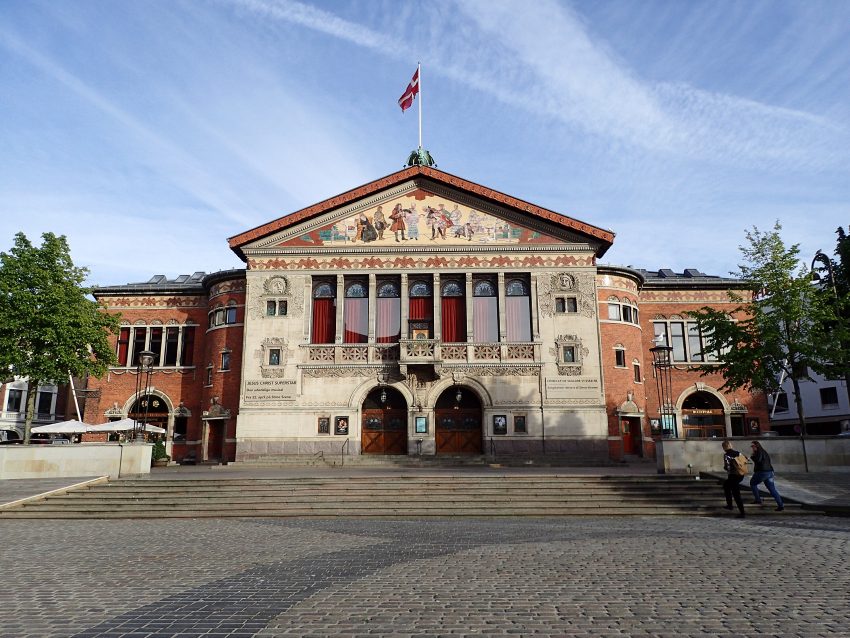
Aarhus Theatre (Aarhus Teater) is one of the city's most atmospheric “walk-past” landmarks that quickly turns into a “go inside” moment. It sits right by Aarhus Cathedral in the historic core, and the contrast is part of the pleasure: medieval streets and church towers outside, then chandeliers, gilding, and theatrical flourish as soon as you step into the foyer.
This is a working theatre first and foremost, so the experience depends on how you visit. A performance gives you the full ritual of a night out, while a guided tour is the best way to see the building in detail and understand how it works behind the scenes. Either way, it is one of the simplest places in Aarhus to feel the city's cultural life rather than just observe it.
Table of Contents
- History and Significance of the Aarhus Theatre
- Things to See and Do in the Aarhus Theatre
- How to Get to the Aarhus Theatre
- Practical Tips on Visiting the Aarhus Theatre
- Where to Stay Close to the Aarhus Theatre
- Is the Aarhus Theatre
- For Different Travelers
- FAQs for Visiting the Aarhus Theatre
- Nearby Attractions to the Aarhus Theatre
History and Significance of the Aarhus Theatre (Aarhus Teater)
The theatre building you see today was designed by Danish architect Hack Kampmann and inaugurated in 1900, created to replace an older venue that had become too small as Aarhus grew into Jutland's leading city. Its style is Art Nouveau (Jugendstil), and it is protected as a listed building-an architectural statement as much as a performance space.
Inside, the theatre’s identity is deliberately celebratory: decorative ceilings, chandeliers, and richly detailed public rooms that make arriving feel like part of the performance. This “grand entrance” approach reflects a period when theatres were civic showpieces, designed to signal confidence, taste, and modern urban life.
Today, the theatre is also significant in practical terms: it is a major regional stage with multiple performance spaces, so it functions as a year-round cultural engine rather than a single historic hall. Even if your Danish is limited, it is still worth checking what is on-music theatre, visually led productions, and touring performances can be surprisingly accessible.
Things to See and Do in the Aarhus Theatre (Aarhus Teater)
If you are attending a performance, arrive early enough to enjoy the building rather than rushing straight to your seat. The foyers are part of the experience: the lighting, the décor, and the sense of anticipation you only get in a busy theatre before the doors open.
If you are not attending a show, look for a public guided tour. Tours are scheduled on selected days and typically take you through parts of the house you would not otherwise see-stages, workshops, and the “working” side that explains how a production actually happens. It is the fastest way to turn a beautiful building into a memorable story.
Even a simple exterior stop is worthwhile, particularly if you are already doing a cathedral-and-Latin-Quarter loop. The theatre's façade and central location make it an easy anchor point for photographs and a natural reference point when navigating the old town.
How to Get to the Aarhus Theatre (Aarhus Teater)
The nearest airports are Aarhus Airport (AAR) and Billund Airport (BLL). For the best deals and a seamless booking experience, check out these flights to Aarhus on Booking.com.
From Aarhus Central Station (Aarhus H), the theatre is an easy city-centre walk, and you can combine it naturally with the cathedral and the Latin Quarter without needing any transport once you arrive downtown. Train schedules and bookings can be found on Omio.
Local buses and the light rail make it straightforward to reach the centre if you are staying outside Aarhus C, but in most cases walking is the simplest option once you are near Store Torv.
If you are driving, plan to park in a central parking garage (for example near Dokk1/Europaplads or other city-centre facilities) and walk the last minutes to the theatre to avoid the tight historic-core streets.
Practical Tips on Visiting the Aarhus Theatre (Aarhus Teater)
- Entrance fee: Varies (performances typically from 160–525 DKK; public guided tours typically 125 DKK on selected dates).
- Opening hours: Opens around 1 hour before performances (varies by showtime).
- Official website: https://www.aarhusteater.dk/
- Best time to visit: Aim for an evening performance if you want the full atmosphere, or choose a guided tour day if your priority is architecture and behind-the-scenes access.
- How long to spend: Allow 2-3 hours for a performance visit including arrival time; for a guided tour, plan roughly 1.5 hours including arrival and settling in.
- Accessibility: Expect stairs and narrow backstage areas on tours, and note that some routes may not suit travellers with limited mobility; if accessibility is critical, choose a main-auditorium performance and confirm seating/access options when booking.
- Facilities: Cloakroom and bars are typically available in connection with performances, but do not treat the building like a museum with all-day visitor services-plan cafés and restrooms around the surrounding city centre.
Where to Stay Close to the Aarhus Theatre (Aarhus Teater)
For a culture-heavy itinerary, base yourself in Aarhus C around Store Torv, the cathedral, and the Latin Quarter so you can walk to evening performances and still have cafés and sights on your doorstep; if your trip is built around day trips and early trains, base closer to Aarhus Central Station for the simplest transport links.
If you want to be steps from the theatre and cathedral, Hotel Royal is the most central, classic option. For a smaller, characterful stay that still keeps you in the core, Boutique Hotel Villa Provence works well for a quieter base with easy walking access. If you prefer a larger full-service hotel in the cultural district, Radisson Blu Scandinavia Hotel, Aarhus is a practical choice for combining theatre nights with museum days.
Is the Aarhus Theatre (Aarhus Teater) Worth Visiting?
Yes. It is one of Aarhus’s best “single-stop” cultural landmarks: central, visually impressive, and easy to integrate into an evening. If you attend a performance, it becomes a memorable night out; if you take a tour, it is one of the most satisfying ways to understand the city’s cultural infrastructure from the inside.
Honest pivot: if you are not attending a show and tours do not fit your schedule, you can treat it as an exterior photo stop and invest your time in Aarhus’s museums instead. The theatre is most rewarding when you actually go in.
For Different Travelers
Families with Kids
This works best for families when you choose the format carefully. A daytime tour can be engaging for older kids who like backstage “how it works” stories, while younger children often do better with a shorter visit or a visually driven performance rather than long explanations.
If you are going in the evening, prioritise practical comfort: arrive early, keep snacks simple, and choose seats that make exits easy if someone needs a break. A theatre night can be excellent with kids, but it is usually better as a planned highlight than a spontaneous add-on.
Couples & Romantic Getaways
For couples, Aarhus Theatre is a strong “signature evening” in the city centre: dinner, a show, and a slow walk back through the cathedral area feels classic without being complicated. The building itself adds romance, especially in the glow of foyer lighting and the pre-show buzz.
If you prefer something lighter than a full evening performance, a guided tour can still feel like a shared experience with a clear beginning and end-then you can build the rest of the day around cafés, galleries, and the Latin Quarter.
Budget Travelers
The best budget approach is to treat the theatre as flexible. You can enjoy the architecture from the outside for free, then decide whether to spend on a show, a tour, or neither depending on what else is competing for your budget that day.
If you do pay for something, look for ticket categories that fit your comfort level rather than chasing the “perfect” seat. A good theatre building is still a good experience even when you are not in the most expensive section.
What Other Travellers Say...

Inaugurated in 1900, this theater features a decorative facade & lavish interiors.


FAQs for Visiting the Aarhus Theatre (Aarhus Teater)
Getting There
Tickets & Entry
Visiting Experience
Photography
Accessibility & Facilities
Nearby Attractions to the Aarhus Theatre (Aarhus Teater)
- Aarhus Cathedral: The city's main cathedral on Store Torv, an essential nearby stop that pairs naturally with the theatre district.
- The Latin Quarter: Aarhus’s most walkable neighbourhood for cafés, small shops, and an easy pre-theatre wander.
- Viking Museum: A compact underground museum that adds a quick, high-impact history layer near the central core.
- Dokk1: The waterfront cultural hub and library, ideal for a modern contrast and harbour views after sightseeing.
- ARoS Aarhus Art Museum: A major modern-art museum that complements a theatre night with a strong “culture day” pairing.
The Aarhus Theatre appears in our Complete Guide to Visiting Aarhus!

Moira & Andy
Hey! We're Moira & Andy. From hiking the Camino to trips around Europe in Bert our campervan — we've been traveling together since retirement in 2020!
This website uses affiliate links which may earn a commission at no additional cost to you!
Planning Your Visit
Opens around 1 hour before performances (varies by showtime).
Varies (performances typically from 160-525 DKK; public guided tours typically 125 DKK on selected dates).
Nearby Attractions
- Bispetorvet (0.0) km
- KØN - Gender Museum Denmark (0.1) km
Museum - Viking Museum (0.1) km
Museum - Aarhus Cathedral (0.1) km
Attraction, Cathedral and Historic Site - The Occupation Museum (0.1) km
Museum - Aarhus Custom House (0.2) km
Harbour and Historic Building - Åboulevarden (0.2) km
Area - Latinerkvarteret (0.2) km
Area - Dokk1 (0.3) km
- Møllestien (0.6) km
Street