Matera, Italy: The Ultimate Travel Guide 2026
italy matera
italy matera

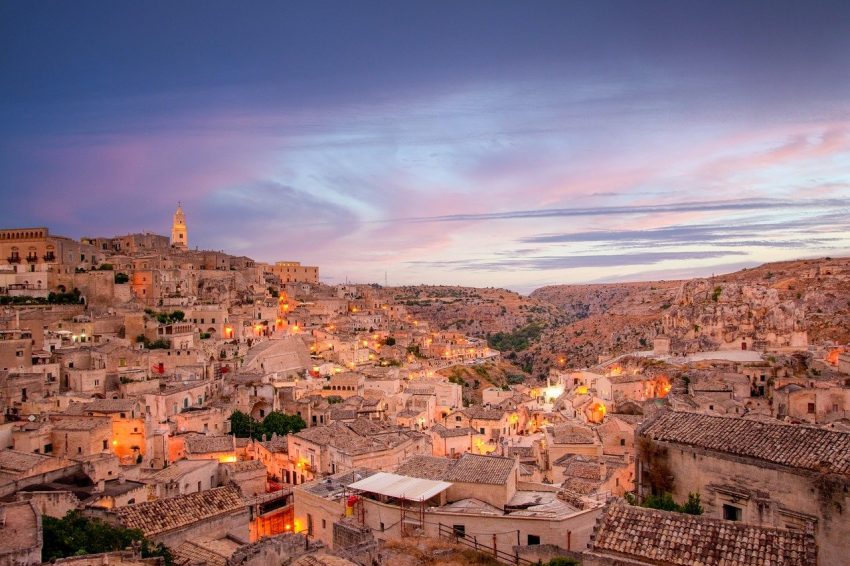
Visiting Matera, Italy, is like stepping back in time to a city where history and culture are carved into the very stone. Known for its ancient cave dwellings, or “Sassi,” Matera offers a unique glimpse into the past, with structures dating back thousands of years. As you wander through the labyrinthine streets, you'll encounter rock-hewn churches, some adorned with centuries-old frescoes, and homes built into the rugged landscape. The city's distinctive architecture, recognized as a UNESCO World Heritage site, is a testament to human ingenuity and resilience. Matera's charm lies not only in its historical significance but also in the way it has seamlessly integrated modern life with its ancient roots, offering visitors a blend of past and present that is truly captivating.

Beyond its historical allure, Matera is a city alive with culture, gastronomy, and stunning landscapes. The city's unique setting, perched on the edge of a ravine, offers breathtaking views, particularly at sunrise and sunset when the golden light bathes the stone buildings in a warm glow. Visitors can explore local markets, dine in cave restaurants, and experience the vibrant arts scene that has flourished here in recent years. Whether you're interested in history, architecture, or simply soaking in the atmosphere of a city like no other, Matera offers a richly rewarding experience that leaves a lasting impression.

History of Matera

Ancient Beginnings of Matera

Matera, one of the world’s oldest continuously inhabited cities, has roots that stretch back to the Paleolithic period. Archaeological evidence suggests that the area was settled as early as 10,000 years ago, with its famous cave dwellings, known as the “Sassi,” carved into the limestone rock. These early inhabitants utilized the natural landscape to create shelters, giving rise to the complex and unique urban structure that would define Matera for millennia.

Matera During the Classical Period

In the classical period, Matera became part of the greater Greek and Roman cultural spheres. The city was influenced by the Magna Graecia colonization in southern Italy, which brought with it advancements in architecture, agriculture, and culture. Under Roman rule, Matera continued to develop, though it remained relatively small compared to other cities in the region. The Sassi continued to serve as homes, and the city became a quiet, rural community with deep ties to the land.

Matera in the Middle Ages

During the Middle Ages, Matera experienced significant growth as it became a fortified city under the control of the Lombards, and later, the Normans. The city’s strategic location made it an important stronghold, and new religious and civic buildings were constructed, many of which were integrated into the existing cave dwellings. The Christian influence is evident in the numerous rock-hewn churches that were built during this period, some of which contain well-preserved frescoes that date back to the 8th and 9th centuries.

Matera in the Modern Era

By the 17th and 18th centuries, Matera had expanded beyond its original Sassi districts, and new neighborhoods were established. However, the Sassi remained densely populated, often with multiple families living in cramped and unsanitary conditions. By the mid-20th century, Matera’s Sassi had come to symbolize extreme poverty, prompting the Italian government to relocate thousands of residents to new housing. The Sassi were abandoned, and Matera became known as “the shame of Italy.”

Matera’s Revival and UNESCO Recognition

Matera’s fortunes began to change in the late 20th century when the abandoned Sassi were rediscovered by historians and architects who recognized their cultural and historical significance. Restoration efforts began, and in 1993, Matera was designated a UNESCO World Heritage Site. This recognition marked the beginning of a new era for the city, transforming it into a symbol of cultural revival and a popular tourist destination. Today, Matera is celebrated for its unique architecture, rich history, and vibrant cultural life, culminating in its designation as a European Capital of Culture in 2019.

Moira & Andy
Moira & Andy

Hey! We're Moira & Andy. From hiking the Camino to trips around Europe in Bert our campervan — we've been traveling together since retirement in 2020!

Read our full story here

Visiting Matera for the first time and wondering what are the top places to see in the city? In this complete guide, I share the best things to do in Matera on the first visit. To help you plan your trip, I have also included an interactive map and practical tips for visiting!

This website uses affiliate links which earn a small commission at no additional cost to you.
Powered by GetYourGuide

24 Best places to See in Matera

This complete guide to Matera not only tells you about the very best sights and tourist attractions for first-time visitors to the city but also provide insights into a few of our personal favorite things to do.

This is a practical guide to visiting the best places to see in Matera and is filled with tips and info that should answer all your questions!

1. Piazza Vittorio Veneto

Piazza Vittorio Veneto Matera
CC BY-SA 4.0 / Bernard Gagnon
Piazza Vittorio Veneto is Matera’s central square, a civic crossroads where the modern town meets the drop toward the Sassi. Its identity has shifted with Italy’s politics—once called Piazza della Fontana and later Piazza del Plebiscito—yet it still reads as the city’s everyday living room, framed by neoclassical façades and arcades near the Annunziata Palace and San Domenico. Look for the belvedere’s rounded arches and terraces, which open to a clear panorama of the cathedral and the stone districts below, especially striking after dark. Beneath the paving lies the Palombaro Lungo, an 1832 rock-cut cistern sometimes likened to a “water cathedral,” with columns and high arches that once stored rainwater.
Location: Piazza Vittorio Veneto, 75100 Matera MT, Italy | Hours: 24 Hours. | Price: Free. | Distance: 0.2km


We recommend to rent a car in Italy through Discover Cars, they compare prices and review multiple car rental agencies. Book your rental car here.

2. Palazzo dell'Annunziata

Palazzo dell'Annunziata
Palazzo dell’Annunziata
CC BY-SA 2.0 / Superchilum
Palazzo dell’Annunziata stands on Piazza Vittorio Veneto in Matera, a large 18th-century complex that has shifted from Dominican convent to civic building and today houses the Provincial Library “Tommaso Stigliani.” Begun in 1739, its plan was reworked in 1742 to replace a central church with an open courtyard, giving the structure a more public feel than its monastic origins suggest. Visitors notice the balanced late-Baroque-to-early-Neoclassical façade, arcades, and the exterior clock added in 1900, all anchoring the square. After heavy damage in the 1980 earthquake, a 1998 restoration revived its interiors, where manuscripts, rare books, and even a coin collection can appear in small displays.
Location: Palazzo dell'Annunziata, Piazza Vittorio Veneto, 1, 75100 Matera MT, Italy | Hours: Monday – Thursday: 08:30–18:30. Friday – Saturday: 08:30–13:30. Closed on Sunday. | Price: Free. | Website | Distance: 0.2km

Here is a complete selection of hotel options in Matera. Feel free to review each one and choose the stay that best suits your needs.

3. Ipogeo MateraSum

Ipogeo MateraSum
Ipogeo MateraSum
CC BY-SA 4.0 / Holger Uwe Schmitt
Ipogeo MateraSum is a walkable underground complex beneath Matera, revealing how the city functioned below street level as much as above it. Near Piazza Vittorio Veneto, it stretches about 12,917 square feet and drops roughly 39 feet underground, with chambers that feel like a small rock-cut neighborhood. Built into the story of the Malvezzi family—whose mansion stands on Via Duomo above—it was used as a storage hub for agricultural goods along old trade routes. Visitors pass cisterns, granaries, furnaces, and a crypt, then wander freely after a short introductory video. Information panels appear in several languages, and the entrance can be easy to miss.
Location: Recinto XX Settembre, 7, 75100 Matera MT, Italy | Hours: Daily: 09:00–13:00 & 15:00–19:00. | Price: Adults: €7. | Website | Distance: 0.2km

Traveling to a country with a different currency? Avoid ATM transaction fees and pay in local currency with a Wise Card. Having used it for over 5 years, we've saved loads on fees!

4. Palombaro Lungo

Palombaro Lungo
Palombaro Lungo
CC BY-SA 4.0 / Holger Uwe Schmitt
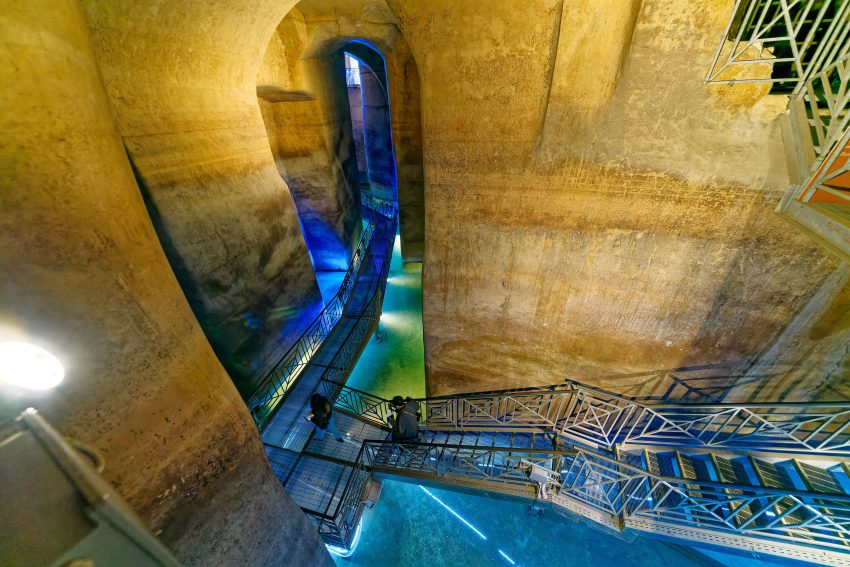
Hidden beneath Piazza Vittorio Veneto in Matera, Palombaro Lungo is a vast rock-cut cistern—often nicknamed a “water cathedral”—built by linking natural caves into the city’s water system. Begun in the 1500s and pushed to completion in 1832 (with later expansion into the 1880s), it could store nearly five million liters gathered from rain and springs, sustaining a town with few rivers. Inside, dim light catches on arches and stone columns that read like a subterranean basilica, with still water visible below. It supplied homes and the fountain above until the Apulian Aqueduct arrived in 1920, then lay sealed until its rediscovery in 1991. Raised walkways now let you cross its echoing chamber.
Location: Piazza Vittorio Veneto, 75100 Matera MT, Italy | Hours: Daily: 10:00–13:00 & 15:00–18:00. | Price: Adults: €3; Minors: free; School groups: €1.50. | Website | Distance: 0.2km

Explore Matera at your own pace with our self-guided walking tour! Follow our curated route to discover must-see sights and local secrets that makes Matera one of the best places to visit in Italy.

5. Chiesa di San Giovanni Battista

Chiesa di San Giovanni Battista
CC BY-SA 4.0 / Velvet
Chiesa di San Giovanni Battista is a free-standing medieval church in Matera, begun in 1229 and finished in 1236 after an earlier chapel was taken over by nuns of Saint Mary of Acre. Set just beyond the old walls, it was abandoned during the Ottoman threat in 1480 and only revived as a parish in 1695, leaving a building that quietly carries layers of interruption and repair. Its Latin-cross plan mixes Romanesque weight with Gothic touches: a nave with unusual Lecce vaults, three apses edged by sculpted arches, and side chapels. Outside, look for the rose window and the statue of John the Baptist above the portal; inside, linger on the carved capitals and the dim, limestone hush visitors often call especially peaceful.
Location: Via San Biagio, 75100 Matera MT, Italy | Hours: Check official website. | Price: Free; donations appreciated. | Website | Distance: 0.3km

6. Chiesa di San Francesco d'Assisi

Chiesa di San Francesco d’Assisi
CC BY-SA 4.0 / Velvet
Chiesa di San Francesco d’Assisi is a Baroque church in central Matera, fronting Piazza San Francesco and marking the threshold between the civic center and the Sassi. Its 18th-century façade by Vito Valentino and Tommaso Pennetta is crowned with three statues—the Immaculate Virgin flanked by Saint Francis and Saint Anthony—set amid curling stucco scrollwork. Inside, the single nave leads to a square apse with a ribbed cross-vault, and behind the high altar a wooden choir screen incorporates panels from a 15th-century tempera polyptych attributed to Lazzaro Bastiani. Look for the trapdoor in a side chapel: it descends to an earlier rock-cut church with a fresco recalling Pope Urban II’s 1093 visit. Visitors often note the calm interior despite the busy square outside.
Location: Piazza S. Francesco, 75100 Matera MT, Italy | Hours: Daily: 08:00–12:00 & 16:30–20:00. | Price: Free; donations appreciated. | Distance: 0.4km

7. Castello Tramontano

Castello Tramontano
Castello Tramontano
CC BY-SA 4.0 / AntonioMT88
Castello Tramontano is Matera’s unfinished Aragonese-style fortress on Lapillo Hill, a hulking limestone mass that still dominates the skyline above the Sassi. Begun in 1506 by Count Giovanni Carlo Tramontano and funded by harsh taxes, it became a symbol of feudal control; after the count was killed by townspeople in 1514, construction stopped and the castle was never completed. From outside you’ll notice the round, crenellated towers, arrow slits, and thick walls, best appreciated by circling the perimeter paths for changing angles and wide photos. Restoration work started in 2008, but travelers often remark on fences and a scruffy, uneven park setting around it.
Location: Via del Castello, 75100 Matera MT, Italy | Hours: 24 Hours. | Price: Free. | Distance: 0.4km

8. Via Ridola
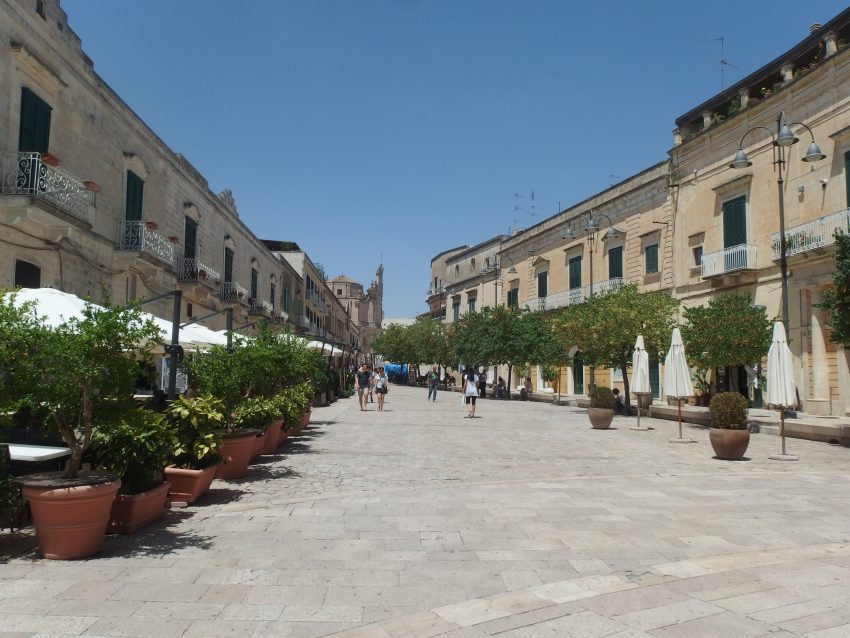
Via Ridola, Matera
Via Ridola, Matera
CC BY-SA 4.0 / Palickap
Via Ridola is a short, elegant street on Matera’s Piano that acts as a hinge between the orderly upper town and the sudden plunge into the Sassi. It’s named for Domenico Ridola, a physician and amateur archaeologist whose cave discoveries seeded the Archaeological Museum that bears his name, with collections ranging from Neolithic tools to Greek-era finds. Laid out during the 17th–18th century baroque expansion beyond the crowded cave quarters, the street is lined with dignified stone façades, churches, and former civic buildings. As you walk, you’ll notice the macabre skull carvings on the Church of Purgatorio and the baroque presence of San Francesco. The stroll naturally gathers momentum toward Piazza Pascoli’s belvedere, where the ravine and cathedral ridge suddenly open into view.
Location: Via Domenico Ridola, 75100 Matera MT, Italy | Hours: 24 Hours. | Price: Free. | Distance: 0.5km

9. Museo Archeologico Nazionale Domenico Ridola
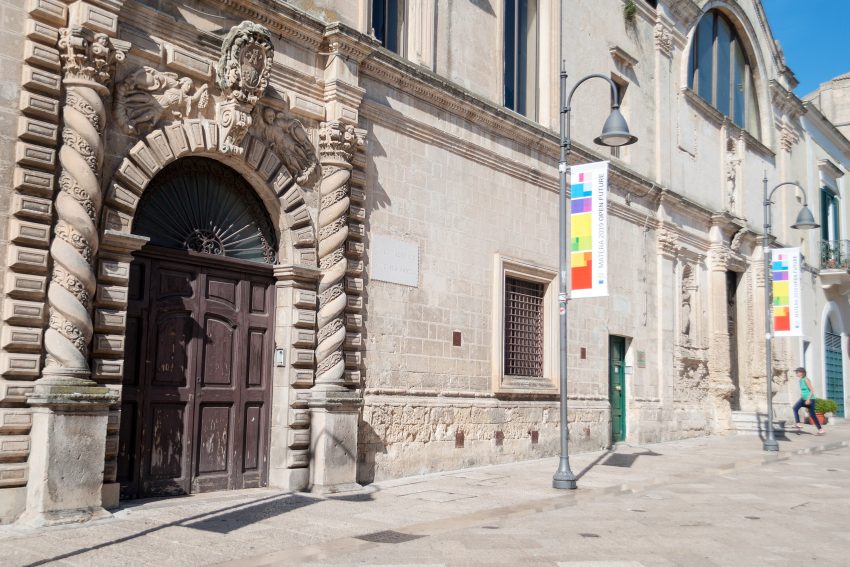
Museo Archeologico Nazionale Domenico Ridola
CC BY-SA 4.0 / Margherita L'Annunziata
Museo Archeologico Nazionale Domenico Ridola is Matera’s main archaeology museum and the oldest in Basilicata, founded in 1911 after Senator-physician Domenico Ridola donated his collections. Set in the former convent of Santa Chiara, it walks you from deep prehistory to Roman times with unusually specific local finds. You’ll see Pleistocene tools and weapons from the Murgia, including material linked to Grotta dei Pipistrelli, plus evidence from Neolithic fortified villages such as Serra d’Alto, known for finely decorated pottery. Later rooms draw from the Basento and Bradano valleys with tomb goods, red-figure ceramics, and bronzes, including the 5th–4th century BC Timmari votives. The Sala Ridola closes with the founder’s papers and personal relics.
Location: Via Domenico Ridola, 24, 75100 Matera MT, Italy | Hours: Monday: 14:00–20:00. Tuesday – Sunday: 09:00–20:00. | Price: Adults: €10; Reduced: €2. | Website | Distance: 0.5km

10. Museo-Laboratorio della Civilta Contadina
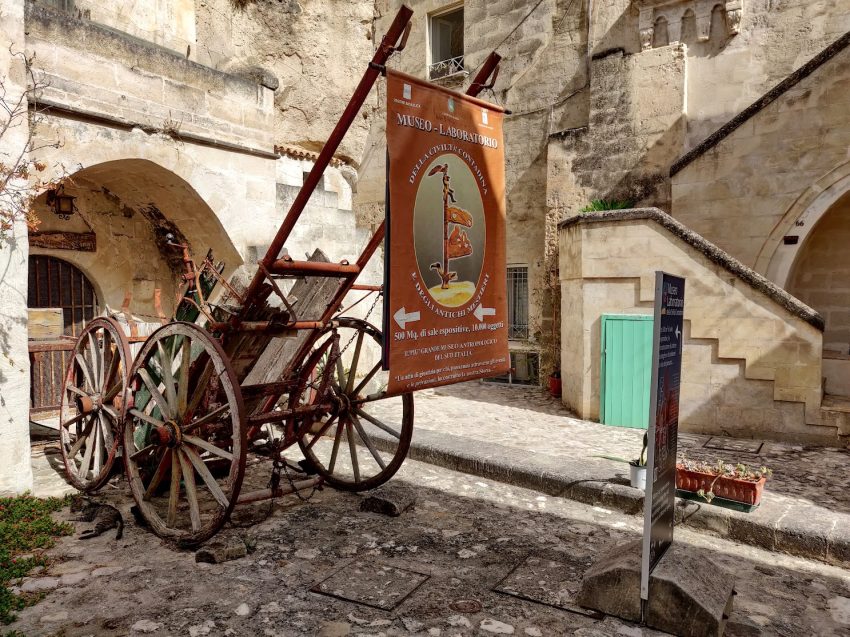
Museo-Laboratorio della Civilta Contadina
CC BY-SA 4.0 / Camelia.boban
In Matera’s Sassi, the Museo‑Laboratorio della Civiltà Contadina is an ethnographic “museum‑workshop” set in a restored 16th‑century lamione built above a cave dwelling. Instead of glass cases, it strings together room-like scenes that reconstruct how rural Basilicata lived and worked, using research and oral memories from local elders. Visitors move through tightly packed spaces such as a public wine cellar (ciddaro), domestic interiors, and small trade setups—often spotting a turn‑of‑the‑century barber corner alongside shoemaking and blacksmith tools. The sheer density of objects makes it feel like a working archive of skills and routines that vanished quickly in the 20th century.
Location: Via S. Giovanni Vecchio, 60, 75100 Matera MT, Italy | Hours: Daily: 09:00–13:00 & 16:00–19:00. | Price: Check official website. | Website | Distance: 0.5km

11. Belvedere Piazzetta Pascoli

Belvedere Piazzetta Pascoli
CC BY-SA 4.0 / Lamiogiancarlo
Belvedere Piazzetta Pascoli is a small terrace-square on the edge of Matera’s historic center, set beside the 17th-century Palazzo Lanfranchi, that distills the city into one sweeping view. From its parapet you look across the stacked cave neighborhoods of Sasso Caveoso and Sasso Barisano, down into the Gravina gorge and out to the Murgia plateau, with the cathedral riding the ridge above. The space also carries a contemporary note: Kengiro Azuma’s nearly three-meter bronze sculpture “The Drop” recalls how precious water was in a city carved from rock. After sunset, the cave homes and cliffside churches glitter with lights, a scene many travelers remember most.
Location: Piazzetta Pascoli, 75100 Matera MT, Italy | Hours: 24 Hours. | Price: Free. | Distance: 0.6km

12. Museo di Palazzo Lanfranchi

Museo di Palazzo Lanfranchi
CC BY-SA 4.0 / Acquario51
Museo di Palazzo Lanfranchi occupies a late-17th-century baroque seminary commissioned by Bishop Vincenzo Lanfranchi (1668–1672), its monumental façade and cloistered passages giving the visit a ceremonial feel. Since 2003 it has housed Basilicata’s National Museum of Medieval and Modern Art, turning the former ecclesiastical complex into a working cultural hub. Inside, you move through light, airy galleries that range from rescued sacred art and Neapolitan-school canvases to modern rooms centered on Carlo Levi, whose Basilicata exile shaped his searing portraits of southern life. Arcaded halls, staircases, and occasional windows open to views over the Sasso Caveoso, and visitors often remember the building’s calm spaciousness as much as the paintings.
Location: Piazzetta Pascoli, 1, 75100 Matera MT, Italy | Hours: Monday: 09:00–20:00. Tuesday: 09:00–14:00. Wednesday: 09:00–20:00. Thursday: 09:00–20:00. Friday: 09:00–20:00. Saturday: 09:00–20:00. Sunday: 09:00–20:00. | Price: Adults: €10; Students: €2; Under 18: free. | Website | Distance: 0.6km

13. Convento di Sant'Agostino
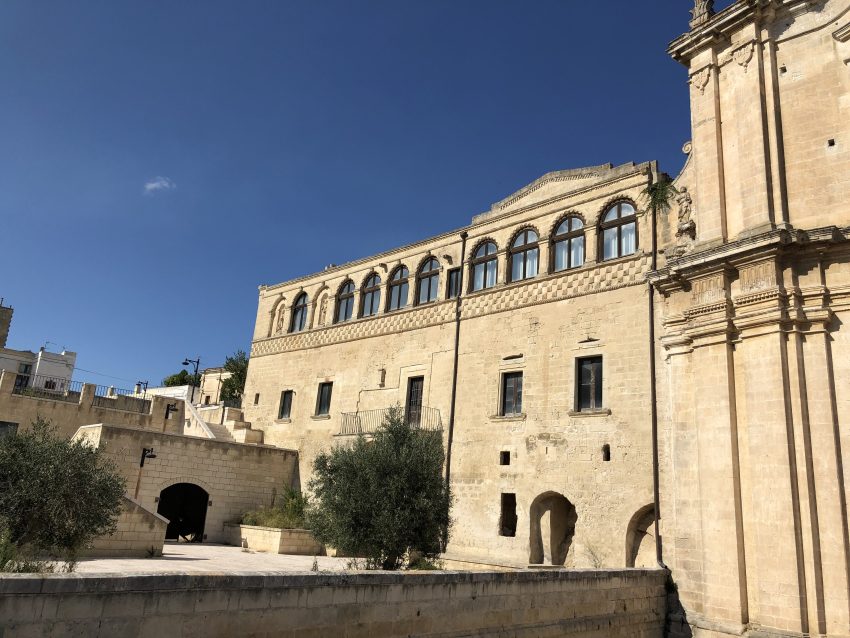
Convento di Sant’Agostino
CC BY-SA 4.0 / Davide Mauro
Convento di Sant’Agostino is a late-16th-century Augustinian church-and-convent complex perched on the edge of Matera’s Sassi, where its forecourt doubles as a natural terrace over the Gravina ravine. Built by Augustinian monks on the remains of an earlier medieval church, it reflects Counter-Reformation Matera in its Late Renaissance to early Baroque façade, with pilasters, niches, and a refined central portal. Inside, the single nave holds side altars, fresco fragments, and sculpture, including a wooden Saint Augustine still tied to local devotion. Visitors often remember the calm interior after the busy lanes outside, and those who ask in the sacristy may be able to descend into the older rupestrian spaces with striking frescoes.
Location: Via D'Addozio, 75100 Matera MT, Italy | Hours: Check official website. | Price: Free; donations appreciated. | Distance: 0.6km

14. Madonna delle Virtu
Madonna delle Virtu
Madonna delle Virtu
CC BY-SA 2.0 / Benjamin Smith
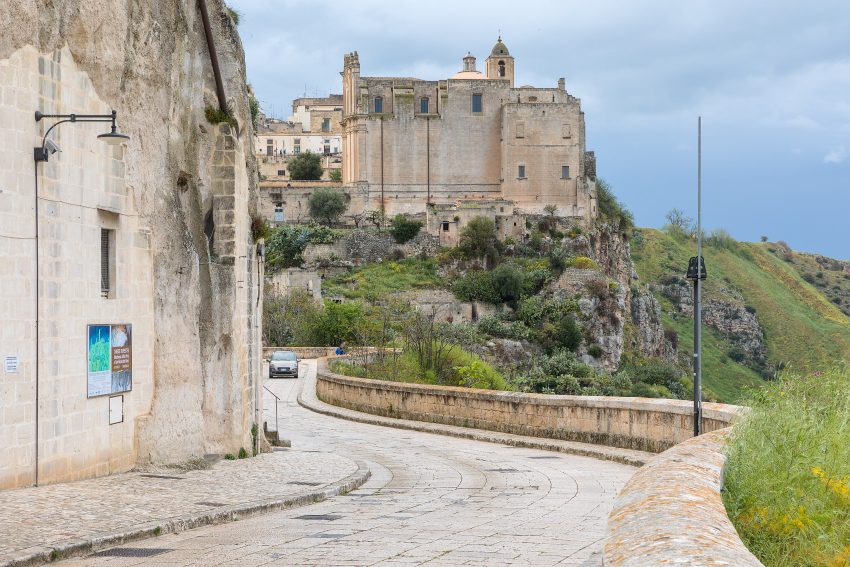
Madonna delle Virtù in Matera is a rupestrian church complex carved into pale tufa, where worship spaces were hollowed out of rock rather than built up. Dating to around 1000 AD, the main church is laid out like a small basilica with three naves, hefty columns, and distinctive “donkey-back” vaults; a relief gallery and a dome-like vault marked with a Greek cross add to the sense of sculpted architecture. Inside, visitors notice scattered fresco survivals, including an 18th-century Crucifixion scene and a later medieval Crucifixion in the right aisle, where a former tuff-quarry chamber opens unexpectedly. Above lies San Nicola dei Greci, a very early crypt with two naves, a 13th-century saints triptych, and a 14th-century fresco, now often used for exhibitions.
Location: Via Madonna delle Virtù, 75100 Matera MT, Italy | Hours: (Summer) June – September: Monday – Sunday: 10:00–20:00. (Winter) October – May: Monday – Sunday: 10:00–13:30 & 15:00–18:00. | Price: Check official website. | Website | Distance: 0.6km

15. Sassi di Matera

Sassi di Matera
Sassi di Matera
CC BY-SA 4.0 / Gigi.Parentini
The Sassi di Matera are two ancient cave-settled quarters carved into the limestone above the Gravina canyon in Matera, Italy, and they matter as a rare cityscape built directly from rock and continuously reshaped over millennia. Some dwellings trace back to the Paleolithic period, later expanding into a layered maze of homes, chapels, cisterns, and even passages that feel like underground streets. Sasso Caveoso keeps the rawest cave-house look, while Sasso Barisano shows later façades and palazzi built over earlier hollows. Visitors remember the tight stairways and winding alleys that suddenly open onto terraces with ravine-wide views, plus rock-cut churches where medieval frescoes still cling to stone.
Location: Sassi di Matera, 75100 Matera MT, Italy | Hours: 24 Hours. | Price: Free. | Distance: 0.6km

16. Casa Noha
Casa Noha
Casa Noha
©
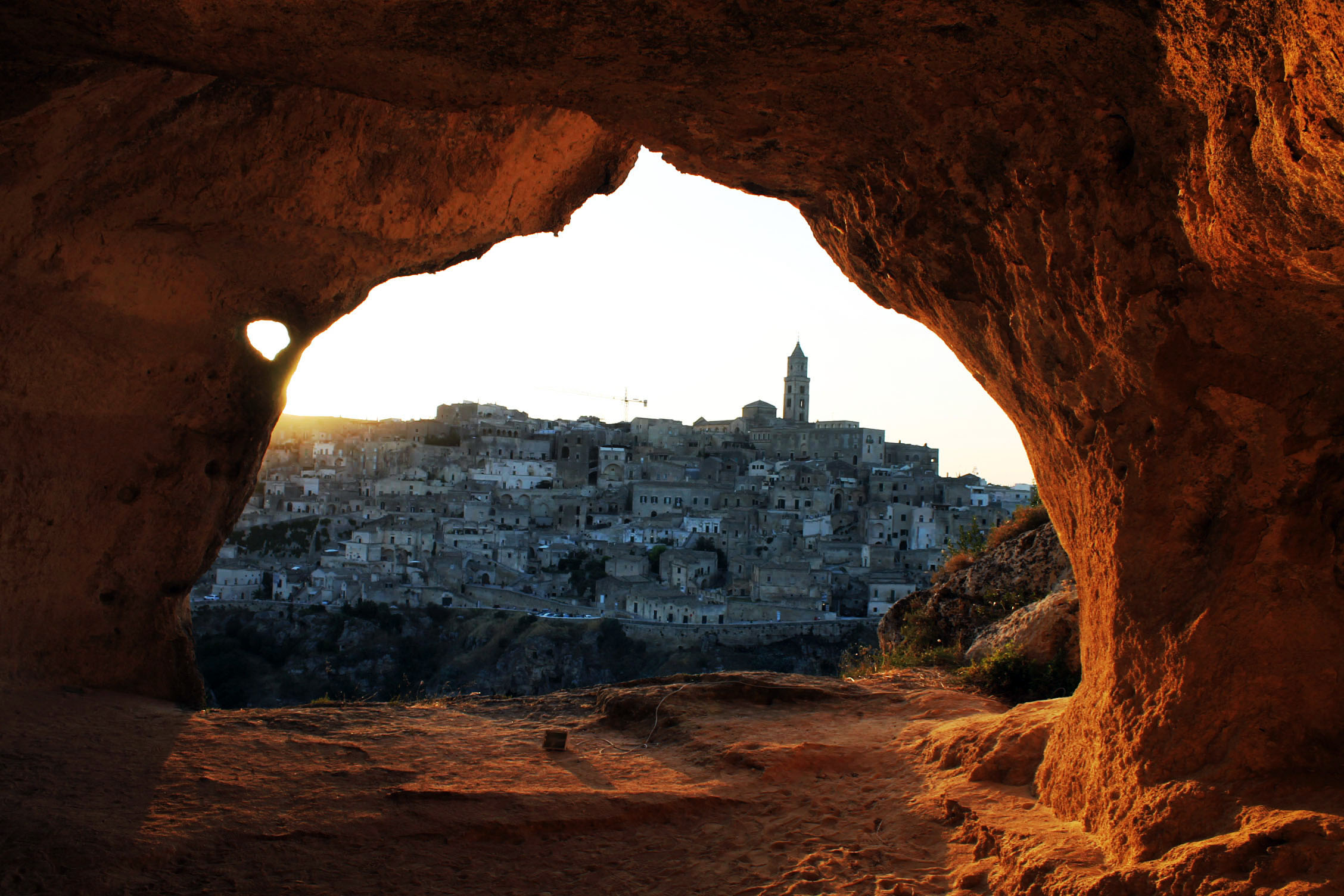
Casa Noha is a 15th-century noble residence in Matera’s Civita quarter, now a small house-museum run by the Italian Environmental Fund. Built precariously over an erosion channel, it was shored up with reused ruins that exposed traces from Bronze and Iron Age life through Greek, Roman, and medieval layers. Inside, the house itself—part carved from rock, part built above ground—frames a courtyard, service rooms, and an exterior staircase leading to the living quarters. Instead of display cases, visitors sit in cool stone rooms for “The Invisible Stones,” a roughly 30-minute immersive film projected on the walls, tracing Matera from cave settlement to UNESCO-era revival. Expect a compact visit focused on orientation and atmosphere.
Location: Recinto Cavone, 9, 75100 Matera MT, Italy | Hours: Thursday – Tuesday: 10:00–17:00. Closed on Wednesday. | Price: Adults: €7; Reduced (6–18): €3; Students (up to 25): €5; Family (2 adults + 2 children): €18; Under 6: free. | Website | Distance: 0.6km

17. Cattedrale di Matera

Cattedrale di Matera crowns the Civita ridge between the two Sassi, watching over the cave-city from the highest point in town. Begun around 1230 on the site of a Benedictine monastery and completed by 1270, it pairs a crisp 13th-century Romanesque exterior with a surprisingly ornate interior shaped by later centuries. On the façade, a 16-rayed rose window sits above Archangel Michael pinning a dragon, while an Atlas figure and a line of twelve lemons quietly nod to the apostles. Inside, look for the surviving Byzantine fresco of the Dark-skinned Madonna, gilded altars, and carved choir stalls, then linger outside for the sweeping view over the Sassi rooftops and ravine.
Location: Piazza Duomo, 75100 Matera MT, Italy | Hours: Daily: 09:00–18:00. | Price: Adults: €3.50 (Cattedrale + MATA Museo Diocesano cultural route); free entry may apply during Mass. | Website | Distance: 0.6km

18. Chiesa dei Santi Pietro e Paolo

Chiesa dei Santi Pietro e Paolo
CC BY-SA 4.0 / Diego Baglieri
Chiesa dei Santi Pietro e Paolo (often called San Pietro Caveoso) is a 13th-century church poised above Matera’s Sasso Caveoso, where its steps double as a lookout over the Gravina gorge and the Murgia plateau. Reworked in the 17th–18th centuries, it keeps a medieval core beneath a more theatrical Baroque front with twin towers. On the façade, three sculpted portals frame figures of the Madonna and Saints Peter and Paul, while a 16-rayed rose window is supported by carved lions. Inside, the Latin-cross plan with three aisles mixes a sober medieval baptismal font with later frescoes, an 18th-century altar, and worn wooden choir stalls. Visitors often remember the intimate interior and the dramatic approach through stone lanes and stairways.
Location: Piazza S. Pietro Caveoso, 75100 Matera MT, Italy | Price: Free; donations appreciated. | Website | Distance: 0.7km

19. Piazza San Pietro Caveoso

Piazza San Pietro Caveoso
CC BY-SA 4.0 / Bernard Gagnon
Piazza San Pietro Caveoso is a cliff-edge square in Matera’s Sasso Caveoso, where the city’s stacked stone dwellings drop toward the Gravina gorge and the Murgia plateau beyond. Facing the open space is the Church of Saints Peter and Paul, founded in the 13th century and later given a Baroque façade with towers, creating a striking contrast with the rough, rock-cut homes around it. The piazza reads like an amphitheater: tight lanes and carved façades press in on three sides, then the view breaks wide to the ravine. In daylight it buzzes with passersby and photographers, and travelers note it’s inside the ZTL, so arriving by car can mean a fine.
Location: Piazza S. Pietro Caveoso, 75100 Matera MT, Italy | Hours: 24 Hours. | Price: Free. | Distance: 0.7km

20. MUSMA
MUSMA
MUSMA
CC BY-SA 4.0 / Velvet
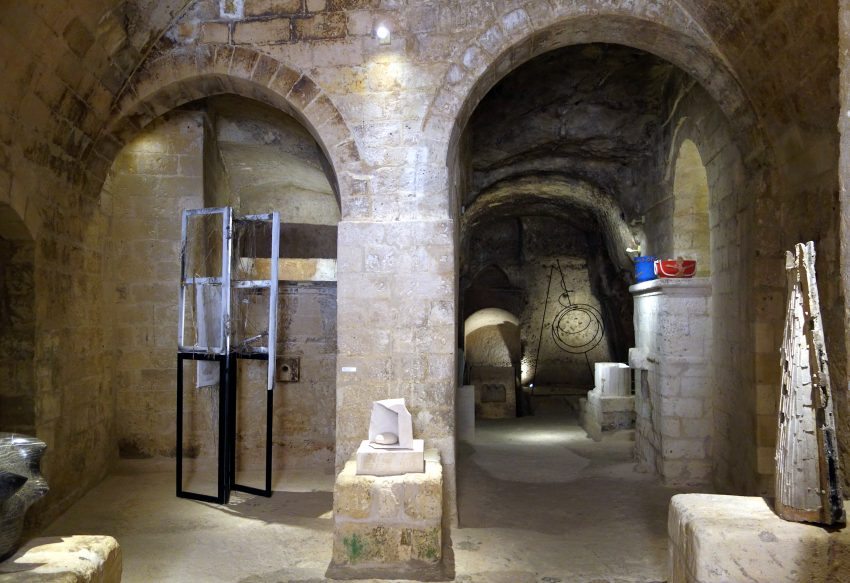
MUSMA (Museo della Scultura Contemporanea di Matera) is a contemporary sculpture museum set inside Palazzo Pomarici, a 17th-century noble residence embedded in the Sassi of Matera’s Sasso Caveoso. Opened in 2006, it threads galleries through refined palace rooms and down into underground tufa caves, so you move between vaulted chambers, cellar-like passages, and raw rock walls. The collection focuses on sculpture from the mid-20th century to today, mixing bronze and marble with more experimental materials, and the setting makes shadow, texture, and scale feel unusually dramatic. Temporary exhibitions and workshops keep it active, but many visitors remember the building itself—cool cave air, echoing spaces, and the sense of exploring as much as viewing art.
Location: Via S. Giacomo, 75100 Matera MT, Italy | Hours: Monday – Thursday: 10:00–14:00. Friday – Sunday: 10:00–18:00. | Price: Check official website. | Website | Distance: 0.7km

21. Casa Grotta di Vico Solitario

Casa Grotta di Vico Solitario
CC BY-SA 4.0 / Holger Uwe Schmitt
Casa Grotta di Vico Solitario is a preserved cave dwelling in Matera’s Sassi that lets you step into everyday life before the 1952 evacuations. Entering through a broad stone arch, you find a single chamber where daily functions were separated by use rather than walls: a front area for cooking and meals, a brazier for heat, and a raised bed once stuffed with corn husks to fight damp. Deeper inside, the space turns utilitarian, with a manger and rough stable area beside tools, pottery, and a loom that underline how work and home overlapped. Look for channels cut into the rock that fed a cistern, showing how survival depended on capturing scarce rainwater.
Location: Vico Solitario, 11, 75100 Matera MT, Italy | Hours: (Winter) January 1 – March 31; Monday – Friday: 09:30–18:00; Saturday – Sunday: 09:30–19:00. (Summer) April 1 – December 31; Monday – Friday: 09:30–19:00; Saturday – Sunday: 09:30–20:00. | Price: Adults: €5; Reduced: €3; Ages 11–18: €2; Under 11: free. | Website | Distance: 0.7km

22. MOOM Matera Olive Oil Museum
MOOM Matera Olive Oil Museum
CC BY-SA 2.0 / Zacharie Grossen
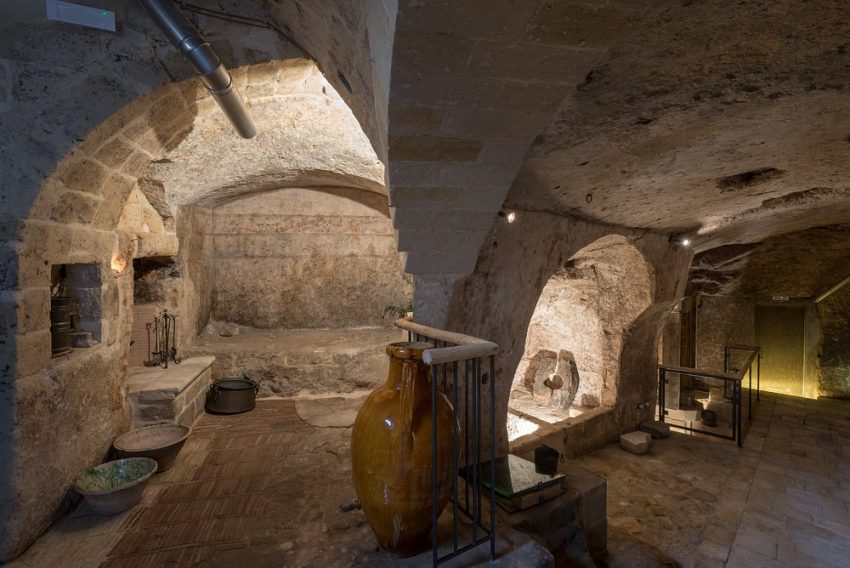
MOOM Matera Olive Oil Museum in Matera, Italy sits inside an ancient hypogeal olive mill carved into the tuff of Sasso Caveoso, with evidence it was operating by the 1600s under church ownership. You enter through a small courtyard where heavy press stones are displayed, then descend into lamp-lit chambers that still read like a working space. The route passes former stables and the muller room, where olives once dropped from an upper storage floor through a hole straight into the grinder, and excavations revealed multiple settling wells. After World War I the mill was repurposed as a wine cellar, a layered afterlife you can still sense in the rooms. The visit ends with an olive oil tasting focused on recognizing quality.
Location: Vico I Casalnuovo, 3, 75100 Matera MT, Italy | Hours: Monday – Sunday: By reservation (24–48 hours notice recommended). | Price: Adults: €7; Reduced: €5; School groups: €3; Under 6: free. | Website | Distance: 0.8km

23. Convicinio di Sant'Antonio

Convicinio di Sant’Antonio
CC BY-SA 3.0 / Sailko
Convicinio di Sant’Antonio is a tight complex of four adjoining rock-cut churches gathered around a small courtyard in Matera’s Casalnuovo district, where worship spaces once sat beside working caves. You enter through an ogival arch into chambers dedicated to San Primo, Sant’Eligio, San Donato, and Sant’Antonio Abate, each with its own carved layout. Inside, visitors notice traces of 14th-century frescoes in the apses, a rainwater cistern near the entrance, and fading painted figures such as San Donato in a miter and a Madonna and Child. The Sant’Antonio Abate chapel is divided into three apsidal naves with sculpted lily crosses on the apse caps. Reviews often mention renovation closures, but the surrounding lanes still feel deeply excavated and lived-in.
Location: Rione Casalnuovo, 75100 Matera MT, Italy | Hours: Check official website. | Price: Check official website. | Distance: 0.9km

24. Santuario di Santa Maria della Palomba
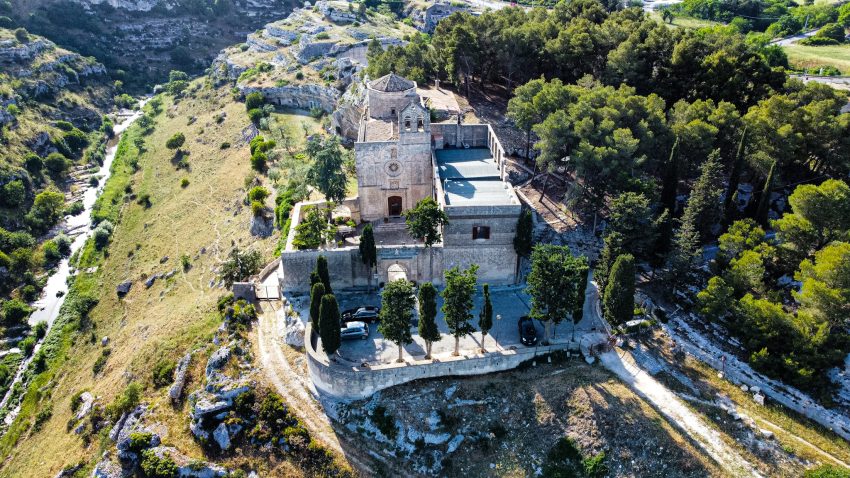
Santuario di Santa Maria della Palomba
CC BY-SA 4.0 / Pipito93
Santuario di Santa Maria della Palomba is a 16th-century sanctuary on Matera’s Gravina edge, built in 1580 over an earlier rock-cut crypt that anchors the area’s long tradition of cave worship. Its portal bears a carved dove—“palomba”—a sign of the Holy Spirit, and the Romanesque-style façade is marked by a rose window and a tuff relief of the Holy Family attributed to Giulio Persio. Inside, a single nave with a barrel vault opens onto side chapels crowded with statues and painted surfaces, while a Madonna Odigitria fresco from the 13th–14th centuries watches from behind the high altar. A passage leads into a later-excavated rock chapel once used to receive pilgrims, and visitors often describe the deeper rooms as a step back in time.
Location: Contrada Pedale della Palomba, SS7, 75100 Matera MT, Italy | Hours: Daily: 08:30–19:00. | Price: Free; donations appreciated. | Distance: 1.5km

Best Day Trips from Matera

A day trip from Matera offers the perfect opportunity to escape the urban rhythm and discover the surrounding region's charm. Whether you're drawn to scenic countryside, historic villages, or cultural landmarks, the area around Matera provides a variety of easy-to-reach destinations ideal for a one-day itinerary. If you are looking to rent a car in Italy I recommend having a look at Discover Cars, first, as they compare prices and review multiple car rental agencies for you.

1. Cripta del Peccato Originale
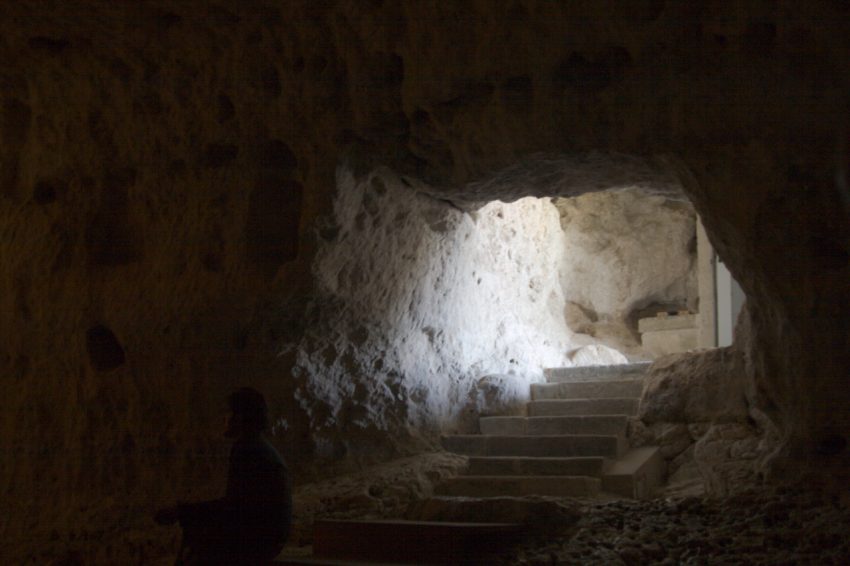
Cripta del Peccato Originale
CC BY-SA 2.0 / Pietro & Silvia
Cripta del Peccato Originale is a small rock-cut cave church outside Matera, in the countryside toward the Murgia plateau. It is one of the city’s most distinctive rupestrian sites, known for a frescoed interior carved directly into the stone and visited by timed entry.The crypt matters because the paintings are closely tied to the cave itself: biblical figures, angels, and…
Location: Contrada Pietrapenta, 75100 Matera MT, Italy | Hours: (Summer) April 1 – September 30; Monday – Sunday: 09:30–18:30. (Winter) October 1 – March 31; Monday – Sunday: 09:30–15:30. | Price: Check official website. | Website | Distance: 6.2km
Visiting Cripta del Peccato Originale

2. Bari

The port of Bari Italy
CC BY-SA 2.0 / loloieg (Laurent Massoptier)
Although it is a leading commercial and industrial center, the bustling port city of Bari offers plenty to charm tourists who pass through on their way to Greece or ports on the eastern Adriatic. Bari serves as the gateway to Puglia’s whitewashed towns, stunning beaches, and unspoiled countryside. This charming, albeit sometimes gritty, city is well worth a visit. The…
Visiting Bari
Powered by GetYourGuide

3. Alberobello

italy Alberobello
italy Alberobello
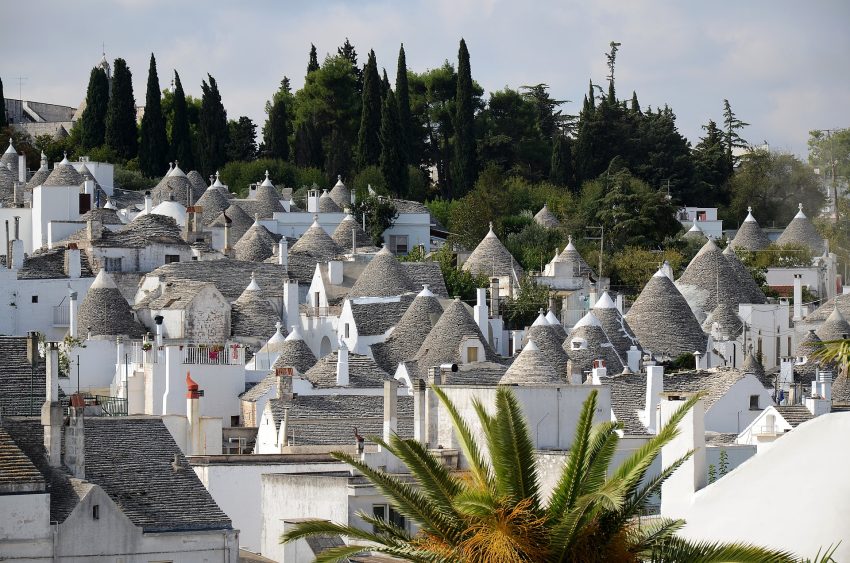
Alberobello, a picturesque town in the Puglia region of southern Italy, is renowned for its unique trulli buildings—traditional dry stone huts with conical roofs. These trulli date back to the 14th century and were originally constructed without mortar to evade taxes on permanent dwellings. In 1996, Alberobello's trulli were designated as a UNESCO World Heritage Site due to their historical…
Visiting Alberobello
Powered by GetYourGuide

4. Taranto

The Complete Guide to Taranto
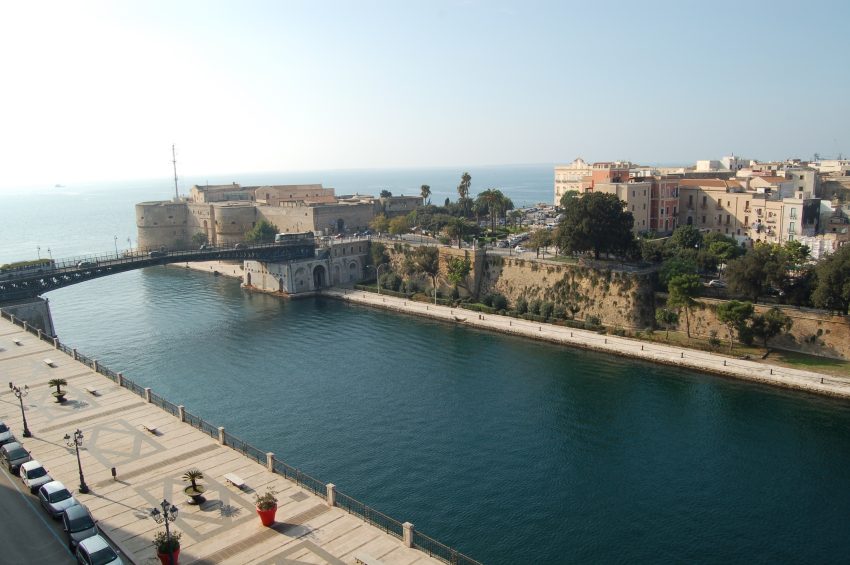
Taranto is a characterful coastal city in southern Italy’s Puglia region, set between the open Ionian Sea and two sheltered inlets that give it a distinctive waterfront feel. It’s a place where you can spend a morning by the water, a lazy afternoon in lively piazzas, and an evening sampling local seafood and Apulian wines without needing a packed itinerary.…
Visiting Taranto

5. Ostuni

The Complete Guide to Ostuni
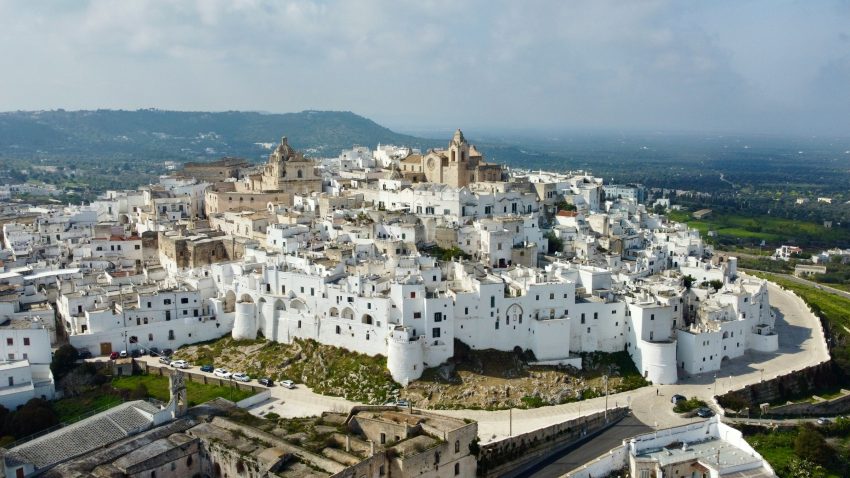
Ostuni is one of Puglia’s most photogenic hill towns, famous for its whitewashed old center that glows in the southern sun. Wandering its steep lanes is the main pleasure: you’ll pass arched passages, small piazzas, viewpoints over olive groves, and a lively mix of artisan shops and wine bars. It’s compact enough to explore on foot, yet full of little…
Visiting Ostuni

6. Castrovillari

Castrovillari
Castrovillari
CC BY-SA 3.0 / Martire Domenico
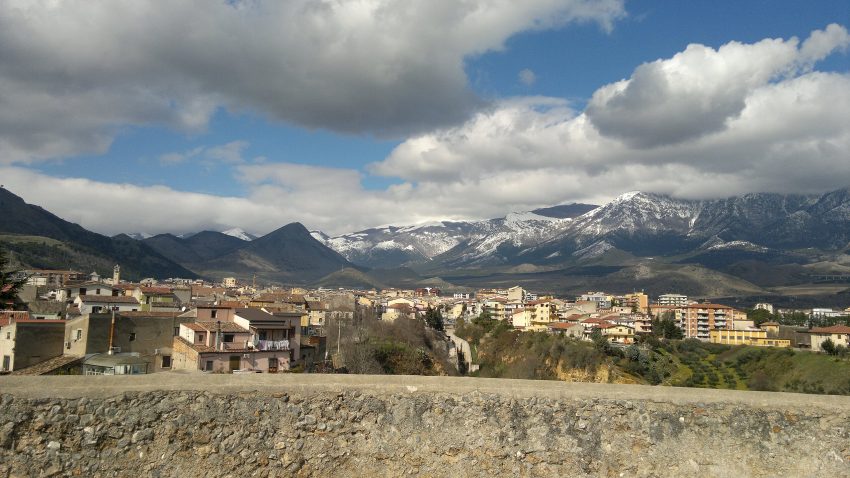
Visiting Castrovillari, a charming town in the Calabria region of southern Italy, offers a journey into a place rich in history and surrounded by natural beauty. Nestled at the foot of the Pollino Massif, Castrovillari serves as a gateway to the Pollino National Park, the largest national park in Italy. The town itself is steeped in history, with its origins…
Visiting Castrovillari

7. Brindisi

Brindisi Harbour
Brindisi Harbour
CC BY-SA 4.0 / Fiurl11
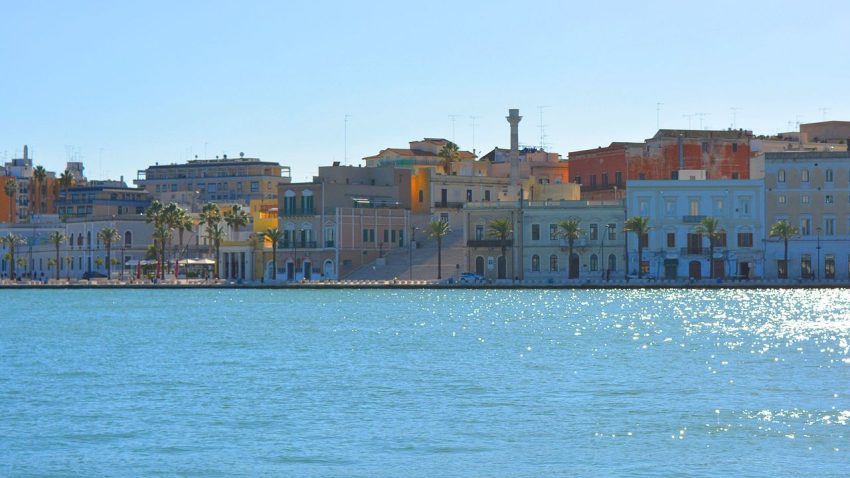
Brindisi is a significant city on the Adriatic coast of Southern Italy in the Apulia region, with a population of just over 88,000. Its natural port has historically been crucial to the region's development, thanks to its strategic location and active trade with Greece and other Adriatic nations. The city's diverse economy includes agriculture, chemical processing, electricity generation, and commercial…
Visiting Brindisi
Powered by GetYourGuide

8. Lecce

Lecce
Lecce
CC BY-SA 1.0 / Bernard Gagnon
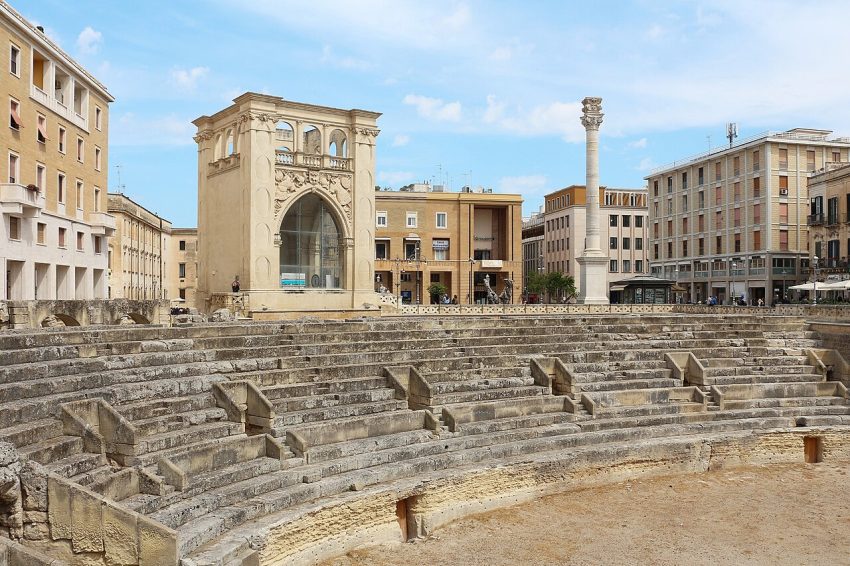
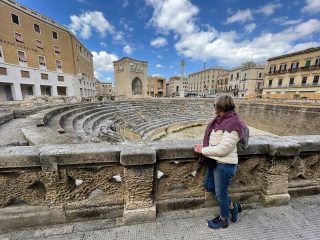
If Lecce, the provincial capital, were not so remotely located at the heel of Italy, its wealth of Baroque architecture would likely make it one of the country's most visited cities. The architects here benefited greatly from the local golden yellow limestone, which is butter-soft and easy to carve. This allowed for the creation of astonishingly intricate and detailed embellishments…
Visiting Lecce
Powered by GetYourGuide

9. Cosenza

Cosenza
Cosenza
CC BY-SA 4.0 / Pianopera
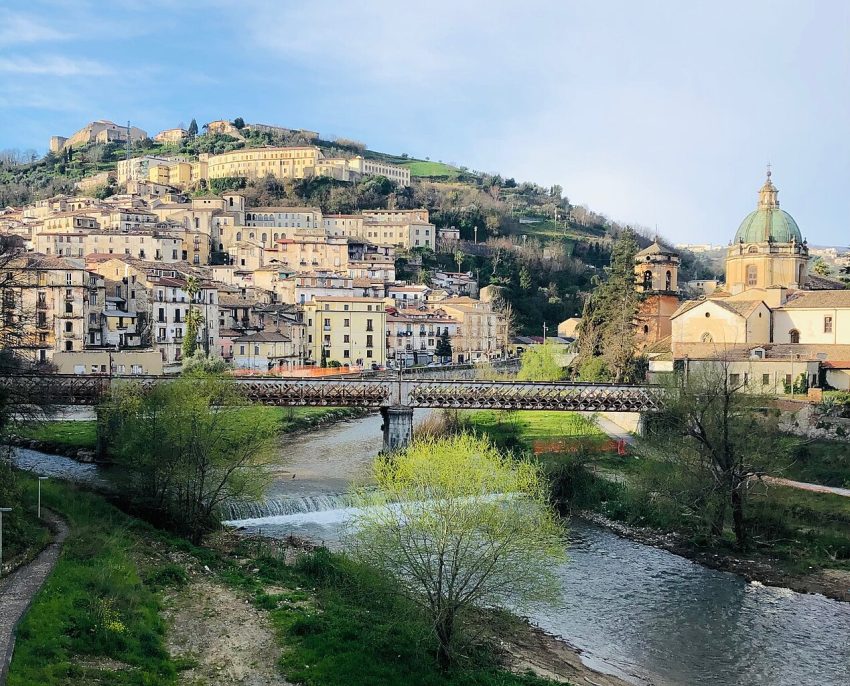
Cosenza, a vibrant city in the Calabria region of southern Italy, offers a rich blend of history, culture, and natural beauty. Known as the "Athens of Calabria," Cosenza is one of Italy's oldest cities, with roots that trace back to ancient times. The city's historic center is a maze of narrow, winding streets, medieval buildings, and charming squares, all centered…
Visiting Cosenza
Powered by GetYourGuide

10. Salerno

Panorama of Salerno
Panorama of Salerno
CC BY-SA 4.0 / Cabalist12
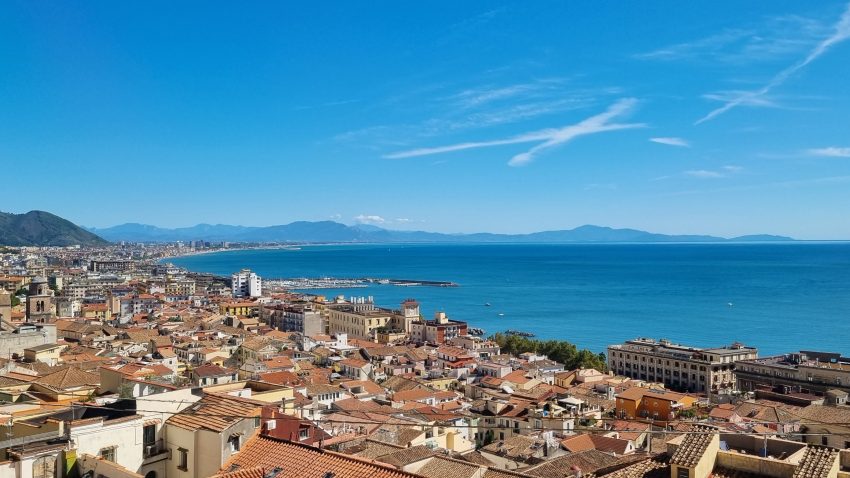
Nestled in the shadow of the soaring Sorrentine Peninsula, Salerno is one of the Campania region’s most overlooked and underrated cities. Combining the convenience of big-city life with the charm of a small town, it remains a delightful place that has yet to be discovered by mass tourism—let’s hope it stays that way! Founded by the Romans in the 2nd…
Visiting Salerno
Powered by GetYourGuide

Where to Stay in Matera

Staying in the Sassi district offers a unique experience, with cave hotels and boutique accommodations carved into the ancient stone dwellings. For a more modern stay, accommodations in the new town provide easy access to the Sassi without the steep climbs.

A 2 to 3-day stay is ideal for exploring the rock-hewn churches, wandering through the Sassi, and enjoying the city’s unique atmosphere. A 4-day stay allows for visiting nearby sites like Alberobello, Metaponto, or the stunning Murgia Materana Park.

Using the our Hotel and Accomodation map, you can compare hotels and short-term rental accommodations in Matera. Simply insert your travel dates and group size, and you’ll see the best deals for your stay.

Matera Accommodation Map

Best Time to Visit Matera

Visiting Matera in Spring (Best)

Spring, from March to May, is the best time to visit Matera. During this season, the weather is mild and pleasant, with temperatures ranging from 15°C to 25°C (59°F to 77°F), making it ideal for exploring the city’s ancient streets and Sassi districts. The city comes alive with blooming flowers, and the landscape around Matera is particularly beautiful. Additionally, spring is less crowded compared to the peak summer months, allowing for a more relaxed and enjoyable experience.

Visiting Matera in Summer

Summer, from June to August, is the peak tourist season in Matera. While the city is bustling with activity, the temperatures can be quite high, often exceeding 30°C (86°F). The heat can make walking around the city a bit challenging, especially during the midday hours. However, the long daylight hours provide ample time to explore, and the city hosts various cultural events and festivals during this season, adding vibrancy to the visit.

Visiting Matera in Autumn

Autumn, from September to November, is another excellent time to visit Matera. The weather is still warm, especially in September and October, with temperatures gradually cooling as the season progresses. The crowds from the summer have thinned out, making it easier to enjoy the city’s attractions. Autumn also brings a unique charm to Matera, with the soft light and changing colors enhancing the beauty of the stone-carved city and its surrounding landscapes.

Visiting Matera in Winter

Winter, from December to February, is the quietest time to visit Matera. The temperatures can be cool, ranging from 5°C to 15°C (41°F to 59°F), but it rarely gets too cold. The city is less crowded, offering a peaceful and reflective atmosphere. Winter is a great time to explore Matera’s indoor attractions, such as its museums and churches, without the rush of tourists. Additionally, visiting during the holiday season can be particularly special, as the city is adorned with festive decorations and lights.

Annual Weather Overview

  • January 12°C
  • February 14°C
  • March 15°C
  • April 19°C
  • May 25°C
  • June 30°C
  • July 32°C
  • August 29°C
  • September 28°C
  • October 24°C
  • November 17°C
  • December 13°C

How to get to Matera

Traveling to Matera by Air

The closest major airports to Matera are Bari Karol Wojtyła Airport (BRI) and Brindisi Salento Airport (BDS). Bari Airport is the most convenient, located about 65 kilometers (40 miles) away from Matera. From either airport, you can rent a car, take a bus, or arrange for a private transfer to reach Matera. The drive from Bari to Matera takes about an hour, while from Brindisi, it's approximately a two-hour drive.

Traveling to Matera by Train

Matera is accessible by train, though it requires some planning. There is no direct national railway connection to Matera, so travelers typically take a train to Bari or Ferrandina-Pomarico-Miglionico station, which is about 30 kilometers (18 miles) from Matera. From these stations, you can take a local train operated by Ferrovie Appulo Lucane (FAL) or a bus to reach Matera. The FAL train from Bari to Matera takes around 1.5 hours.

Traveling to Matera by Car

Driving to Matera is a convenient option, especially if you plan to explore the surrounding region. Matera is well-connected by road, with the SS99 and SS7 highways providing direct access to the city. If you're coming from Bari, the drive takes about an hour, and from Naples, it's around 3.5 hours. Having a car allows you the flexibility to explore Matera and its scenic surroundings at your own pace.

Traveling to Matera by Bus

Several bus companies operate routes to Matera from major Italian cities. Direct buses run from Bari, Naples, Rome, and other cities, making it an accessible option for those who prefer not to drive. The bus ride from Bari to Matera takes approximately 1.5 hours. Matera's main bus station is conveniently located near the city center, making it easy to reach your accommodation or start exploring the city as soon as you arrive.
More from this area