Budapest, Hungary: The Ultimate Travel Guide 2026
The Complete Guide to Budapest

Budapest is one of Europe's most visually dramatic capitals, stretched across the Danube where the hills of Buda face the broad avenues and grand facades of Pest. In Central Hungary, it combines imperial architecture, riverside panoramas, thermal bath culture, neighborhood cafés, and a cityscape shaped as much by bridges and domes as by everyday street life. First-time visitors often come for the Parliament, Castle Hill, and the famous baths, but the city's real appeal lies in how naturally the monumental and the lived-in sit side by side. Trams skim the waterfront, church towers rise above busy shopping streets, and market halls, bathhouses, and old apartment blocks still feel embedded in ordinary life rather than staged for visitors. Budapest suits travelers who want a major European capital with strong visual identity, rich history, and enough variety to reward both short breaks and slower stays.

Buda and Pest each give the city a different mood. Buda feels greener, hillier, and more residential, with Castle Hill, lookouts, old lanes, and wider views over the river and bridges. Pest is flatter, busier, and more urban, with monumental boulevards, nightlife streets, synagogue quarters, museums, markets, and grand 19th-century buildings that make the center feel both stately and lively. What makes Budapest especially satisfying is how easy it is to experience these contrasts in a single day, whether by crossing the Chain Bridge on foot, riding the riverside trams, or moving from a church square to a bath complex to a late-evening bar district. Travelers interested in architecture, history, city walks, spa culture, and food will find more range here than the skyline alone suggests.

The city is also unusually strong for atmosphere. Morning light on the river, late-afternoon climbs to Castle District viewpoints, and evening reflections around the Parliament all make Budapest feel theatrical without becoming artificial. It is a place where major sights are often best appreciated not just as isolated attractions, but as part of a wider urban rhythm that includes market lunches, coffee stops, hilltop walks, and long views across the Danube. Even the best-known landmarks work as pieces of a larger whole: Parliament opposite Castle Hill, St. Stephen's Basilica rising from central Pest, and the baths reminding visitors that Budapest's identity is tied as much to water and geology as to architecture. For travelers who like cities that are grand, walkable, and full of distinct neighborhoods, Budapest is one of the strongest bases in Central Europe.

History of Budapest

Roman Foundations and the Early Settlements

The Budapest area was important long before the modern capital existed. In Roman times, Aquincum, on the western side of today’s city, served as a significant settlement and military center in the province of Pannonia. Its remains still help explain why this stretch of the Danube became such an enduring urban focus: it was a defensible river crossing, a trade route, and a natural meeting point between landscapes that looked very different on either bank.

After the Roman era, the region passed through changing political and cultural phases before becoming tied to the early Hungarian state. The settlement history of the area was never linear, but the geography that now feels so distinctive to visitors, hills on one side, open lowland on the other, was already shaping how communities developed here.

The Medieval Kingdom and the Rise of Buda

Buda became increasingly important in the medieval Kingdom of Hungary, especially after the Mongol invasion of the 13th century encouraged stronger fortification and more defensible urban development. Castle Hill emerged as the key political and strategic center, and over time the area became associated with royal authority, administration, and church power. Much of what visitors now experience in the Castle District is later in appearance, but its importance is rooted in these medieval foundations.

Across the river, settlements that would later form part of Pest developed with a different character, more open, commercial, and closely tied to trade. This duality between elevated Buda and expansive Pest is not just scenic today; it reflects a long historical pattern that shaped the city’s identity well before unification.

Ottoman Rule, Habsburg Control, and Rebuilding

The Ottoman conquest in the 16th century changed the city profoundly. Buda was incorporated into the Ottoman world for roughly a century and a half, leaving traces that still survive most clearly in bath culture and a few built remnants. When Habsburg forces retook the city in the late 17th century, large parts of Buda were damaged, and what followed was not a simple restoration but a long period of rebuilding and redefinition.

Under Habsburg rule, the urban landscape gradually took on more of the Baroque and later imperial character that visitors now associate with Central European capitals. The city’s layers are therefore not the product of a single golden age, but of repeated destruction, adaptation, and rebuilding under changing powers.

The Unification of Budapest and the 19th-Century Boom

The modern city was formally created in 1873 through the unification of Buda, Pest, and Óbuda. This was the decisive turning point in Budapest’s development, because it transformed a set of related settlements into a single capital with metropolitan ambitions. The late 19th century then brought a period of enormous expansion, especially during the Austro-Hungarian era, when boulevards, public buildings, bridges, transport infrastructure, and landmark institutions gave Budapest much of its present monumental form.

Many of the city’s most recognizable buildings belong to this period or grew out of its confidence and scale. Parliament, grand avenues, elegant apartment blocks, major churches, and many civic institutions all reflect a city presenting itself as one of Europe’s major capitals rather than a regional center.

War, Occupation, and the 20th Century

The 20th century brought some of Budapest’s darkest chapters. The city was deeply affected by the Second World War, the Holocaust, and the brutal Siege of Budapest, which caused severe destruction to buildings, bridges, and neighborhoods. Later, the postwar Communist period reshaped urban life again, not by erasing the older city completely, but by imposing new political meanings, housing patterns, and public uses onto an inherited imperial fabric.

The 1956 Hungarian uprising also left a lasting mark on the city’s memory. Even where buildings have been restored or repurposed, Budapest’s streets still carry the emotional weight of these upheavals, especially around memorials, riverfront sites, and districts tied to wartime and 20th-century political history.

Budapest Today

Since the end of state socialism, Budapest has reasserted itself as a major European capital while retaining a visibly layered urban identity. Restorations, new cultural venues, revived markets, bath complexes, riverfront projects, and re-energized nightlife districts have all contributed to a city that feels both historic and active. Yet what makes Budapest especially compelling is that its past remains legible: Roman traces, medieval street patterns, Ottoman baths, imperial grandeur, wartime scars, and late-20th-century adaptations still coexist.

For visitors, this means Budapest is not a city of one story or one architectural style. Its character comes from continuity through change, and that is why walking through it can feel so rich: the city’s beauty is inseparable from the political, cultural, and social layers that created it.

Moira & Andy
Moira & Andy

Hey! We're Moira & Andy. From hiking the Camino to trips around Europe in Bert our campervan — we've been traveling together since retirement in 2020!

Read our full story here

Visiting Budapest for the first time and wondering what are the top places to see in the city? In this complete guide, I share the best things to do in Budapest on the first visit. To help you plan your trip, I have also included an interactive map and practical tips for visiting!

This website uses affiliate links which earn a small commission at no additional cost to you.

More from this area

18 Best places to See in Budapest

This complete guide to Budapest not only tells you about the very best sights and tourist attractions for first-time visitors to the city but also provide insights into a few of our personal favorite things to do.

This is a practical guide to visiting the best places to see in Budapest and is filled with tips and info that should answer all your questions!

1. Castle Hill
Castle Hill
Castle Hill
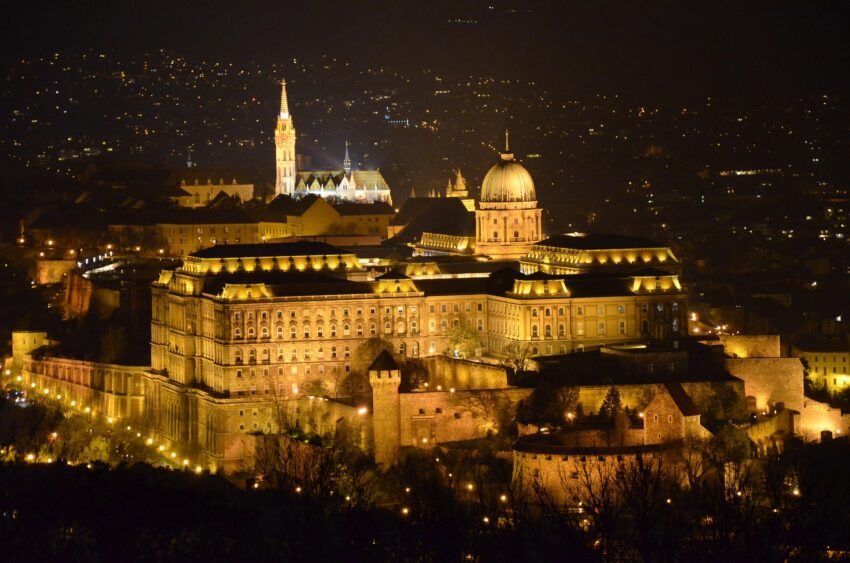
Castle Hill (Várhegy) is the high ground on the Buda side of Budapest, crowned by the Buda Castle District and threaded with elegant streets, courtyards, and viewpoints looking across the Danube to Pest. It’s the kind of area where you can come for a single landmark photo and end up lingering for hours, moving between church spires, ramparts, museums, and…
Location: Budapest, Várhegy, 1013 Hungary | Hours: 24 Hours. | Price: Free. | Website | Distance: 0.1km


Here is a complete selection of hotel options in Budapest. Feel free to review each one and choose the stay that best suits your needs.

2. Buda Castle

Buda Castle
Buda Castle
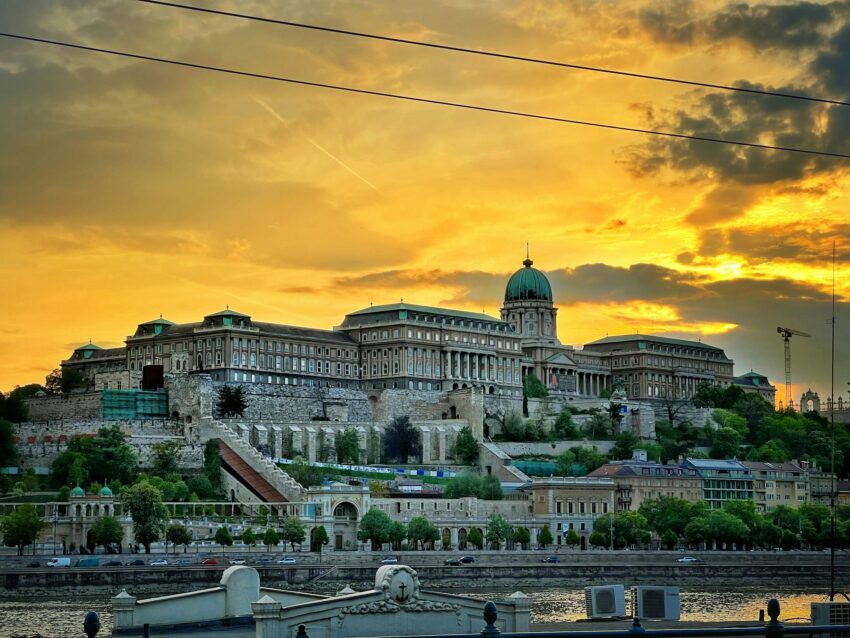
Buda Castle sits high on Buda Hill in Budapest, a sprawling royal-palace complex that dominates the skyline above the Danube and the city’s bridges. It’s one of the best places to see how Budapest’s geography shapes the experience: steep approaches, sudden panoramas, and long terraces that pull your gaze across to Pest.Many visitors first encounter it on a walking tour…
Location: Budapest, Castle Hill, Hungary | Hours: 24 Hours. | Price: Free (castle grounds); museums and exhibitions inside require tickets. | Distance: 0.2km

Traveling to a country with a different currency? Avoid ATM transaction fees and pay in local currency with a Wise Card. Having used it for over 5 years, we've saved loads on fees!

3. Castle Bazaar

Castle Bazaar
Castle Bazaar
CC BY-SA 3.0 / Андрей Бобровский
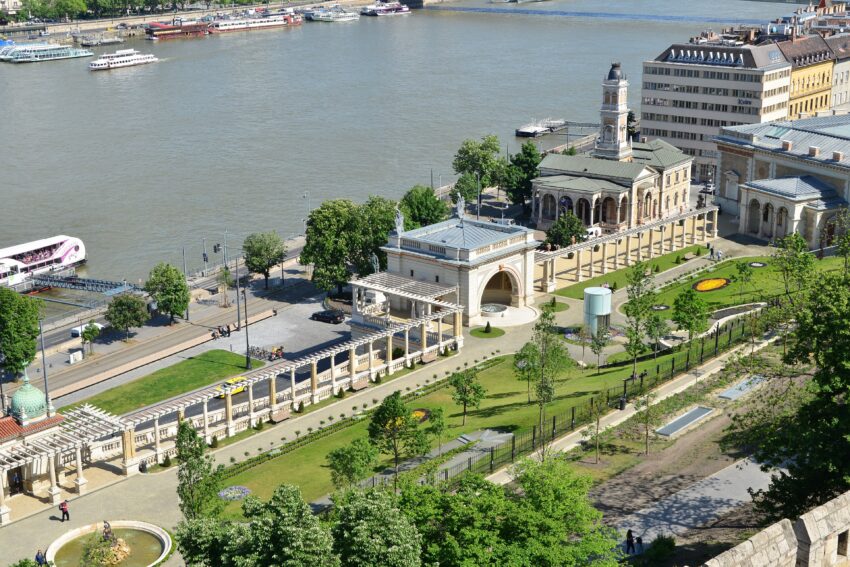
Castle Garden Bazaar, often still called Castle Bazaar in English, is one of the most elegant places to linger on the Buda side of the Danube. Sitting at the foot of Castle Hill between the riverfront and the royal quarter above, it combines gardens, terraces, arcades, stairways, and historic architecture in a way that feels both monumental and relaxed. What…
Location: Budapest, Castle Garden Bazaar, Ybl Miklós tér, Hungary | Hours: Daily: 09:00–17:00. | Price: Free to enter the Neo-Renaissance Garden and public outdoor areas. Tickets are required for some exhibitions and events, with prices varying by programme. | Website | Distance: 0.4km

4. Chain Bridge
Chain Bridge
Chain Bridge
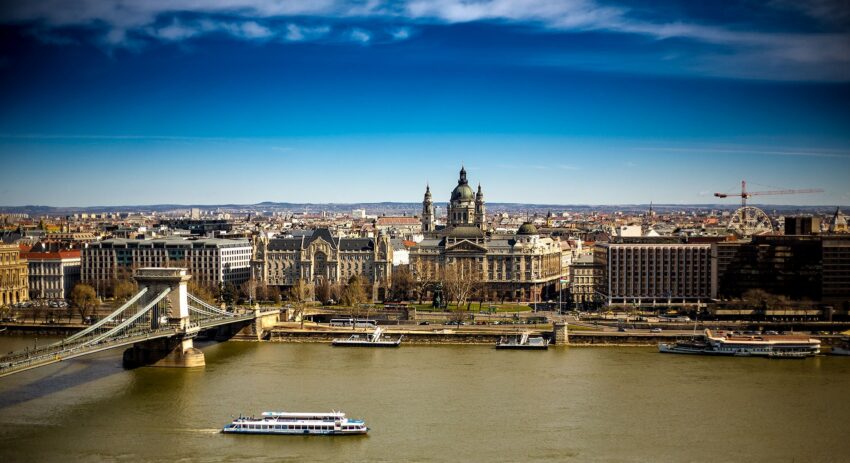
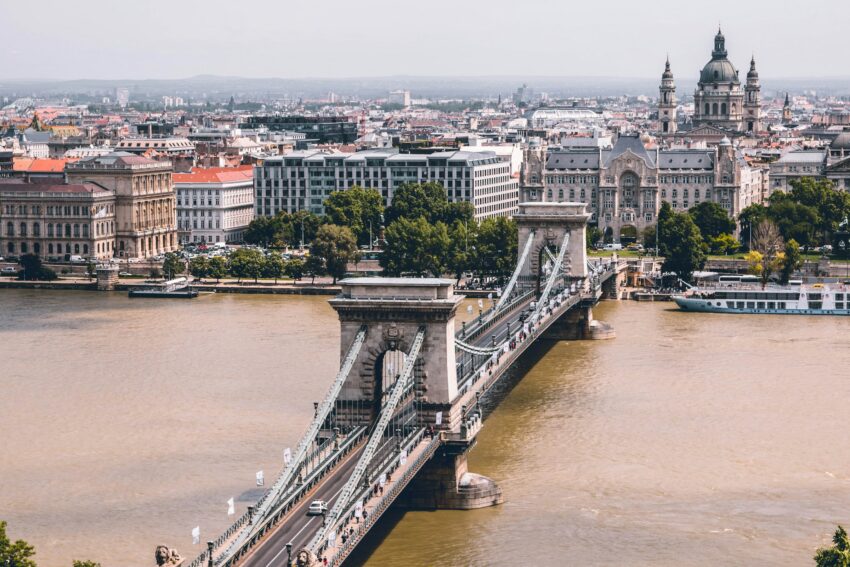
The Chain Bridge, or Széchenyi Lánchíd, is the most famous crossing over the Danube in Budapest and one of the clearest symbols of how Buda and Pest became a single city in the imagination of travelers. It links Széchenyi István tér on the Pest side with Clark Ádám tér at the foot of Castle Hill, so even a simple walk…
Location: Budapest, Széchenyi Lánchíd, Hungary | Hours: 24 Hours. | Price: Free. | Distance: 0.5km

5. Fisherman's Bastion
Fisherman’s Bastion
Fisherman’s Bastion
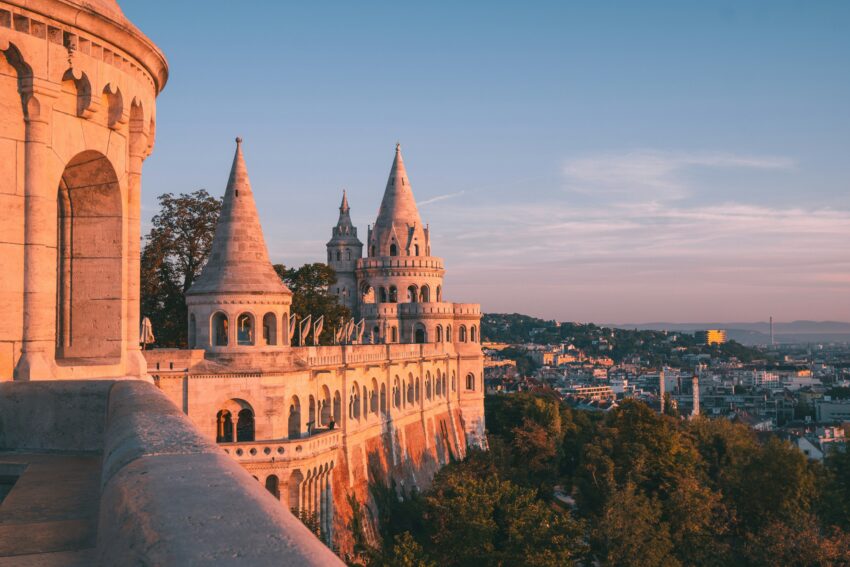
Fisherman’s Bastion sits on Budapest’s Castle Hill in the Buda side of the city, directly beside Matthias Church, where its pale stone arcades and turrets frame some of the city’s most memorable views. It’s one of the best places to see Budapest from above, especially if you’re joining a Castle District walking tour and want a dramatic panorama without a…
Location: Budapest, 1014 Hungary | Hours: Daily: Open 24 hours (terraces); Ticketed upper viewpoints: 09:00–19:00 (January 2 – May 31 & October 1 – December 23) / 09:00–21:00 (June 1 – September 30). | Price: Lower terraces: Free. Upper viewpoints/turrets (on-site, card only): HUF 1,700; discounts available; children 0–5: free. | Website | Distance: 0.6km

6. Matthias Church
Matthias Church
Matthias Church
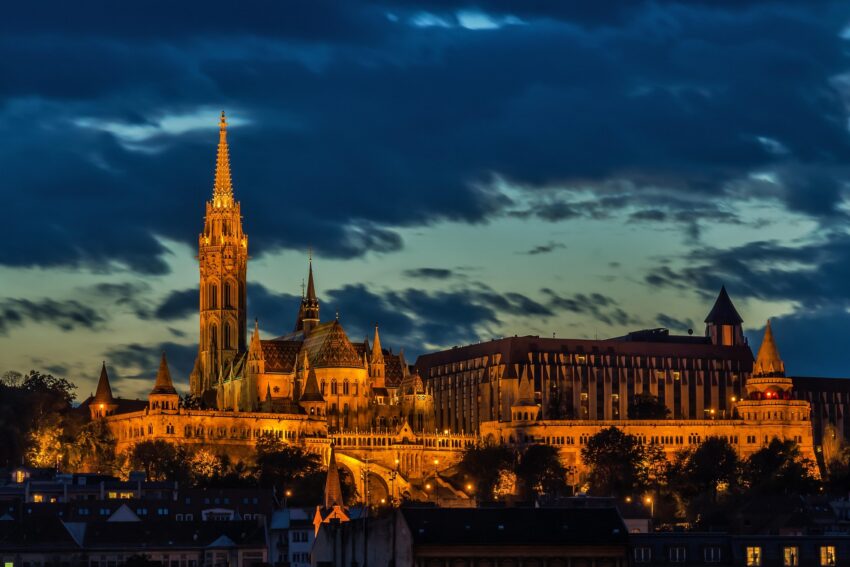
Matthias Church (officially the Church of Our Lady) sits in Budapest’s Castle District on Szentháromság tér, right by the postcard viewpoints around Fisherman’s Bastion. Even if you’re only passing through on a walking tour of the best places to see in Buda, the church’s steep spire and brightly patterned roof tiles are hard to ignore.Step inside and the mood changes…
Location: Budapest, Szentháromság tér 2, 1014 Hungary | Hours: Monday – Friday: 09:00–17:00. Saturday: 09:00–12:00. Sunday: 13:00–17:00. | Price: Adults (church): 3,400 HUF; Students: 2,700 HUF; Seniors: 2,700 HUF; Under 6: free; Tower: 4,000 HUF. | Website | Distance: 0.7km

7. Shoes on the Danube Bank
Shoes on the Danube Bank
CC BY-SA 4.0 / kallerna
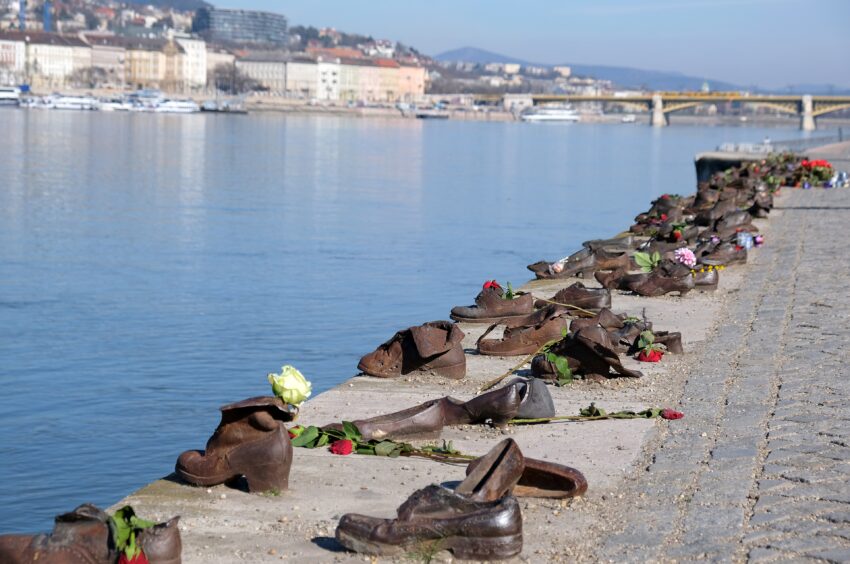
The Shoes on the Danube Bank is a moving outdoor memorial on the Pest side of the Danube, set along the riverside promenade with views across to Buda. Dozens of iron shoes line the stone edge of the river, placed at ground level so you encounter them up close rather than from a distance.It’s often included on walking tours and…
Location: Budapest, 1054 Hungary | Hours: 24 Hours. | Price: Free. | Distance: 0.8km

8. St. Stephen's Basilica
St. Stephens Basilica
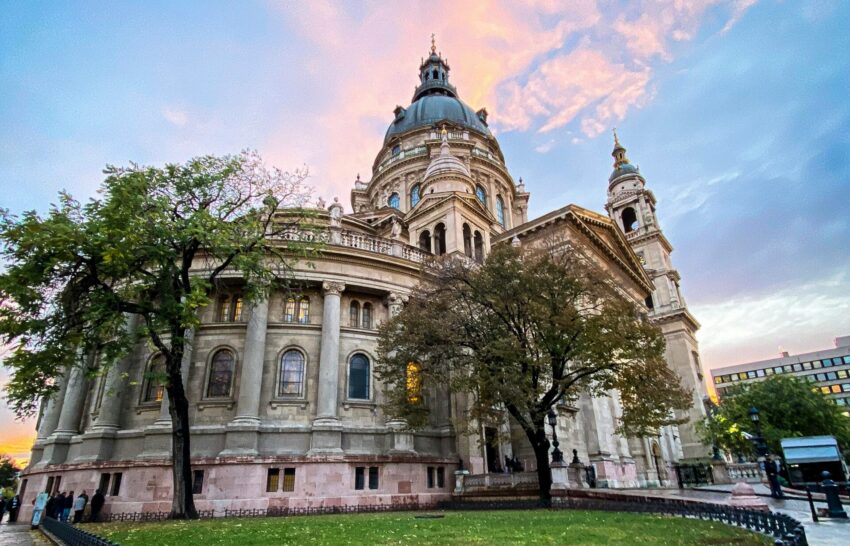
St. Stephen’s Basilica (Szent István Bazilika) anchors Szent István tér in the heart of Pest, and it’s one of those Budapest landmarks you can appreciate from the square even before you step inside. The Neoclassical façade, twin bell towers, and the 96-meter dome make it a natural focal point on any first-time itinerary.It also fits perfectly into a walking tour…
Location: Budapest, Szent István tér 1, 1051 Hungary | Hours: Monday – Saturday: 09:00–17:45. Sunday: 13:00–17:45. Monday – Sunday: 09:00–19:00. | Price: Church entry (adult): 2600 Ft; Panoramic Terrace & Treasury (adult): 5000 Ft; All-in-one (adult): 6800 Ft. | Website | Distance: 1km

9. Hungarian Parliament Building
Hungarian Parliament Building
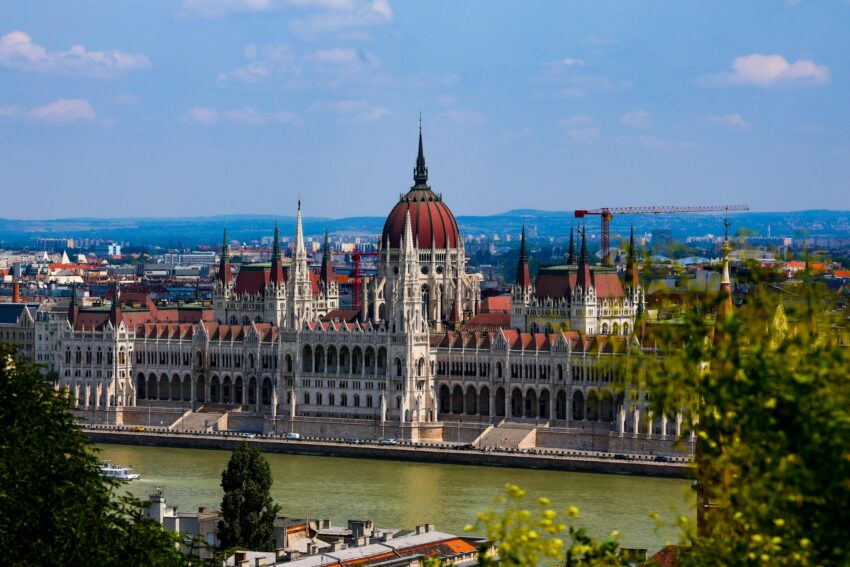
The Hungarian Parliament Building (Országház) is Budapest’s most recognizable landmark, rising in neo-Gothic splendor directly on the Pest bank of the Danube. Even if you only admire it from outside, the symmetry, spires, and riverside setting make it a must-see on any first trip to Hungary’s capital.For many travelers, the best way to experience it is to combine viewpoints: see…
Location: Budapest, Kossuth Lajos tér 1-3, 1055 Hungary | Hours: (Summer) April 1 – October 31; Monday – Sunday: 08:00–18:00. (Winter) November 1 – March 31; Monday – Sunday: 08:00–16:00. | Price: Check official website. | Website | Distance: 1km

10. Vaci Street
Vaci Street
Vaci Street
CC BY-SA 4.0 / Christo
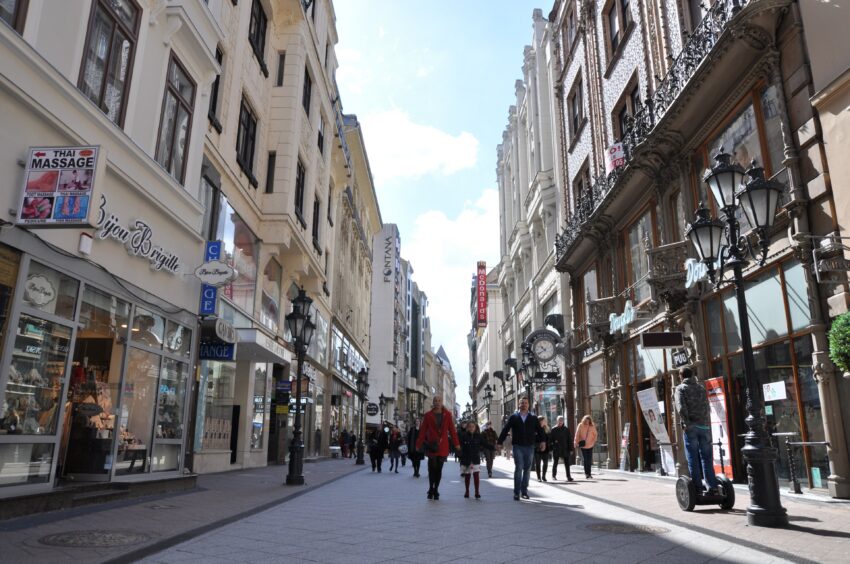
Váci Street (Váci utca) is a long, pedestrian-only avenue cutting through central Pest in Budapest, lined with shops, cafés, bars, and restaurants that keep the street busy from late morning into the evening. It’s an easy, linear walk that connects major city squares and river-adjacent streets, so you’ll often end up here naturally even if you didn’t plan to.It also…
Location: Budapest, Váci u, Hungary | Hours: 24 Hours. | Price: Free. | Distance: 1.1km

11. Gellert Hill
Gellert Hill
Gellert Hill
CC BY-SA 3.0 / IIya Kuzhekin
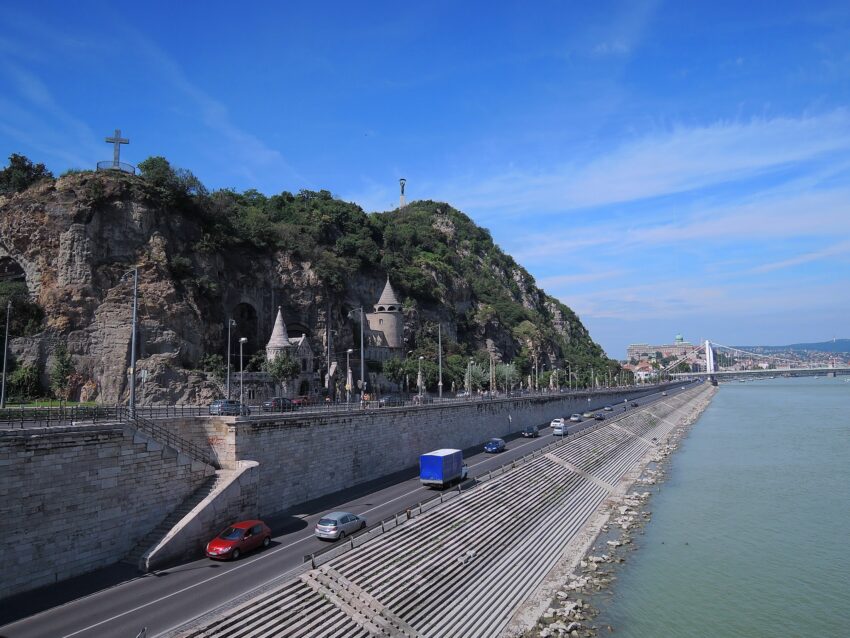
Gellért Hill is the steep, green rise on Budapest’s Buda side that lifts you above the Danube for a full-city panorama—bridges, river bends, and the layered skyline of Pest all in one sweep. It’s a natural viewpoint first and foremost, with walking paths that reveal new angles every few minutes as you climb.It’s also a place where Budapest’s story is…
Location: Budapest, Gellért Hill, 1016 Hungary | Hours: 24 Hours. | Price: Free. | Distance: 1.4km

12. Gozsdu Courtyard
Gozsdu Courtyard
Gozsdu Courtyard
CC BY-SA 3.0 / Globetrotter19
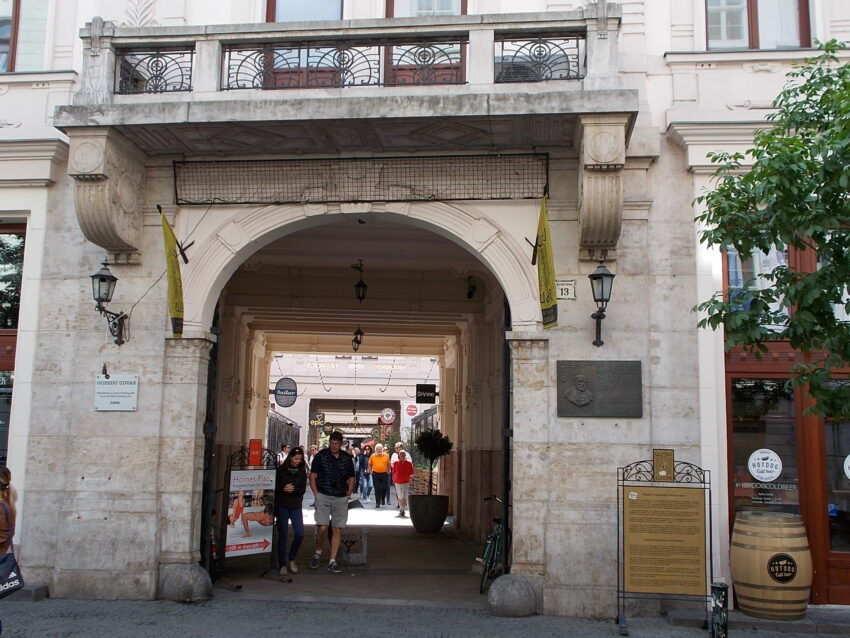
Gozsdu Courtyard is a connected chain of passageways and inner courtyards in central Budapest, tucked into the Jewish Quarter (District VII) between Király Street and Dob Street. It’s the kind of place you can walk through in five minutes, then end up lingering for an hour because there’s always another terrace, another little shopfront, or another pocket of music echoing…
Location: Budapest, Gozsdu Udvar, 1075 Hungary | Hours: 24 Hours. | Price: Free. | Website | Distance: 1.4km

13. Great Synagogue
Great Synagogue
Great Synagogue
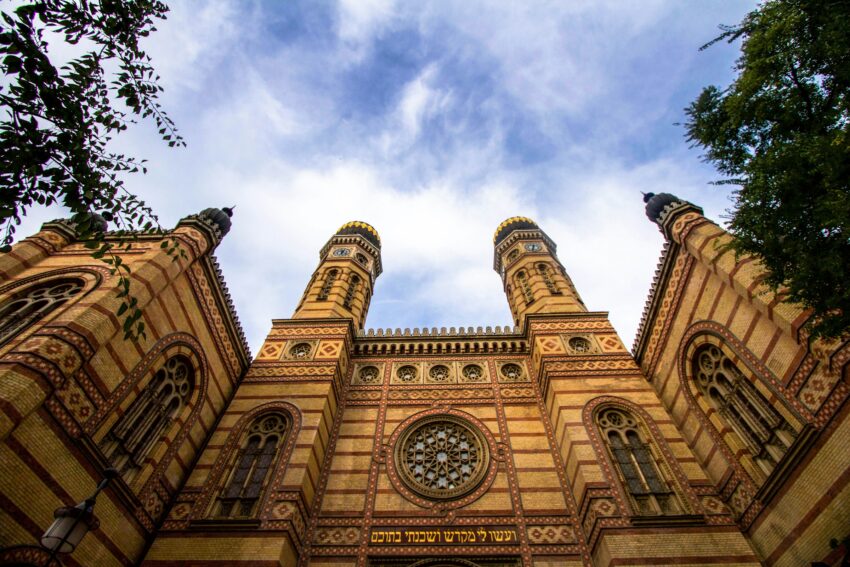
Budapest’s Great Synagogue (often called the Dohány Street Synagogue) rises in the heart of Pest’s Jewish Quarter, a few minutes’ walk from the city’s busiest boulevards yet emotionally worlds apart. Built in the 1850s for the Neolog Jewish community, it is among the largest synagogues on earth, and its striped brickwork, twin octagonal towers, and onion domes make it one…
Location: Budapest, Dohány u. 2, 1074 Hungary | Hours: (Seasonal) Sunday – Thursday: 10:00–16:00 (January 7 – February 28); 10:00–18:00 (March 1 – April 30); 10:00–20:00 (May 1 – September 30); 10:00–18:00 (October 1 – October 31); 10:00–16:00 (November 2 – December 31). (Seasonal) Friday: 10:00–16:00 (March 1 – October 31); 10:00–14:00 (November 2 – December 31). Saturday: Closed. | Price: Adults: 14500 HUF; Students: 12000 HUF. | Website | Distance: 1.5km

14. Kazinczy Street
Kazinczy Street
Kazinczy Street
CC BY-SA 3.0 / Globetrotter19
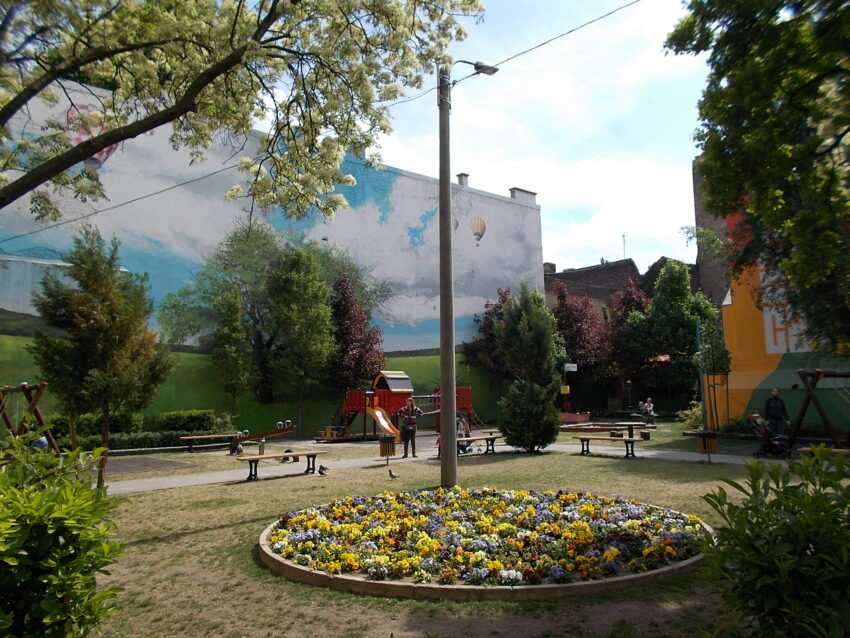
Kazinczy Street sits in the heart of Budapest’s District VII (the Jewish Quarter), a compact area where heritage sites, casual eateries, and nightlife all share the same few blocks. It’s the kind of place many travelers first encounter on a walking tour, then return to later for dinner, street food, or a drink.What makes Kazinczy Street memorable is the constant…
Location: Budapest, Kazinczy u., Hungary | Hours: 24 Hours. | Price: Free. | Distance: 1.7km

15. Gellert Spa Bath
Gellert Spa Bath
Gellert Spa Bath
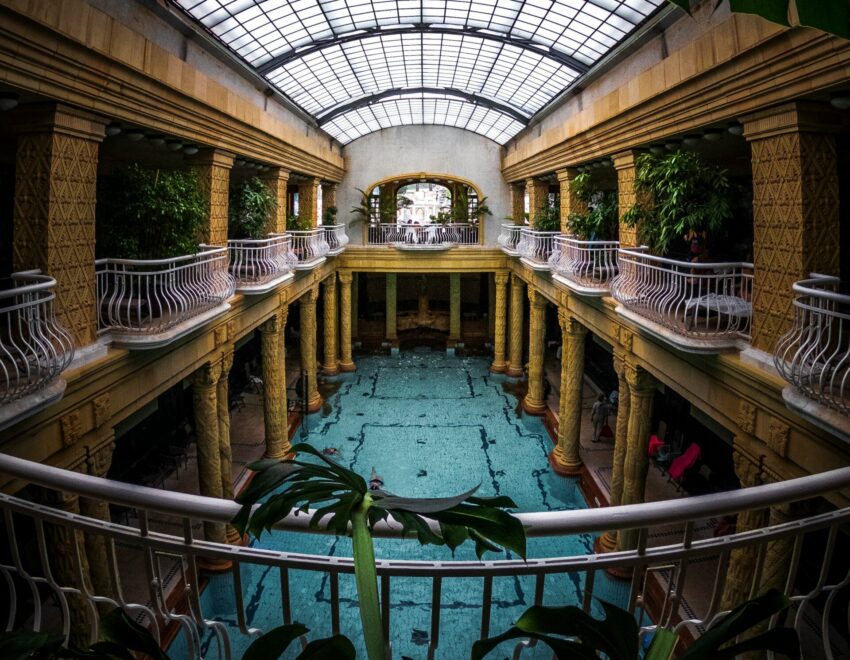
Gellert Spa Bath (Gellért Gyógyfürdő) is one of Budapest’s most visually striking thermal baths, set at the foot of Gellért Hill on the Buda side, near the Danube and the Liberty Bridge. It’s attached to the historic Hotel Gellért and is best known for an Art Nouveau interior that turns a simple soak into something closer to a museum visit.Even…
Location: Budapest, Kelenhegyi út 4, 1118 Hungary | Hours: Closed for renovation (closed from October 1, 2025; planned reopening in 2028). | Price: Check official website. | Website | Distance: 1.8km

16. Central Market Hall
Central Market Hall
Central Market Hall
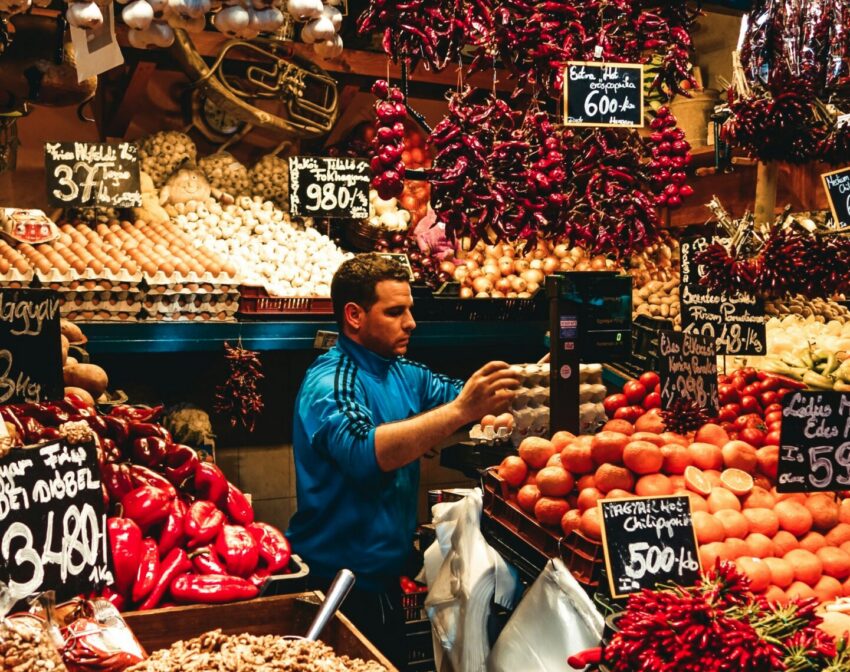
Budapest’s Central Market Hall sits by Fővám Square on the Pest side of the Danube, right near Liberty Bridge and the southern end of Váci Street. It’s the kind of place you can drop into on a walking tour for a quick look at the architecture, then end up staying because the smells, colors, and snack options keep pulling you…
Location: Budapest, 1093 Hungary | Hours: Monday – Friday: 06:00–18:00. Saturday: 06:00–16:00. Sunday: 10:00–16:00. | Price: Free. | Website | Distance: 1.8km

17. Budapest Zoo and Botanical Garden
Budapest Zoo and Botanical Garden
CC BY-SA 4.0 / 12akd
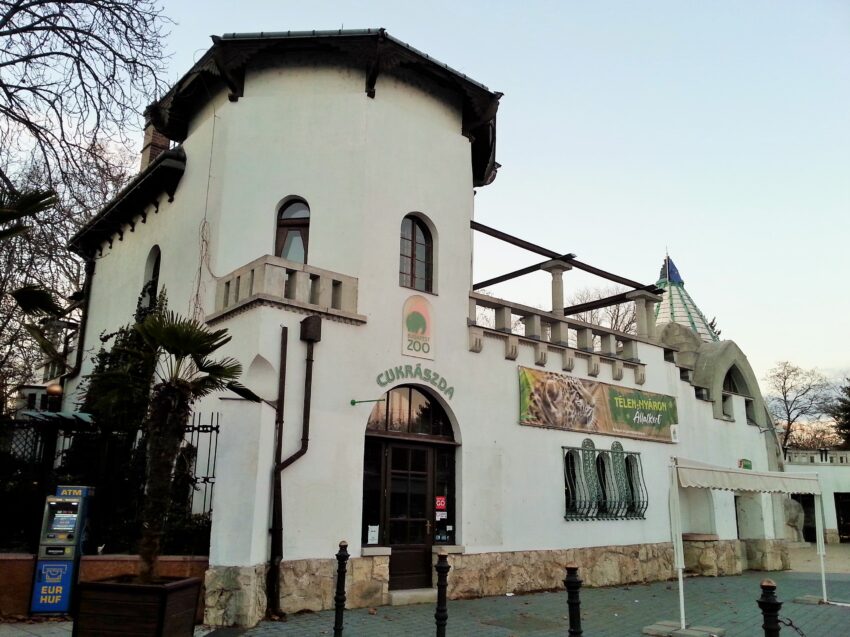
Budapest Zoo and Botanical Garden sits inside Budapest’s City Park (Városliget), a green pocket on the Pest side where museums, promenades, and landmark buildings cluster within an easy ride of the center. It’s a working zoo and botanical garden in one, so your day naturally alternates between animal habitats, indoor houses, and surprisingly pretty architectural details.Because it’s so central, the…
Location: Budapest, Állatkerti krt. 6-12, 1146 Hungary | Hours: Check official website. | Price: Adults: 5 900 HUF; Children (2–18): 4 200 HUF; Students (with ISIC): 4 200 HUF; Seniors (65+): 4 200 HUF; Under 2: 400 HUF. | Website | Distance: 3.6km

18. City Park
City Park
City Park
CC BY-SA 3.0 / AwOiSoAk KaOsIoWa
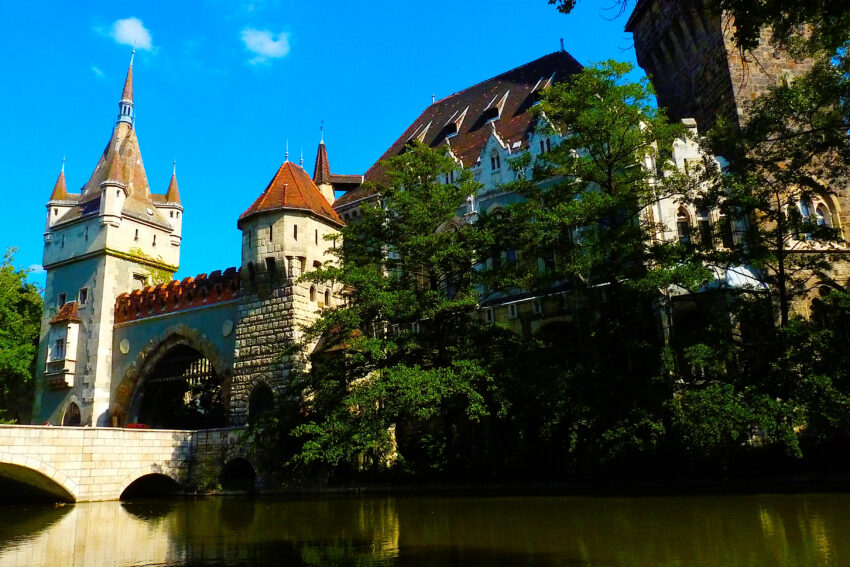
Budapest City Park (Városliget) is the city’s classic “big park” zone: a broad, walkable green space just beyond Heroes’ Square, where locals come to stretch out on the grass, jog the paths, or take a slow loop past lakes, museums, and playgrounds.It also fits naturally into a first-time itinerary, whether you’re ticking it off among the best places to see…
Location: Budapest, City Park, 1146 Hungary | Hours: 24 Hours. | Price: Free. | Website | Distance: 3.9km

Where to Stay in Budapest

p>For most first-time visitors, the best base is central Pest. It gives you the easiest access to major sights such as Parliament, St. Stephen’s Basilica, the Danube embankment, shopping streets, and many of the city’s best-connected tram and metro routes. It also works well if you want cafés, evening atmosphere, and the flexibility to return to your hotel between sightseeing stops without losing much time.

The area around the Inner City, Lipótváros, and the central Danube-side districts is especially strong for travelers who want classic Budapest at the doorstep. Staying around Aria Hotel Budapest or Hotel Moments Budapest suits visitors who want elegant surroundings and quick access to central landmarks, while Prestige Hotel Budapest works well for those who want a calmer but still very central base near the river and Parliament-side streets.

If nightlife, bars, and a more energetic urban feel matter most, look toward the Jewish Quarter and the wider District VII area. This part of Pest is ideal for travelers who want Budapest after dark as much as Budapest by day, with easy access to courtyard bars, restaurant streets, and late evening walks back through lively neighborhoods. Stories Boutique Hotel and Continental Hotel Budapest both fit travelers who want to stay close to the city’s most animated central districts.

Buda is the better choice for travelers who prioritize quieter evenings, greener surroundings, and proximity to Castle Hill or panoramic viewpoints over central nightlife. It can feel more residential and less hurried, especially after day visitors leave the main hilltop areas. That said, for a first trip focused on seeing as much as possible on foot and by public transport, central Pest remains the easiest and most efficient all-round base.

Using the our Hotel and Accomodation map, you can compare hotels and short-term rental accommodations in Budapest. Simply insert your travel dates and group size, and you’ll see the best deals for your stay.

Budapest Accommodation Map

Best Time to Visit Budapest

Spring

Spring is one of the most rewarding times to visit Budapest, especially from April onward when the city’s parks, promenades, and café terraces begin to fill out again. Temperatures are usually comfortable for walking, and the light is often particularly good for river views, hilltop lookouts, and long afternoons in the Castle District or around City Park. Crowds are generally lighter than in peak summer, so this season works well for travelers who want a balance of activity and breathing room.

Summer (Best)

Summer brings Budapest’s most energetic atmosphere, with long daylight hours, busy riverfronts, outdoor dining, evening cruises, and a city that feels fully in motion. This is the best season for terrace culture, late sunsets over the Danube, and combining major sightseeing with baths, rooftop bars, and open-air events. It is also the busiest and warmest time of year, so central areas can feel crowded, but for many first-time visitors the city’s full visual drama is at its strongest in summer.

Autumn

Autumn often feels calmer and more textured than summer, with softer light, cooler air, and a slightly less hurried pace in the main visitor districts. It is an excellent season for museums, thermal baths, longer walks, and views from Buda when the surrounding trees begin to change color. Early autumn in particular can be ideal for travelers who want city energy without peak-season pressure.

Winter

Winter gives Budapest a more atmospheric, inward-looking character. Cold days make the city’s bath culture, grand cafés, indoor markets, and monumental interiors especially appealing, while evening views of the Parliament and bridges can be striking in crisp weather. The season is quieter overall, though festive periods draw visitors, and it suits travelers who enjoy historic capitals at a slower, moodier pace rather than in full summer bustle.

Annual Weather Overview

  • January 5°C
  • February 10°C
  • March 13°C
  • April 19°C
  • May 23°C
  • June 28°C
  • July 31°C
  • August 29°C
  • September 25°C
  • October 18°C
  • November 10°C
  • December 5°C

How to get to Budapest

Getting to Budapest by air

Nearest airport: Budapest Liszt Ferenc International Airport is the city’s main air gateway and the obvious arrival point for most international visitors. From the airport, central Budapest is commonly reached by airport bus connections, public transport combinations, taxi, or pre-booked transfer depending on budget and arrival time. For most travelers staying in the center, the city is easy to reach after landing, which makes Budapest a practical destination for both short breaks and longer itineraries.

Getting to Budapest by train

Budapest is well connected by rail and works well as part of a wider Central European trip. Long-distance and international services arrive into the city’s major stations, and rail remains one of the easiest ways to combine Budapest with other Hungarian destinations and nearby capitals. Train operator: Hungary’s national rail network is operated by MÁV, and for many travelers rail is one of the most comfortable ways to arrive directly into the urban core.

Getting to Budapest by Car

Driving to Budapest is practical if you are building a wider road trip through Hungary or neighboring countries, but a car is not usually necessary once you are in the city. Central districts are easier to explore on foot and by public transport, and parking can be less convenient than simply using trams, metro lines, and buses.

Travelling around Budapest

Budapest is one of the easiest major capitals in the region to explore without a car. The city’s tram, metro, bus, trolleybus, suburban rail, and river-adjacent routes make it straightforward to move between the Castle District, central Pest, City Park, the baths, and major stations. Public transport: the BKK network covers the city comprehensively, while many central areas are also highly walkable, especially if you like crossing between major sights on foot and using public transport only for longer hops.

More from this area