Buda Castle, Budapest
Castle in Budapest
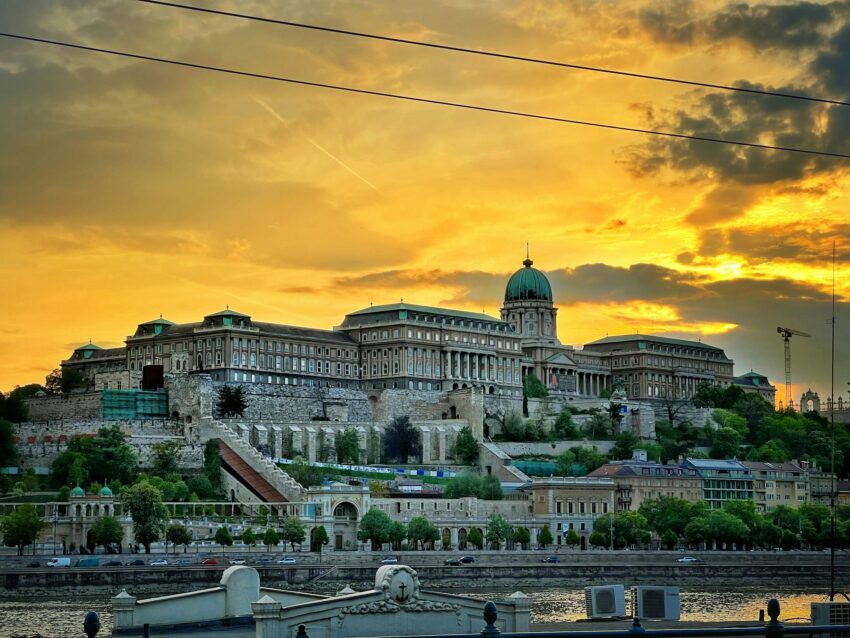
Buda Castle sits high on Buda Hill in Budapest, a sprawling royal-palace complex that dominates the skyline above the Danube and the city's bridges. It's one of the best places to see how Budapest's geography shapes the experience: steep approaches, sudden panoramas, and long terraces that pull your gaze across to Pest.
Many visitors first encounter it on a walking tour through the Castle District, but it also rewards a slower, self-guided wander. The grounds feel like a small hilltop neighborhood of courtyards and pathways, while the palace buildings house cultural institutions rather than preserved royal rooms.
History and Significance of the Buda Castle
Buda Castle’s story is one of repeated transformation. Over centuries it has been damaged, rebuilt, expanded, and reimagined, which is why the complex doesn’t present a single “pure” style. Instead, you’ll notice a layered mix of Gothic remnants, Romantic-era touches, and Baroque massing that reflects different chapters of Hungarian history.
What makes the site especially significant today is how its role has shifted from royal residence to cultural center. Rather than touring lavish state apartments, you’re more likely to spend time in museums and galleries that interpret Hungary’s art, the city’s development, and the long arc of the palace itself.
Even if you don’t go indoors, the castle’s position matters: it’s a natural lookout over the Danube corridor. The relationship between the hilltop and the river below is part of what makes the complex feel so grand, particularly when the buildings are illuminated at night.
Things to See and Do in the Buda Castle
Start with the outdoor experience: stroll the open courtyards, follow the winding paths along the palace edges, and pause at viewpoints that frame the Danube and the Pest side of the city. The scale becomes clear as you walk; the complex runs long along the ridge, so it’s easy to turn a quick look into a full, unhurried circuit.
In the main courtyard, seek out the Matthias Fountain, a dramatic sculptural scene of King Matthias and a hunting party. It’s one of those details that feels almost cinematic in person, and it’s a natural meeting point if you’re exploring with others.
For indoor time, choose based on your interests. The Budapest History Museum focuses on the city's story across eras, while the Hungarian National Gallery is the go-to for Hungarian art. The National Library adds another layer of cultural weight, preserving rare books and prints, and it helps explain why the palace feels more like a living civic complex than a sealed-off royal interior.
How to Get to the Buda Castle
Budapest is served by Budapest Ferenc Liszt International Airport (BUD), with onward connections into the city by public transport, taxi, or rideshare. For the best deals and a seamless booking experience, check out these flights to Budapest on Booking.com.
Budapest is also easy to reach by train, with international and domestic services arriving at the city's main stations, making rail a practical option if you're coming from elsewhere in Hungary or nearby capitals. Train schedules and bookings can be found on Omio.
Once you're in Budapest, reaching Buda Castle is straightforward by public transport and on foot: buses climb Castle Hill, and many visitors approach from the river side and walk up through the Castle Garden Bazaar area or use the funicular from Clark Ádám Square. If you're traveling by car, expect limited access and parking constraints in the Castle District, so using a garage and finishing the last stretch on foot is usually the least stressful approach.
Practical Tips on Visiting the Buda Castle
- Entrance fee: Free (castle grounds); museums and exhibitions inside require tickets.
- Opening hours: 24 Hours.
- Best time to visit: Go early in the morning for quieter courtyards and cleaner photos, then consider returning after sunset to see the palace and riverfront lit up.
- How long to spend: Plan 1-2 hours for a scenic walk around the grounds; add another 2-3 hours if you want to visit one or two museums inside.
- Accessibility: The hilltop setting means slopes and uneven paving in places; using buses, the funicular, or elevator/ramp routes can reduce steep walking.
- Facilities: Facilities vary by building, but you’ll generally find restrooms, ticket counters, and small shops within the museum areas rather than across the open courtyards.
Where to Stay Close to the Buda Castle
Staying in the Castle District (Budavár) puts you within an easy morning-and-evening walk of the courtyards and viewpoints, which is especially appealing if you want to see the area before day-trippers arrive. For more choice and often better value, look just downhill in Krisztinaváros or Tabán, where you can still walk up to the castle while being closer to tram and metro connections for the rest of the city.
What Other Travellers Say...



FAQs for Visiting the Buda Castle
The Buda Castle appears in our Complete Guide to Visiting Budapest!

Moira & Andy
Hey! We're Moira & Andy. From hiking the Camino to trips around Europe in Bert our campervan — we've been traveling together since retirement in 2020!
This website uses affiliate links which may earn a commission at no additional cost to you!
Planning Your Visit
24 Hours.
Free (castle grounds); museums and exhibitions inside require tickets.
Nearby Attractions
- Castle Hill (0.1) km
Archive - Castle Bazaar (0.4) km
Gardens - Fisherman's Bastion (0.6) km
Archive - Matthias Church (0.6) km
Church - Chain Bridge (0.7) km
Abbey - Shoes on the Danube Bank (0.9) km
Memorial - Hungarian Parliament Building (1.1) km
Attraction, Historic Building and Notable Building - Vaci Street (1.2) km
Activity - St. Stephen's Basilica (1.2) km
Basilica, Church and Tower - Gellert Hill (1.4) km
Hill