Self-Guided Walking Tour of Toulouse (+ Maps!)
This website uses affiliate links which earn a small commission at no additional cost to you.
Toulouse is a city made for wandering: broad historic squares, quiet medieval lanes, riverside paths, and that distinctive pink-brick glow that changes with the light. A self-guided walking tour gives you an easy structure for the day while still letting you explore at your own pace, with maps to keep the route simple between stops.
This style of touring works especially well here because the centre is dense with sights but never feels like a checklist. You can move from a major landmark to a café-lined street in minutes, pause for museums or churches when you feel like it, and still keep the day coherent. If you want to cover the best things to see in Toulouse without feeling rushed, walking is the cleanest way to do it.
The maps are your shortcut to a smoother day: fewer wrong turns, less backtracking, and clearer choices about what to skip or linger on. Build in time for food markets, a long lunch, and a late-afternoon river walk, and you'll get a Toulouse day that feels both productive and unforced.
How to Get to Toulouse
By Air: Toulouse-Blagnac Airport (TLS) is the main gateway, with a wide range of domestic and international flights and quick onward connections into the city. Once you land, you can reach central areas efficiently by airport shuttle or tram/metro combinations, which is usually faster and easier than driving if you're only in town for the walking-tour day. For the best deals and a seamless booking experience, check out these flights to Toulouse on Booking.com.
By Train: Arriving by rail is straightforward, with Toulouse’s main station (Matabiau) putting you close to the centre and well connected by metro and buses. For a self-guided route, the train is ideal because you can step off, drop bags near the core, and begin walking with minimal logistics. You can use SNCF Connect to check schedules, compare routes, and purchase tickets for National (SNCF ) and regional trains (TER). For a more streamlined experience, we recommend using Omio, which allows you to easily compare prices, schedules, and book tickets for both National and Regional travel across all of Europe, all in one place.
By Car: Driving suits a wider Occitanie road trip, but for the walking-tour day you’ll want to park and forget the car. Pick accommodation with parking or use a central car park, then keep the rest of the day on foot so you’re not dealing with traffic patterns, limited-access streets, and the stop-start rhythm of city driving. If you are looking to rent a car in France I recommend having a look at Discover Cars, first, as they compare prices and review multiple car rental agencies for you.
By Bus: Long-distance coaches can be a cost-effective option from nearby cities and regional hubs. Coach arrival points typically connect to the metro or local buses, and once you’re staying centrally you can run the full walking route without needing additional transport.
Getting around the city: Toulouse is walkable in the core, and its metro is excellent for bridging gaps if your hotel is slightly outside the centre or if you want to hop to a starting point and walk back. Buses and trams fill in the rest, but most visitors find they use public transport mainly to reposition once, then spend the day walking and pausing in squares, museums, and cafés.
A Short History of Toulouse
Toulouse in Roman Times and the Early City
Toulouse’s origins reach back to antiquity, when the settlement developed into a significant urban centre with regional influence. Early street patterns and civic organisation established a framework that later eras built upon, even as the city’s architecture and institutions evolved.
Toulouse in the Medieval Period and a Powerful Urban Identity
The medieval era shaped Toulouse’s long-term character: commerce, religion, and civic life intertwined, and the city grew in both wealth and confidence. Churches, convents, and public buildings expanded the urban footprint, while dense streets and trading spaces created the lived-in texture that still defines many central districts.
Toulouse and the “Pastel” Boom in the Renaissance Era
In the late medieval and Renaissance periods, Toulouse benefited from prosperity tied to the pastel trade, which helped fund an architectural flowering. Wealthy patrons left a legacy of elegant townhouses and refined details, creating a cityscape where prestige and artistry are embedded into everyday streets.
Toulouse in the Early Modern Period and Shifting Fortunes
As political and economic conditions changed, Toulouse adapted through new administrative roles and renewed investment in civic institutions. The city's built environment continued to develop, balancing older religious foundations with evolving public life and new urban priorities.
Toulouse in the 19th and 20th Centuries and the Modern Transformation
Modernisation brought new infrastructure, expanding neighbourhoods, and a changing relationship between the historic core and the wider city. Over the 20th century, Toulouse’s growth accelerated and its identity broadened, blending heritage with a forward-looking economic and cultural energy that remains visible today.
Where to Stay in Toulouse
To make the most of visiting Toulouse and this walking tour then you consider stay overnight at the centre, so you can start early near the main squares, break for museums or lunch without watching the clock, and finish with an easy evening stroll back. The Capitole and central old-town area is the most convenient base, keeping you close to the headline sights, lively dining streets, and a natural start point for a mapped route. Good central options include Le Grand Balcon and Plaza Hotel Capitole Toulouse for immediate access to the core.
Saint-Cyprien, just across the river, is a smart choice if you want a slightly more local feel while staying close enough to walk straight into the centre. It’s ideal for adding riverside segments to your day and works well if you like neighbourhood cafés and markets as part of the experience. Consider Hôtel Gascogne and Eklo Toulouse if you want good value with straightforward links back to the main walking area.
The Carmes and Esquirol area is excellent for a charming, compact Toulouse experience: narrow streets, food-focused stops, and an easy flow between churches, boutiques, and small squares. It's a strong base for travellers who want their walking tour to feel more like daily city life than a sequence of monuments. Options worth checking include Hôtel des Arts and Mama Shelter Toulouse depending on whether you prioritise classic charm or a more modern, social hotel style.
Your Self-Guided Walking Tour of Toulouse
Discover Toulouse on foot with our walking tour map guiding you between each stop as you explore its grand squares, pink-brick landmarks, riverside viewpoints, and café-lined streets. As this is a self guided walking tour, you are free to skip places, and take coffee stops when ever you want!
1. Capitole de Toulouse
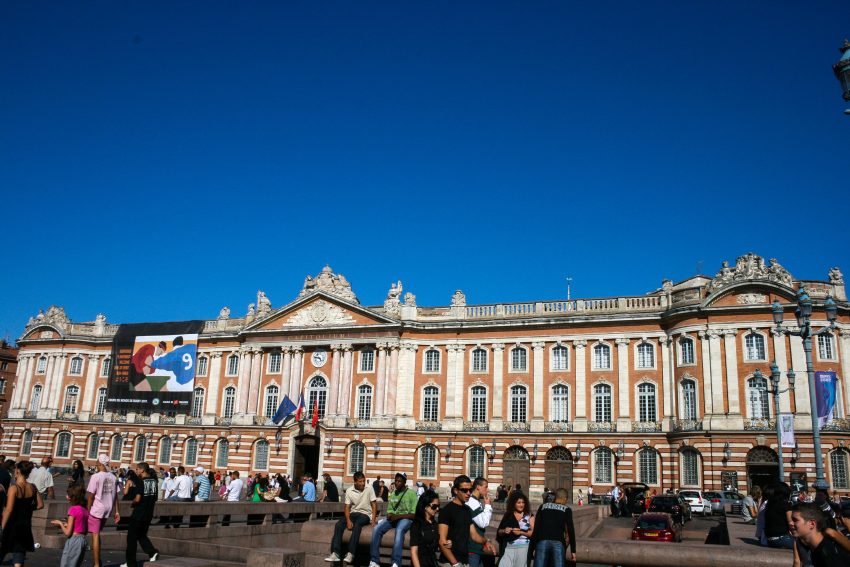
The Capitole has been the seat of Toulouse’s municipal power since the Middle Ages, when the city’s elected magistrates (the Capitouls) established their headquarters here. Over centuries it was rebuilt and enlarged, and the grand neoclassical façade facing the main square largely dates to the 18th century, giving the city a civic “front stage” to match its growing importance. It remains both a working city hall and a symbol of Toulouse’s identity.
Inside, the building rewards a slow look: formal state rooms, ceremonial stairways, and richly decorated interiors that underline how seriously Toulouse took its civic life. Depending on access and opening arrangements, you may be able to step into areas that feel more like a palace than an administrative building, with painted ceilings and historic décor that reflects different phases of renovation.
Outside, the square is part of the experience. Pause on the wide forecourt, take in the symmetry of the façade, then look down at the paving and details around the edges of the plaza. It’s a good place to get your bearings, people-watch from the cafés, and absorb the sense of Toulouse as a city that has long presented its public institutions with confidence.
Location: Capitole de Toulouse, Toulouse, France | Hours: Monday – Saturday: 09:00–19:00. Sunday: 10:00–19:00. | Price: Free. | Website
2. Couvent des Jacobins
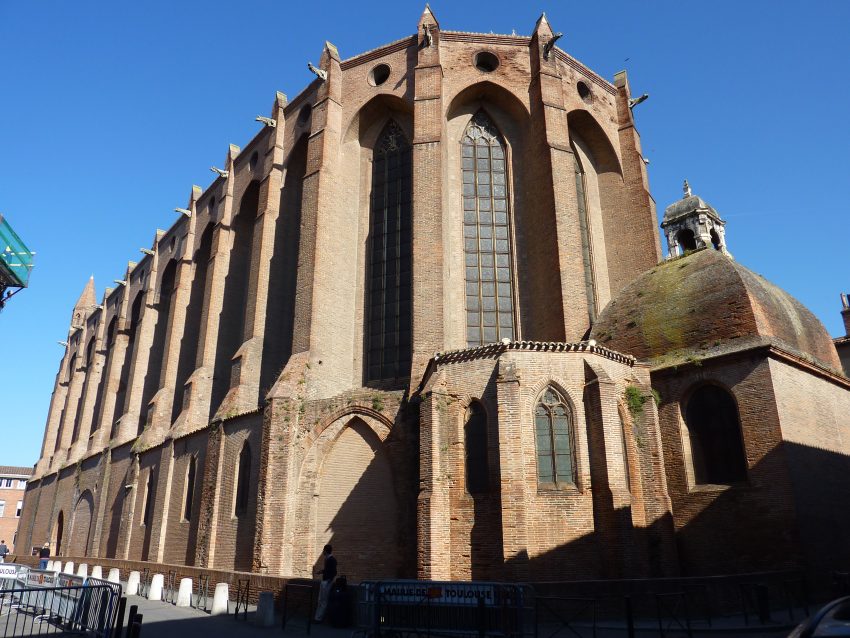
The Couvent des Jacobins is one of Toulouse’s defining medieval monuments, founded by the Dominican order in the 13th century, with construction beginning in the early 1200s. It became a major religious and intellectual site, and its architecture played an important role in shaping the Southern Gothic style, using brickwork to create a building that is austere outside but remarkably refined within.
Historically, the site is strongly associated with Dominican scholarship, and it is also known for housing relics linked to Thomas Aquinas. That mix of teaching, preaching, and prestige gives the convent a significance beyond its beauty: it represents a period when religious orders were deeply involved in education and public life, and Toulouse was a serious centre of learning.
What to see is unambiguous once you step inside. The church’s interior is celebrated for its airy feeling and the famous “palm tree” column, where rib vaulting fans out in a way that feels both structural and sculptural. Take time to look up, then walk the nave slowly to appreciate how the proportions, light, and brickwork create an atmosphere that is calm, monumental, and distinctly of this region.
Location: Couvent des Jacobins, 10 Pl. des Jacobins, 31000 Toulouse, France | Hours: Tuesday – Sunday: 10:00–18:00. Closed on Monday. | Price: Church: Free. Convent areas (cloister and additional rooms): Adults: €5; Reduced: €3; Temporary exhibition: €9 (full) / €5 (reduced). | Website

3. Pont Saint-Pierre
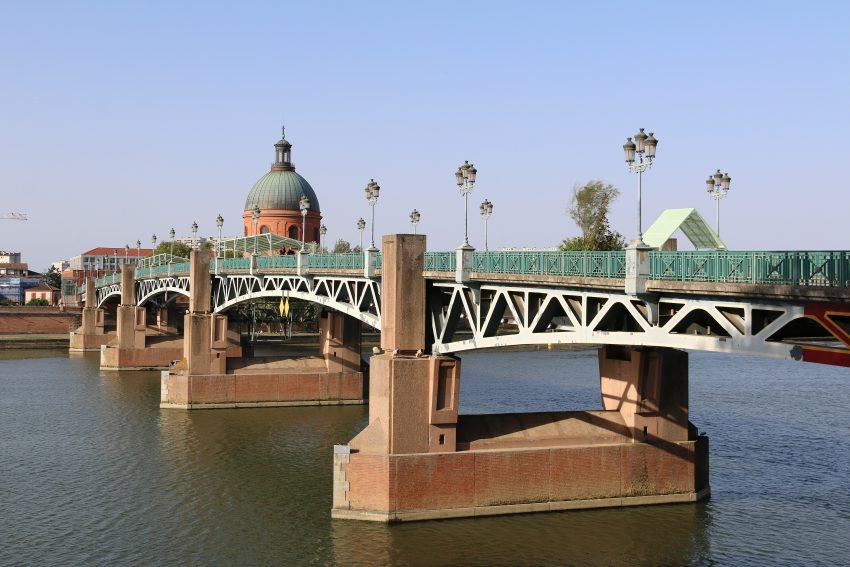
Pont Saint-Pierre has been rebuilt in different forms over time, reflecting Toulouse’s changing needs for a reliable crossing near a lively riverfront district. Earlier versions in the 19th century used suspension-bridge principles, and later reconstructions updated the structure to suit modern traffic and engineering expectations, while keeping the same strategic connection across the Garonne.
That history is part of the view: the bridge is less about a single “masterpiece moment” and more about continuity of crossing at a key urban point. It sits in a setting where the river, embankments, and nearby landmarks create a strong sense of place, so the bridge functions as a frame for Toulouse as much as a structure in its own right.
For what to see, treat it as a viewpoint. From the span you get memorable river perspectives, and the surrounding skyline becomes the main attraction, especially in late afternoon light. Cross slowly, pause at the centre, then step down to the river edges on either side to see how the bridge fits into the wider composition of water, brick, and city life.
Location: Rue du Pont Saint-Pierre, 31400 Toulouse, France | Hours: 24 Hours. | Price: Free.
4. Les Abattoirs Museum
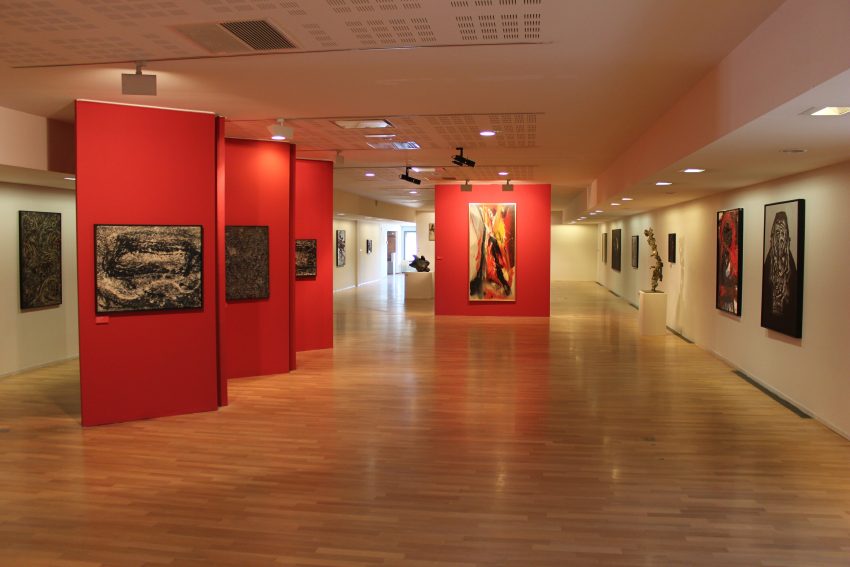
Les Abattoirs is a contemporary art institution with an industrial past: it occupies former municipal slaughterhouse buildings from the 19th century. The transformation into a museum space is part of a broader pattern of adaptive reuse, where heavy civic infrastructure becomes cultural architecture, and the building’s scale and robustness suit large works and changing exhibitions.
The institution opened as a modern and contemporary art venue in 2000, bringing together museum functions and regional contemporary-art programming in one place. That hybrid identity is reflected in the experience: you can encounter both curated collections and more experimental projects, with the building’s raw volumes giving the art room to breathe.
When you visit, expect a mix of permanent holdings and temporary shows, often with bold installation work that takes advantage of the architecture. Spend time noticing how the former industrial layout shapes your movement: wide spans, tall walls, and transitional spaces that can feel theatrical. Even if a particular exhibition isn’t to your taste, the building itself often makes the visit worthwhile.
Location: 76 All. Charles de Fitte, 31300 Toulouse, France | Hours: Wednesday – Friday: 12:00–18:00. Saturday – Sunday: 10:00–18:00. Closed on Monday, Tuesday. | Price: Adults: €12; Reduced: €10 or €6; Free on the 1st Sunday of the month. | Website
5. Pont Neuf
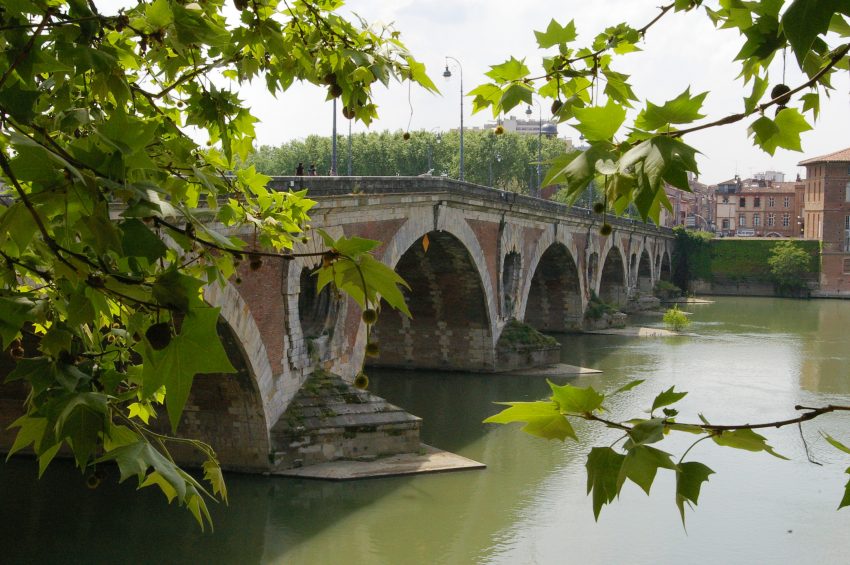
Despite its name, the Pont Neuf is the oldest surviving bridge in Toulouse, begun in the mid-16th century and only completed in the 17th century after long delays caused by floods and difficult ground conditions. It was conceived at a time when a reliable crossing of the Garonne had strategic and economic value, and its robust engineering helped it outlast other bridges when the river turned destructive.
Architecturally, it’s notable for its Renaissance-era approach: a broad stone structure with multiple arches, designed to let water pass and reduce pressure during floods. Look closely at the piers and openings that break up the mass of masonry; they’re part of what makes the bridge feel both elegant and purposeful, a piece of infrastructure built with real respect for the river’s power.
Visiting is simple and rewarding. Cross it slowly and stop mid-span for the best views up and down the Garonne, then step onto the riverbanks at either end to see the bridge’s profile from below. It’s especially striking in changing light, when the stonework and the water surface make the bridge feel like the city’s most timeless line.
Location: Pont Neuf, Toulouse, France | Hours: 24 Hours. | Price: Free.
6. Hotel d'Assezat and Bemberg Foundation
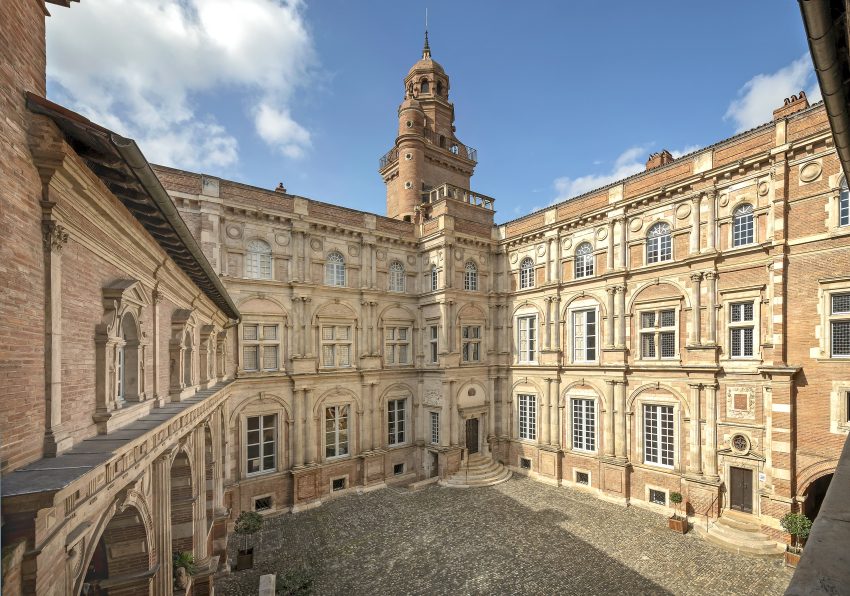
The Hôtel d’Assézat is a landmark of Toulouse Renaissance architecture, built in the 16th century for Pierre d’Assézat, a wealthy merchant whose fortune was tied to the region’s historic trade. The building’s design, with its impressive courtyard and classical detailing, reflects the ambition of a private patron eager to express status through architecture, while still using Toulouse’s characteristic brick-and-stone palette.
Today, the mansion is best known for housing the Bemberg Foundation, a major art collection displayed in the historic rooms. The contrast is part of the appeal: fine art set within a domestic palace of the Renaissance, where staircases, galleries, and the courtyard itself feel like exhibits. Even before you reach the paintings, the architecture frames the visit with a sense of ceremony.
When you go, give time to both layers: the building and the collection. Start by lingering in the courtyard to take in the columns, symmetry, and carved details, then move through the galleries with an eye on how the rooms shape the experience. It’s one of Toulouse’s most satisfying “inside visits” because it combines an exceptional setting with art that rewards unhurried viewing.
Location: Place d'Assezat, 31000 Toulouse, France | Hours: (August – April) Tuesday – Sunday: 10:00–18:00; Closed on Monday. (May – July) Monday – Sunday: 10:00–18:00. | Price: Adults: €12; Reduced: €10; Children (10–18): €8; Under 10: free. | Website
7. Quai de la Daurade
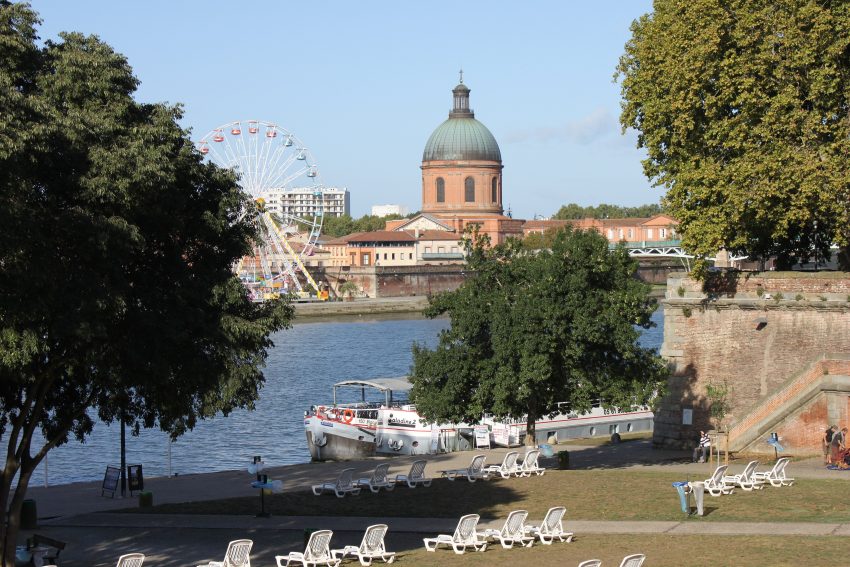
The Quai de la Daurade sits along the Garonne and reflects Toulouse’s long relationship with its river: practical, scenic, and constantly reshaped by time. The area takes its name from La Daurade, the historic riverside quarter and its church, and the quays here were developed to tame and frame the river edge, turning it into a place for promenading as well as a working frontage.
The setting is closely tied to the nearby Basilica of Notre-Dame de la Daurade, known for its revered Black Madonna, which anchors the district’s religious history. That mix of sacred landmark and riverside openness gives the quay a distinctive character: part neighbourhood gathering place, part viewpoint, part threshold between city streets and water.
When you’re there, the main “sight” is the river panorama. Walk the length of the promenade, stop at the steps and railings for views across the Garonne, and look for the way the light plays off Toulouse’s brick tones near sunset. It’s also a good place to pause between more formal monuments, because it shows the city at a human, outdoors pace.
Location: Quai de la Daurade, 31000 Toulouse, France | Hours: 24 Hours. | Price: Free.
8. Rue Saint-Rome
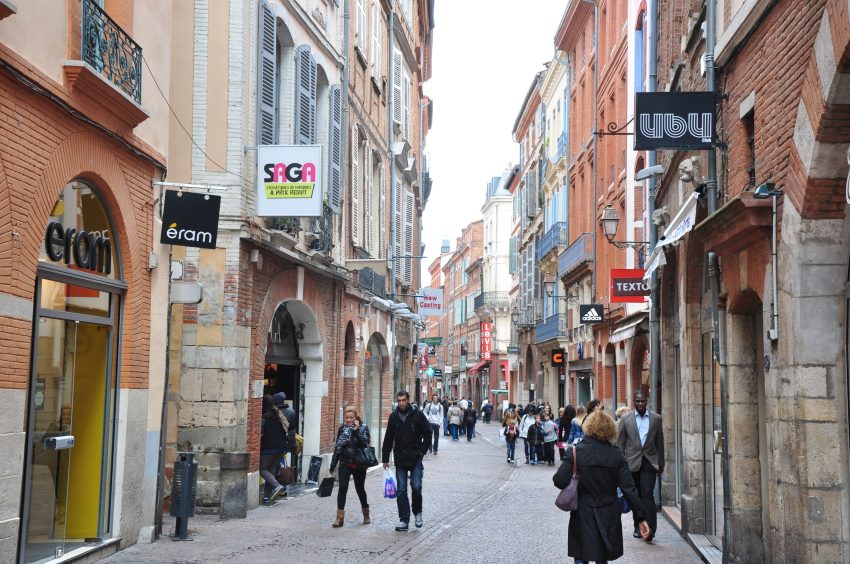
Rue Saint-Rome is one of the old commercial arteries of central Toulouse, and its story is tied to trade and daily city life over many centuries. Its name is linked to the medieval Church of Saint-Romain, and the street has been associated with merchants since at least the Middle Ages, when guilds and market activity helped define the character of the area.
What you see today is a shopping street layered over that earlier fabric. As you move along it, keep an eye on the changes in street width, the irregular alignment of façades, and the older architectural fragments that survive among modern shopfronts. Even without a single “monument” moment, the street communicates the continuity of commerce in the city centre.
For a visit, treat it as a place to notice details rather than rush through. Dip into side passages, glance up at upper-storey windows and balconies, and watch how the street funnels movement toward major civic spaces nearby. It’s most enjoyable when it’s lively, with the everyday rhythm of Toulouse on display.
Location: Rue Saint-Rome, 31000 Toulouse, France | Hours: 24 Hours. | Price: Free.
9. Jardin Royal
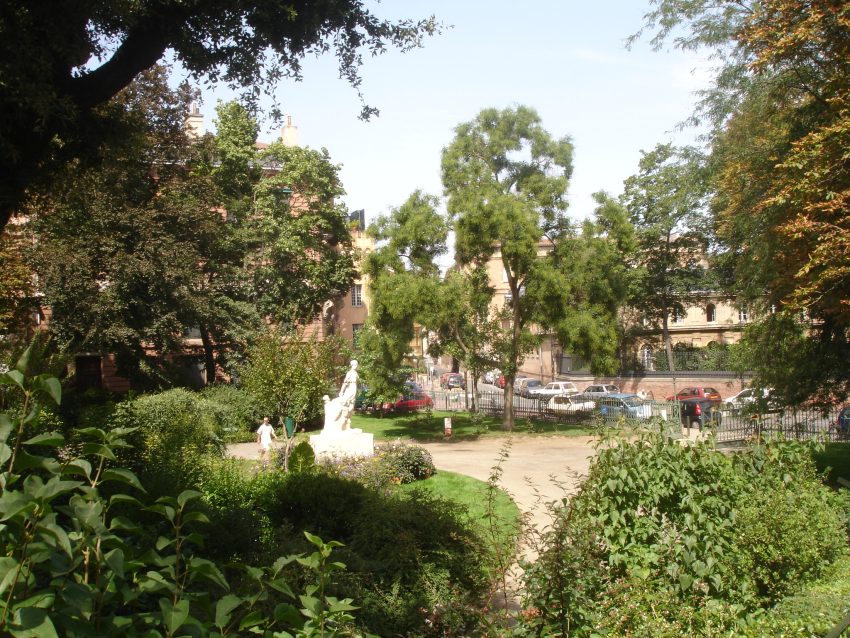
The Jardin Royal is Toulouse’s oldest public garden, created in 1754 as part of an 18th-century urban improvement plan led by Louis de Mondran. Its name and status shifted with politics over time (including periods when it was styled simply as a public park), but it eventually settled definitively as “Jardin Royal” in the late 19th century. In the 1860s the garden was reworked into an English-style landscape, giving it the winding paths and informal scenic rhythm that still define it today.
What you see now is a compact, carefully composed green space with lawns, curving walkways, and a central pond with a small bridge and duck house, designed to feel like a quiet retreat rather than a formal showpiece. One of the pleasures here is its botany: the garden is known for hosting a mix of mature and less-common species for the area, including notable specimen trees that give real structure and shade. It’s also officially recognised as a “Jardin remarquable,” a French label awarded to gardens of particular cultural, historic, aesthetic, or botanical interest.
For sights, focus on the small details that reward an unhurried lap: the pond and bridges, the iron benches and railings, and the sculpture trail. You’ll find works that nod to Toulouse-linked figures (including Saint-Exupéry and The Little Prince) and other commemorative pieces, which make the garden feel like an outdoor gallery as much as a park. It’s at its best as a pause between busier landmarks: pick a bench, watch the light shift through the trees, and let the city noise drop away for a while.
Location: Jardin Royal, Angle Rue Ozenne et Allées Jules Guesde, Toulouse, France | Hours: (Winter) 01 November – 28 February: Daily: 08:00–18:00. (Spring) 01 March – 31 May: Daily: 08:00–20:00. (Summer) 01 June – 31 August: Daily: 08:00–21:00. (Autumn) 01 September – 31 October: Daily: 08:00–20:00. | Price: Free. | Website
10. Cathédrale Saint-Étienne de Toulouse
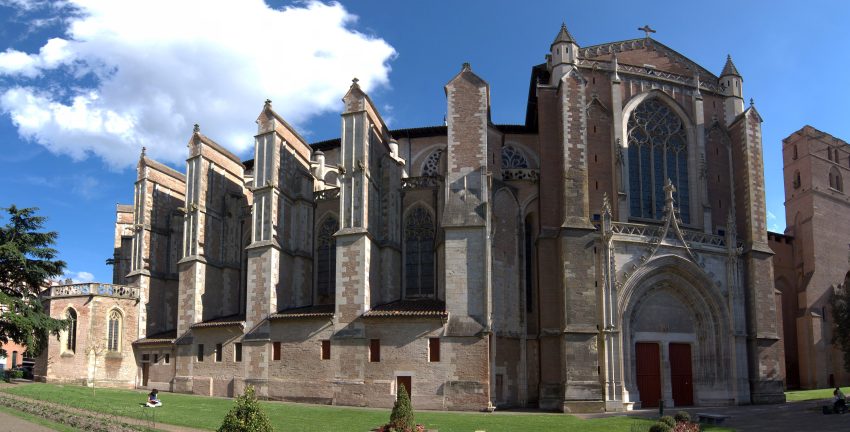
Toulouse Cathedral is famously complex, because it wasn’t built as a single, unified project. Its origins go back many centuries, and major rebuilding in the medieval period produced an unusual combination of styles and volumes, the result of changing plans, tastes, and constraints over time. That layered construction is precisely what makes it distinctive among French cathedrals.
Inside, you can read those phases in the architecture: shifts in height, different Gothic expressions, and a sense that separate ambitions were stitched together into one functioning cathedral. Rather than expecting perfect symmetry, treat it as an evolving record of Toulouse’s religious and civic history, shaped by what was possible in each period.
For what to see, focus on the overall spatial drama and the details that reveal craftsmanship: chapels, stained glass, and sculptural elements that reward close attention. Step back to take in the contrasts between sections, then move slowly along the side areas to notice how the building changes as you progress. It’s a place where the “story” is written into the structure itself.
Location: Pl. Saint-Étienne, 31000 Toulouse, France | Hours: Monday – Saturday: 08:00–19:00. Sunday: 09:00–19:00. | Price: Free; donations appreciated. | Website
11. Musée des Augustins
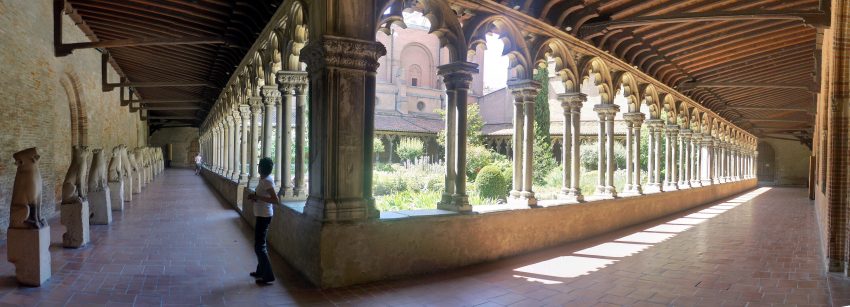
The Musée des Augustins occupies a former Augustinian convent whose medieval fabric still shapes the experience. The site’s religious origins and later secular transformation reflect a wider French story: ecclesiastical buildings repurposed after the Revolution, with Toulouse’s convent becoming a public museum in the late 18th century. That long institutional life makes the museum as much about place as it is about objects.
The setting matters here. Cloister spaces and convent architecture create a calm, almost monastic rhythm as you move through collections, and the building’s older stonework and courtyard atmosphere can make even a brief visit feel restorative. It’s not just “rooms on a route”; it’s an environment that encourages lingering.
In terms of what to see, the museum is known for fine arts and sculpture, and the presentation benefits from the generous historic spaces. Spend time with the sculpture displays, where form and light are especially strong, then choose a few painting rooms to go deeper rather than trying to cover everything. The cloister and quieter corners are worth seeking out, because they’re part of what makes this museum uniquely Toulouse.
Location: 21 Rue de Metz, 31000 Toulouse, France | Hours: Monday: 12:00–18:00. Tuesday: Closed. Wednesday: Closed. Thursday: 12:00–18:00. Friday: 12:00–18:00. Saturday: 10:00–18:00. Sunday: 10:00–18:00. | Price: Adults: €5; Reduced: €3; First Sunday of the month: free. | Website
12. Rue d'Alsace-Lorraine
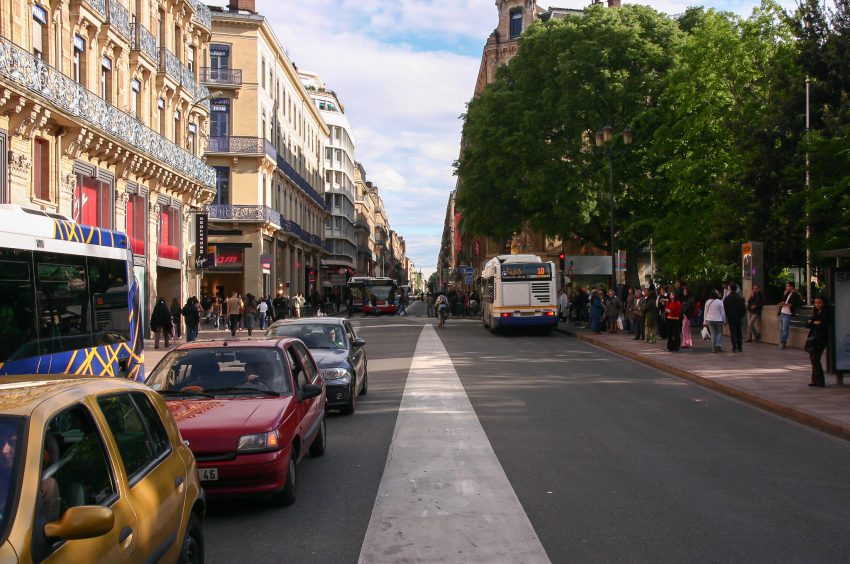
Rue d’Alsace-Lorraine is a product of 19th-century urban change, cut through the older city fabric as Toulouse modernised its centre. Opened in the late 1860s and early 1870s, it reflects the era’s preference for broad, straight streets that improved circulation and created a new stage for commerce and civic life, with façades designed to feel coherent and “modern” for their time.
Architecturally, it’s a good place to see a more Haussmann-influenced Toulouse: aligned building fronts, consistent heights, and a sense of planned order that contrasts with the irregular medieval lanes nearby. That contrast is the point; you can feel how the city deliberately shifted from intimate, winding streets to an avenue that could carry crowds and display prosperity.
When you visit, make it a detail walk. Look up at cornices, balconies, and stonework, note how ground floors are shaped for shops, and watch how the street’s width changes the city’s sound and pace. It’s also useful as a connector between major central areas, so you can treat it as both an architectural study and a practical route.
Location: Rue d'Alsace Lorraine, 31000 Toulouse, France | Hours: 24 Hours. | Price: Free.
13. Basilica of Saint Sernin
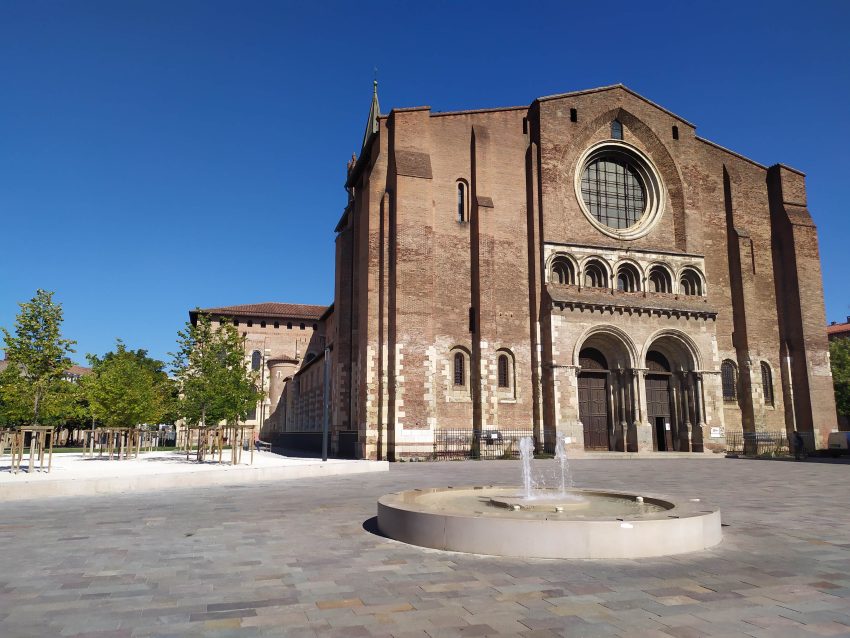
The Basilica of Saint-Sernin is one of the great Romanesque pilgrimage churches of Europe, built largely between the 11th and 13th centuries and closely linked to the routes to Santiago de Compostela. Its scale, solidity, and plan were shaped by the practical needs of pilgrimage: accommodating movement, veneration, and relic display, while making a powerful architectural statement in brick and stone.
Historically, the basilica’s importance rests on continuity and devotion. It honours Saint Saturnin (Sernin), associated with the early Christian history of Toulouse, and the church’s role as a pilgrimage landmark helped secure its lasting prestige. The building’s later recognition as part of the UNESCO-listed pilgrimage routes underlines how central it is to the wider medieval landscape of southwestern France.
What to see starts with the exterior massing and the distinctive tower, then continues inside with the long nave, the ambulatory circulation, and the chapels that create a sense of unfolding space. Pay attention to the carved capitals and the way the light shifts as you move, because Romanesque churches often reveal their richness gradually. It’s at its best when you allow time for quiet observation rather than a quick circuit.
Location: Basilique Saint-Sernin de Toulouse, 7 Pl. Saint-Sernin, 31000 Toulouse, France | Hours: (Summer) June 1 – September 30; Daily: 08:30–19:00. (Sunday: 08:30–19:45.). (Winter) October 1 – May 31; Daily: 08:30–18:00. | Price: Free. | Website

Moira & Andy
Hey! We're Moira & Andy. From hiking the Camino to trips around Europe in Bert our campervan — we've been traveling together since retirement in 2020!
This website uses affiliate links which earn a small commission at no additional cost to you.
Walking Tour Summary
Distance: 7 km
Sites: 13