Self-Guided Walking Tour of Split (+Maps!)
This website uses affiliate links which earn a small commission at no additional cost to you.
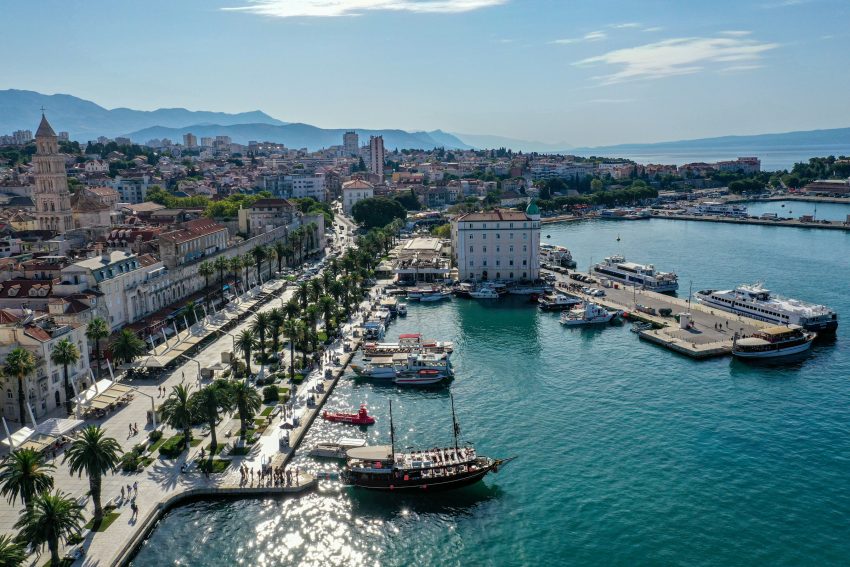
Split rewards slow, on-foot exploring. The city's headline sights are packed into a compact historic core, with the seafront promenade always nearby when you want a breather, a gelato, or a coffee with a view. If you like places where ancient stones and everyday life overlap, you'll find plenty to linger over here.
This self-guided route focuses on the best things to see in Split, moving naturally from the waterfront into Diocletian's Palace and out again into the Old Town squares. With maps to keep you oriented, you can concentrate on the details: worn thresholds, hidden passages, and the way the city shifts from bright open plazas to cool, shaded lanes.
Treat the itinerary as a framework rather than a fixed schedule. Split is at its best when you allow time for small detours, market stalls, a quick museum visit, or an unplanned stop on a terrace when the light turns golden.
Table of Contents
- How to Get to Split
- A Short History of Split
- Split in the Roman Era: Diocletian’s Palace and the Bones of the City
- Split in the Early Medieval Period: The Cathedral, the Temple, and a City Reused
- Split Under Venetian Influence: Squares, Civic Life, and the Old Town’s Public Face
- Split in the Modern Era: Museums, Icons, and Pop-Culture Layers on Ancient Stone
- Split’s Fortified Thresholds: Gates, Small Churches, and the Edges You Notice on Foot
- Where to Stay in Split
- Your Self-Guided Walking Tour of Split
- Riva Harbor
- Bronze Gate
- Ethnographic Museum
- Vestibule
- Podrum
- Diocletian's Palace
- Cathedral of St. Domnius
- Temple of Jupiter
- Silver Gate
- City Museum of Split
- Church of Saint Martin
- Golden Gate
- Grgur Ninski Statue
- Game of Thrones Museum
- Iron Gate and Church of Our Lady of the Bell Tower
- People's Square
- Prokurative
- Fruit's Square
How to Get to Split
By Air: Split Airport (SPU) is the main gateway for international and seasonal routes, with straightforward transfers into the city by shuttle bus, taxi, or rideshare depending on arrival time. If you're landing in peak summer, plan for extra road traffic at the airport approach and on the coastal routes into town, especially late afternoon. For the best deals and a seamless booking experience, check out these flights to Split on Booking.com.
By Train: Train services connect Split with other Croatian cities, and the railway station sits conveniently close to the ferry port and the edge of the Old Town, which is ideal if you're arriving without a car. Trains can be slower than buses on some routes, but they're comfortable and remove the stress of parking once you arrive. Train schedules and bookings can be found on Omio.
By Car: Driving gives you flexibility for day trips along the Dalmatian coast, but parking in central Split can be tight and expensive in high season. If you're staying inside or near the historic centre, it's often easiest to choose accommodation with arranged parking or to park once and explore on foot for the rest of your stay.
How to get around the city: Split’s core is made for walking, and this tour is easiest on foot because many lanes around the palace are pedestrianised. Local buses are useful for reaching beach areas and neighbourhoods beyond the centre, while taxis and rideshares work well for short hops when it’s hot or when you’re returning late. If you’re planning a beach break, consider walking one way along the waterfront and taking the bus back to save time.
A Short History of Split
Split in the Roman Era: Diocletian’s Palace and the Bones of the City
Split’s story is inseparable from Diocletian’s Palace, the vast Roman complex that became the city’s living heart rather than a sealed-off ruin. The palace basements (often referred to locally as the Podrum) were built as substructures supporting the imperial apartments above, and today they form one of the most atmospheric spaces to walk through-cool, echoing, and unmistakably ancient. Over centuries, the palace’s gates shaped movement and identity: the Golden Gate to the north, the Silver Gate to the east, the Iron Gate to the west, and the Bronze Gate to the south, linking the palace directly to the waterfront and what would become the Riva.
Split in the Early Medieval Period: The Cathedral, the Temple, and a City Reused
As power shifted and the centuries moved on, Split didn't discard its Roman architecture-it repurposed it. One of the clearest examples is the Cathedral of St. Domnius, which evolved from the imperial mausoleum into a Christian cathedral, turning the symbols of Roman authority into the centre of religious life. Nearby, the Temple of Jupiter reflects the same pattern of adaptation: older sacred spaces reshaped to suit new beliefs and new civic realities. The result is a city where major monuments aren't isolated “sites,” but layers of continuity you can still read while walking.
Split Under Venetian Influence: Squares, Civic Life, and the Old Town’s Public Face
As maritime powers competed along the Adriatic, Split’s public spaces gained a more recognisably “Mediterranean city” rhythm-busy squares, trading streets, and civic buildings that framed daily life. People’s Square (Pjaca) became a focal point for meetings, commerce, and ceremony, while nearby Fruit’s Square developed its own intimate character, framed by historic façades and café tables. Prokurative (Republic Square) later added a grander, more theatrical stage for public life, reinforcing Split’s habit of gathering outdoors-something you’ll still feel as you move between plazas on your walk.
Split in the Modern Era: Museums, Icons, and Pop-Culture Layers on Ancient Stone
In more recent history, Split has leaned into interpretation and storytelling-both scholarly and pop-cultural-without losing the everyday pace of a real working city. The Ethnographic Museum and the City Museum of Split help anchor the palace and Old Town in local context, explaining how people lived, traded, worshipped, and adapted the built environment over time. At the same time, the Game of Thrones Museum reflects a newer layer of attention, using modern fandom to pull visitors deeper into spaces they might otherwise hurry past. And just outside the palace, the Grgur Ninski Statue has become a modern ritual point-part landmark, part local superstition, part photo-stop-showing how Split keeps creating new traditions around old stones.
Split’s Fortified Thresholds: Gates, Small Churches, and the Edges You Notice on Foot
The best way to understand Split’s historic defences is to experience them as thresholds rather than “attractions.” Entering through the Bronze Gate from the Riva drops you straight into the palace’s substructures (Podrum), while the Golden Gate feels more ceremonial and outward-facing. The Silver Gate and Iron Gate show how the palace connected to the city’s expanding life beyond the walls, and the smaller details-like the Church of Saint Martin tucked into a passageway and the Iron Gate area with the Church of Our Lady of the Bell Tower-make it clear how sacred spaces and daily routes intertwined. Even the Vestibule, once a transitional space of imperial grandeur, now feels like a public room where Split’s past and present meet in the simplest way: people passing through, pausing, and looking up.
Where to Stay in Split
To make the most of visiting Split and this walking tour then you consider stay overnight at the centre. If you want to step out the door and be on the route in minutes, base yourself in or just beside the Old Town/Diocletian's Palace zone, where early mornings and late evenings feel calmer and you can revisit squares after the day-trippers fade. Strong central options include Cornaro Hotel and Heritage Hotel Santa Lucia, both putting you close to People’s Square (Pjaca) and the palace lanes for a smooth start each day.
If you prefer a slightly quieter base that still walks easily into the historic core, look around the Bačvice area: you’ll get a more relaxed neighbourhood feel, beach access, and a straightforward stroll to the Riva and the Bronze Gate entrance. Consider Hotel Park Split for a classic stay near the shoreline, or Briig Boutique Hotel for something more design-led while staying close to the action.
For harbour views and a polished, modern feel with an easy walk along the waterfront into town, the West Coast/Riva promenade side is a smart choice-especially if you like finishing your day with a sunset stroll back to the hotel. A strong pick here is Hotel Ambasador Split, which keeps you close to the Riva and within comfortable reach of the palace and museums without being right in the densest lanes.
If your priority is space, resort-style facilities, and a beach-forward stay (with the walking tour as a planned “day in town”), look east toward Trstenik/Žnjan. You’ll likely use buses or short taxi rides to reach the start point, but you’ll get a more relaxed base for swimming and downtime. A reliable option is Radisson Blu Resort & Spa, Split.
Your Self-Guided Walking Tour of Split
Discover Split on foot with our walking tour map guiding you between each stop as you explore its waterfront Riva, the palace lanes of Diocletian's Palace, and the Old Town's most characterful squares. Because this is a self-guided walking tour, you're free to skip places that don't grab you, double back for a better photo, and take coffee stops whenever you want-Split's cafés and shaded corners are part of the experience.
1. Riva Harbor
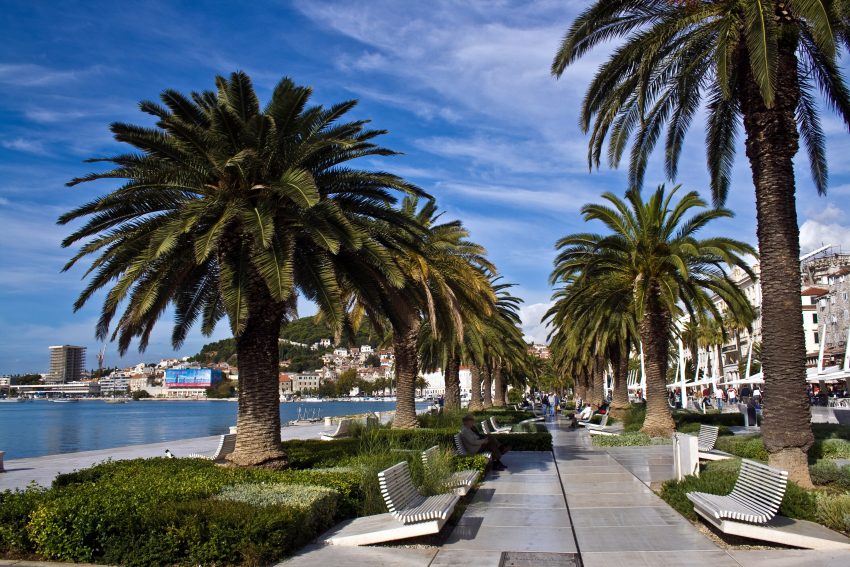
Riva is Split’s main waterfront promenade, and the stretch you see today largely took shape in the early 1800s under French administration, when older defensive elements were replaced by a more open seafront. Since then it’s been repeatedly tidied up and expanded into the city’s everyday “front room.” What to see here is less a single monument and more the atmosphere: the palm-lined walkway, the constant flow between the old town and the sea, and the views back to the palace walls. It’s also one of the best places to understand how the historic core meets the harbour in a single, lived-in space. Come for people-watching, the café terraces, and the way the light plays on the stone façades at the edge of the old town. If you want a simple mental map of Split, start here: sea in front, palace behind, and the city’s rhythm in between.
Location: 21.000, Obala Hrvatskog narodnog preporoda 23, 21000, Split, Croatia | Hours: 24 Hours. | Price: Free.

2. Bronze Gate
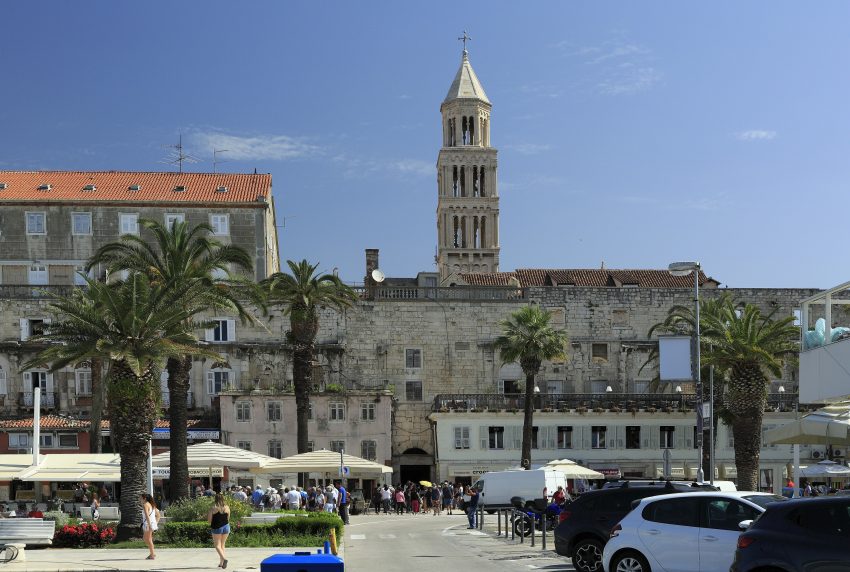
The Bronze Gate (also called the Brass Gate) is the southern gate of Diocletian’s Palace, built in the 4th century and historically functioning as a sea gate linked to the waterfront. In late antiquity, the sea reached the palace walls more closely, making this a practical entry from boats into the complex. What to see is its understated, functional Roman character—smaller and less decorated than the main northern gate, but rich in atmosphere because it connects straight into the palace substructures. Passing through it helps you understand how the palace related to the sea as much as to the land. Look at the surviving stretch of southern wall around it and imagine the shoreline before the modern promenade. Then follow the route inward, where the stone vaulting immediately shifts the mood from bright waterfront to Roman undercroft.
Location: Obala Hrvatskog narodnog preporoda 22, 21000, Split, Croatia | Hours: 24 Hours. | Price: Free.
3. Ethnographic Museum
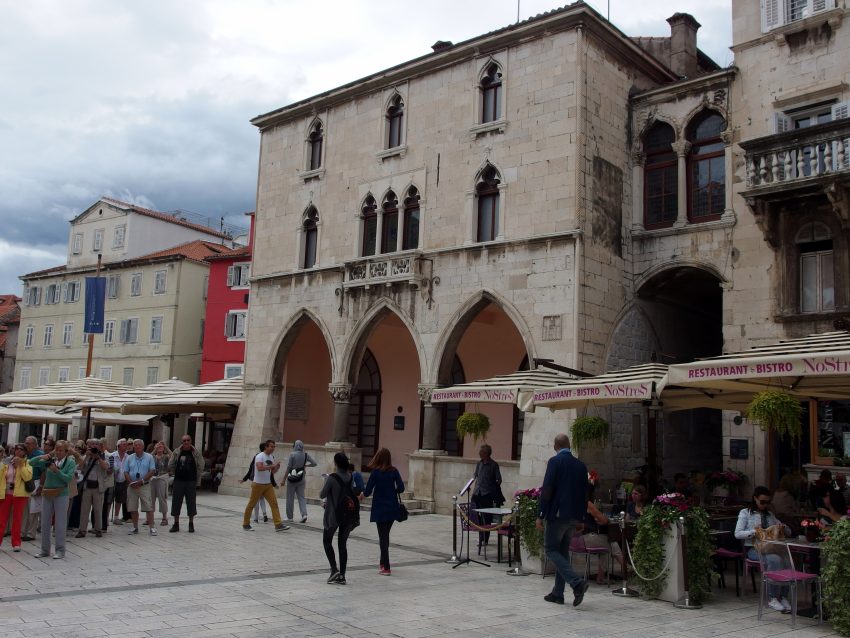
Split’s Ethnographic Museum sits within the palace complex and focuses on regional cultural life, with displays commonly described as including traditional costumes, jewellery, tools, furniture, and photographs. Its setting inside Diocletian’s walls is part of the appeal, because the “container” is as historic as the collection. What to see is the mix of everyday objects that explain how people in Dalmatia lived and worked, giving you a human-scale counterweight to imperial Roman stone. Many visitors also single out the opportunity to access a terrace area for views over the old town. If you’re choosing what to prioritise, this museum is most rewarding when you want context rather than spectacle. The combination of cultural material and rooftop perspective makes it feel like a “two-for-one” stop inside the palace area.
Location: Ul. Iza Vestibula 4, 21000, Split, Croatia | Hours: (Summer) June 1 – August 31; Monday – Friday: 09:00–19:00. Saturday: 10:00–17:00. Sunday: 10:00–14:00. (Winter) November 1 – May 31; Monday – Friday: 09:00–16:00. Saturday: 10:00–14:00. (Winter) September 1 – September 30; Monday – Friday: 09:00–18:00. Saturday: 10:00–17:00. Sunday: 10:00–14:00. (Winter) October 1 – October 31; Monday – Friday: 09:00–17:00. Saturday: 10:00–14:00. Closed on public holidays. | Price: Adults: €7; Schoolchildren/Students/Seniors: €4; Groups (10+): €4 per person; Family ticket: €15; Split Card: free admission. | Website
4. Vestibule
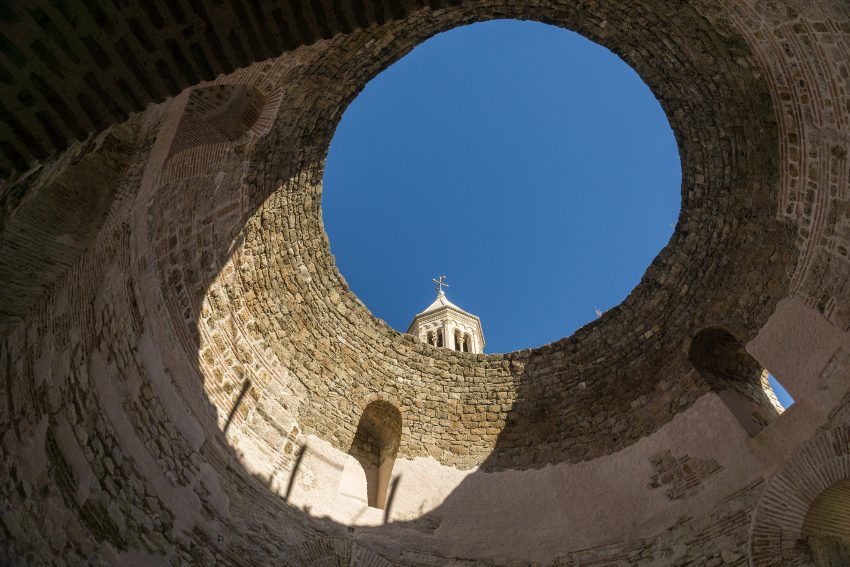
The Vestibule is a dramatic circular hall built as part of Diocletian’s Palace, forming the ceremonial transition into the emperor’s private apartments. Dating to the early 4th century, it’s one of the spaces where the palace still feels unmistakably imperial rather than simply “old town.” What to see is the vertical impact: the round plan, the high walls, and the open/partly open dome that pulls your eyes upward. The acoustics and the shaft of light from above are a big part of why it feels so memorable despite being relatively small. Pause in the centre and look for surviving Roman proportions beneath later changes. It’s also a natural junction point, so you can use it to orient yourself between the palace’s central spaces and the routes toward the substructures.
Location: Ul. Iza Vestibula 1, 21000, Split, Croatia | Hours: 24 Hours. | Price: Free.
5. Podrum
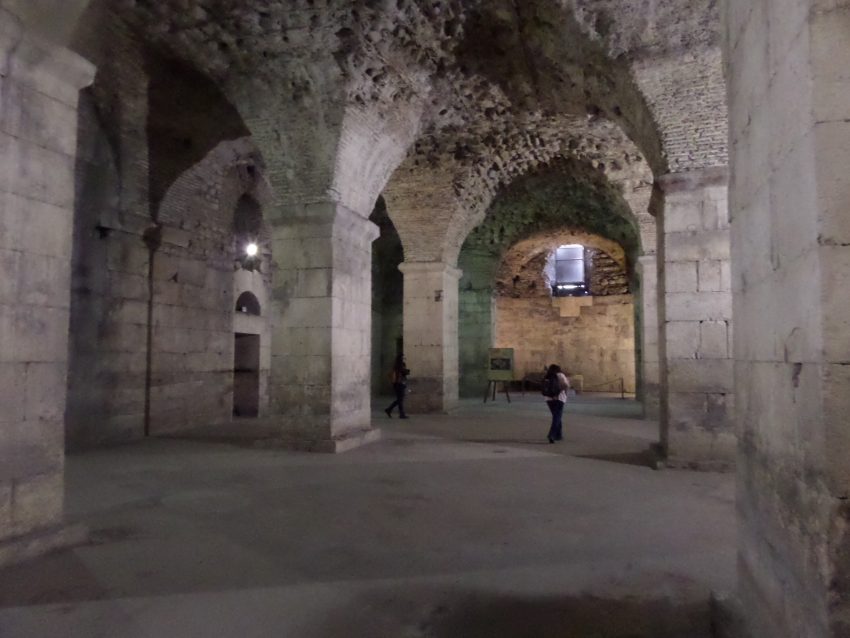
The “Podrumi” are the substructures beneath Diocletian’s Palace, built in the 4th century to support the emperor’s apartments above and to mirror their layout. They’re among the best-preserved Roman substructures of their kind, which is why they feel so architectural rather than simply “underground rooms.” What to see is the sequence of vaulted halls and passages, where you can read Roman engineering in the mass of stone and the geometry of the vaulting. The spaces are also a practical key to the palace plan, because their footprint reflects what once stood above. Look for the change in room shapes as you move through—basilica-like spaces, narrower corridors, and larger chambers that open unexpectedly. It’s also the most direct “from the sea into the palace” experience, because the southern gate connects through these substructures up into the heart of the complex.
Location: Ul. Iza Vestibula 3, 21000, Split, Croatia | Hours: Daily: 08:30–20:00. | Price: Adults: €10; Concessions: €8; Family ticket: €18. | Website
6. Diocletian's Palace
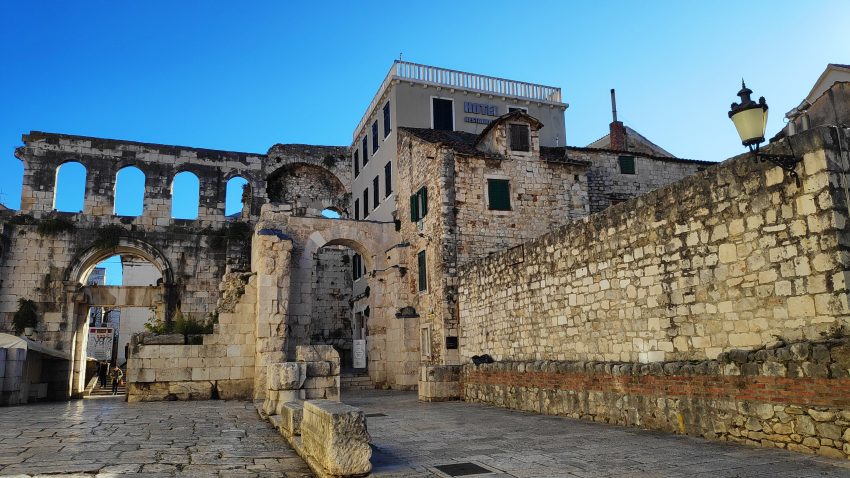
Diocletian’s Palace was built as a late-Roman imperial residence and fortified complex, constructed roughly between 295 and 305 CE for Emperor Diocletian’s retirement. It later became the urban fabric of Split itself—homes, streets, shops, and churches folded into the Roman shell rather than replacing it. What to see is the way a “palace” behaves like a living neighbourhood: you pass from monumental Roman walls into medieval lanes without a clean break. The overall plan—gates, main streets, and central ceremonial spaces—still shapes how you move through the old town today. Focus on the contrasts: heavy Roman masonry beside later façades, and sacred spaces repurposed from pagan to Christian use. Even if you only pick a few stops, you’re still experiencing a UNESCO-listed historic complex that’s as much city as monument.
Location: 21000, Grad, Split, Croatia | Hours: Daily: Open 24 hours. | Price: Free to wander the palace area; paid entry applies to specific sites inside (e.g., Substructures of Diocletian’s Palace: €10; concessions: €8). | Website
7. Cathedral of St. Domnius
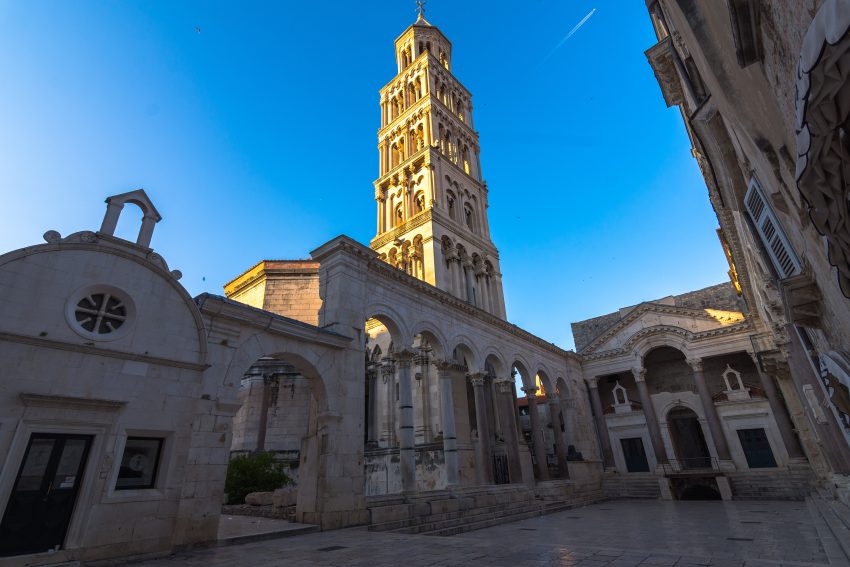
Split’s cathedral is exceptional because its core is Diocletian’s own mausoleum, begun around AD 305 and later converted into a Christian cathedral as refugees settled within the palace in the 7th century. Few buildings illustrate the pivot from Roman imperial power to medieval Christian city life so directly. What to see is the ancient structure itself: the mausoleum’s distinctive form, the sense of an imperial tomb reused as a sacred space, and the layered additions that grew around it over centuries. The bell tower became one of Split’s defining landmarks, and climbing it is a classic way to grasp the scale of the old town. Inside, pay attention to the tension between the Roman shell and the later Christian fittings—this is a building that keeps its original bones while changing its meaning. Even if you’re not focused on religion, it’s one of the most historically “dense” interiors in Split.
Location: Ul. Kraj Svetog Duje 3, 21000, Split, Croatia | Hours: Check official website. | Price: Check official website. | Website
8. Temple of Jupiter
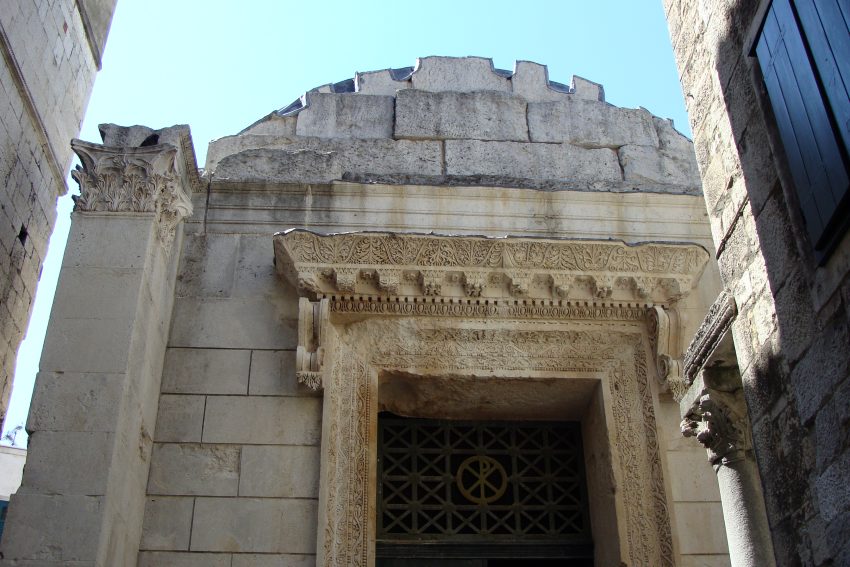
The Temple of Jupiter was built as part of Diocletian’s Palace complex around the turn of the 4th century, originally dedicated to the Roman god Jupiter. By around the 6th century it was repurposed as a Christian baptistery (commonly associated with St John the Baptist), reflecting the broader religious transformation of the palace. What to see begins before you even step inside: a sphinx positioned near the entrance is traditionally noted as part of Diocletian’s imported Egyptian elements. Inside, the space is compact but richly detailed, with a coffered barrel vault and later Christian furnishings layered into the Roman shell. This is one of the best “before and after” sites in Split: Roman purpose, then medieval Christian reuse, all within a few metres. It’s also right by the palace’s central ceremonial zone, so it fits easily alongside the cathedral and surrounding historic structures.
Location: Ul. Kraj Svetog Ivana 2, 21000, Split, Croatia | Hours: Check official website. | Price: Check official website.
9. Silver Gate
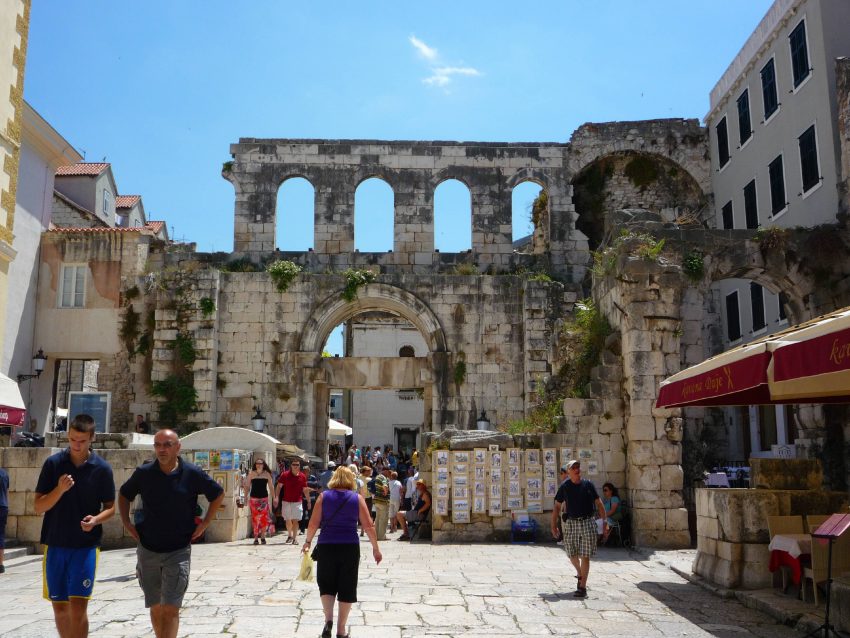
The Silver Gate is the eastern gate of Diocletian’s Palace, built in the 4th century as part of the imperial defensive and ceremonial system. It was more modestly decorated than the main northern gate, and parts of it were closed off for long periods before being reopened and reconstructed in the modern era. What to see is the gate’s Roman structure and the sense of the palace’s original perimeter logic—this is where the ancient city opened toward the east. The gate also sits near the everyday life of the modern city, making it a spot where Roman monumentality meets markets and local routines. Look for remnants that help you imagine the former defensive towers and the depth of the passageway. Even if you treat it as a quick pass-through, it’s one of the clearest markers that you’re entering a Roman complex rather than just an old European town.
Location: Poljana kraljice Jelene 5, 21000, Split, Croatia | Hours: 24 Hours. | Price: Free.
10. City Museum of Split
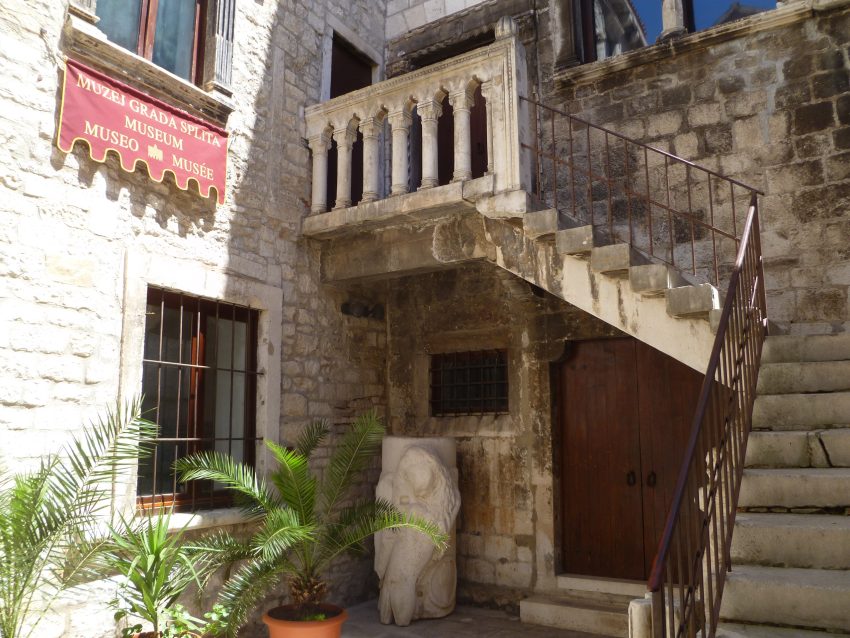
The City Museum of Split is housed in the Papalić Palace, a noble residence associated with the city’s late medieval and Renaissance-era urban culture. The building itself is part of the story, because it represents the period when Split’s civic elite shaped the old town beyond the Roman foundations. What to see is a city-focused collection that helps connect the dots between Roman Split, medieval life inside the palace walls, and later civic development. Visitors commonly note exhibits tied to the historic core, making it a useful stop if you want context for what you’ve been seeing outside. Pay attention to the palace rooms and details as much as the objects, because the setting reinforces the theme: Split as a layered city rather than a single-period site. If you like “how a city becomes itself,” this is one of the most straightforward places to get that narrative.
Location: Papalićeva ul. 1, 21000, Split, Croatia | Hours: Tuesday – Sunday: 09:00–20:00. Closed on Monday. | Price: Adults: €10; Concessions: €8; Family: €18; Under 7: free. | Website
11. Church of Saint Martin
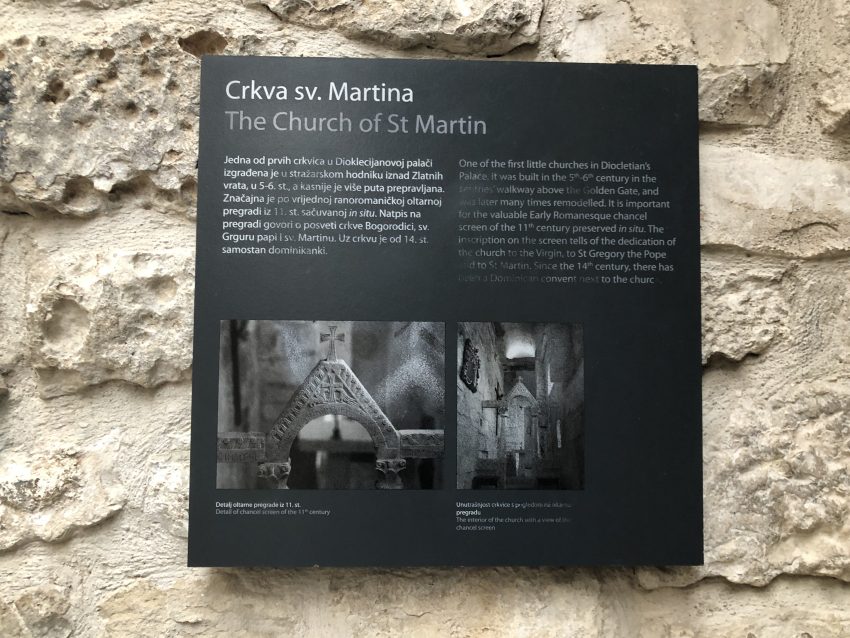
St Martin’s Church is one of Split’s smallest and oldest church spaces, created within a former guard corridor inside the Golden Gate structure of Diocletian’s northern wall. The conversion to a church is generally placed in the early medieval period (commonly cited around the 6th century), when Christian communities adapted palace infrastructure for worship. What to see is the extreme compactness—this is sacred architecture squeezed into military architecture—and the survival of early medieval stonework such as an 11th-century chancel screen. The fact that it’s embedded in the gate complex makes it a rare “inside the wall” experience. Go in with the right expectations: it’s not grand, it’s intimate, and that’s the point. A few minutes here clarifies how thoroughly Split repurposed the palace, turning guard spaces into chapels without erasing the Roman skeleton underneath.
Location: Dioklecijanova ul. 10, 21000, Split, Croatia | Hours: Check official website. | Price: From €1 (small on-site contribution commonly requested).
12. Golden Gate
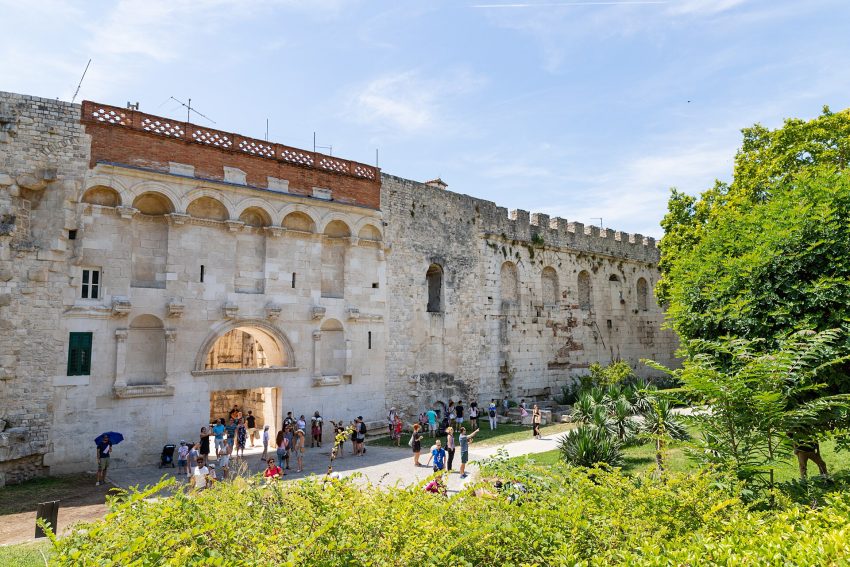
The Golden Gate (Porta Aurea) is the main northern gate of Diocletian’s Palace, built in the 4th century as the most ceremonially important entrance. Over the Middle Ages it was sealed and altered, then later reopened and repaired, which is why it reads today as both Roman and historically “intervened.” What to see is the scale and status: even without all its original decoration, it still feels like the primary threshold into an imperial complex. Historically, this gate aligned with the route leading toward Salona, the major Roman centre in the region and closely tied to Diocletian’s life. Look for the way later history attaches itself here, including the presence of the tiny St Martin’s church within the gate structure. It’s a good final “big gate” stop because it summarises Split’s story in one view: Roman monument, medieval adaptation, and modern city life flowing through.
Location: Dioklecijanova 7, 21000, Split, Croatia | Hours: 24 Hours. | Price: Free.
13. Grgur Ninski Statue
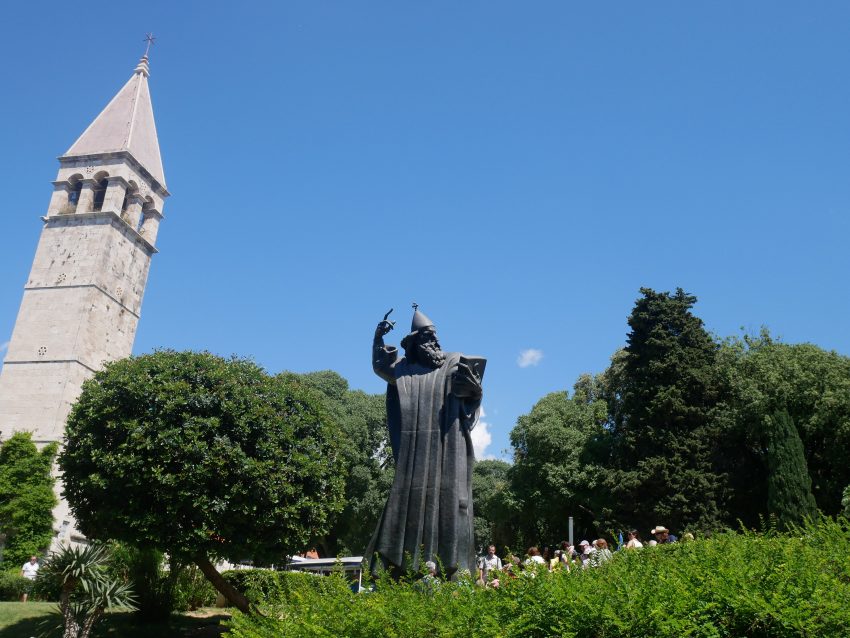
The monumental bronze statue depicts Gregory of Nin (Grgur Ninski), a figure strongly associated with Croatian religious and cultural history, and it was created by sculptor Ivan Meštrović in 1929. Its placement near the palace gates makes it one of Split’s most photographed modern landmarks in an ancient setting. What to see is the sculpture’s sheer scale and surface detail—this is public art designed to be encountered up close, not just viewed from afar. The statue has also accumulated local ritual, with visitors commonly touching or rubbing the toe for luck. Stand back to frame it against the stone architecture nearby, then come in close to see how Meštrović modelled the robe and face for maximum presence. It’s a quick stop, but it says a lot about 20th-century national symbolism layered onto the Roman city.
Location: Ul. kralja Tomislava 12, 21000, Splitska, Croatia | Hours: 24 Hours. | Price: Free.
14. Game of Thrones Museum
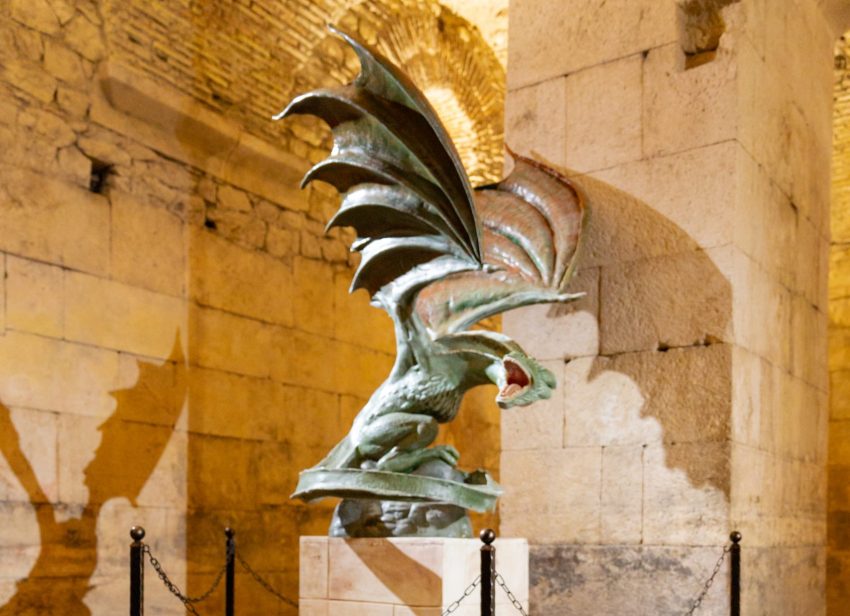
Split’s Game of Thrones Museum exists because parts of the series were filmed in and around the old town and Diocletian’s Palace area. The museum is a modern, fan-focused space in the historic centre, commonly listed at Bosanska ulica 9. What to see is the display of series-themed material—props and set-style recreations are frequently highlighted in visitor descriptions, along with explanations of how Split’s locations were used on screen. It’s designed to be interactive and photo-friendly rather than a formal, academic museum. Go if you want a pop-culture counterpoint to the heavy history outside, and treat it as a short, focused visit. The best part for many people is simply connecting recognisable filming context with the real stone streets you’ve just walked through.
Location: Bosanska ul. 9, 21000, Split, Croatia | Hours: Monday: 09:00–24:00. Tuesday: 09:00–24:00. Wednesday: 09:00–24:00. Thursday: 09:00–24:00. Friday: 09:00–24:00. Saturday: 09:00–24:00. Closed on Sunday. | Price: Check official website.
15. Iron Gate and Church of Our Lady of the Bell Tower
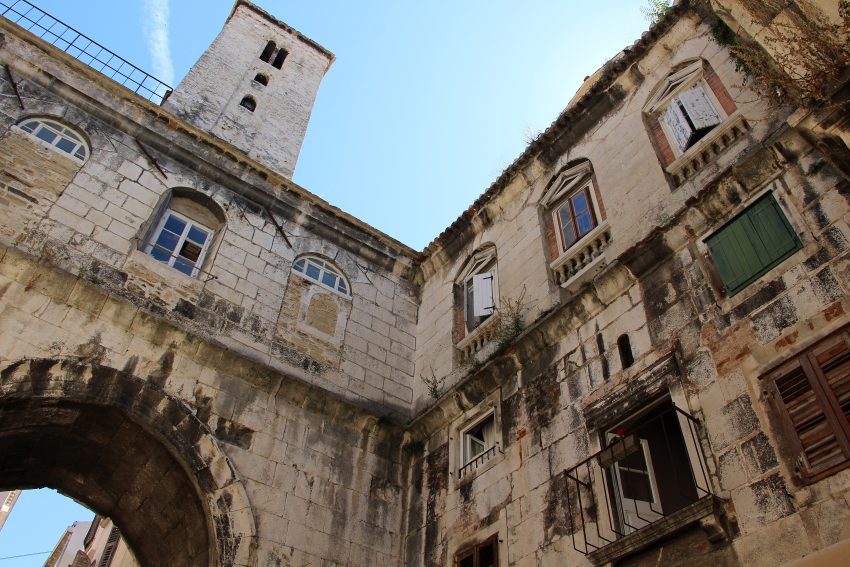
The Iron Gate is the western gate of Diocletian’s Palace and is notable for remaining in continuous use, evolving from a Roman military entrance into a living city gateway. Above and around it, later Christian elements were added as the palace transformed into a populated medieval town. The Church of Our Lady of the Belfry (Gospa od Zvonika) is associated with this gate area, with origins traced to an early Christian phase and an 11th-century bell tower that’s frequently cited as exceptionally early on the Adriatic’s Croatian side. Today, what survives most visibly is the bell tower itself, a small but significant piece of early medieval architecture embedded in the Roman fabric. What to see is the layering: Roman gate structure below, then the compact ecclesiastical footprint and bell tower above, all compressed into one urban corner. It’s a good place to slow down and notice how Split reused the palace defensively and spiritually, not just residentially.
Location: Peristil ul. 2, 21000, Split, Croatia | Hours: Check official website. | Price: Check official website.
16. People's Square
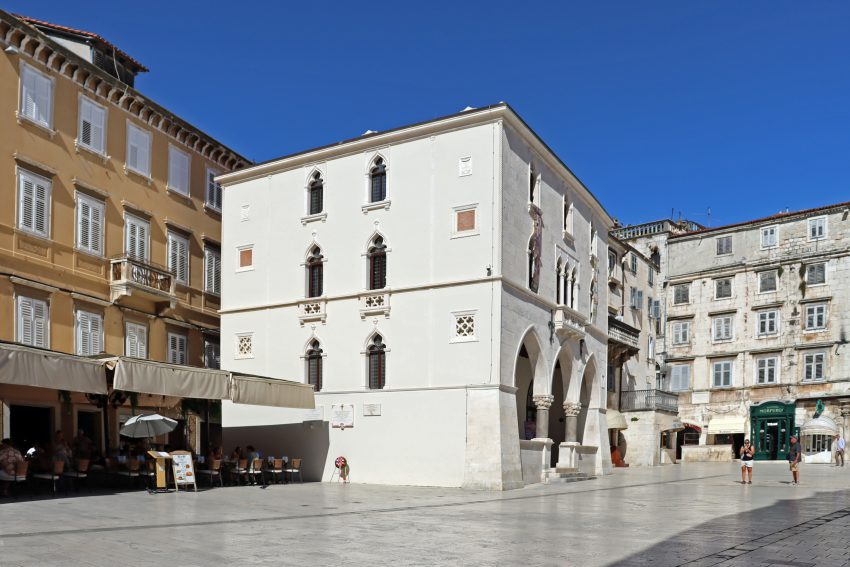
People’s Square (Pjaca / Narodni trg) is first mentioned in the 13th century and developed as Split’s earliest major civic space outside the palace walls, leaning against the complex’s western side. Over time it became a showcase for the city’s noble townhouses and public life beyond the Roman core. What to see is the architecture around the square—its mix of styles reflects centuries of urban growth as Split expanded outward. The square’s historic role as a social and administrative centre is still obvious in how cafés and gatherings naturally cluster here. Spend a few minutes looking up at façades and corners rather than only crossing the open space. This is one of the best places in the old town to feel the shift from “imperial complex” to “medieval and later city.”
Location: 21000, Grad, Split, Croatia | Hours: 24 Hours. | Price: Free.
17. Prokurative
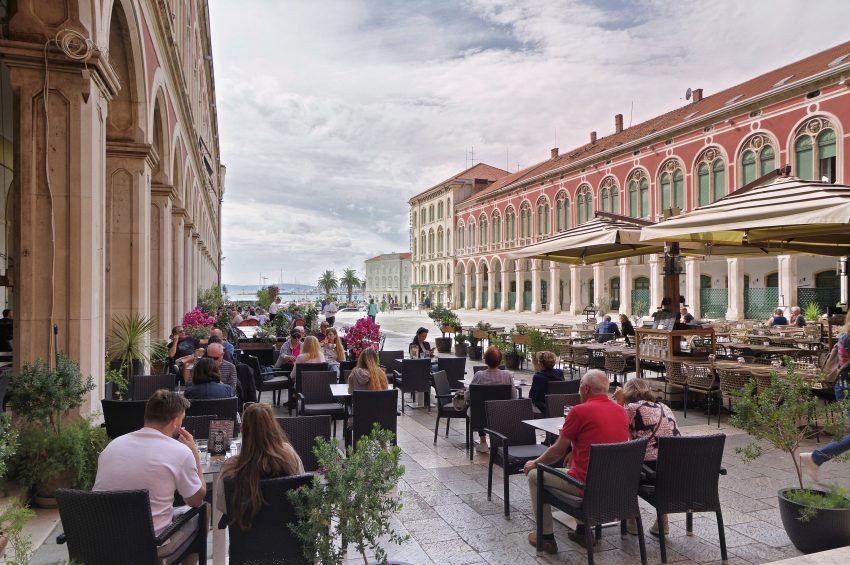
Prokurative (Republic Square) is a 19th-century project associated with Mayor Antonio Bajamonti, conceived during a period when Split was modernising beyond the palace walls. Its arcaded façades were intentionally styled to evoke Italian and Venetian urban traditions. What to see is the grand, stage-like geometry of the square: the long colonnades, the symmetry, and the sense that it was designed for civic display rather than medieval intimacy. It’s also a space that often hosts public events, so it can feel like Split’s open-air salon. Stand at the edge and take in the full sweep of the arcades, then walk under them to feel how they frame views and shade. Architecturally, it’s one of the clearest “modern city” interventions near the ancient core.
Location: Prokurative, 21000, Split, Croatia | Hours: 24 Hours. | Price: Free.
18. Fruit's Square
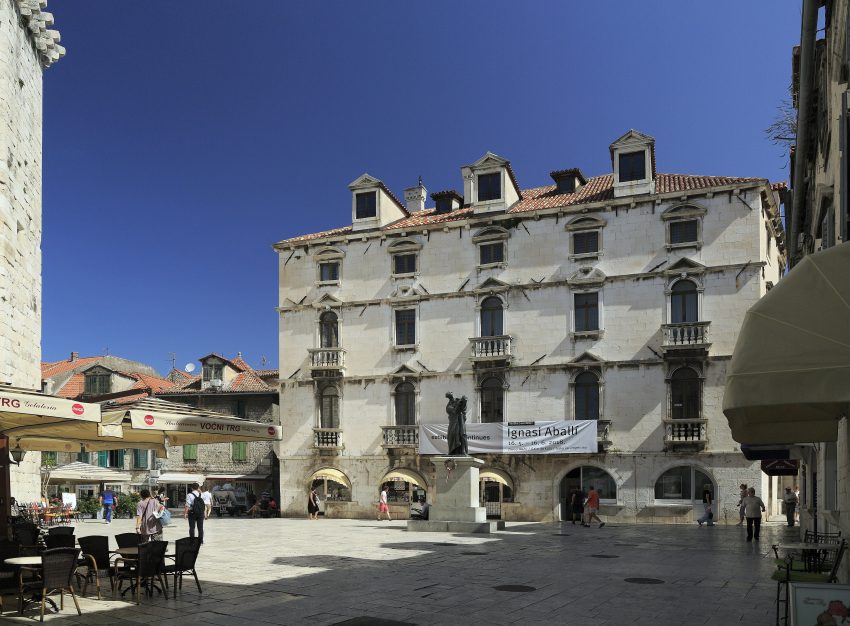
Fruit Square (Voćni trg, formally Trg Braće Radić) earned its nickname from the fruit market that once animated this small space with sellers from the surrounding villages. It also preserves fragments of Split’s Venetian-era defensive story, including a 15th-century octagonal Venetian tower. What to see includes that Venetian tower and the surrounding historic buildings, which make the square feel like a compact outdoor museum of urban layers. A key focal point is the statue of Marko Marulić, a major figure in Croatian literature, placed right in the centre. Today it’s a relaxed pause-point with restaurants and small shops, but it rewards slow observation. If you like details, this is where you can spot how defence, trade, and cultural pride all share the same few metres of stone.
Location: Trg Braće Radić 5, 21000, Split, Croatia | Hours: 24 Hours. | Price: Free.

Moira & Andy
Hey! We're Moira & Andy. From hiking the Camino to trips around Europe in Bert our campervan — we've been traveling together since retirement in 2020!
This website uses affiliate links which earn a small commission at no additional cost to you.
Walking Tour Summary
Distance: 1.5 km
Sites: 18