Self-Guided Walking Tour of Siena (2026)
This website uses affiliate links which earn a small commission at no additional cost to you.
Siena is a city made for wandering. Its medieval lanes twist and climb, opening suddenly onto sunlit squares, stone churches, and postcard-perfect views over terracotta rooftops. A self-guided walk lets you slow down, take detours, and linger where it feels right-without the pressure of a group or a timetable.
This route is designed to link the best things to see in Siena into one satisfying loop, mixing headline landmarks with quieter corners that give the city its character. Expect a blend of grand Gothic architecture, lively civic spaces, and those small Siena moments-bells in the distance, a hidden courtyard, a bakery window you can't ignore.
You can do the walk in a few hours, or stretch it into a full day with gelato breaks, museum visits, and long stops for coffee or lunch. Bring comfortable shoes for the slopes and cobbles, keep your camera handy, and treat the city like a story you’re reading one street at a time.
How to Get to Siena
By Air: Siena doesn't have its own commercial airport, so you'll fly into one of Tuscany's larger hubs and continue overland. Florence Airport is the closest major option, while Pisa Airport often has more low-cost and international routes; Rome's airports can also work if flights are significantly cheaper, but the onward journey is longer. From any of these airports, the simplest next step is a train or bus to Siena, or a rental car if you plan to explore the surrounding countryside. For the best deals and a seamless booking experience, check out these flights to Siena on Booking.com.
By Train: Siena is well-connected by rail, but most routes involve a change, commonly at Empoli when coming from Florence, and sometimes at Chiusi-Chianciano Terme when coming from Rome. Trains arrive at Siena station, which sits below the historic centre; from there you can take local buses, a taxi, or use the escalator system and walking paths to reach the old town without tackling a steep climb all at once. For day trips, trains are reliable, but factor in transfer times and check schedules if you're traveling early morning or later in the evening. Use Omnio to easily compare schedules, book train tickets, and find the best prices all in one place for a hassle-free journey across Italy.
By Car: Driving is convenient if you want flexibility for wineries, hill towns, and rural stays, but it’s not the easiest way to approach the medieval core. The historic centre is a ZTL (limited traffic zone) and fines are common, so plan to park in one of Siena’s paid car parks outside the walls and walk or take an escalator/bus up. If you’re staying overnight, confirm with your accommodation whether they can register your plate for limited access, then treat the car as a base tool rather than something you’ll use inside the centre. If you are looking to rent a car in Italy I recommend having a look at Discover Cars, first, as they compare prices and review multiple car rental agencies for you.
By Bus: Buses are often the most straightforward option from nearby cities, especially Florence, with frequent services that can be quicker than the train once you include rail transfers. Coaches typically arrive closer to the old town than the train station, which makes arrival and departure easier if you're doing Siena as a day trip with minimal luggage. If you're arriving from smaller Tuscan towns, regional buses can be more direct than rail, but schedules can thin out on Sundays and holidays, so it's worth checking timings in advance.
A Short History of Siena
Siena in Etruscan and Roman Times
Siena’s earliest roots lie in a landscape shaped by pre-Roman settlement and later absorbed into the Roman world. The city’s identity was never purely imperial in character; even when Roman influence settled in, Siena’s story remained tied to local networks of trade, agriculture, and small-scale urban life rather than the monumental stamp of a single conquering vision. This layered beginning matters because it set the pattern that repeats throughout Siena’s history: a strong civic personality, built as much from local institutions and patronage as from outside powers.
As centuries passed, Christianity gradually reshaped the city's rhythms and spaces, laying the groundwork for Siena's medieval ascent. The earliest religious foundations evolved over time into the great ecclesiastical complex that would later culminate in the Duomo di Siena, with the Battistero di San Giovanni and the artistic riches now gathered in the Museo dell'Opera del Duomo and the Facciatone. The physical fabric of Siena began to turn inward and upward, shaped by devotion, craft, and the ambitions of a community learning to express itself through stone and ceremony.
Siena’s Medieval Rise and the Making of a City-State
From the 1100s onward, Siena grew into a self-confident commune, increasingly governed by civic bodies that treated the city as a shared project. Power, pride, and public life focused on spaces created specifically for government and ceremony, most famously the Piazza del Campo. The Campo wasn't just a convenient open area; it was an architectural statement about Siena's civic order, designed as a stage where government, religion, commerce, and festival life could intersect in plain sight.
The city-state's institutions took on physical form in the Palazzo Pubblico, whose frescoes and painted cycles-today central to the Museo Civico-were not simply decorative, but didactic. Art in Siena often carried the weight of political theory, moral instruction, and civic aspiration. Above it all rose the Torre del Mangia, a vertical emblem of communal authority and competitive prestige, signaling Siena's place among the proud cities of medieval Italy. Nearby, the Fonte Gaia added another layer of meaning: the idea that public works, water, and beauty belonged to the community, not just the elite.
Siena in the 1200s and 1300s
The 1200s and early 1300s marked Siena's high medieval confidence, when wealth, banking, and international connections fed an extraordinary burst of building and artistic production. This is the period when Siena's religious heart took on its most dramatic form, with the Duomo di Siena becoming a showcase of faith and competitive grandeur. The artistic culture that flourished here wasn't only about piety; it was also about status, civic pride, and Siena's desire to speak in a visual language as powerful as its political voice.
It is also the era that reveals Siena’s complex relationship between spiritual life and practical care. Santa Maria of Scala Hospital Museum preserves the memory of a medieval institution that was simultaneously charitable, medical, administrative, and symbolic-an embodiment of the city’s belief that civic responsibility included caring for the vulnerable. In the same centuries, daily life flowed along arteries such as Via di Città, where commerce, noble residences, and civic movement wove together a lived city beneath the grand facades and sacred spaces.
Siena from Renaissance Splendour to Shifting Power
As the Renaissance unfolded, Siena absorbed new currents of taste and learning while still protecting its distinct artistic voice. Humanist patronage and ecclesiastical ambition enriched the cathedral complex, and the Biblioteca Piccolomini stands as one of the clearest expressions of that era's ideals-learning, lineage, and the use of art to project refined authority. Siena's Renaissance was not a clean break from the medieval past; it layered new cultural ambitions onto older civic and religious frameworks.
Yet Renaissance brilliance also arrived alongside growing external pressure and internal strain. Siena's political independence faced increasing challenges from larger regional powers, and the city's institutions had to navigate a changing Italy where survival depended on alliances, resources, and military realities. The impressive civic core-Campo, Palazzo Pubblico, and the surrounding fabric-remained Siena's symbolic anchor even as the practical balance of power shifted beyond its walls.
Siena in the Early Modern and Modern Eras
In the centuries that followed, Siena's pace of change slowed compared with rapidly industrialising centres, and that relative stillness helped preserve the city's historic character. Civic identity continued to revolve around long-established institutions, rituals, and neighbourhood loyalties, while art and architecture remained central to how Siena understood itself. Museums such as the Museo dell'Opera del Duomo and the Museo Civico became custodians of memory, gathering the artistic evidence of Siena's earlier centuries and reframing it for new audiences.
Modern Siena's history is also a story of continuity through reinvention: historic spaces adapted to new needs without losing their symbolic weight. The Piazza del Campo still operates as Siena's civic living room, a place where the city's layered past feels immediate rather than distant. Walk Siena today and the narrative is readable in its landmarks-the Torre del Mangia watching over the Campo, the cathedral complex expressing centuries of devotion and ambition, and routes like Via di Città linking the everyday to the monumental in a single, coherent urban story.
Where to Stay in Siena
To make the most of visiting Siena and this walking tour, consider staying overnight in the centre. If you base yourself within the historic core, you can start early at Piazza del Campo, return easily for breaks, and enjoy Siena after the day-trippers leave. For a classic, walk-everywhere stay close to the Campo and the main lanes, look at Hotel Athena, Grand Hotel Continental Siena - Starhotels Collezione, and Hotel Palazzo di Valli. These put you in a strong position for the city’s headline sights while still giving you easy access to restaurants and evening atmosphere.
If you want to be closest to the Duomo side of the old town and the museum cluster, the area around the cathedral and the upper streets makes a good base for an art-and-architecture-focused visit, with short walks to the Duomo complex, Biblioteca Piccolomini, and the viewpoints near the Facciatone. In this zone, consider Hotel Duomo, Albergo Cannon d'Oro, and B&B Palazzo Bulgarini, all of which keep you tightly connected to the most central lanes and make it easy to dip in and out of the route without relying on transport.
For a slightly calmer feel with easier arrival by car or taxi, staying just outside the walls or near the main parking areas can be the smartest compromise-still walkable to the centre, but often quieter at night and simpler if you have luggage. This works particularly well if you're combining Siena with countryside time and want straightforward access in and out. Options in this style include NH Siena, Hotel Italia, and Four Points by Sheraton Siena, which tend to suit travellers prioritising convenience while still keeping the walking tour comfortably within reach.
Your Self-Guided Walking Tour of Siena
Discover Siena on foot with our walking tour map, guiding you from stop to stop as you explore its medieval lanes, landmark piazzas, and hidden corners. Because this is a self-guided walking tour, you can set your own pace, skip anywhere that doesn't interest you, and pause for coffee, gelato, or photos whenever you feel like it.
1. Piazza del Campo
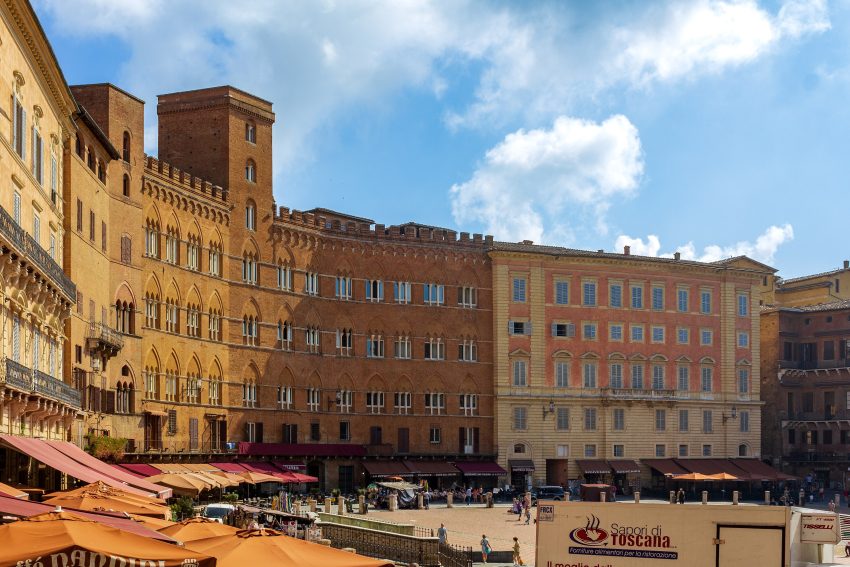
Piazza del Campo is Siena’s civic heart, laid out in its distinctive shell shape during the 13th and 14th centuries as the city’s mercantile wealth and self-confidence peaked under the Republic of Siena. The sloping pavement and nine main segments are traditionally linked to the Council of Nine, the governing body that oversaw Siena’s most prosperous medieval decades. Unlike many Italian piazzas that feel like open courtyards, the Campo reads like an outdoor amphitheatre, designed to gather crowds and stage public life.
Look closely at the paving as it falls towards the Palazzo Pubblico: that gentle incline is part of the drama, pulling your eye to Siena’s seat of power. Around the edge, the warm-toned palazzi form an almost continuous ring, punctuated by cafés and historic façades that make it easy to imagine the square as a medieval marketplace. The open space also reveals Siena’s urban planning at its most theatrical, with sightlines deliberately framed.
When you visit, take time to circle the perimeter and then stand mid-slope to appreciate how the architecture “holds” the square. From the Campo you can pick out key landmarks in seconds: the Torre del Mangia rising above the skyline and the Palazzo Pubblico anchoring the lower edge. Early morning and late afternoon are best for atmosphere and softer light, when the brick tones deepen and the square feels less hurried.
Location: Il Campo, 53100 Siena SI, Italy | Hours: 24 Hours. | Price: Free.

2. Museo Civico
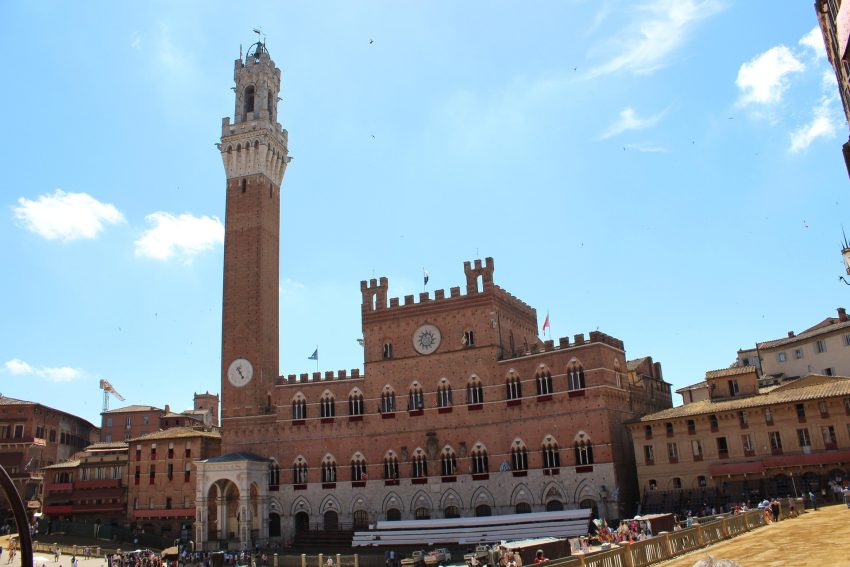
Museo Civico is housed inside the Palazzo Pubblico, and it preserves Siena’s artistic identity exactly where it was meant to function: in the chambers of government. The museum’s core is a set of civic rooms decorated at the height of Siena’s medieval power, when painting was used not just for devotion but for political messaging. This is where Siena’s leaders met, negotiated, and asserted the city’s values in imagery.
The standout is the Sala della Pace, famed for Ambrogio Lorenzetti’s fresco cycle on good and bad government, one of the most extraordinary works of secular medieval art in Europe. Rather than saints and miracles, you get a visual argument about justice, civic responsibility, prosperity, and the consequences of tyranny. It’s a rare chance to see how a 14th-century city state explained itself to those in charge.
Beyond the frescoes, move through the adjoining rooms for additional panels, allegories, and decorative schemes that show Siena’s stylistic confidence. Windows and viewpoints within the complex also help you connect the art to the city outside: you’re not in a detached gallery, but in a living civic monument. Give yourself time to absorb the details; these paintings reward slow looking.
Location: Il Campo, 1, 53100 Siena SI, Italy | Hours: (Summer) March 1 – October 31: Daily: 10:00–19:00. (Winter) November 1 – February 28: Daily: 10:00–18:00. | Price: Adults: €10; Reduced: €9; Under 11: free. | Website
3. Palazzo Pubblico
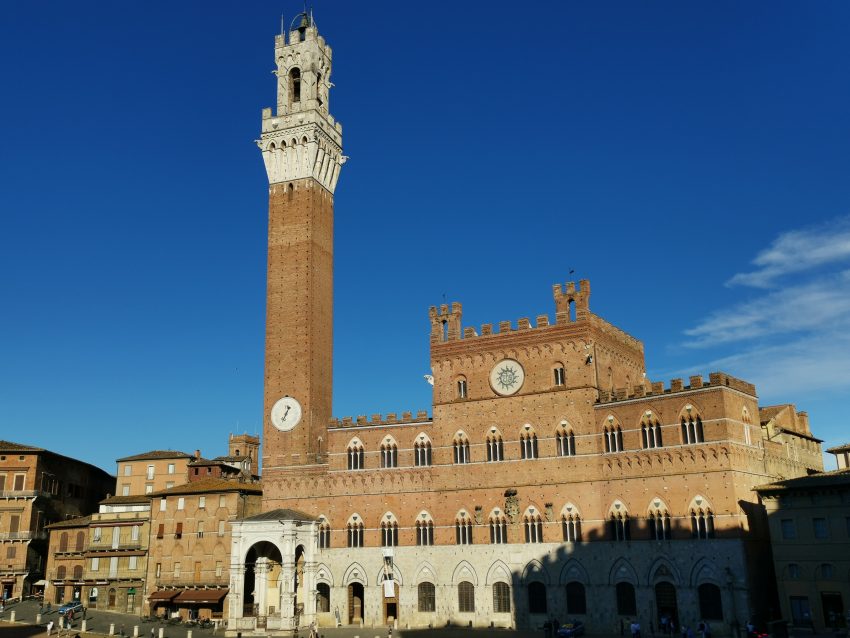
Palazzo Pubblico was begun at the end of the 13th century as Siena’s town hall, a deliberate statement that civic authority belonged to the community and its institutions rather than to a single ruler. Built in brick with elegant Gothic lines, it faces the Campo like a stage set for public power, with an architecture that is both imposing and surprisingly refined. Its form reflects Siena’s identity as a fiercely independent medieval republic.
From the outside, the palace’s curved façade mirrors the shape of the square, strengthening the sense that the Campo and the Palazzo are one unified civic space. The building is rich in emblematic details: coats of arms, carefully proportioned windows, and the overall harmony that Siena’s builders achieved with relatively simple materials. It’s worth stepping back across the Campo to see how the whole composition works together.
Inside, the atmosphere changes from open piazza to solemn government rooms, many still carrying the visual language of authority and virtue. Even if you focus on just a few key spaces, you’ll come away with a clearer sense of how Siena projected stability and order. Look out for the transition points—staircases, corridors, and thresholds—because they were designed to impress visitors moving from public space into the seat of administration.
Location: Il Campo, 1, 53100 Siena SI, Italy | Hours: (Summer) March 1 – October 31; Daily: 10:00–19:00. (Winter) November 1 – February 28; Daily: 10:00–18:00. | Price: Adults: €10; Reduced: €9; Under 11: free. | Website
4. Torre del Mangia
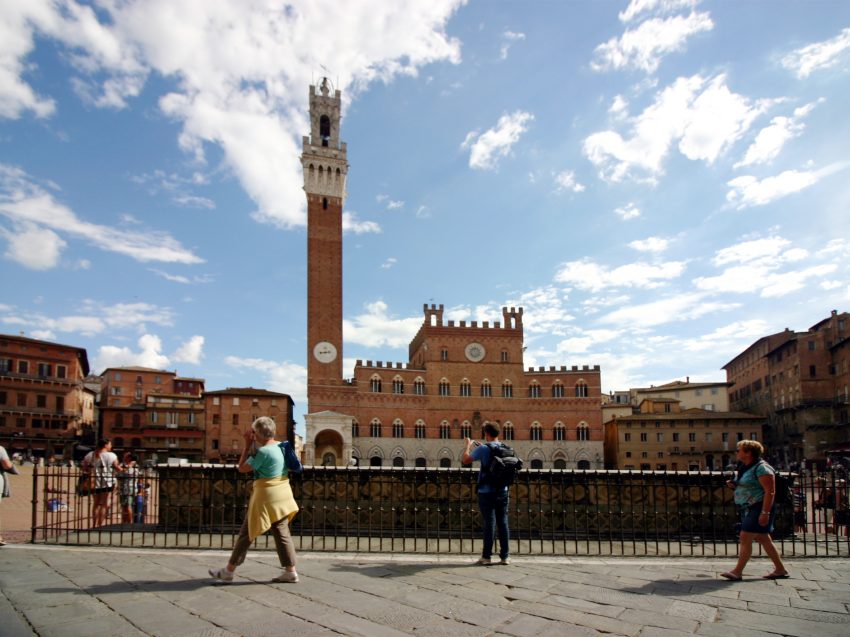
Torre del Mangia was built in the 14th century to rival Florence’s great civic tower and to proclaim Siena’s strength in unmistakable vertical form. Its name comes from Giovanni di Balduccio, the first bell-ringer, nicknamed “Mangiaguadagni” (“eat-the-earnings”) for his alleged fondness for spending. Rising beside the Palazzo Pubblico, the tower reinforces the idea that the city’s identity was civic, communal, and publicly visible.
Architecturally, the tower balances brick with pale stone bands and culminates in a distinctive crown, giving it elegance rather than brute mass. The tower’s relationship to the Campo below is key: it marks time, calls attention, and anchors Siena’s daily rhythms, much as it would have in the medieval period when bells structured urban life. It also acts as a constant point of orientation as you move through the city’s winding streets.
Climbing the tower is about the view, but also about understanding Siena’s topography: the city’s ridges, dense brick skyline, and the surrounding Tuscan countryside spread out in every direction. From above, you can trace how Siena’s neighbourhoods interlock and how major landmarks align. If you go, pace yourself on the stairs and take pauses at the windows; the changing angles reveal the Campo and the Duomo complex in a way ground level never can.
Location: Torre del Mangia, 53100 Siena SI, Italy | Hours: (Summer) March 1 – October 31: 10:00–19:00. (Winter) November 1 – February 28: 10:00–16:00. | Price: Adults: €10 (Torre del Mangia ticket). | Website
5. Fonte Gaia
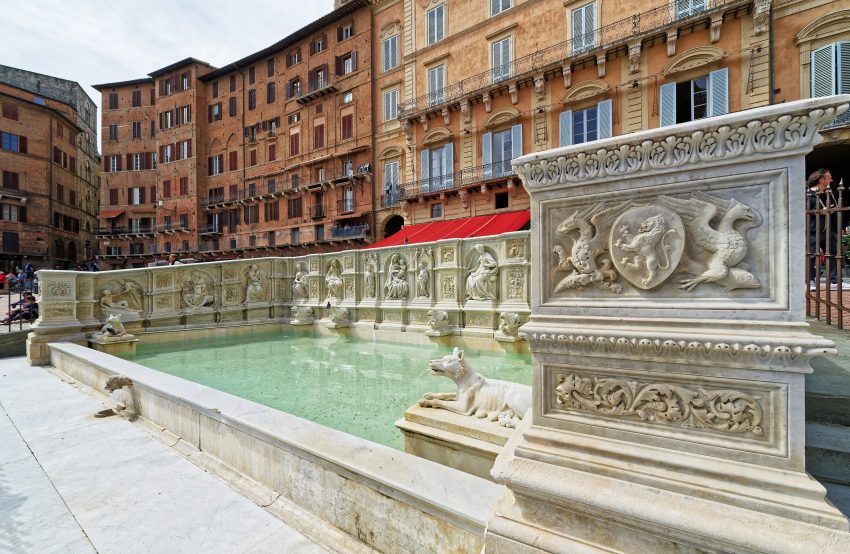
Fonte Gaia was commissioned in the early 15th century as a celebratory public fountain, reflecting Siena’s long-running investment in water engineering and urban display. The original marble decoration was created by Jacopo della Quercia, one of the most important sculptors of his time, and it set a new standard for expressive, monumental relief in the city. The fountain’s name is often linked to the joy (“gaia”) that supposedly greeted the arrival of fresh water at the Campo.
What you see today is a carefully made copy, placed to protect the original sculptures, but the composition still reads clearly: central figures, surrounding panels, and a rhythmic narrative structure that feels both devotional and civic. The fountain’s placement on the upper edge of the Campo is deliberate, functioning as both utility and ornament, and it becomes a natural focal point as you scan the square’s architecture.
Spend a few minutes reading the panels and comparing the crispness of the carving with the softer brick landscape around it. It’s also one of the best places in the Campo to pause and take in the full “theatre” of the square, with the Palazzo Pubblico and tower drawing you downhill. In the evening, the fountain area often feels calmer than the centre of the piazza, making it a good spot to appreciate the Campo’s proportions.
Location: Via Fontebranda, 50, 53100 Siena SI, Italy | Hours: 24 Hours. | Price: Free.
6. Battistero di San Giovanni
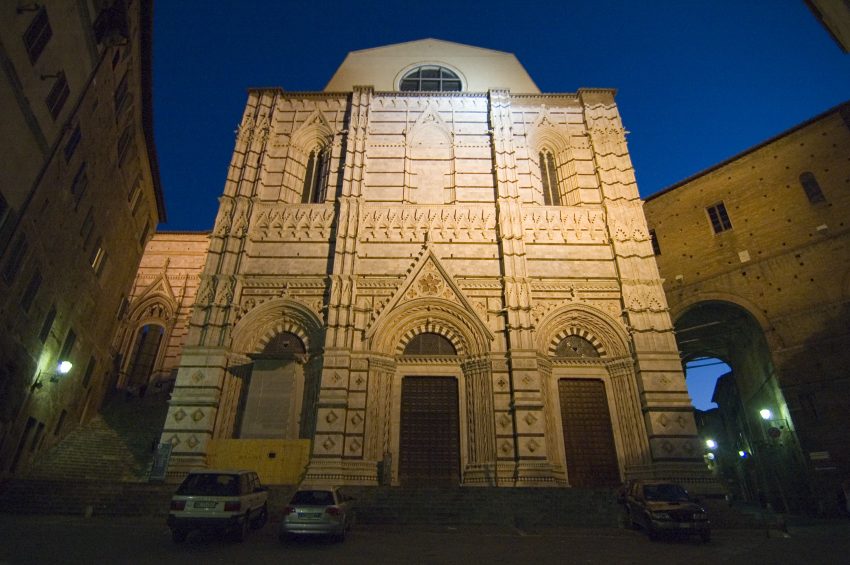
The Baptistery of San Giovanni sits behind the Duomo and represents Siena’s late medieval and early Renaissance ambition in both architecture and sculpture. Constructed largely in the 14th and 15th centuries, it forms part of the cathedral complex and reflects the period when Siena was competing artistically with rival city states. Its setting, tucked into the folds of the cathedral’s terrain, can feel like discovering a hidden chapter of the same grand story.
Inside, the space is known for its baptismal font, a collaborative masterpiece involving leading sculptors of the era, with reliefs that bring biblical scenes to life in dense, energetic carving. The interior also carries an atmosphere distinct from the cathedral proper: more intimate, more focused, and often quieter, which suits its sacramental purpose. The architecture guides your attention towards the font and the ritual meaning of the room.
When visiting, look for the contrast between the building’s structural clarity and the sculptural richness at the centre. Pay attention to how light falls across the reliefs, because it sharpens the storytelling and makes the figures feel almost animated. Stepping back outside, take a moment to understand the Baptistery’s placement within the wider Duomo ensemble; it’s one of Siena’s best examples of how complex sites grow over centuries while still feeling unified.
Location: Piazza S. Giovanni, 1, 53100 Siena SI, Italy | Hours: (Winter) January 7 – March 31: 10:30–17:30. (Summer) April 1 – October 31: 10:00–19:00. | Price: Whole: €14 (January 1 – June 26; August 1 – August 17; October 16 – December 31); €16 during the Cathedral floor uncovering (June 27 – July 31; August 18 – October 15). Reduced (children 7–11): €3; Children up to 6: free. | Website
7. Museo dell'Opera del Duomo & Facciatone
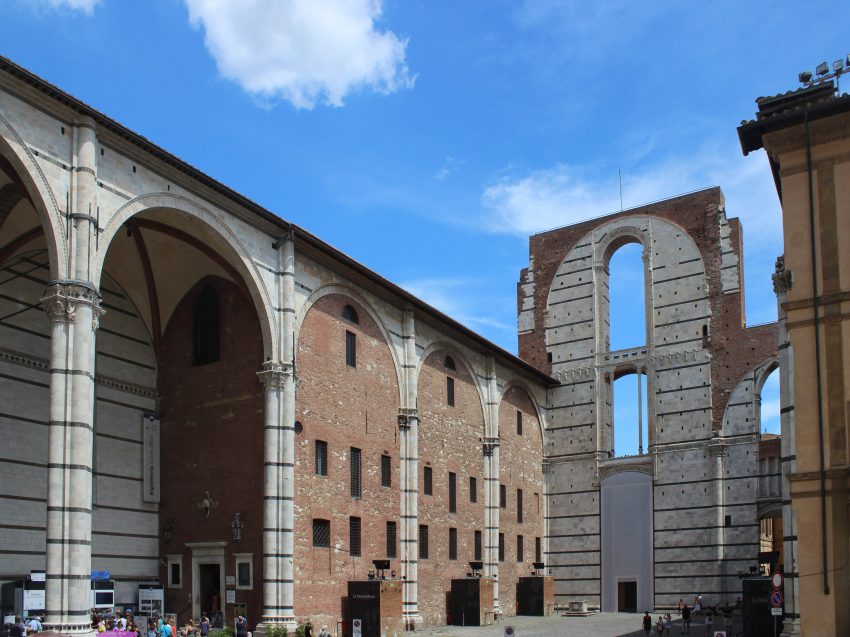
Museo dell’Opera del Duomo preserves artworks and architectural fragments connected to Siena’s cathedral, but it’s also inseparable from one of the city’s most dramatic “what if” stories. In the 14th century, Siena planned an enormous expansion of the cathedral that would have produced one of the largest churches in Christendom. The project stalled—financial strain, structural challenges, and the devastating impact of the Black Death all played their part—leaving behind the unfinished façade wall known as the Facciatone.
The museum context helps you read the cathedral not as a single finished masterpiece, but as a living project shaped by ambition and crisis. Collections typically include sculpture, painting, and liturgical pieces that once belonged to the Duomo complex, allowing you to connect artistry with the institution that commissioned it. The story of the halted expansion adds an edge of poignancy: you’re looking at evidence of Siena’s grandest aspirations and its abrupt limits.
The Facciatone viewpoint is a major reason people come here, because it turns an architectural remnant into a spectacular vantage point. From this angle, you see Siena’s dense medieval fabric at close range and the Duomo’s own striped marble surfaces in unusual perspective. Treat the experience as both museum visit and architectural excavation: the artefacts explain the site, and the unfinished masonry explains Siena’s history.
Location: Piazza del Duomo, 8, 53100 Siena SI, Italy | Hours: (Winter) January 7 – March 31 2026: Daily: 10:30–17:30. | Price: Adults: €14 (January 1 – June 26; August 1 – August 17; October 16 – December 31) or €16 (June 27 – July 31; August 18 – October 15); Children 7–11: €3; Under 7: free. | Website
8. Biblioteca Piccolomini
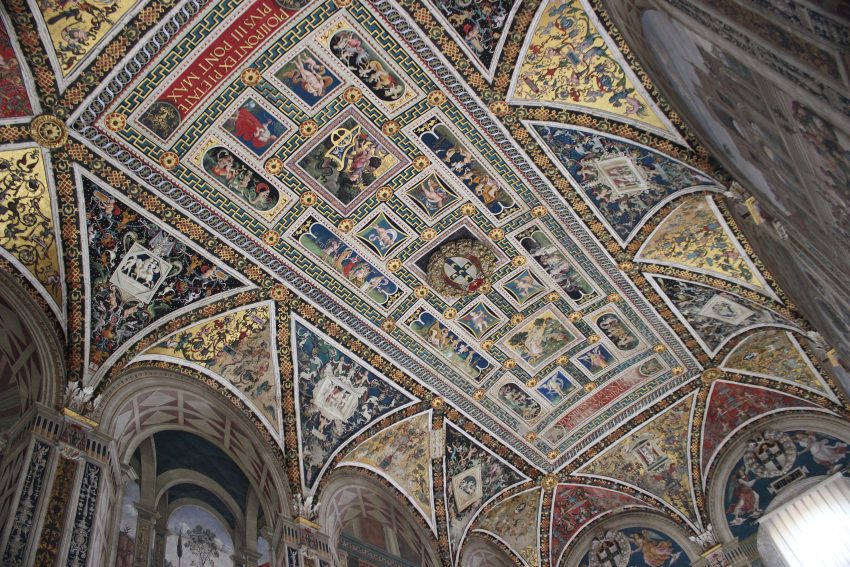
The Piccolomini Library was created in the early 16th century to honour Enea Silvio Piccolomini, who became Pope Pius II, and it stands as a high Renaissance jewel within Siena’s cathedral complex. Commissioned by Cardinal Francesco Piccolomini (later Pope Pius III), the library was designed to house precious manuscripts and to project the family’s cultural prestige. It’s a reminder that Siena’s story is not only medieval republics and rivalries, but also humanist learning and papal connections.
The room is celebrated for its vivid fresco cycle, attributed to Pinturicchio and his workshop, illustrating episodes from Pius II’s life in richly coloured, detail-packed scenes. The imagery is theatrical, full of costume, architecture, and ceremonial pageantry, and it contrasts strikingly with Siena’s more austere civic Gothic spaces. The ceiling decoration and the overall colour saturation create an almost immersive effect.
When you’re inside, slow down and scan the frescoes as narratives rather than isolated pictures; they read like a visual biography. Look also at the manuscript displays, which underline the library’s original function as a treasury of learning. Because the space can get busy, try to position yourself where you can see the full length of the room at once; the intended impact is cumulative, like stepping into a painted world.
Location: Piazza del Duomo, 8, 53100 Siena SI, Italy | Hours: Monday – Saturday: 10:30–17:30. Sunday: 13:30–17:30. | Price: Included with Siena Cathedral/OPA SI complex admission; reduced ticket (children 7–11): €3; children up to 6: free. | Website
9. Duomo di Siena
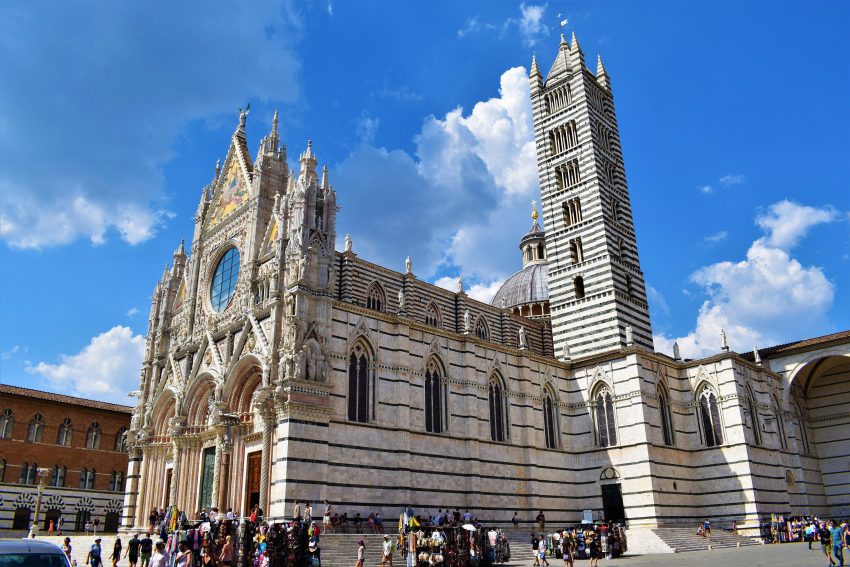
Siena’s cathedral is one of the most distinctive achievements of Italian Gothic, shaped over centuries and infused with the city’s competitive pride. Its black-and-white marble striping echoes Siena’s heraldic colours and creates an immediate sense of identity, inside and out. The Duomo’s long building history reflects shifting artistic tastes, political fortunes, and the steady desire to make a sacred space that could rival any in Italy.
The exterior rewards careful viewing: sculpted portals, layered decorative programs, and a façade that feels like an elaborate stone screen. Inside, the same striped marble continues, creating a rhythm that draws your eye through the nave and into the chapels. The cathedral also operates as a container for art across periods, with sculpture, painting, and decorative schemes that reflect Siena’s role as a major artistic centre.
What to see depends on your interests, but don’t rush past the basics: look up, look down, and look sideways. The floor is famously intricate, and the interior’s visual density can be overwhelming in the best way, with each bay offering another set of details to decode. Give yourself time for stillness: the Duomo is at its most impressive when you let your eyes adjust and start noticing how geometry, pattern, and narrative all work together.
Location: Piazza del Duomo, 8, 53100 Siena SI, Italy | Hours: (Winter) January 7 – March 31, 2026: Monday – Saturday: 10:30–17:30; Sunday & Public Holidays: 13:30–17:30. (Summer) April 1 – October 31, 2026: Monday – Saturday: 10:00–19:00; Sunday & Public Holidays: 13:30–18:00. | Price: OPA SI PASS (valid 3 consecutive days): Adults: €14 (January 1 – June 26; August 1 – August 17; October 16 – December 31); Adults: €16 (June 27 – July 31; August 18 – October 15); Children 7–11: €3; Under 7: free. | Website
10. Santa Maria of Scala Hospital Museum
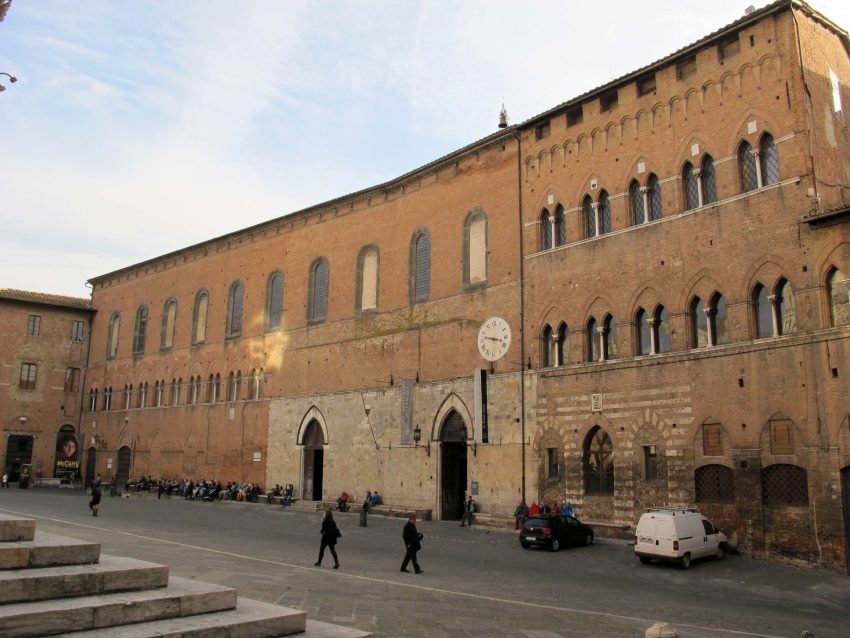
Santa Maria della Scala began as a hospital and charitable institution opposite the cathedral, and it grew into one of Siena’s most important civic and religious foundations. For centuries it cared for the sick, sheltered pilgrims, and supported the poor, making it a practical expression of medieval Christian duty woven into the city’s everyday life. Its location—facing the Duomo—signals how closely Siena linked spiritual authority with public welfare.
Today, as a museum complex, it preserves the layered spaces of the former hospital: halls, chapels, corridors, and rooms that still communicate the scale of the institution. Frescoed interiors, where they survive, are especially evocative because they show how Siena visualised care, charity, and institutional pride. The building is also a physical record of how cities organised social services long before modern healthcare.
When you visit, focus on the atmosphere as much as the individual exhibits: the sense of depth, the worn thresholds, and the changing room volumes tell their own story. Look for surviving decorative cycles that depict hospital life and patronage, since they are unusually direct windows into medieval society. It’s also a good place to understand Siena beyond its headline monuments, because it connects art and architecture to the city’s social history.
Location: Complesso museale Santa Maria della Scala, Piazza del Duomo, 1, 53100 Siena SI, Italy | Hours: (Summer) March 15 – October 31; Daily: 10:00–19:00. (Winter) November 1 – March 14; Monday, Wednesday, Thursday, Friday: 10:00–17:00. Saturday – Sunday: 10:00–19:00. Closed on Tuesday. | Price: Check official website. | Website
11. Via di Città
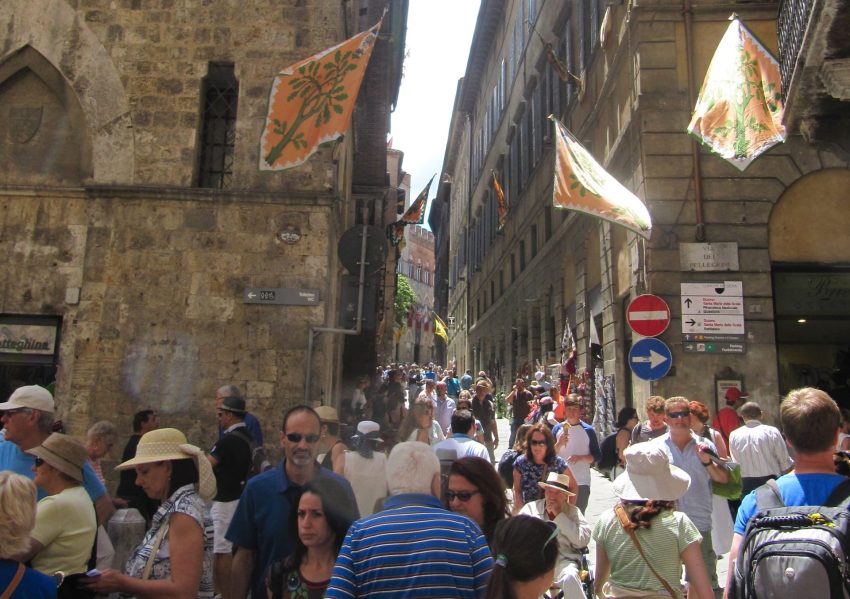
Via di Città is one of Siena’s most storied streets, running through a corridor of noble palaces and historic institutions that reflect the city’s medieval and Renaissance elites. The street’s name itself speaks to its civic importance: it was, and remains, a central artery in the urban fabric. In Siena, streets are rarely just routes; they’re layered spaces shaped by centuries of commerce, ceremony, and local power.
As you move along, the architecture becomes the main attraction: tall brick façades, stone details, courtyards hidden behind heavy doors, and the occasional glimpse into a narrow side lane that drops away unexpectedly. Many buildings along this stretch belonged to powerful families, and the street still conveys that sense of contained wealth and hierarchy. Even without stepping inside anything, you can read the city’s history in the materials and proportions.
What to see here is less a single monument and more the cumulative experience of Siena’s urban character. Pay attention to small elements—family crests, gothic windows, changes in paving—because they mark shifts in period and status. It’s also a good place to pause in a quieter moment and listen: you’ll often hear the city before you see it, as sound carries through the tight street geometry.
Location: Via di Città, 53100 Siena SI, Italy | Hours: 24 Hours. | Price: Free.
12. Piazza del Mercato
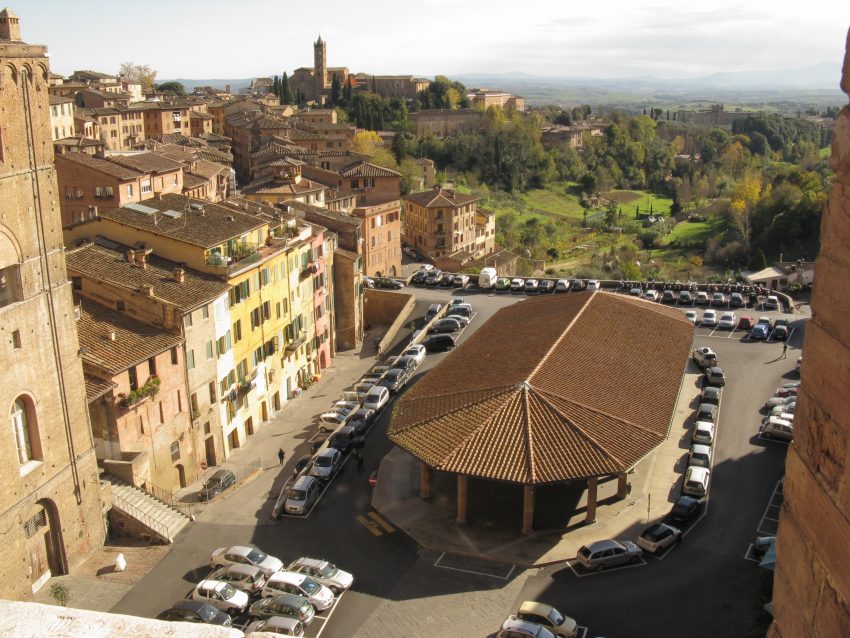
Piazza del Mercato sits just behind Siena’s Palazzo Pubblico, effectively acting as the Campo’s older, more workaday counterpart. From the Middle Ages onward it functioned as a practical trading space for livestock and produce, positioned slightly out of the main ceremonial spotlight while still tightly connected to the city’s political core. Its role reflects how Siena separated showpiece civic space from the messier business of provisioning a dense hill city.
The square’s shape and level changes make it feel markedly different from Piazza del Campo: it’s more enclosed, more irregular, and more directly shaped by the surrounding buildings and retaining walls. One of the key historic features is the Fonte di Piazza del Mercato, a substantial public fountain supplied by Siena’s famed medieval waterworks, which underpinned daily life and market activity here. You also get strong views of the Palazzo Pubblico’s rear elevations, which helps you understand the town hall as a full architectural mass rather than a single theatrical façade.
When you visit, treat it as a place to read Siena’s “backstage” history. Walk the edges, look for the fountain and the texture of the brickwork, and notice how quickly the atmosphere shifts compared with the Campo—often quieter, sometimes surprisingly local. It’s also a useful spot to appreciate the city’s engineering: the way streets, stairs, and walls stitch together steep terrain into usable public space.
Location: Piazza del Mercato, 53100 Siena SI, Italy | Hours: 24 Hours. | Price: Free.

Moira & Andy
Hey! We're Moira & Andy. From hiking the Camino to trips around Europe in Bert our campervan — we've been traveling together since retirement in 2020!
This website uses affiliate links which earn a small commission at no additional cost to you.
Walking Tour Summary
Distance: 1 km
Sites: 12