Self-Guided Walking Tour of Reykjavík (2026)
This website uses affiliate links which earn a small commission at no additional cost to you.
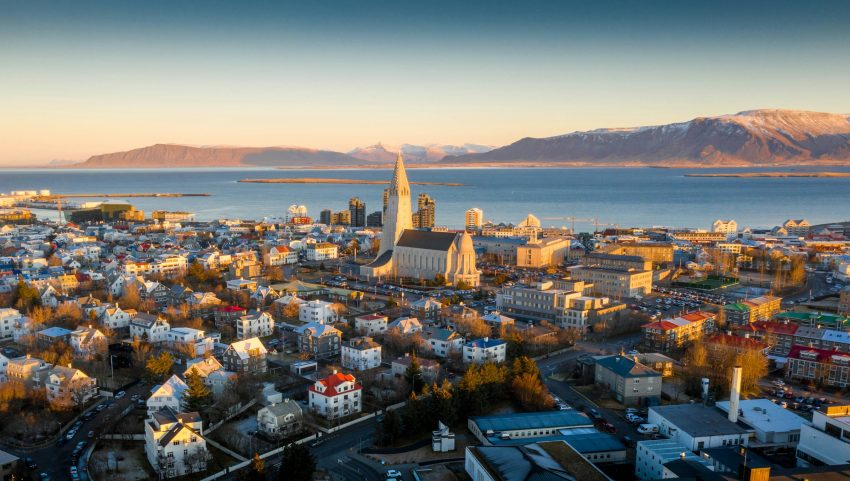
Reykjavík is compact, characterful, and made for exploring on foot. This self-guided walking tour stitches together the city’s most rewarding sights-architectural icons, harbour views, colourful streets, and small details you might miss from a bus window-into a route you can do at your own pace. Whether you have a few hours between excursions or want to dedicate a full day to the capital, walking is the simplest way to understand how Reykjavík’s history and creativity sit side by side.
Along the way you’ll move between the old town’s low-rise houses, lively shopping streets, and waterfront paths where the light changes by the minute. You’ll pass design shops, bakeries, and museums you can dip into if the weather turns, with plenty of opportunities to pause for a coffee or a bowl of lamb soup. The route is easy to tailor: shorten it for a quick orientation loop, or stretch it out with extra stops and detours into quieter neighbourhoods.
If you’re deciding what to prioritise, this walk is built around the best things to see in Reykjavík-classic landmarks alongside local favourites that give the city its personality. Expect big photo moments, but also the everyday scenes that make the capital feel lived-in: geothermal warmth in the air, public art in unexpected places, and a harbour that anchors the city’s past and present. Bring layers, keep your camera handy, and treat the tour as a flexible framework rather than a strict checklist.
Where to Stay in Reykjavík
To make the most of visiting Reykjavík and this walking tour then you consider staying overnight at the centre. The most convenient base is the 101 Reykjavík core around Laugavegur, Skólavörðustígur, and Hlemmur, where you can step straight into cafés, shops, museums, and many of the city’s headline sights without relying on buses or taxis. For a comfortable, walk-everywhere stay, consider Sand Hotel, Center Hotels Laugavegur, and Alda Hotel Reykjavík-all well-placed for an early start and easy returns between stops.
If you want a calmer feel while still remaining highly walkable, look at the Old Harbour and Grandi area. It’s ideal if your route includes the waterfront, Harpa, or a slower-paced morning by the sea, and it tends to feel less busy at night than the main shopping strip. Good options here include Reykjavík Marina - Berjaya Iceland Hotels and ION City Hotel, which place you close to the harbour atmosphere while keeping the city centre within an easy stroll.
For a quieter, more residential base that still connects well to a central walking route, consider the area around Tjörnin (the pond) and the University/Centre fringes, where streets are greener and evenings are more relaxed. This can be a strong choice if you prefer a slightly slower pace after sightseeing, while staying close enough to walk into the centre in 10-20 minutes. A reliable pick in this zone is Hotel Reykjavík Centrum, which keeps you close to the historic core and the start of many self-guided routes.
The History of Reykjavík
From Settlement to a Small Farmstead Town (9th-17th Centuries)
Reykjavík’s story begins with Iceland’s first permanent settlement era in the late 9th century, traditionally linked to Ingólfur Arnarson, who is often named in the sagas as the first Norse settler to establish himself in the area. For centuries, Reykjavík remained a modest cluster of farms rather than a true town, with activity centred on subsistence life and seasonal trade. If you want to connect that early period to something tangible today, The Settlement Exhibition is the most direct link: it interprets archaeological remains from the earliest habitation layers, grounding Reykjavík’s origin story in evidence rather than legend.
The Rise of an Administrative Centre (18th-19th Centuries)
Reykjavík began shifting from rural outpost to administrative and commercial centre in the 18th century, when Danish-led reforms encouraged more concentrated trade and governance. By the 19th century, the town’s civic identity strengthened as Iceland’s institutions gradually expanded in scope and confidence. A key symbol of that emergence is Alþingishús (Althingishus), built in the 1880s to house Iceland’s parliament. Its sober, dark-stone presence reflects Reykjavík’s growing political weight at a time when the island’s national movement was taking clearer shape. Nearby, Dómkirkjan (Reykjavík Cathedral), completed in the 19th century, reinforced the area around Austurvöllur as the heart of official and ceremonial life.
Nationhood and the Shaping of the Capital (1900s-Mid 20th Century)
In the early 20th century Reykjavík expanded rapidly as people moved from rural areas to the capital for work, education, and modern services. The city’s built environment began to reflect a more self-defined Icelandic identity, especially as the country moved toward full independence in 1944. Several core buildings in the central area speak to this state-forming era. Stjórnarráðshúsið (the Government House), long associated with national administration, anchors the governmental quarter, while cultural institutions consolidated Reykjavík’s role as the country’s intellectual centre; the Culture House is part of that lineage, representing the city’s commitment to safeguarding and presenting Iceland’s literary and historical heritage in a formal civic setting.
Postwar Growth, Modern Design, and Global Visibility (Late 20th Century-Today)
From the late 20th century onward, Reykjavík’s identity became increasingly tied to modern architecture, cultural production, and its dramatic coastal setting. Hallgrímskirkja is the most instantly recognisable example of that shift: the church was designed by Guðjón Samúelsson, and construction began in the mid-1940s, with completion in the 1980s. Its bold, basalt-inspired form turned the skyline into a statement about landscape, faith, and national design language, and it continues to function as both a working church and a defining landmark for visitors.
Along the waterfront, Reykjavík’s 21st-century transformation is encapsulated by Harpa, the concert hall and conference centre that opened in the early 2010s. Designed through a collaboration led by Henning Larsen Architects with Batteríið Architects, and featuring a distinctive façade concept associated with artist Olafur Eliasson, Harpa signalled Reykjavík’s ambition to present itself as a contemporary cultural city as well as a gateway to Iceland’s natural world. Nearby, the Sun Voyager (Sólfar) offers a more poetic public marker: an iconic steel sculpture by Jón Gunnar Árnason, it is often read as a dream-ship or an ode to exploration, fitting a city whose modern identity blends seafaring heritage with a forward-looking creative scene.
Sites That Hold Reykjavík’s Political and Diplomatic Memory
Reykjavík’s history is not only architectural; it is also political and diplomatic. Höfði, a house that has become synonymous with international diplomacy, is the most famous setting for that narrative, and it sits slightly apart from the tourist core, facing the sea in a way that feels deliberately contemplative. Within the centre, churches such as Fríkirkjan add another layer to the city’s civic geography, reflecting religious and community life as Reykjavík diversified and grew beyond its earlier institutional footprint around the cathedral and parliament.
If you trace these sites on foot-from the archaeological story at The Settlement Exhibition to the civic heart near Alþingishús and Dómkirkjan, then onward to Hallgrímskirkja and the modern waterfront at Harpa-you effectively walk through Reykjavík’s evolution: from settlement-era beginnings, to a national capital, to a compact city that uses architecture, culture, and public space to express who it is to the world.
Your Self-Guided Walking Tour of Reykjavík
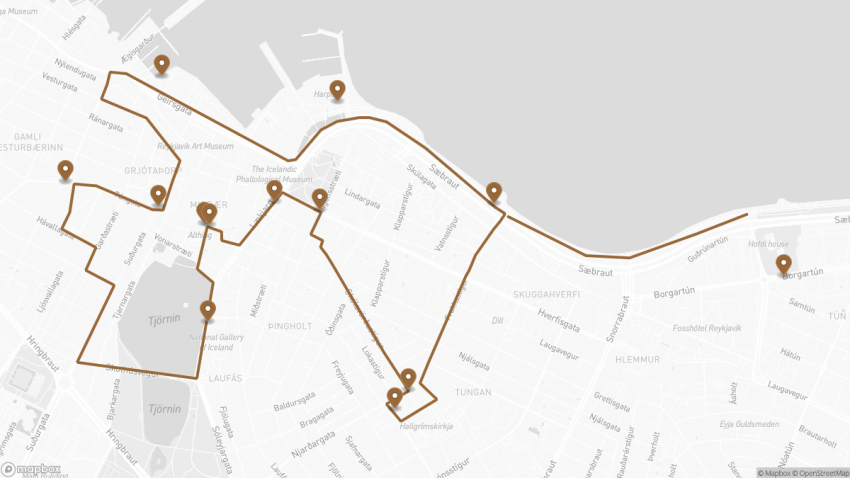
Discover Reykjavík on foot with your walking tour map guiding you between each stop as you explore its colourful streets, harbourfront views, striking modern architecture, and cosy café culture. This walking tour follows the city’s layered story, shaped by settlement-era beginnings, maritime life, and a strong design-forward identity, taking you from landmark churches and historic civic squares to the waterfront, sculpture-lined promenades, and cultural spaces, all within a compact capital where the sea and changing light frame almost every view.
1. Sun Voyager (Sólfar)
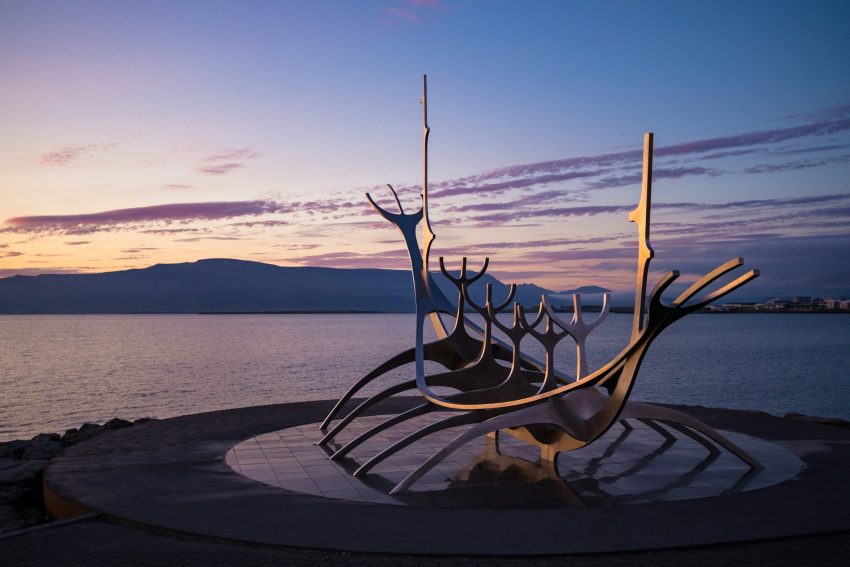
Sun Voyager is one of Reykjavík’s most recognisable waterfront landmarks, unveiled in 1990 to mark the city’s 200th anniversary. Designed by sculptor Jón Gunnar Árnason, it is often described as a Viking ship, but the intent is more symbolic: a “dreamboat” pointing toward the horizon, suggesting hope, exploration, and the pull of the North Atlantic.
What you see is a sleek stainless-steel frame set directly on the Sæbraut seafront, with Mount Esja frequently forming a dramatic backdrop. The minimal lines catch the changing light, so the sculpture can look almost white in summer glare, then blue-grey under winter cloud, and it becomes especially striking when the sky turns pink at sunset.
It is less about spending time “inside” an attraction and more about setting the tone for a walk: linger for photos, then follow the shoreline path toward Harpa or the old harbour. On calm evenings you may get mirror-like reflections; on stormy days you feel Reykjavík’s elemental character immediately—wind, salt air, and sea spray.
Location: Sæbraut, 101 Reykjavík, Iceland | Hours: 24 Hours. | Price: Free.

2. Harpa Concert Hall and Conference Centre
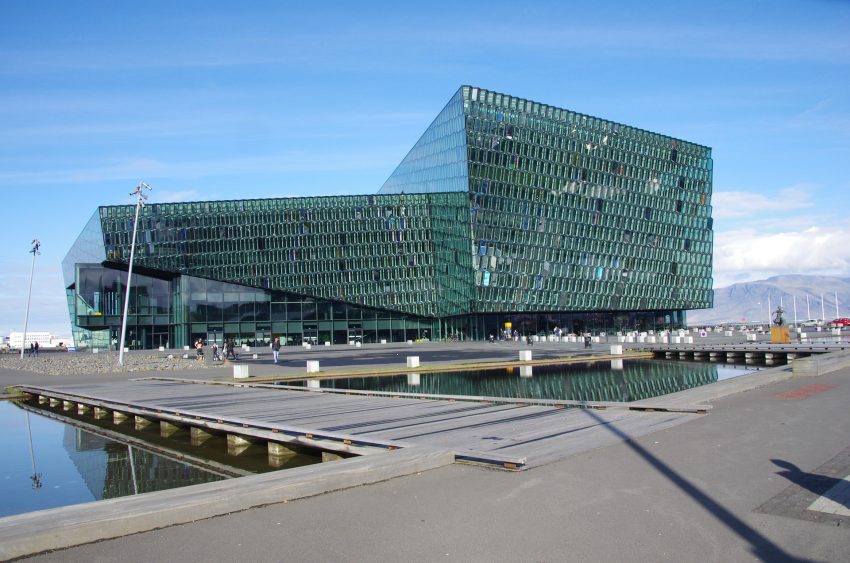
Harpa opened in 2011 and quickly became a symbol of modern Iceland, rising from the post-2008 financial crisis era as a statement of cultural confidence. The building is closely associated with Icelandic-Danish artist Ólafur Elíasson and the architects Henning Larsen and Batteríið, whose collaboration produced a façade inspired by basalt columns and the shifting colours of the ocean and sky.
The main draw is the architecture itself: a geometric glass skin that refracts light in hundreds of directions, changing character minute by minute. Inside, the spaces are deliberately theatrical—broad staircases, warm timber finishes, and views across the harbour—while the main hall is designed for excellent acoustics and hosts everything from classical concerts to contemporary music.
Even if you do not attend a performance, it is worth going in to wander the public areas, see the light patterns, and enjoy the harbour-facing viewpoints. Check what is on, because a short concert can be an efficient way to experience the building as intended—sound, crowd, and atmosphere—rather than only as a photo stop.
Location: Austurbakki 2, 101 Reykjavík, Iceland | Hours: Monday – Tuesday: 10:00–18:00. Wednesday – Saturday: 10:00–20:00. Sunday: 10:00–18:00. | Price: Free (public areas); prices vary by show. | Website
3. Old Harbour
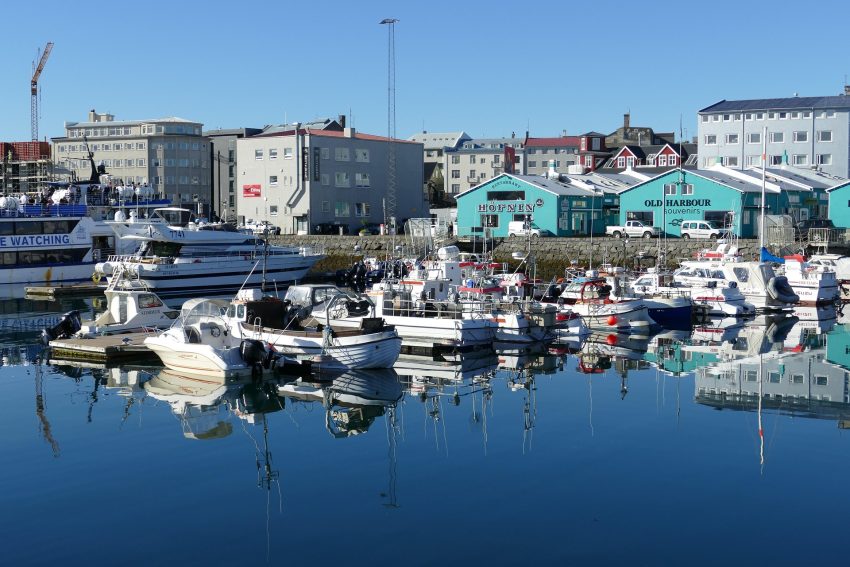
Reykjavík’s Old Harbour is where the city’s modern story starts to feel tangible: a working waterfront that grew out of necessity rather than grandeur. For centuries, the coastline here was an exposed landing place where boats were hauled up on the shore, but Reykjavík’s growth as a trading and fishing centre made a proper harbour essential. Construction of the harbour in the early 20th century was a major national project, transforming the city’s economy and daily life by giving fishing boats and cargo vessels a safer, more reliable base in all but the worst weather.
As you approach along Geirsgata, you are effectively walking into that era of engineering and ambition. Near the harbour you will spot an old steam locomotive, once used to haul stone and building materials during the harbour works, a small but memorable reminder that this waterfront was built by hand, rail, and hard logistics rather than by slow, organic drift. From there, continue toward the sea: the shoreline path opens up views across the bay, and you can pause to take in the outdoor sculptures and the changing exhibition-style displays that often appear around the waterfront.
What to do here now is a mix of old and new. Fishing is still present in the working boats and the smell of the sea, but the Old Harbour Area has also become one of Reykjavík’s most enjoyable strolling zones, with galleries, small museums, cafés, and tour operators operating from restored or repurposed buildings. It is an easy place to fold into a walking tour: amble along the quays, watch the boats come and go, and use the open views as a reset before you continue into the city or further along the coast, where the atmosphere shifts from industrial harbour edges to wide water and sky.
Location: Geirsgata 5c, 101 Reykjavík, Iceland | Hours: 24 Hours | Price: Free. | Website
4. The Settlement Exhibition
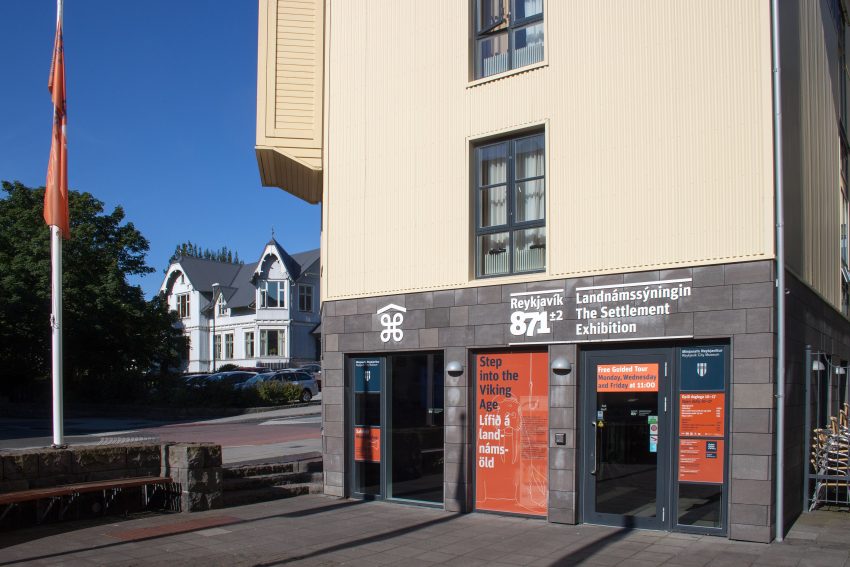
The Settlement Exhibition is one of the most rewarding stops for understanding Reykjavík beyond its contemporary café culture and design scene. It centres on archaeological discoveries made during construction in the city, including remains that date to the early settlement period, giving you a rare, concrete link to Iceland’s beginnings.
The core experience is built around excavated structures and carefully presented artefacts, with interpretation that connects everyday objects to broader themes—migration, survival, resourcefulness, and the shaping of identity in a harsh environment. Rather than a broad sweep museum, it feels focused and narrative-driven, making it efficient even if you have limited time.
For what to do, plan to take it slowly: read the context panels, watch any short media elements, and treat it as a foundation for everything else you see in the city. After this visit, places like the old harbour or the institutional buildings around Austurvöllur tend to feel more meaningful, because you have a clearer sense of how quickly Icelandic society formed and evolved.
Location: Aðalstræti 16, 101 Reykjavík, Iceland | Hours: Daily: 10:00–17:00. | Price: Check official website. | Website
5. Cathedral of Christ the King
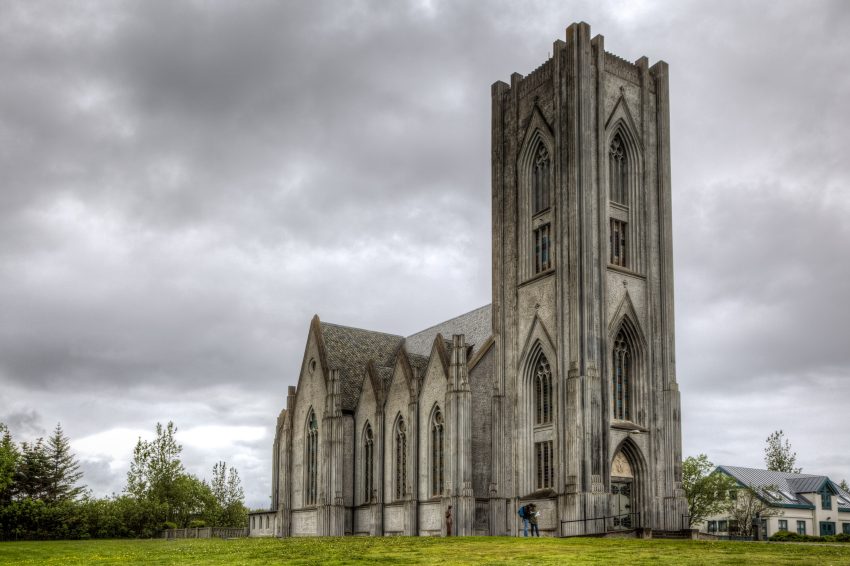
Reykjavík’s Cathedral of Christ the King, better known locally as Landakotskirkja, is the centre of Iceland’s Roman Catholic Diocese and the country’s only Catholic cathedral. The current neo-Gothic building was consecrated on 23 July 1929, but the story begins earlier on the Landakot site, where Catholic clergy re-established a foothold in Reykjavík in the 19th century and first built a small chapel in 1864 before a larger church became necessary as the community grew. The cathedral’s construction marked a turning point: a permanent, confident statement of Catholic life in a predominantly Lutheran country.
Architecturally, it is worth visiting even if you are not specifically seeking religious sites. It was designed by Guðjón Samúelsson, the same architect associated with some of Iceland’s best-known church architecture, and Landakotskirkja is instantly recognisable for its neo-Gothic massing and its unusual flat-topped tower rather than a needle spire. Seen from the surrounding streets in Vesturbær, it reads as a landmark that is both European in reference and distinctly adapted to Reykjavík’s scale and weather, with a solid, almost fortress-like presence that feels appropriate for the Atlantic edge.
Inside, the appeal is the calm atmosphere and the craftsmanship: many of the fittings and carved elements were produced by the Dutch atelier J.W. Ramakers & Sons, giving the interior a sense of artisanal detail that contrasts with the often minimal décor of local Lutheran churches. Plan to step in briefly for the stained glass and the quiet, then linger outside to appreciate how the cathedral sits above the neighbourhood streets, making it an easy stop to combine with a walk between the old harbour, Vesturbær cafés, and the central district. If your timing aligns, you can also experience the cathedral as a living place of worship, with services offered in multiple languages for Reykjavík’s international Catholic community.
Location: Túngata 13, 101 Reykjavík, Iceland | Hours: Monday: 09:00–17:00. Tuesday: 09:00–17:00. Wednesday: 09:00–17:00. Thursday: 09:00–17:00. Friday: 09:00–17:00. Saturday: Closed. Sunday: Closed. | Price: Free; donations appreciated. | Website
6. Fríkirkjan
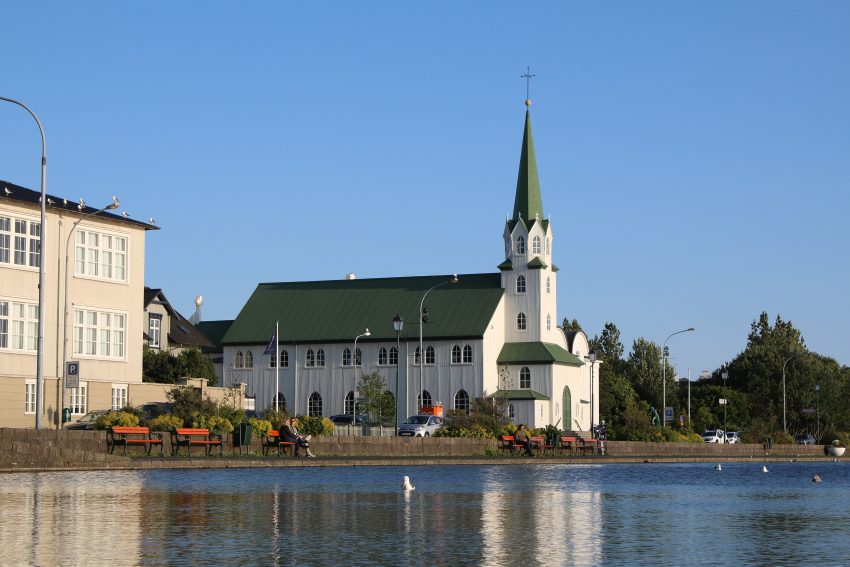
Fríkirkjan is a charming lakeside church with an important place in Reykjavík’s cultural landscape. It is associated with a movement that sought greater independence within Icelandic religious life, and that history gives the building a distinct identity compared with the cathedral’s formal national role.
What you see is a picturesque structure near Tjörnin (the city pond), where the setting is as much part of the experience as the church itself. In summer it feels bright and open, with birds and reflections on the water; in winter, the area can be starkly beautiful, and the church becomes a warm focal point in the subdued light.
It is an excellent stop during a walk around Tjörnin and nearby streets, particularly if you want quieter, more local-feeling moments between the larger headline sights. If you can time it with a concert or community event, even better—Fríkirkjan often feels like the kind of place where Reykjavík’s everyday cultural life is more visible than its tourist-facing image.
Location: Fríkirkjuvegur 5, 101 Reykjavík, Iceland | Hours: Monday – Thursday: 09:00–16:00. | Price: Free; donations appreciated. | Website
7. Alþingishús
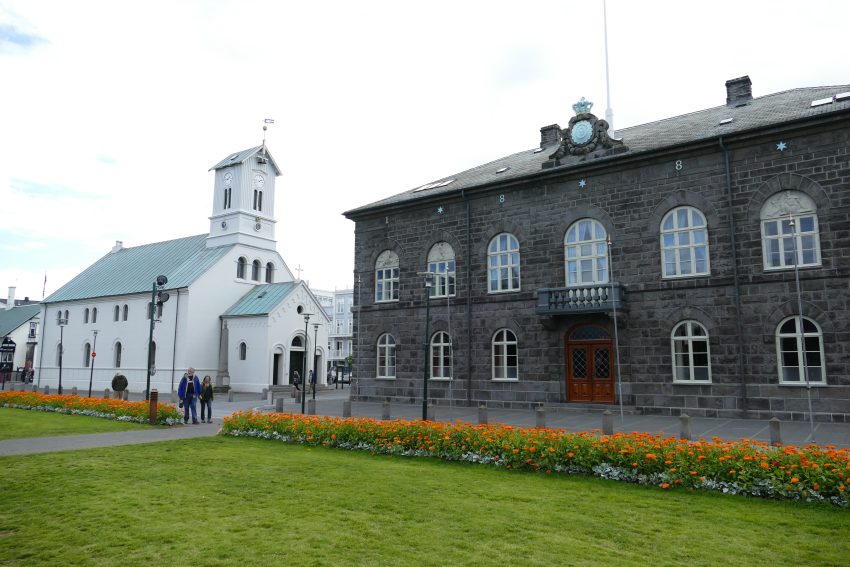
Alþingishús is the home of Iceland’s parliament, a powerful symbol given that the Alþingi is often cited as one of the world’s oldest parliamentary institutions, founded in 930 at Þingvellir. The current parliament building in central Reykjavík dates to the late 19th century, built in hewn Icelandic stone, and its dignified, compact design reflects the young nation’s growing political self-definition.
What stands out is its solid, almost austere appearance, set beside Austurvöllur square—a gathering place that has long functioned as the city’s civic stage. The square is where locals meet, where seasonal events happen, and where political life becomes visible, from everyday conversations on benches to moments of public demonstration.
You typically engage with Alþingishús from the outside rather than as an interior museum experience, but it is an excellent stop for understanding Reykjavík’s centre as a living civic district. Pair it with a slow walk around Austurvöllur and the adjacent streets, noting how close the core institutions are to one another—parliament, cathedral, government offices—creating a compact “capital in miniature.”
Location: 43W5+MWW, Kirkjutorg, 101 Reykjavík, Iceland | Hours: Check official website. | Price: Free. | Website
8. Reykjavík Cathedral
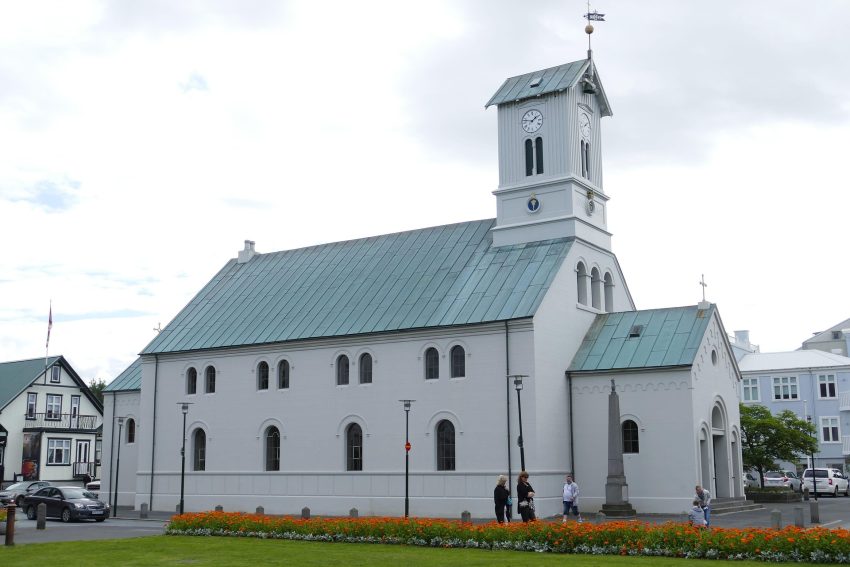
Dómkirkjan is Reykjavík’s principal cathedral and one of the city centre’s key historical anchors. While the building has been altered over time, it remains closely tied to Iceland’s national story, including religious life, state occasions, and ceremonial moments that link the capital to the wider country.
Architecturally, it is notable for understatement: a pale façade, clean proportions, and a calm presence that contrasts with the more sculptural drama of Hallgrímskirkja. Its setting near Austurvöllur gives it additional resonance, because it sits alongside parliament and the heart of civic life, reinforcing how intertwined faith, society, and governance have historically been in Iceland.
What to do here is simple but worthwhile: step inside for a quiet pause, appreciate the light and the sense of continuity, and then use it as a pivot point to explore the immediate area. Even a brief visit adds texture to a walk through the centre because it frames the city not just as a creative hub, but as a place with deep institutional roots.
Location: Kirkjustræti, 101 Reykjavík, Iceland | Hours: Monday – Friday: 10:00–14:00. | Price: Free; donations appreciated. | Website
9. Stjórnarráðshúsið (Government House)
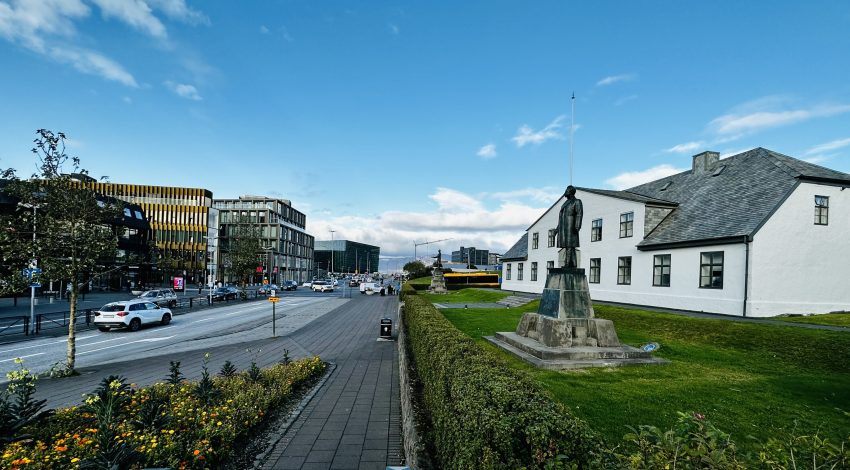
Stjórnarráðshúsið is the Government House, a key building in Iceland’s political landscape and one of the city centre’s most historically resonant administrative sites. It is closely linked to the evolution of Icelandic governance, particularly the transition from external rule toward modern national administration, and it remains central to how the state presents itself in the capital.
The building itself is modest compared to grand government palaces elsewhere in Europe, which is part of its appeal: Reykjavík often signals authority through restraint rather than spectacle. Its presence helps you read the city’s core as a compact cluster of institutions, where political power is embedded in a walkable streetscape rather than separated behind vast ceremonial spaces.
As a visitor, you typically engage with Stjórnarráðshúsið as an exterior landmark—note its position, observe the rhythms of the area, and use it to connect the political story to nearby places like Alþingishús and the cathedral. It is a useful stop if you are building a mental map of Reykjavík as both a lived-in city and a functioning national capital.
Location: Lækjargata, 101 Reykjavík, Iceland | Hours: Monday – Friday: 08:30–16:00. Closed on Saturday, Sunday. | Price: Free. | Website
10. Culture House (Safnahúsið / The Culture House)
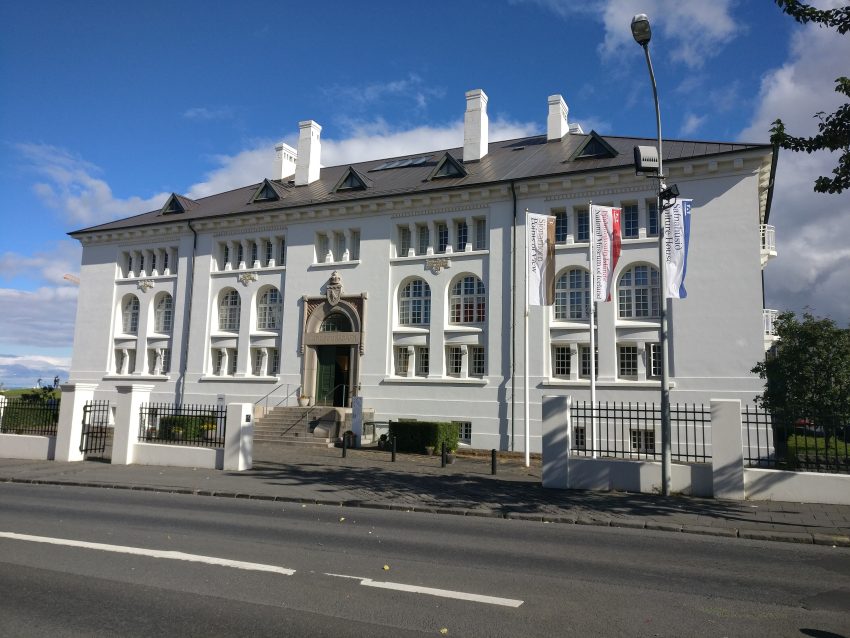
The Culture House is one of Reykjavík’s most valuable “context” stops, bringing together exhibitions that illuminate Iceland’s literary, artistic, and cultural heritage. Housed in a central building with an institutional feel, it functions as a gateway to the stories Iceland tells about itself—language, creativity, identity, and the preservation of memory.
What to see depends on the current exhibitions, but the emphasis is typically on well-curated, interpretive displays rather than blockbuster spectacle. You may encounter material connected to Icelandic manuscripts and cultural history, alongside rotating shows that broaden the frame to art and modern cultural expression, making it a strong complement to the archaeological focus of the Settlement Exhibition.
In practical terms, it works well mid-walk: it is centrally located, does not require a huge time commitment, and it gives you a more nuanced understanding of why Iceland’s cultural output—especially literature—punches above its weight globally. Even a short visit can deepen the meaning of what you see elsewhere, from public sculpture to contemporary architecture.
Location: Hverfisgata 15, Hverfisgata 15, 101 Reykjavík, Iceland | Hours: Daily: 10:00–17:00. | Price: Adults (18+): 1.500 kr.; Students: 1.000 kr.; Seniors (67+): 1.000 kr.; Children (17 and under): free; Visitors with disabilities and care partners: free. | Website
11. Hallgrímskirkja
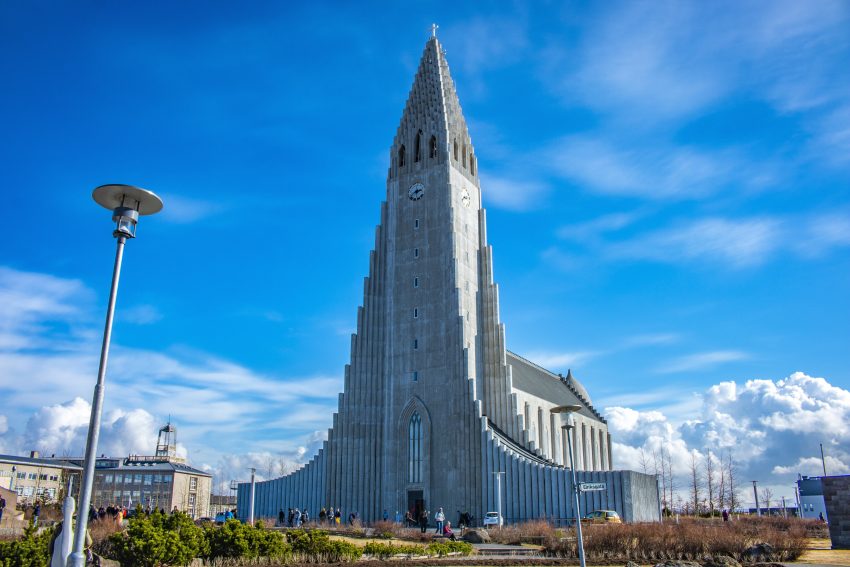
Hallgrímskirkja is Reykjavík’s most iconic church, designed by state architect Guðjón Samúelsson and built over several decades in the 20th century, with completion in 1986. Its form is famously influenced by Icelandic nature—particularly basalt lava flows and columnar rock formations—translated into a dramatic stepped façade and a soaring tower that dominates the skyline.
The exterior is the headline: a monumental, sculptural front that feels both stark and uplifting, especially in low winter light. In the forecourt you will also see the statue of Leif Erikson, gifted by the United States in 1930 to commemorate the 1,000th anniversary of the Alþingi, linking the site to broader Icelandic identity and history.
Inside, the atmosphere is comparatively restrained, emphasising space, light, and clean lines rather than ornate decoration. The tower elevator is one of the best things to do in central Reykjavík: from the top you get a clear sense of the city’s layout—colourful roofs, the harbour edge, and the mountains beyond—making it a useful orientation point early in a visit.
Location: Hallgrímstorg 1, 101 Reykjavík, Iceland | Hours: Daily: 10:00–17:00. Tower & church shop: 10:00–16:45. | Price: Church entry: Free. Tower: Adults 1,400 ISK; Seniors/students/disabled 1,000 ISK; Children (7–16) 200 ISK; Under 7: free. | Website
12. The Einar Jónsson Museum
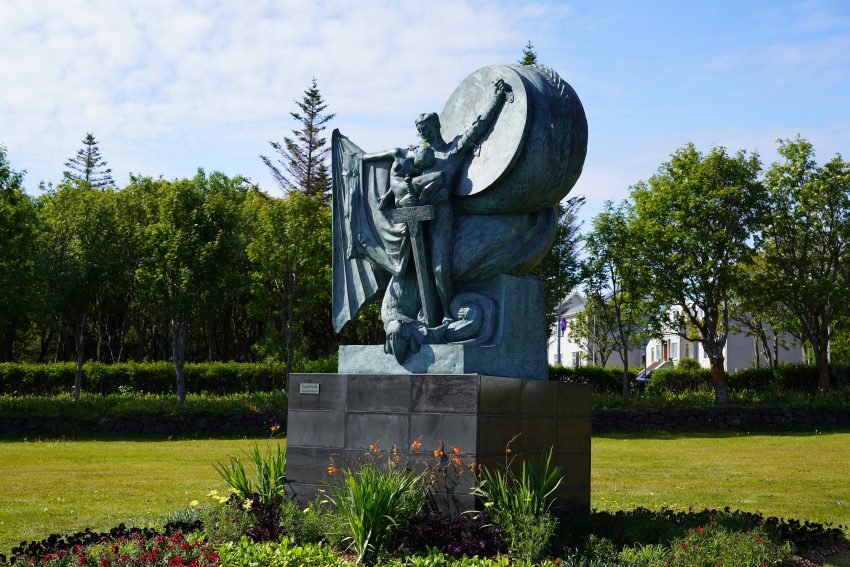
The Einar Jónsson Museum (Listasafn Einars Jónssonar) is one of Reykjavík’s most distinctive small museums, built around the life and work of Einar Jónsson (1874–1954), often regarded as Iceland’s first major sculptor. Trained abroad and shaped by late-19th and early-20th century European art currents, Jónsson developed a symbolic, sometimes mystical visual language that resonated with Iceland’s emerging national identity. The museum itself is part of the story: it was purpose-built to house his work and stands close to Hallgrímskirkja, placing it in the same “cultural hilltop” zone that defines Reykjavík’s skyline.
Inside, the focus is almost entirely on sculpture, with a strong emphasis on plaster originals and bronze works that span Jónsson’s career. Expect expressive figures, allegorical scenes, and myth-tinged compositions that draw on Icelandic folklore, human psychology, and spiritual themes rather than straightforward portraiture alone. The galleries are compact and contemplative, so it suits visitors who prefer to slow down and look closely—this is less about variety and more about stepping into one artist’s world and understanding how he tried to give form to big ideas: fate, struggle, love, belief, and the forces of nature.
A major highlight is the sculpture garden outside, which is easy to combine with a walk around Hallgrímskirkja and the surrounding streets. The garden lets you see how the works sit in open air, with changing light and weather altering the mood—particularly effective in Reykjavík, where cloud and sun can shift quickly. If you are building a cultural route through the city centre, the museum works well as a short, high-impact stop: pair it with Hallgrímskirkja’s tower view for orientation, then use the museum to add depth and texture to Reykjavík’s artistic and national story.
Location: Hallgrímstorg 3, Njarðargata 51, 101 Reykjavík, Iceland | Hours: Tuesday – Sunday: 10:00–17:00. Closed on Monday. | Price: Adults: ISK 1500; Seniors (67+): ISK 1000; Students (with ID): ISK 1000; Under 18: free; People with disabilities: free. | Website
13. Höfði House (Hofdi)
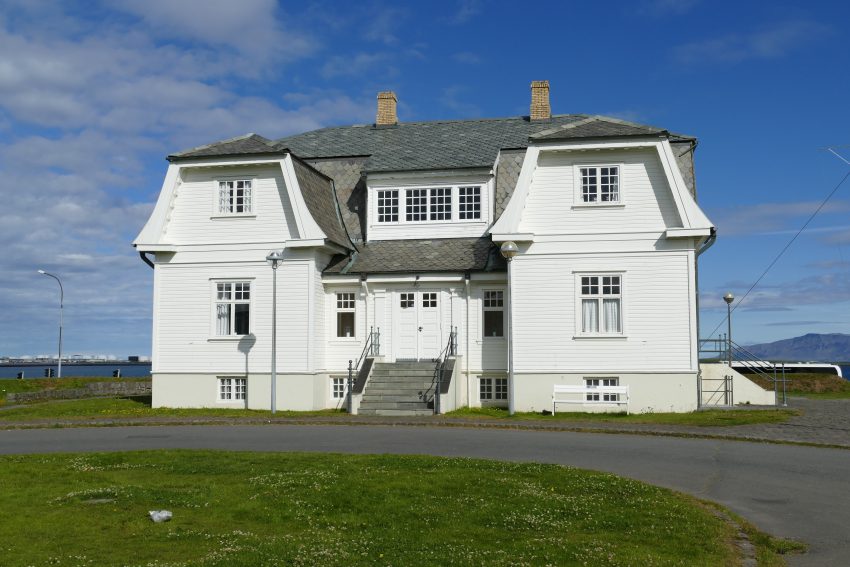
Höfði is a small house with outsized historical significance, best known internationally as the site of the 1986 Reykjavík Summit between Ronald Reagan and Mikhail Gorbachev. While the meeting did not produce a final agreement, it is widely viewed as a pivotal moment in the thawing of Cold War tensions, giving Reykjavík a distinctive place in late 20th-century diplomatic history.
The building also carries local intrigue: it is one of the city’s older houses and has long been wrapped in stories and folklore, which adds an atmospheric layer even for visitors mainly interested in the summit narrative. Its location near the waterfront makes it feel slightly apart from the busiest central streets, lending it a quiet, reflective quality.
What to do is essentially to visit the exterior and absorb the setting—this is a “stand and think” stop rather than an activity-heavy attraction. It pairs well with a waterfront walk, especially if you started at Sun Voyager, because it reinforces a theme that runs through Reykjavík: a small city that repeatedly finds itself connected to big ideas, from exploration and settlement to culture and geopolitics.
Location: Félagstún 1, 105 Reykjavík, Iceland | Hours: 24 Hours. | Price: Free.

Moira & Andy
Hey! We're Moira & Andy. From hiking the Camino to trips around Europe in Bert our campervan — we've been traveling together since retirement in 2020!
This website uses affiliate links which earn a small commission at no additional cost to you.
Walking Tour Summary
Distance: 5.5 km
Sites: 13
Walking Tour Map